Fasteners: Driving Into Plastic...Edge-Wise
It took several years, but self-tapping screws for plastic assembly have come of age. OEMs were lukewarm toward this type of fastener in the 1980s and early 1990s, that trend has changed in recent years.
It took several years, but self-tapping screws for plastic assembly have come of age. OEMs were lukewarm toward this type of fastener in the 1980s and early 1990s, but two trends in recent years have changed that scenario.
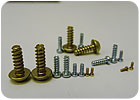
One is that manufacturers increasingly are using parts made of higher-performing thermoplastic and thermoset materials. The other is that fastener suppliers have developed a new generation of self-tapping screws specifically for use with these thermoplastic and thermoset materials.
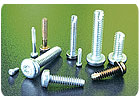
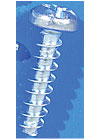 There are two types of self-tapping screws: thread forming and thread cutting. The screws are made of steel, require a preformed hole and have an asymmetrical thread that creates opposing forces during thread forming for improved material flow. They can be used with any drive head design.
A thread-forming screw has a blunt end and is used in thermoplastic having a flexural modulus from 150,000 psi to 400,000 psi. As it is driven down into the boss, the screw pushes the walls of the plastic hole into the shape of threads, producing no chips.
A thread-cutting screw has a shank slotted point and is used in thermoset materials having a flexural modulus from 500,000 psi to 2 million psi. The screw cuts the material and forms the thread as it is driven down, producing chips that fall out of the hole. The shank slot minimizes chip production.
Manufacturers in industries that use a lot of high-performance thermoplastics-such as electronics, automotive, agriculture and office equipment-tend to be the biggest users of thread-forming screws. White goods and furniture manufacturers also frequently use thread-forming screws.
Thread-cutting screws are used in products such as outdoor plastic bench seating and power tools.

“You need a screw with the right thread profile to make sure you won’t crack or damage the boss,” says Randy Luzum, technical service engineer for Infastech. “The material’s flexural modulus is the key to determining thread profile. As a rule, higher modulus plastic is more brittle.”
Other factors that must be considered to determine the correct thread profile, and screw to use, include the plastic’s thermal expansion rate, amount of filler and or reinforcement, and creep rate. The latter factor refers to how much the plastic will creep, or permanently deform, during installation. Excessive creep causes a loss in clamp load, but this can be compensated for in many ways, including reducing the stress at the bearing surface.
When joining plastic parts, assemblers must take care to not strip the threads formed in the plastic. The best way to achieve this is adherence to the fastener’s strip-to-drive ratio, which is the ratio between the torque at which the screw will strip its thread and the torque necessary to drive it. Assemblers should always use a power tool with torque control.
“Standard screws have a 2-to-1 strip-to-drive ratio, whereas thread-forming screws have a ratio of at least 4-to-1 to prevent joint damage,” says Jeff Fleming, sales manager for ITW Shakeproof. “For example, if 7 ft-lbs of torque are required to drive a specific thread-forming screw, 28 ft-lbs of torque will strip it. The higher ratio also provides a higher safety margin, which is important because it’s often hard to tell when the screw thread is stripped in plastic.”
Screwdriver speed also needs to be monitored. Depending on the screw being installed, driver speed should range from 300 rpm to 800 rpm. Using too high of a driver speed will melt the thermoplastic.
A final challenge is determining whether it’s better to use a thread-forming screw or a threaded insert (made of brass or stainless steel) for a part, such as a car air filter, that the end-user must disassemble and reassemble. Several factors need to be considered, including cost, reusability, installation time and scrap management.
Thread-forming screws cost significantly less than inserts (per piece), can be reused up to 10 times and be installed manually or automatically. The screws install quicker than inserts (which must be either molded or pressed into the boss) and are easier to remove, leaving behind plastic scrap that’s cleaner and easier to recycle.
On the other hand, threaded inserts allow repeated disassembly and reassembly without damaging the part. They are recommended when the assembly involves the use of thin sheets of material, requires very high strip-out resistance and or work space is limited.
Inserts also ensure part alignment during assembly, thanks to predrilled holes, and can be molded into thermoset materials.
This action increases the screw’s resistance to pull-out, vibration and thread stripping. It also allows for a low thread-forming torque (0.7 newton-meter) and minimizes radial force on the boss.
Both eco-syn and Delta PT thread-forming screws have a 30-degree flank angle. The screws’ flanks displace material and create shear areas that produce high tensile strength, torsional strength and clamp loads. The flanks also produce very little radial force, ensuring boss integrity.
Each screw has other benefits. The eco-syn offers assemblers high levels of binding safety. This is because the screw produces a low burst effect at the outside of thermoplastic material.
The Delta PT features a multi-compound angled thread and an angled core diameter instead of a flat bottom. Russell Hendee, specialty products manager for Semblex Corp., says the angled core helps lessen stress during thread forming. The 30-degree helix angle also controls screw back-out, especially in dynamic applications.
Another thread-forming screw is the BosScrew. This screw has tiny detents (indentations) on the thread’s pressure flank, which is inactive during installation. However, once the screw is seated, plastic flows into the detents to increase the screw’s resistance to loosening.
“The detents are located just below the horizon of the fastener, and this enhances locking into thermoplastic,” says Phil Johnson, general manager of ITW Shakeproof. “Time, temperature and vibration also strengthen the joint.”
A washer can be placed under the BosScrew head to span larger boss holes, protect fragile surfaces and better distribute radial forces.
Flanks on the Duro PT thread-cutting screw are positioned at a 30-degree angle to maximize friction between the fastener and thermoset material. The 30-degree thread profile also increases strip resistance and reduces radial stress and back-out caused by material relaxation.
Other key features of the Duro PT are its recessed thread root and optimal thread pitch. The thread root minimizes installation torque and lessens clogging and galling of threads during assembly. The thread pitch increases load-carrying capacity, pull-out strength and resistance to vibration loosening.
Two more thread-cutting screws are the Delta PT-S and PT-DS. The PT-S is the PT screw with a shank slotted point that extends over three pitches at the lead thread end. It offers high retention in thermoset materials due to optimized thread pitch.
The Delta PT-DS is also based on the PT thread form. However, the PT-DS’s threads feature grooves that start at the fastener tip and taper off towards the screw head. The PT-DS also requires less chip space in the design of a blind hole and allows for shorter hole depths than the PT-S.
Although the exact size of the boss will vary with the screw and the material, the general rule of thumb is the boss’s outside diameter should be two to three times the diameter of the screw threads. In addition, the amount of material displaced from the side of the hole by the screw should not exceed 70 percent to 90 percent of the length of the threads. Softer thermoplastics will displace more material.
“When there are significant ‘unknowns,’ engineers have a tendency to overdesign,” says Gene Simpson of Semblex. “They take the safer route and design thicker and larger bosses using excessive material. But this doesn’t improve performance and, in some cases, it can lead to higher torque and increased stresses.”
For the most strength, bosses should be located next to walls or corners. A free-standing boss has the lowest pull-out force; a boss located at a 90-degree corner the highest. Round, uniform cross-sections also increase boss strength and prevent stress from concentrating in any one location.
Deepak Garg, product solution specialist for Bossard Americas, says material around the hole should be 1.8 to 2.5 millimeters thick for additional strength. He also recommends design engineers include a small counterbore on the holes to prevent hair cracks from occurring there.
Boss hole size and height will determine exact fastener length, but generally, the length of thread engagement should be two to three times the screw diameter. Hole size also determines how much friction is generated when the screw is installed. The tighter the screw fits the hole, the more friction that will be generated during installation.
Finally, manufacturers should thoroughly test a number of different fasteners in the boss before selecting one.
“Proper boss design is crucial,” says Phil Johnson, general manager of ITW. “But so is matching the fastener to the capabilities of the plastic you’re working with.”
It took several years, but self-tapping screws for plastic assembly have come of age. OEMs were lukewarm toward this type of fastener in the 1980s and early 1990s, but two trends in recent years have changed that scenario.
One is that manufacturers increasingly are using parts made of higher-performing thermoplastic and thermoset materials. The other is that fastener suppliers have developed a new generation of self-tapping screws specifically for use with these thermoplastic and thermoset materials.
The eco-syn thread-forming screw offers assemblers high levels of binding safety because it produces a low burst effect at the outside of thermoplastic material. Photo courtesy Bossard Americas
A thread-forming screw has a blunt end and is used in thermoplastic having a flexural modulus from 150,000 psi to 400,000 psi. As it is driven down into the boss, the screw pushes the walls of the plastic hole into the shape of threads, producing no chips.
A thread-cutting screw has a shank slotted point and is used in thermoset materials having a flexural modulus from 500,000 psi to 2 million psi. The screw cuts the material and forms the thread as it is driven down, producing chips that fall out of the hole. The shank slot minimizes chip production.
Manufacturers in industries that use a lot of high-performance thermoplastics-such as electronics, automotive, agriculture and office equipment-tend to be the biggest users of thread-forming screws. White goods and furniture manufacturers also frequently use thread-forming screws.
Thread-cutting screws are used in products such as outdoor plastic bench seating and power tools.
Flanks on the Delta PT-DS thread-cutting screw feature grooves that start at the fastener tip and taper off towards the screw head. Graphic courtesy Semblex Corp.
Challenges of Plastic Assembly
Manufacturers face several challenges when using fasteners to assemble plastic parts. The biggest challenge is to make sure the fastener will not crack or leave any structural or cosmetic defect, such as white marks, on the boss.“You need a screw with the right thread profile to make sure you won’t crack or damage the boss,” says Randy Luzum, technical service engineer for Infastech. “The material’s flexural modulus is the key to determining thread profile. As a rule, higher modulus plastic is more brittle.”
Other factors that must be considered to determine the correct thread profile, and screw to use, include the plastic’s thermal expansion rate, amount of filler and or reinforcement, and creep rate. The latter factor refers to how much the plastic will creep, or permanently deform, during installation. Excessive creep causes a loss in clamp load, but this can be compensated for in many ways, including reducing the stress at the bearing surface.
When joining plastic parts, assemblers must take care to not strip the threads formed in the plastic. The best way to achieve this is adherence to the fastener’s strip-to-drive ratio, which is the ratio between the torque at which the screw will strip its thread and the torque necessary to drive it. Assemblers should always use a power tool with torque control.
“Standard screws have a 2-to-1 strip-to-drive ratio, whereas thread-forming screws have a ratio of at least 4-to-1 to prevent joint damage,” says Jeff Fleming, sales manager for ITW Shakeproof. “For example, if 7 ft-lbs of torque are required to drive a specific thread-forming screw, 28 ft-lbs of torque will strip it. The higher ratio also provides a higher safety margin, which is important because it’s often hard to tell when the screw thread is stripped in plastic.”
Screwdriver speed also needs to be monitored. Depending on the screw being installed, driver speed should range from 300 rpm to 800 rpm. Using too high of a driver speed will melt the thermoplastic.
A final challenge is determining whether it’s better to use a thread-forming screw or a threaded insert (made of brass or stainless steel) for a part, such as a car air filter, that the end-user must disassemble and reassemble. Several factors need to be considered, including cost, reusability, installation time and scrap management.
Thread-forming screws cost significantly less than inserts (per piece), can be reused up to 10 times and be installed manually or automatically. The screws install quicker than inserts (which must be either molded or pressed into the boss) and are easier to remove, leaving behind plastic scrap that’s cleaner and easier to recycle.
On the other hand, threaded inserts allow repeated disassembly and reassembly without damaging the part. They are recommended when the assembly involves the use of thin sheets of material, requires very high strip-out resistance and or work space is limited.
Inserts also ensure part alignment during assembly, thanks to predrilled holes, and can be molded into thermoset materials.
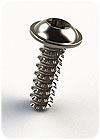
BosScrew has tiny detents (indentations) on the thread’s pressure flank that help the screw lock into thermoplastic. Photo courtesy ITW Shakeproof
The Screws
Infastech recently introduced the Aptino, a thread-forming screw with a 20-degree flank angle. Each flank has a narrow tip that displaces material in a direction opposite that of the pull-out load.This action increases the screw’s resistance to pull-out, vibration and thread stripping. It also allows for a low thread-forming torque (0.7 newton-meter) and minimizes radial force on the boss.
Both eco-syn and Delta PT thread-forming screws have a 30-degree flank angle. The screws’ flanks displace material and create shear areas that produce high tensile strength, torsional strength and clamp loads. The flanks also produce very little radial force, ensuring boss integrity.
Each screw has other benefits. The eco-syn offers assemblers high levels of binding safety. This is because the screw produces a low burst effect at the outside of thermoplastic material.
The Delta PT features a multi-compound angled thread and an angled core diameter instead of a flat bottom. Russell Hendee, specialty products manager for Semblex Corp., says the angled core helps lessen stress during thread forming. The 30-degree helix angle also controls screw back-out, especially in dynamic applications.
Another thread-forming screw is the BosScrew. This screw has tiny detents (indentations) on the thread’s pressure flank, which is inactive during installation. However, once the screw is seated, plastic flows into the detents to increase the screw’s resistance to loosening.
“The detents are located just below the horizon of the fastener, and this enhances locking into thermoplastic,” says Phil Johnson, general manager of ITW Shakeproof. “Time, temperature and vibration also strengthen the joint.”
A washer can be placed under the BosScrew head to span larger boss holes, protect fragile surfaces and better distribute radial forces.
Flanks on the Duro PT thread-cutting screw are positioned at a 30-degree angle to maximize friction between the fastener and thermoset material. The 30-degree thread profile also increases strip resistance and reduces radial stress and back-out caused by material relaxation.
Other key features of the Duro PT are its recessed thread root and optimal thread pitch. The thread root minimizes installation torque and lessens clogging and galling of threads during assembly. The thread pitch increases load-carrying capacity, pull-out strength and resistance to vibration loosening.
Two more thread-cutting screws are the Delta PT-S and PT-DS. The PT-S is the PT screw with a shank slotted point that extends over three pitches at the lead thread end. It offers high retention in thermoset materials due to optimized thread pitch.
The Delta PT-DS is also based on the PT thread form. However, the PT-DS’s threads feature grooves that start at the fastener tip and taper off towards the screw head. The PT-DS also requires less chip space in the design of a blind hole and allows for shorter hole depths than the PT-S.
A thread-cutting screw, the Duro PT has a 30-degree thread profile that reduces back-out caused by material relaxation. Photo courtesy Infastech
Boss Design: Some Tips
Boss design determines how easily a plastic part is assembled and how well it performs after assembly. Parts engineers need to focus on many design factors, including diameter, location, strength, height, hole size and fastener compatibility.Although the exact size of the boss will vary with the screw and the material, the general rule of thumb is the boss’s outside diameter should be two to three times the diameter of the screw threads. In addition, the amount of material displaced from the side of the hole by the screw should not exceed 70 percent to 90 percent of the length of the threads. Softer thermoplastics will displace more material.
“When there are significant ‘unknowns,’ engineers have a tendency to overdesign,” says Gene Simpson of Semblex. “They take the safer route and design thicker and larger bosses using excessive material. But this doesn’t improve performance and, in some cases, it can lead to higher torque and increased stresses.”
For the most strength, bosses should be located next to walls or corners. A free-standing boss has the lowest pull-out force; a boss located at a 90-degree corner the highest. Round, uniform cross-sections also increase boss strength and prevent stress from concentrating in any one location.
Deepak Garg, product solution specialist for Bossard Americas, says material around the hole should be 1.8 to 2.5 millimeters thick for additional strength. He also recommends design engineers include a small counterbore on the holes to prevent hair cracks from occurring there.
Boss hole size and height will determine exact fastener length, but generally, the length of thread engagement should be two to three times the screw diameter. Hole size also determines how much friction is generated when the screw is installed. The tighter the screw fits the hole, the more friction that will be generated during installation.
Finally, manufacturers should thoroughly test a number of different fasteners in the boss before selecting one.
“Proper boss design is crucial,” says Phil Johnson, general manager of ITW. “But so is matching the fastener to the capabilities of the plastic you’re working with.”
Looking for a reprint of this article?
From high-res PDFs to custom plaques, order your copy today!