Wire Processing: Porosity Sealants for Wire Harnesses

All day long, wire harnesses are sealed against porosity at nine Magna-Tech Manufacturing facilities located throughout North America. These wire harnesses are of different lengths, contain wire of different thicknesses, and are made by Tier 1 suppliers such as Delphi, ATPI, Siemens, Group Dekko and Federal Mogul.
One Federal Mogul wire harness sealed by Magna-Tech is installed in General Motors’ aftermarket fuel pumps. Measuring 20 inches long, the harness features two 18-gauge and two 16-gauge wires and a grommet in the middle. Although each harness takes about two hours to process, a Magna-Tech facility can seal up to 2,500 harnesses simultaneously. Depending on the size and length of the wire, a typical harness can cost from 15 to 50 cents to seal.
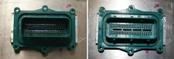
Tiny blue lights show the micro porosities in this wire
connector (left). After resin impregnation, the porosities are filled and the
blue lights are no longer visible (right). Photos courtesy Hernon Manufacturing
Inc.
Why it's Done
All molded or casted products have porosities, which include micro voids and holes. Porosity sealing completely fills these openings to improve product integrity. The process is also called vacuum impregnating and polymer impregnating.When first developed in the 1940s, porosity sealing was done with sodium silicate and styrene-based resins, and it was primarily used to repair metal castings that had been deemed “leakers” in leak-test operations. Shortly after that, the process began to be used to prevent corrosion in metal castings, powdered-metal parts, weldments, and other porous metal substrates.
Nonmetal products, such as plastic composites and wood, had been treated with potting materials to prevent corrosion. But by the 1980s, more flexible resins were being used to seal these products.
As for wire harnesses, the Department of Defense and construction equipment manufacturers have required them to be sealed for many years. However, harness sealing has increased significantly since the 1990s due to the increased amount of electric components in automobiles.
Porosities in harnesses include micro voids, holes and leak paths. These porosities trap water, salt, petroleum products and other chemicals that promote internal corrosion. They also negatively impact long-term electrical performance.
Low-viscosity methacrylate resins are used to fill and permanently seal these tiny openings in harnesses, preventing corrosion and ensuring long-term performance. The resins require either heat or the removal of air to cure, and they are thermoset, meaning their cure is irreversible.
The cured resin is a polymer that is both flexible and durable. It will not crack due to thermal expansion and can withstand common solvents (including oils, glycol, caustics and acid) and high continuous operating temperatures (up to 350 F).
The whole harness can be sealed or just the ends of it. The latter option is usually chosen to save money, although, in some applications, only the harness ends are exposed to harmful elements and need to be sealed. Sealing the whole harness fills openings within bundled wire strands and where wires touch connectors and or grommets.
When done right, the process produces no change in the appearance or dimensional attributes of harness components. However, excess resin that isn’t properly rinsed off the harness can be visible to the naked eye. More importantly, the excess resin can, in effect, become an unwanted extra layer of insulation that negatively impacts harness performance or installation.
“Because all types of wire harnesses are exposed to fuels and other chemicals, many OEMs are starting to specify that the harnesses they install be sealed,” says Harry Arnon, president of Hernon Manufacturing Inc. “The use of porosity sealing is growing because more manufacturers know the importance of it.”
Kevin Roslinski, senior application engineer for Henkel Corp., agrees that harness sealing is on the upswing, but says the majority of harnesses are still not being sealed. “Unfortunately, the benefits of sealing are not yet common knowledge,” he says.
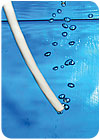
All wire is porous at the microscopic level, as proven
by air bubbles appearing when wire is submerged in water. Photo courtesy Hernon
Manufacturing Inc.
How it's Done
Porosity sealing of wire harnesses can be done using any of three methods: wet vacuum, wet vacuum and pressure, or dry vacuum and pressure. Several factors must be considered to determine which process is best. These include the number and length of wire harnesses to be impregnated, the amount of harness porosity, desired sealing results and budget.“For short harnesses, those less than one meter, the wet vacuum and pressure method is preferred,” says Peter Gebhard, vice president of Impco Inc. “For longer harnesses, and or those that require complete sealing of all internal wires, the dry vacuum and pressure method is very effective.”
Wet vacuum is the simplest method. Harnesses are placed in a basket, which is lifted by crane and immersed in a steel tank filled with resin. The tank must maintain a vacuum but does not have to be pressure rated.
After the tank is closed, vacuum is applied at a level from 28 to 29 inches of mercury to remove air from the tank, resin and porosities within the harnesses. Vacuum is applied for a time period sufficient enough to ensure adequate deaeration (usually five to 10 minutes).
When deaeration is complete, residual vacuum is released to the atmosphere. Harnesses are left to soak in the resin at atmospheric pressure until the resin thoroughly penetrates into the porosities. After sufficient soak time, the basket is lifted out of the tank.
The harnesses must now be washed and cured. Washing involves immersing the basket in one to three tanks of room-temperature clean water. Harnesses sealed with resins that cure anaerobically do so at room temperature. Harnesses sealed with resins that require heat to cure are immersed in a hot water tank (around 195 F) for 10 to 20 minutes and then air dried.
The wet vacuum and pressure method uses a single pressure vessel or autoclave but no storage tank, says Michael Ballou, technical director for Impco Inc. The basket of harnesses is immersed in the pressure vessel or autoclave, which is filled with resin. Vacuum is applied for deaeration, and residual vacuum is released to the atmosphere.
Pressure is then applied at a level from 80 to 100 psig and held there long enough to facilitate complete resin penetration into the harnesses’ porosities (usually five to 10 minutes). Large porosities fill quicker than very fine micro porosities. After sufficient time under pressure, the vessel or autoclave is vented to atmosphere, and the basket is removed. The harnesses are then washed and cured.
The dry vacuum and pressure method is preferred for harnesses with very small porosities and or very stringent sealing requirements. It requires a pressure vessel or autoclave and a resin storage tank.
The basket of harnesses is placed into the autoclave, which is then closed. Vacuum is applied for deaeration and maintained while resin is transferred from the storage tank to the autoclave. When the resin reaches a level about 6 inches above the harnesses, the transfer is complete. Residual vacuum is then released to the atmosphere.
Pressure is applied and held for complete resin penetration. After the desired time under pressure, the resin is transferred back to the storage tank. The autoclave is vented to atmosphere, and the basket of harnesses is removed, washed and cured.
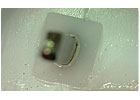
This photo (at 50 times magnification) shows a
pin-connector interface that has been sealed, eliminating a potentially
destructive leak path for water or chemicals. Photo Courtesy Impco Inc.
The Resins and Equipment
Although most harness sealing is done at facilities like those of Magna-Tech, some sealing is done by manufacturers. Several suppliers sell the resins and equipment that manufacturers need to seal wire harnesses. Some suppliers also offer sealing services.Loctite Flexseal 5100 and 5110 from Henkel Corp. are methacrylate resins designed specifically for use with wire harnesses. They cure anaerobically.
The resins contain a fluorescent indicator that appears blue when a UV light is shone on cured resin, making it easy to identify porosities and verify they’ve been filled. Flexseal 5100 and 5110 can withstand temperatures up to 450 F.
HPS 1200 is a dimethacrylate ester resin from Hernon Manufacturing. HPS 1200 fills porosities within 25 minutes and fully cures anaerobically within one to three hours at room temperature. The resin can withstand temperatures up to 350 F.
Hernon has also developed a proprietary HPS resin that Magna-Tech uses as part of its Enviroseal impregnation system for harnesses. In addition, the two companies are working together to develop a third proprietary HPS resin for use on very large wires: from 2 to 2/0 AWG.
PolyFlex 140 from Impco is a methacrylate resin that cures anaerobically at 140 F. Its flexibility can be made harder or softer, depending on application, to better withstand the thermo cycling of dissimilar materials found in harness connectors. PolyFlex 140 has a flashpoint of 200 F and can withstand temperatures up to 350 F.
Harness sealing facilities can use Impco’s Res’Net System to recover any PolyFlex 140 resin that’s present in wash water. The system continually separates water from the resin, which is not diluted and can later be used for sealing harnesses.
Looking for a reprint of this article?
From high-res PDFs to custom plaques, order your copy today!