A new generation of supersonic aircraft could dramatically change commercial flight. While the basic technology has been around for decades, it's been plagued by noise issues. Due to sonic booms, supersonic jetliners are unable to fly over land.
Additive manufacturing has already transformed the way that products are designed and produced in a wide variety of industries. The technology is now starting to be used by appliance engineers to assemble coffee makers, ovens, refrigerators and other household products.
The University of Central Florida (UCF) is playing a leading role in modernizing America's aging power grid. It's home to the Siemens Digital Grid Lab, which features cutting-edge technology similar to what many private and public utilities use to manage the nation's power system.
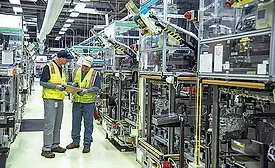
Parts come in all sizes, shapes and weights. But, any type of part isn't good until it's at the right location, at the right time and at the right height on assembly lines.
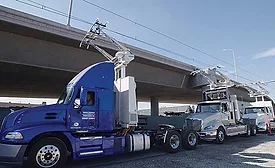
In the future, vehicles may travel down roads covered by overhead catenary wires and on highways paved with solar panels. Several experimental projects already exist in China, France and Southern California.
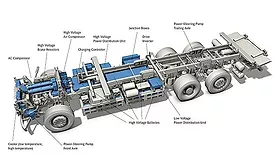
At the recent Geneva Motor Show, vehicle electrification was a leading topic of conversation. While automakers aren’t giving up on the good-old internal combustion engine just yet, they’re investing billions of dollars to develop fully electric systems that are reliable, safe and cost-effective to assemble.
According to most doctors, walking is one of the best forms of exercise that people can do. Among other things, it helps lower blood pressure, improves mental health and reduces the risk of cardiovascular disease.
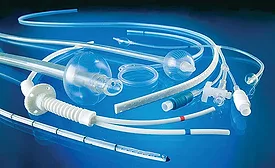
Catheters, pacemakers, ventilators and dialysis filters are vastly different products. But, they all have one thing in common: they must be checked for leaks, whether into, or out of, an assembly.
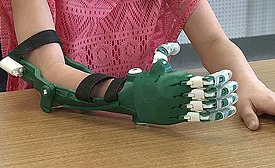
Additive manufacturing is the hottest thing to hit the medical device industry since the first pacemaker was implanted in a patient 60 years ago. The technology has transformed the way that engineers design numerous products. Now, it’s starting to move beyond prototyping into production.
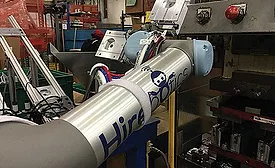
Traditionally, some manufacturers have avoided robots because of the cost. However, a new robots-for-hire business model is changing that misperception and enabling many types of companies to benefit from automation.