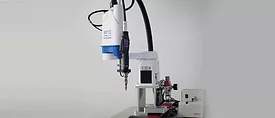
An automatic screw feeder can greatly increase the efficiency of a manual screwdriving operation. However, to reach the next level of productivity, assemblers should consider a robot. Screwdriving is a great application for Cartesian, SCARA, six-axis robots and collaborative robots. Now, several suppliers have introduced robots for installing large screws and bolts. Here’s a look at some of the latest developments.
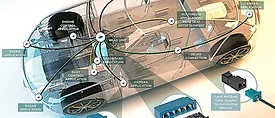
Ethernet cables provide high-speed data transmission for infotainment and driver assistance applications, but they require automated equipment for stripping and crimping.
Electronics in today's vehicles are increasingly complex. With more sensors, controls and interfaces all using higher bandwidth, faster data throughput and more reliable networks are required. The weight of the cables and harnesses in the vehicle is also a concern.
My wife works for one of the largest printers in the country. From August through October last year, nine of her co-workers died of COVID-19. All were shop-floor personnel who did not have the luxury of working from home. One was just 28 years old. None were vaccinated, despite ample monetary incentives to do so. Alarmed, the CEO held a companywide meeting via Zoom, begging employees to get vaccinated.
Vision systems play a vital role in automated assembly systems. They can check for the presence or absence of parts or materials. They can measure key dimensions of assemblies. They can tell robots the precise location of parts. They can even read 1D and 2D codes. Here's a look at some of the latest developments.
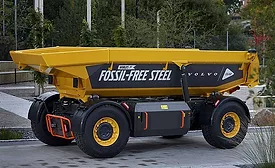
In October, the Volvo Group unveiled the world's first vehicle, a load carrier used in mining and quarrying, that is made from steel produced without fossil fuels.
We don’t often think about the impact our operations have on the lives of our customers and employees. Sometimes, our operations can literally be the difference between life and death.
The United States is far and away the world leader in R&D spending. In 2019, the U.S. spent $612.7 billion on R&D, more than any other country. We spent 19 percent more than China, four times more than Japan, five times more than Germany, and six times more than South Korea.
This February will mark my 25th anniversary with ASSEMBLY magazine. In that short time, I've seen technological advancements that I could not have imagined, and each day seems to bring news of another.
Manufacturers worldwide are trying to be more sustainable. They are conserving energy and raw materials. They are re-examining global supply chains. And, they are reusing or recycling packaging.