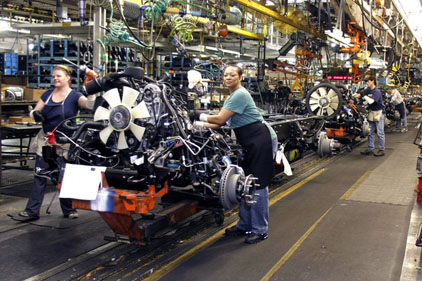
The risk factors for musculoskeletal disorders (MSDs) are well known: repetitive motions, forceful exertions, awkward postures, vibration, etc. Most of the time, we talk about these risk factors within the context of work and seek ways to reduce or eliminate them from the workplace.
But it is important to realize that not all risk factors are related to the job. Some are known as personal risk factors. Personal risk factors include age, gender, tobacco use, medication and previous injuries (work- or non-work-related). These personal risk factors can increase a person’s odds of experiencing an MSD.
Age and gender are two of the most significant personal risk factors. Remember that MSDs are mostly a matter of cumulative wear and tear. So it follows that the aging process can increase the risk of MSDs, since our bodies’ repair and recovery processes slow down with age. Gender is the other biggie MSD risk factor. Research has shown that women run a greater risk of MSDs than men. I know that sounds sexist, but you can’t argue with the facts.
There are many reasons why women are more susceptible to MSDs than men. These include hormonal fluctuations and pregnancy, which can increase edema (fluid retention) and raise the risk of inflammation and tissue damage. Furthermore, many women still work at jobs that were originally designed for men. They are using tools and equipment sized for men and performing job functions that were designed for the greater size and strength of men. Thus women labor under the triple whammy of improper tools, inappropriate job design, and their unique physiology.
The solution to reduce MSDs in the workplace is not to hire only men. Not only is this illegal and discriminatory, it is also ineffective. Remember those other personal risk factors? Age is the other big personal risk factor. And you can’t exclusively hire young men, then jettison them when they get older. (That’s also illegal and discriminatory.)
In both men and women, medication and tobacco use can increase MSD risk. So, too, can previous injuries. Studies have shown that former football players (even those who just played in high school or college) have a higher risk of back injuries than people who did not play the game. You can see that trying to hire only those at lowest risk of MSD is futile—and it surely should not be the sole criterion for selecting an employee.
No, the solution is still ergonomic work design. If jobs are designed such that older workers and female workers can perform them safely, then everyone can safely perform them. This is an example of designing for the extreme: In this case, the “extreme” is the older or weaker worker. Protecting them through proper job design protects everyone else as well.
What do you think? How do men and women compare on your assembly line? How have you tailored jobs on the assembly line to overcome the personal risk factors of your workers? Have you ever had to move a worker who was in the wrong job from an ergonomic standpoint? Have you ever had workers with unique personal risk factors? How did you accommodate them? Share your experiences.
Delia Treaster, Ph.D., is a certified professional ergonomist and writes on various ergonomic issues, drawing on decades of experience in occupational ergonomics. She has been an ergonomic contractor with Humantech, one of the largest workplace ergonomics consulting firms in the United States. Prior to working for Humantech, Delia was an ergonomic consultant for the U.S. Postal Service, a senior ergonomic specialist with Travelers Insurance, and a research scientist at Battelle Memorial Institute. She has a master’s degree in human factors engineering and a Ph.D. in biomechanics from Ohio State University.
E-mails to Delia can be sent to ergocorner@yahoo.com.
Editor’s note: “Ergo Corner” is part of a series of guest spots by industry experts that will appear regularly on ASSEMBLY’s blog page. Check back frequently to read more commentaries from Delia, as well as contributions on product testing, automated assembly systems, electronics assembly and robotics.

Recent Comments
Helpful for Trainees
Cable Assembly Manufacturers
Huawei for manufacturing?
should have a scanner and then 3D print the repair
IPC-A-610 and IPC-j-std-001