Assembly Magazine logo
search
Ask ASSEMBLY AI
cart
facebook twitter linkedin youtube
  • Sign In
  • Create Account
  • Sign Out
  • My Account
Assembly Magazine logo
  • TRENDS
    • Ask ASSEMBLY AI
    • Trends
    • News
    • New Products
  • INDUSTRIES
    • Aerospace
    • Appliance
    • DFMA Assembly
    • Medical Devices
    • Green Manufacturing
    • Lean Manufacturing
    • Machinery Assembly
    • Electronics Assembly
    • Automotive
  • TECHNOLOGIES
    • Adhesives & Dispensing
    • Assembly Presses
    • Automated Assembly Systems
    • Manufacturing Management
    • Manufacturing Software
    • Motion Control
    • Screwdriving & Riveting
    • Robotics
    • Test & Inspection
    • Plastics & Metal Welding
    • Wire Processing
    • Workstations
  • AUTONOMOUS & ELECTRIC MOBILITY
    • AEM Magazine Archives
    • Autonomy
    • Electrification
    • Mobility Services
    • Assembly & Testing
    • AV/EM News
  • MEDIA
    • Ask ASSEMBLY AI
    • Podcasts
    • Assembly News Now
    • Assembly TV
    • Webinars
    • eBooks
  • EVENTS
    • Calendar
    • The ASSEMBLY Show
  • MORE
    • Exclusives >
      • Plant of the Year
      • Capital Spending
    • Buyers Guide >
      • Supplier Insights
    • Classifieds
    • Featured Products
    • Newsletters
    • Store
    • White Papers
    • Columns
    • Sponsor Insights
  • INFOCENTER
    • Assembly & Test Solutions
  • EMAGAZINE
    • eMagazine
    • Archive Issues
    • Advertise
    • Contact Us
    • Sign Up

Creating Lean Workstations

January 31, 2006

Although lean workstations appear much the same as their more traditional brethren, they are, in fact, inherently different.

"With a lean workstation, everything must be choreographed like an orchestra, so that every movement has a purpose," says Rick Harris, president of Harris Lean Systems Inc. "It requires a new way of thinking. Traditionally, most workstations were laid out for the material handler's convenience, not for the value-adding operator."

Assemblers creating lean workstations should focus on critical operator issues, such as safety, ergonomics, and getting parts and tools in place, so they can be located quickly and efficiently. A lean workstation puts all the required assembly materials at the operator's fingertips. They are strategically positioned so assemblers can reach for tools or parts without even looking.

Unfortunately, workstations are notorious for being sources of waste. This is because tools and parts are often located in such a way that an operator needs to walk or reach around or over something to get what he needs-a situation made all more problematic when dealing with heavy objects that can cause muscle strain.

Quarterman Lee, president of Strategos Inc., believes it may be time for engineers to resurrect the principles of motion economy that were codified in the 1930s and then successfully applied during World War II. "In its fascination with computers, American industry pretty much forgot about motion economy during the 1960s," Lee says. "When lean manufacturing was re-imported from Japan, motion economy was left behind.

With this in mind, manufacturing engineers need to become familiar with the basic principles of ergonomics. For example, it's important to have an understanding of the three primary ergonomic operating zones: the optimum work zone, the optimum grab zone and the maximum grab zone. Parts presentation, the assembly sequence and tool organization should all be limited to the optimum zones as much as possible.

"It's important to remember that people move in arcs, not straight lines," says Chris McIntyre, president of Ergonomics at Work Inc. "Too many workstations tend to be designed as a rectangular desk. As you move parts and tools further out from the side of the body, they become harder to reach."

Looking for quick answers on assembly and manufacturing topics? Try Ask ASM, our new smart AI search tool. Ask ASM →

Remember that ergonomic reach zones extend both vertically and horizontally, and tasks performed below shoulder height are less fatiguing than those that take place higher up. Routinely used tools and parts should be placed within horizontal reach and work zones whenever possible. If reaches become excessive, engineers should consider splitting the assembly operation into two separate tasks.

Also, whereas in a traditional workstation, parts and tools tend to spread out horizontally across a work surface, in a lean workstation, there is a more vertical presentation so tools and parts are closer to the operator. "This reduces space and wasted time spent looking for materials," says Eric Dotson, general manager for Treston.

Throughout this process, keep in mind that it may be necessary to determine whether it's more important for operators to be able to access tools or parts more efficiently. In a high-volume situation, for example, the key may be easy access to the different components that go into each assembly. On the other hand, in a low-throughput environment where a single operator may be performing a number of different operations on a single workpiece, access to assembly tools may be the priority.

Finally, don't forget your operators. John O'Kelly, president of Newcastle Systems, suggests that assemblers carefully examine how a procedure is being performed and ask operators a series of questions, such as: What are your pains or annoyances? How does the workstation fit within the facility environment? What happens before and after the product arrives at the workstation? What do you want to change about the work area? What do you like about it?

These factors affect the size and shape of the workstation, the choice and placement of accessories, and whether the workstation should be mobile or stationary. "Document the different tasks that need to be performed at the workstation and the accessories that may be able to provide relief. Use the information from the operator to find modular workstations that provide variety in surfaces, configurations or sizes, such as height, depth and width," O'Kelly says.

Put together a mockup of the workstation and let operators "try it on" for size. "Many engineers...fail to do a mockup of the workstation, using cardboard, Styrofoam and PVC pipe," says Harris. "We always invite the operator in during this simulation. He becomes the king. We put him in his work envelope and let him evaluate it."

While working with your operator on the shop floor, don't hesitate to pick up the tools and trying performing the assembly yourself. "Engineers need to step in and do the task to get a better perspective," says McIntyre. "Try it yourself. Try working at the workstations you design. Ask questions such as: How much force do I have to use? What position do I have to use?"


Share This Story

Looking for a reprint of this article?
From high-res PDFs to custom plaques, order your copy today!

Recommended Content

JOIN TODAY
To unlock your recommendations.

Already have an account? Sign In

  • Made in the U.S.A.

    Consumer Products Manufacturing: Made in the USA

    Supply chain lessons learned during the coronavirus...
    Automated Assembly Systems
    By: Austin Weber
  • Best Practices for Press-Fit Assembly

    Best Practices for Press-Fit Assembly

    In manufacturing, ironclad formulas for success are hard...
    Assembly Presses
    By: Jim Camillo
  • aem0523leader-tesla1.jpg

    Tesla Rethinks the Assembly Line

    Engineers at Tesla Inc. have developed a new process that...
    Assembly and Testing
    By: Austin Weber
Manage My Account
  • eMagazine Subscription
  • Assembly Newsletters
  • Online Registration
  • Subscription Customer Service
  • Manage My Preferences

More Videos

Sponsored Content

Sponsored Content is a special paid section where industry companies provide high quality, objective, non-commercial content around topics of interest to the ASSEMBLY audience. All Sponsored Content is supplied by the advertising company and any opinions expressed in this article are those of the author and not necessarily reflect the views of ASSEMBLY or its parent company, BNP Media. Interested in participating in our Sponsored Content section? Contact your local rep!

close
  • ultrasonic welding
    Sponsored bySonobond Ultrasonics

    Engineering Efficiency in High-Performance Assembly: How Ultrasonic Welding Enhances Throughput, Reliability and Quality

  • UV curing system
    Sponsored byDymax

    Why UV Intensity Alone Doesn’t Define Curing Performance

  • wooden pallets
    Sponsored byLEAN Manufacturing Products

    Eliminating Waste on the Shop Floor: Applying Lean Principles to Improve Manufacturing Efficiency

Popular Stories

ASSEMBLY News Now, episode-30: Volvo Redesigns EV Manufacturing

Volvo Redesigns EV Manufacturing

Boeing CEO Kelly Ortberg announces 1 billion investment

Boeing Plans $1 Billion Wichita Investment, Workforce Training Center

automated consumer goods assembly system

Best Practices for Cycle Time Optimization

Watch the latest episode of ANN now!

Events

July 24, 2025

From Shop Floor to CFO: How Manufacturers Are Closing the Loop Between Operations and Finance

On Demand Learn how manufacturers are bridging the gap between the shop floor and ERP systems to gain real-time visibility, streamline operations, and kick-start digital transformation—without waiting years.

Sponsored by:

PicoStratusGreen
July 30, 2025

Buffer Analysis and Design Fundamentals for Manufacturing Excellence

On Demand In this presentation, Dr. Herman Tang shares practical insights from his industry experience and research on buffer management in manufacturing operations.

View All Submit An Event

Poll

Difficult Assembly Processes

Which assembly process gives you the most difficulty?
View Results Poll Archive

Products

Manufacturing Cost Policy Deployment (MCPD) Profitability Scenarios: Systematic and Systemic Improvement of Manufacturing Costs

Manufacturing Cost Policy Deployment (MCPD) Profitability Scenarios: Systematic and Systemic Improvement of Manufacturing Costs

See More Products
Register for webinar - Modernizing Automotive Assembly: Why Upgrading Legacy MES is a Business Imperative

Related Articles

  • Lean Workstations: Glossary of Lean Manufacturing Terms

    See More
  • What’s New With Workstations

    Lean Workstations: Organized for Productivity

    See More
  • Evana Automation Delivers Lean Workstations

    See More

Related Products

See More Products
  • The First Snap-Fit Handbook 2e: Creating and Managing Attachments for Plastics Parts

  • achieving

    Achieving Excellence Through Lean Manufacturing: A Lean Leader’s Journey

  • leaner

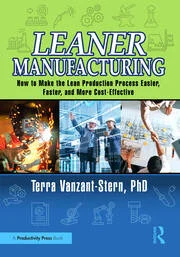
    Leaner Manufacturing: How to Make the Lean Production Process Easier, Faster, and More Cost-Effective

See More Products

Related Directories

  • Lean Manufacturing Products

    Lean Manufacturing Products LLC is a leading provider of innovative solutions designed to enhance operational efficiency and productivity in various industries. Specializing in lean manufacturing principles, we offer a comprehensive range of high-quality products, including racking systems, safety equipment, and modular storage solutions. Our mission is to help companies streamline their processes, reduce waste, and create more effective work environments. With a commitment to exceptional customer service and cutting-edge design, Lean Manufacturing Products LLC partners with businesses to implement best practices that drive success and foster continuous improvement.
  • Lean Factory America

    Our products aid in the elimination of waste, a cornerstone of lean manufacturing, by helping to eliminate errors, overproduction, inefficient processes, inventory, unnecessary transportation of product and unnecessary movement of personnel. Solutions are also highly configurable and customizable to provide customers with systems that are safe to both their personnel and products. The result is increased manufacturing efficiency and profitability for the customer.
×

Never miss the latest news and trends driving the manufacturing industry

Stay in the know on the latest assembly trends.

JOIN TODAY!
  • RESOURCES
    • Advertise
    • Contact Us
    • Directories
    • Manufacturing Division
    • Store
    • Want More?
  • SIGN UP TODAY
    • Create Account
    • eMagazine
    • Newsletters
    • Customer Service
    • Manage Preferences
  • SERVICES
    • Marketing Services
    • Reprints
    • Market Research
    • List Rental
    • Survey/Respondent Access
  • STAY CONNECTED
    • LinkedIn
    • Facebook
    • Instagram
    • YouTube
    • X (Twitter)
  • PRIVACY
    • PRIVACY POLICY
    • TERMS & CONDITIONS
    • DO NOT SELL MY PERSONAL INFORMATION
    • PRIVACY REQUEST
    • ACCESSIBILITY

Copyright ©2026. All Rights Reserved BNP Media, Inc. and BNP Media II, LLC.

Design, CMS, Hosting & Web Development :: ePublishing