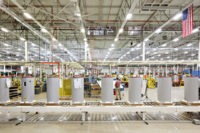
There’s more to this question than meets the eye. As we all know, many production jobs, especially low-skill jobs, have been shipped out of the United States to lower-cost countries. Writing inThe Wall Street Journalrecently, Clare Ansberry says the result is that the manufacturing sector is morphing into the service sector, with a growing proportion of the workers still employed by manufacturing companies now working in cubicles instead of on the factory floor.
Only about 52 percent of the 17 million jobs in the U.S. manufacturing sector are involved in "the actual production of goods," Ansberry says. The rest are in engineering, design, sales, marketing, consulting, logistics and support. Ansberry calls these service jobs, and says that a decade ago, 68 percent of manufacturing jobs involved actual production. In this view, a job is only a manufacturing job if it is hands-on work on the production line.
I don’t entirely agree with Ansberry’s perception of manufacturing and service jobs. In my view, everyone employed by a manufacturing enterprise plays a direct role in the success of the enterprise. Therefore, whether they are machine operators on the shop floor or accountants in a cubicle, they have manufacturing jobs.
Here’s why the question is important. Regardless of whether the manufacturing sector really is morphing into the service sector, politicians and bureaucrats will continue making rules to protect American jobs and interests. Rule-making is always strongly influenced by whatever perceptions the politicians, bureaucrats, their constituents and the media have of the subject. So when they are addressing rules like tariffs, restrictions on offshore plants, and anything else intended to protect American jobs and interests, politicians and bureaucrats will rely on their perceptions of manufacturing and service jobs.
Politicians, bureaucratsand the popular media that tells them which way the public wind is blowingtend to give manufacturing short shrift most of the time. Public posturing to the contrary, they generally don’t truly comprehend manufacturing, nor appreciate its importance to our way of life. Therefore it would be too much to expect for them to understand that people working in cubicles at a manufacturing company are indispensable to that company, whether we call what they do manufacturing jobs or service jobs.
The result is an attitude of "there’s no need to worry about the manufacturing jobs; we’re creating plenty of service jobs to replace them." And an attitude that if manufacturing jobs aren’t important, then manufacturing itself must not be important either.
We have opportunities every day to counter these attitudes. As we meet people outside our professional careers it’s in our ownand our nation’sbest interest to help them understand that manufacturing, and manufacturing jobs, are essential to our way of life.