Sponsored Content
Understanding the Significance and Color Codes of Stack Lights in Industrial Machinery
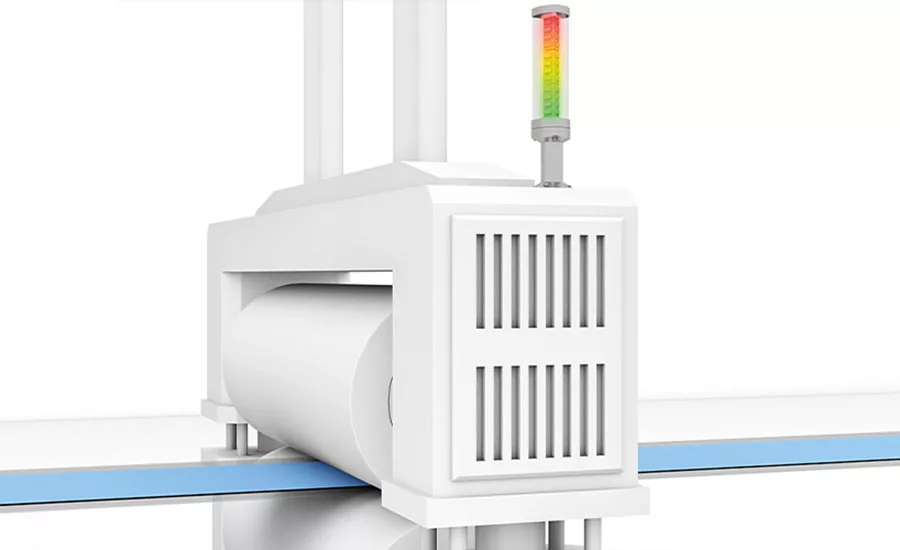
Photo courtesy of Balluff
Stack lights, also known as signal towers, are commonly in use in industrial settings to visually convey machinery or processes status. These lights consist of a vertical stack of colored lights that are easily seen from a distance. The importance in industrial machinery lies in providing quick and clear visual indicators, improving workplace communication and safety.
Key functions advantages
Stack lights in industrial settings offer the following key advantages:
Status indication: Operators and workers often use stack lights to indicate the operational status of a machine or process. See below the different colors representing different conditions, allowing for quick assessments of situations. Operators and workers often use stack lights to indicate the operational status of a machine or process.
Warning and alert signals: Stack lights can be configured to emit specific colors, warning of potential issues or alerting personnel to take specific actions. For example, a flashing red light might indicate a critical fault or emergency.
Efficient communication: The use of colors in stack lights provides an efficient and intuitive means of communication. Even in noisy or busy industrial environments, workers can easily understand the status or conditions indicated by the lights.
Increased safety: By providing immediate visual feedback, stack lights contribute to a safer working environment. Operators can respond promptly to changes in machine status or emergency situations, reducing the risk of accidents.
Customization: You can customize stack lights to suit specific applications by configuring the sequence of colors, determining the meaning of each color, and designing the overall layout to match the needs of the facility.
Decoding stack light color codes
Specific color codes can vary between industries and applications, so it is essential to refer to the documentation provided by the equipment manufacturer or follow industry standards for consistent use. The following are some common color codes:
Green typically indicates that the machine or process is in normal operation or that a specific condition is met.
Yellow/amber is often a warning signal, indicating a cautionary state or a need for attention without immediate danger.
Red indicates a critical or emergency condition requiring immediate attention. It can signal a fault, shutdown, or other urgent issues.
Blue sometimes displays a maintenance or service in progress. It can also represent a specific machine status depending on the system configuration.
White conveys a particular status, such as a change in production mode, or it can have a custom meaning based on the application.
In summary, stack lights are essential in conveying machinery or process status in industrial settings. Their advantages include efficient communication, warning signals, increased safety, and customization for specific applications through color codes.
Click here for more information.
Looking for a reprint of this article?
From high-res PDFs to custom plaques, order your copy today!


