Whether you’re chopping vegetables for soup, pruning a tree in the back yard, or filleting a freshly caught fish during a camping trip, a sharp blade is vital for efficiency, quality and safety.
To automate an assembly task that requires two hands, engineers have two options: one robot equipped with a tool changer or two robots. Now, there may soon a third option. We have developed a single end-of-arm tool that can simultaneously hold a part, such as a dowel or a long screw, in place and install it at the same time.
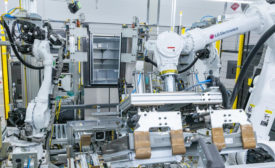
CHANGWON, South Korea—Automation has enabled LG Electronics to boost productivity, decrease defects and increase safety at its appliance assembly plant here.
The iconic Fiat 500 is a legendary automobile. In Italy, the cinquecento is considered to be the "people’s car." Since 1957, more than 6 million units have been mass-produced. The subcompact vehicle is even part of the permanent collection of the Museum of Modern Art in New York City.
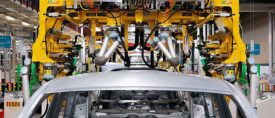
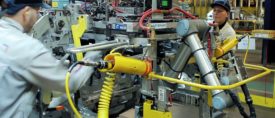
For decades, automakers have primarily used robots for welding and painting. Final assembly lines were considered too complex and too unsafe for automation. However, that is changing.
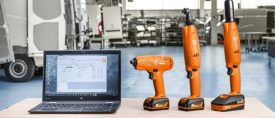
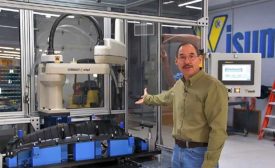
An automatic screw feeder can greatly increase the efficiency of a manual screwdriving operation. However, to reach the next level of productivity, assemblers should consider a robot. Screwdriving is a great application for Cartesian, SCARA, six-axis robots and collaborative robots. Now, several suppliers have introduced robots for installing large screws and bolts. Here’s a look at some of the latest developments.
Every motorist uses rearview mirrors whenever they get behind the wheel. In fact, most people look at them every few seconds as they drive. However, few ever give those ubiquitous devices much thought.