
Several big hurdles need to be overcome before there will be more widespread use of carbon-fiber composites in the auto industry. Major issues include material cost, high-volume processing, repeatable quality and overall cost effectiveness.
Carbon-fiber composites offer numerous benefits to automotive manufacturers, such as weight reduction. However, they pose a wide variety of joining challenges to engineers, who must choose between adhesive bonding or mechanical fastening. Each assembly process has many pros and cons.
Carbon-fiber composites offer numerous benefits to automotive manufacturers, such as weight reduction. However, they pose a wide variety of joining challenges to engineers, who must choose between mechanical fastening or adhesive bonding. Each assembly process has many pros and cons that must be evaluated.
Traditionally, it has been difficult to manufacture large quantities of carbon-fiber composites. That drawback has hindered widescale use of the lightweight material in the mainstream auto industry. However, engineers in Germany have developed a new process that makes it possible to use injection-molding technology.
A European consortium called ACOMPLICE (Affordable Composites for Lightweight Car Structures) recently embarked on a two-year program to develop low-cost materials for mainstream automotive applications.
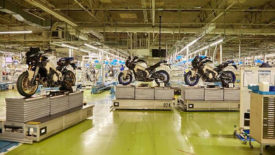
Color affects mood and perception. It’s amazing how a slight change in color can alter the look and feel of a room. I found this out first-hand recently after doing a little painting at home. Whenever I step into an assembly plant, I always try to take a quick look at the color of its floor, walls and equipment. Usually, it’s nothing to get too excited about.
Parts bins have been synonymous with assembly lines ever since the mass-production process was pioneered by Ford Motor Co. engineers 100 years ago.
Batteries are an environmentally friendly form of energy with fewer pollution and disposal issues than other green technologies.
Compliant mechanisms are jointless, elastic structures that reduce costs and simplify product designs. These single-piece flexible structures elastically deform without joints to produce a desired functionality.
A fully automatic stripping and crimping system might be the “glamour” technology of wire harness assembly shops. However, there’s still plenty of work for handheld electric, pneumatic and manually powered crimping tools.
John Sprovieri was featured on Manufacturing Revival Radio, speaking about best practices and techniques, emerging trends in manufacturing, and the impact that the new Baxter Robot will have on manufacturers, as well as the capital spending outlook for 2013 and 2014.
The 2013 May Assembly includes a cover story about considerations for selecting vision systems and articles about leak testing, optimizing parts bin layout, and what's new with assembly presses. Check it out today!
This text introduces students to a solid background in the basic principles and practices of welding.
With access to over one million professionals and more than 60 industry-specific publications,Clear Seas Research offers relevant insights from those who know your industry best. Let us customize a market research solution that exceeds your marketing goals.