Station-to-Station: High-Speed Dispensers Keep Pace With Assembly
Machine builders have many options for integrating dispensing operations without creating a bottleneck.
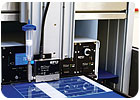 If machine builders had their druthers, they would avoid integrating dispensing operations into high-speed automated assembly systems. Compared with other assembly processes, such as crimping, pressing or even resistance welding, dispensing is slow, unpredictable and maintenance-intensive.
Like it or not, however, machine builders are often required to include dispensing equipment in assembly systems, and not just for adhesives, either. Integrators have been asked to dispense all sorts of fluids, including primers, sealants, inks, paint, oil, grease, solder paste, polymers, solvents, reagents and pharmaceuticals. One integrator had to dispense small volumes of mercury-10 to 30 nanoliters-in a system for assembling mercury vapor lamps.
Fortunately, machine builders have several options for integrating dispensing operations without creating a bottleneck. One approach is simply to take dispensing and curing operations off-line, so they can run at their own pace. For example, a sensor could be fully assembled on a synchronous line, then transferred to an asynchronous line for a dose of potting compound and some time under a curing lamp. Another approach is to group assemblies together so multiple valves can apply adhesive to multiple assemblies simultaneously.
One more option is to integrate high-speed dispensing equipment that can keep pace with other operations on the line. A good example is the SureShot 3000 metering pump from Hernon Manufacturing Inc. (Sanford, FL). The pump’s parts are made from stainless steel coated with titanium nitrate. This keeps anaerobic adhesive from curing inside the pump. In addition, a low-pressure isolation fluid keeps adhesive from migrating past the piston and into the pump’s working parts, says Tom Bray, application design engineer for Hernon.
The pump uses an offset drive to create simultaneous rotary and linear motion of the piston. Each 360-degree rotation of the motor results in an intake and discharge cycle. The stroke length of the piston-how much fluid is dispensed-is mechanically adjusted. The rate the piston travels is electronically adjusted through the motor speed.
In the suction stroke, the piston is pulled back and the piston flat opens to the inlet port. Suction is created and adhesive fills the pump chamber. When the piston reaches the highest point in the reciprocation cycle, the volume of the pump chamber is at maximum capacity.
As the piston continues to rotate, the inlet port is sealed and the outlet port opens up. The piston is forced down, the piston flat opens to the outlet port, and the adhesive is discharged. As the piston completes its rotation, the outlet port is sealed and the inlet port opens to start another suction stroke. Only one port is open at any time; the inlet and outlet ports are never connected.
The pump was originally developed for a high-speed assembly system for producing machine gun ammunition. The cartridges sit in fixtures arrayed radially along the perimeter of a rotary indexing table, with the tips of the projectiles pointing outward. The pump is positioned above the table. As the table turns, the pump dispenses a drop of anaerobic adhesive onto the seam between the bullet and the cartridge case. The adhesive flows into the joint by capillary action and cures, sealing the cartridge from the elements. The system assembles cartridges at a rate of 600 parts per minute.
For ultra high-speed dispensing of very small amounts, EFD Inc. (East Providence, RI) has introduced the PicoDot jet dispensing system. This noncontact, piezoelectric system dispenses adhesives and other fluids at a maximum rate of 150 dots per second. It can apply dots or lines, or it can cover areas by dispensing an array of droplets with a shot size as small as 20 nanoliters and a maximum flow rate of 300 grams per minute.
The device accommodates fluid viscosities ranging from 50 to 500,000 centipoise. It is equipped with an integrated heater to keep the fluid at a constant viscosity.
The PicoDot jet dispensing system can output adhesive at a maximum rate of 150 dots per second. Photo courtesy EFD Inc.
Like it or not, however, machine builders are often required to include dispensing equipment in assembly systems, and not just for adhesives, either. Integrators have been asked to dispense all sorts of fluids, including primers, sealants, inks, paint, oil, grease, solder paste, polymers, solvents, reagents and pharmaceuticals. One integrator had to dispense small volumes of mercury-10 to 30 nanoliters-in a system for assembling mercury vapor lamps.
Fortunately, machine builders have several options for integrating dispensing operations without creating a bottleneck. One approach is simply to take dispensing and curing operations off-line, so they can run at their own pace. For example, a sensor could be fully assembled on a synchronous line, then transferred to an asynchronous line for a dose of potting compound and some time under a curing lamp. Another approach is to group assemblies together so multiple valves can apply adhesive to multiple assemblies simultaneously.
One more option is to integrate high-speed dispensing equipment that can keep pace with other operations on the line. A good example is the SureShot 3000 metering pump from Hernon Manufacturing Inc. (Sanford, FL). The pump’s parts are made from stainless steel coated with titanium nitrate. This keeps anaerobic adhesive from curing inside the pump. In addition, a low-pressure isolation fluid keeps adhesive from migrating past the piston and into the pump’s working parts, says Tom Bray, application design engineer for Hernon.
The pump uses an offset drive to create simultaneous rotary and linear motion of the piston. Each 360-degree rotation of the motor results in an intake and discharge cycle. The stroke length of the piston-how much fluid is dispensed-is mechanically adjusted. The rate the piston travels is electronically adjusted through the motor speed.
In the suction stroke, the piston is pulled back and the piston flat opens to the inlet port. Suction is created and adhesive fills the pump chamber. When the piston reaches the highest point in the reciprocation cycle, the volume of the pump chamber is at maximum capacity.
As the piston continues to rotate, the inlet port is sealed and the outlet port opens up. The piston is forced down, the piston flat opens to the outlet port, and the adhesive is discharged. As the piston completes its rotation, the outlet port is sealed and the inlet port opens to start another suction stroke. Only one port is open at any time; the inlet and outlet ports are never connected.
The pump was originally developed for a high-speed assembly system for producing machine gun ammunition. The cartridges sit in fixtures arrayed radially along the perimeter of a rotary indexing table, with the tips of the projectiles pointing outward. The pump is positioned above the table. As the table turns, the pump dispenses a drop of anaerobic adhesive onto the seam between the bullet and the cartridge case. The adhesive flows into the joint by capillary action and cures, sealing the cartridge from the elements. The system assembles cartridges at a rate of 600 parts per minute.
For ultra high-speed dispensing of very small amounts, EFD Inc. (East Providence, RI) has introduced the PicoDot jet dispensing system. This noncontact, piezoelectric system dispenses adhesives and other fluids at a maximum rate of 150 dots per second. It can apply dots or lines, or it can cover areas by dispensing an array of droplets with a shot size as small as 20 nanoliters and a maximum flow rate of 300 grams per minute.
The device accommodates fluid viscosities ranging from 50 to 500,000 centipoise. It is equipped with an integrated heater to keep the fluid at a constant viscosity.
Looking for a reprint of this article?
From high-res PDFs to custom plaques, order your copy today!