
LEAN Manufacturing Products designs and manufactures durable visual management, 5S, and lean workplace organization solutions that help facilities improve efficiency, safety, and productivity.


Eliminating Waste on the Shop Floor: Applying Lean Principles to Improve Manufacturing Efficiency
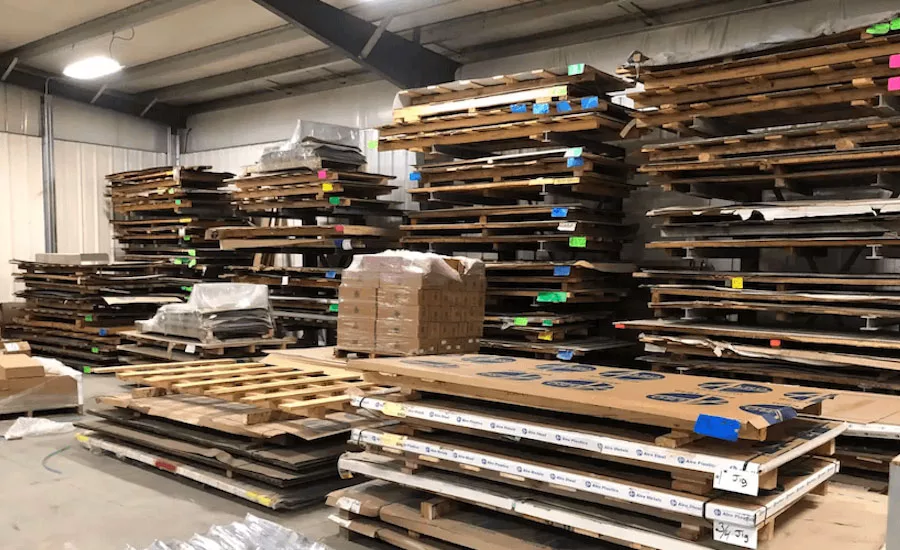
Walk through almost any manufacturing facility and you will see clear efforts to improve productivity. Workstations are arranged to support flow. Visual boards track production. Storage areas are labeled. Material handling routes are defined. Despite these efforts, many operations still struggle with inefficiencies that quietly erode performance.
In many cases, the challenge is not a lack of effort — it is the presence of waste embedded within everyday processes.
The lean manufacturing methodology focuses on identifying and eliminating activities that consume time, motion, materials, or resources without adding value to the customer. These non‑value‑added activities are commonly categorized as the seven wastes: transportation, inventory, motion, waiting, overproduction, overprocessing, and defects.
When these wastes accumulate across a facility, they slow production, increase costs, and make work more difficult for operators. When organizations systematically reduce them, they often unlock significant improvements in productivity, safety, and consistency.
For manufacturers seeking to improve operational performance, understanding how waste appears on the shop floor — and how to remove it — is often the first step toward a more efficient production environment.
Recognizing the Seven Wastes in Daily Operations
Lean practitioners often begin improvement efforts by observing work directly on the shop floor. The goal is to understand where time and effort are being spent and whether those activities truly add value.
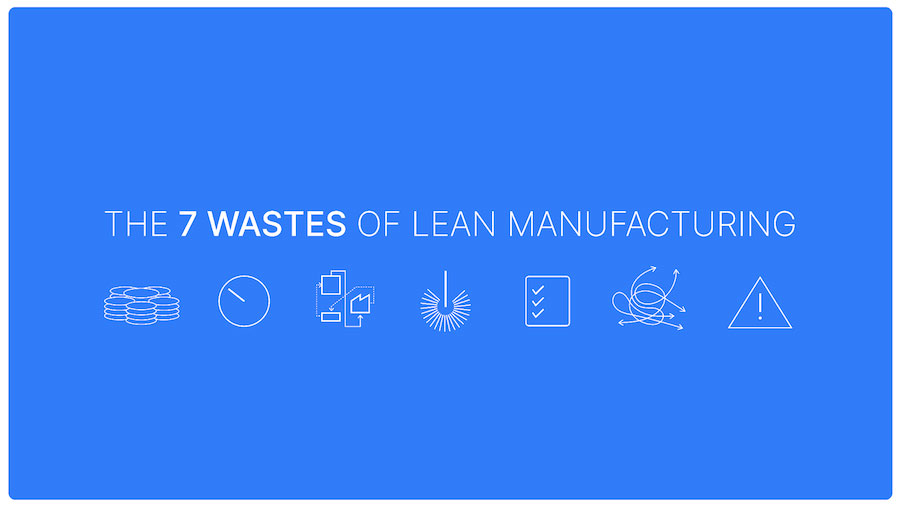
The 7 Wastes of Lean – Inventory, Waiting, Transportation, Overproduction, Overprocessing, Motion, & Defects
Graphic courtesy of LEAN Manufacturing Products.
The seven wastes provide a useful lens for evaluating production systems.
- Inventory Waste - appears when excess raw materials, work‑in‑process, or finished goods accumulate beyond what is needed to support production flow. While inventory can buffer disruptions, too much of it ties up capital and hides underlying process problems.
- Waiting Waste - occurs whenever people or machines are idle due to delays in materials, information, approvals, or upstream processes. Even short interruptions can compound over the course of a production day.
- Transportation Waste- occurs when materials, tools, or products are moved more often than necessary. Long travel distances between workstations, poorly organized storage areas, or inefficient material delivery routes can all increase transportation waste.
- Overproduction Waste - happens when items are produced earlier or in greater quantities than needed. This waste often leads directly to excess inventory and increased handling.
- Overprocessing Waste - results from performing more work than required to meet specifications. Examples can include redundant inspections, excessive packaging steps, or overly complex documentation processes.
- Motion Waste - refers to unnecessary physical movement by operators. Searching for tools, bending to reach parts, walking to retrieve materials, or repositioning equipment repeatedly throughout a shift can all reduce productive time.
- Defects Waste - represents products or components that must be reworked or scrapped. In addition to material loss, defects consume time, labor, and capacity that could otherwise be used for productive output.
Identifying these wastes is not about assigning blame. Instead, it helps teams understand where process design can be improved.
Designing Work Environments That Reduce Waste
One of the most effective ways to address waste is by shaping the physical work environment to support efficient movement, clear information flow, and consistent processes.
Lean workplaces often emphasize point‑of‑use organization. Tools, materials, and instructions are located where work is performed rather than stored remotely. This reduces motion and waiting while helping operators maintain focus on value‑adding tasks.

Material storage placed next to point of use
Photo courtesy of LEAN Manufacturing Products.
Workstation layout also plays a major role in reducing waste. When components are arranged in logical sequences that follow the production process, transportation and motion can decrease significantly. Clear storage locations, labels, and defined material flow paths help maintain this organization over time.
These approaches allow teams to spend less time searching, walking, or handling materials unnecessarily and more time performing productive work.
Visualizing Processes to Spot Issues Quickly
Lean environments rely heavily on visual systems to make waste and process disruptions easier to detect. When information about production status, material levels, or equipment conditions is clearly visible, teams can respond to issues quickly.
Visual signals such as kanban cards, floor markings, production boards, and shadow boards help standardize communication across shifts and departments. These systems allow operators and supervisors to quickly identify when something is out of place, delayed, or incomplete.
The goal is not simply to make the workplace look organized. Effective visual systems reveal abnormal conditions immediately so they can be corrected before they grow into larger problems.
For example, a clearly marked storage location makes missing inventory visible at a glance. A visual production board can highlight when output falls behind schedule. A labeled tool board quickly reveals when equipment has not been returned after use.

Organized material storage with labeling system
Photo courtesy of LEAN Manufacturing Products.
By making problems easier to see, visual systems help organizations address root causes rather than repeatedly reacting to symptoms.
Building a Foundation with 5S Workplace Organization
Many manufacturers rely on 5S as a foundation for waste reduction. The five steps — Sort, Set in Order, Shine, Standardize, and Sustain — focus on organizing the workplace so that tools, materials, and information are consistently available where they are needed.
- Sorting removes unnecessary items that contribute to clutter and confusion.
- Setting items in order ensures that everything has a clearly defined location.
- Shining emphasizes cleaning and inspection so that problems such as leaks, damage, or wear can be identified early.
- Standardizing establishes consistent methods for maintaining organization across shifts and departments.
- Sustaining reinforces these practices through regular audits and continuous improvement activities.
When applied effectively, 5S reduces motion waste, shortens search time, improves safety, and helps teams maintain process discipline.
Continuous Improvement Through Small, Targeted Changes
Lean improvement rarely comes from a single large initiative.
Instead, progress typically occurs through many small adjustments that collectively remove friction from the production process.
Teams often begin by identifying locations where operators frequently encounter delays or unnecessary movement. Observing how materials flow through the process can reveal where transportation or waiting occurs. Reviewing defect data can highlight where quality issues are disrupting production.

Color coded cart system utilized as production process indicators
Photo courtesy of LEAN Manufacturing Products.
Once waste is identified, improvements can be tested and refined. A workstation layout may be adjusted to reduce motion. A material delivery route may be modified to reduce waiting. A visual signal may be introduced to prevent overproduction.
Over time, these incremental improvements build more stable and predictable production systems.
Sustaining Waste Reduction on the Shop Floor
Eliminating waste is not a one‑time project. As products, equipment, and staffing levels change, processes must evolve as well.
Sustaining improvement requires regular observation of work, feedback from operators, and periodic evaluation of workplace organization and visual systems. When teams treat these elements as active parts of the production system rather than static installations, they are more likely to maintain their effectiveness.
Organizations that consistently review their processes often discover new opportunities to reduce motion, shorten travel distances, simplify workflows, and improve material flow.
A Practical Path Toward Leaner Operations
Manufacturers looking to strengthen shop floor efficiency often begin with a simple question: where does waste appear most frequently in our daily operations?
The answer may emerge in places where employees spend time searching for tools, where materials travel long distances between processes, where work‑in‑process inventory accumulates, or where production slows while waiting for the next step.
Addressing these friction points does not always require complex technology or large investments. Many improvements come from better organization, clearer visual communication, and thoughtful process design.
As waste is gradually removed, processes tend to become easier to understand, easier to manage, and more predictable for the people performing the work.
Across the manufacturing industry, these lean principles continue to provide a practical framework for improving productivity while creating safer and more organized workplaces.
Looking for a reprint of this article?
From high-res PDFs to custom plaques, order your copy today!


