We Fed It: Sealed Drive Feeds Primers Safely
An ammunition manufacturer needed to feed primers, the cylindrical brass parts used to light the propellant in projectiles. Automation Devices Inc. hit the target.
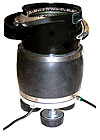
An ammunition manufacturer needed to feed primers, the cylindrical brass parts used to light the propellant in projectiles. Automation Devices Inc. (ADI) filled that need with a vibratory feeder designed for hazardous locations.
Specifically, ADI provided an air-purged vibratory drive unit coupled with a 6-inch stainless steel feeder bowl. The interior of the drive unit is sealed and connected to a source of compressed air. This positive pressure keeps potentially explosive residue from entering the inner workings of the drive. A pressure differential switch ensures that if the drive unit loses positive air flow, all power is disconnected to the feeder.
The base of the bowl is round to make it easier to enshroud the drive unit.
The primers climb the interior track in any orientation. The parts are singulated and oriented as they exit the bowl to a “high-positive” outside track. The outside track begins at an angle of approximately 60 degrees, but is nearly level by the time it reaches the feed point of the assembly machine. The primers enter the outside track on their sides. As the track winds around the bowl, it turns so the primers are vertically oriented for assembly. The system feeds the primers at a rate of 150 parts per minute.
Although this bowl was made from stainless steel, a polyurethane coating could have been applied to provide high feed rates with low-amplitude vibrations. And, while this bowl fed parts in a single lane, multiple feeding lanes are possible.
For more information on vibratory feeder bowls, call Automation Devices at 814-474-5561 or visit www.autodev.com.
An ammunition manufacturer needed to feed primers, the cylindrical brass parts used to light the propellant in projectiles. Automation Devices Inc. (ADI) filled that need with a vibratory feeder designed for hazardous locations.
Specifically, ADI provided an air-purged vibratory drive unit coupled with a 6-inch stainless steel feeder bowl. The interior of the drive unit is sealed and connected to a source of compressed air. This positive pressure keeps potentially explosive residue from entering the inner workings of the drive. A pressure differential switch ensures that if the drive unit loses positive air flow, all power is disconnected to the feeder.
The base of the bowl is round to make it easier to enshroud the drive unit.
The primers climb the interior track in any orientation. The parts are singulated and oriented as they exit the bowl to a “high-positive” outside track. The outside track begins at an angle of approximately 60 degrees, but is nearly level by the time it reaches the feed point of the assembly machine. The primers enter the outside track on their sides. As the track winds around the bowl, it turns so the primers are vertically oriented for assembly. The system feeds the primers at a rate of 150 parts per minute.
Although this bowl was made from stainless steel, a polyurethane coating could have been applied to provide high feed rates with low-amplitude vibrations. And, while this bowl fed parts in a single lane, multiple feeding lanes are possible.
For more information on vibratory feeder bowls, call Automation Devices at 814-474-5561 or visit www.autodev.com.
Looking for a reprint of this article?
From high-res PDFs to custom plaques, order your copy today!