Web Exclusive: More Techniques to Reduce Robot Cycle Times
Systems integrator Applied Manufacturing Technologies
Inc. offers assemblers 10 techniques they can use to reduce manufacturing cycle
times - a continuous challenge. AMT addresses factors such as sequencing of robots, open clamp signals
and proper servo gun operation.
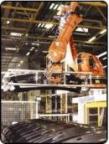
Lowering manufacturing cycle times is a continuous challenge. Reducing machine cycle time helps to increase production throughput and profits. Cycle time depends on many factors including conveyors, process times, vision, clamps, tooling, operators, and robots. This list presents 10 techniques to reduce robot cycle time.
[1] Cells with multiple robots must be sequenced properly to optimize cycle time. Restructuring interference zones reduce the amount of time the robots need to wait for each other. Robot A starts the cycle inside the interference zone while Robot B starts outside the interference zone. Then Robot A moves clear of the zone and Robot B finishes inside the zone. When sequenced correctly both robots minimize interference zone wait times. Multiple overlapping zones can also be used to reduce robot wait times even more.
[2] Rounding corners during the robot’s movement will lower cycle time. Rounding corners means that while moving the robot does not reach the exact programmed point, but starts to move to the next point a certain distance before the programmed point. This method reduces the robot deceleration between points and creates a rounded path. By reducing the deceleration times, the robot’s overall path will be faster and cycle time lower. Use higher cornering values when the robot is moving between fixtures and use lower values when the robot is moving within the fixture. With ABB and Nachi robots, the amount of rounding, in millimeters, can be adjusted for each accuracy level.
[3] Use the correct speed for the distance between points. Every time the robot moves from point to point, the robot accelerates to the programmed speed and then decelerates when the robot approaches the end point. If the programmed speed is too high, the robot will accelerate, but not reach the programmed speed, and will then rapidly decelerate. The robot path is more efficient if the robot can accelerate, move along the path at the programmed speed, and then decelerate smoothly. A Motoman robot’s acceleration and deceleration for each move can be adjusted in the detail edit screen. By adjusted acceleration and deceleration values, individual moves can be made more efficient.
[4] On most robot controllers, Joint motions work something like this:
a. The robot’s motion planning software examines the joint angles at the start and end of the move, and then determines the angle each motor will need to rotate.
b. The motion planner software uses each motor’s acceleration and maximum speed to determine which motor will take the longest time to perform its move.
c. The motion planner software scales back the speed of all other motors so all axes finish the move simultaneously.
Based on this, spreading large joint angle changes over multiple moves increases path speed by improving the efficiency of the other axes. For example, spreading a large wrist movement over several moves is more efficient than if the whole wrist movement was completed in one move.
[5] Use the signals ‘open clamps early’ and ‘request tool reposition’ correctly to reduce the process time. Requesting a clamp reposition while the robot is moving and before it is required allows the clamp to open/close before the robot reaches it. This reduces the time the robot needs to stop and wait for the clamp reposition. ‘Open clamps early’ signal allows the tooling clamps to open as soon as the robot is clear of the opening clamps. This will allow the clamps to open while the robot is moving instead of waiting until the robot reaches home.
[6] Turning on outputs while the robot is moving reduces the time that it needs to pause. If the robot position is not critical for the timing of an output, turn on the output after a continuous move. The output will turn on during the cornering to get to the next point. If the output is turned on after a fine move, the robot will stop and then turn on the output.
[7] Material handling applications have several different timers used to control clamps opening and closing, and part present checking. Equipment delay timers can be reduced or eliminated if clamp opened and clamp closed switches are used to verify clamp operation. For special applications, custom subroutines can be created to improve the speed of material handling operations.
[8] Different Spot Welding timers can be adjusted to improve cycle time. Increase gun close anticipation time to close the gun before the robot reaches the weld point instead of letting the robot stop at the point and then closing the gun. Reduce the gun open delay to enable the robot to begin the next move before the gun is fully open. By adjusting these timers, the gun can be opening or closing while the robot is in motion. When using a KUKA KRC, the settling times for fine points can be changed using system variables. With lower settling times, the robot will move faster between fine points.
[9] Several techniques can improve servo gun operation. While moving between points, keep the gun opening to a minimum to clear the part being welded. Keeping the servo gun opening almost closed will reduce the amount of time used to close the gun at each weld spot. Use continuous moves for weld spots to reduce motion pauses during the weld motions. If the weld spots are fine points, the robot will hesitate at the approach and departure points. Remove squeeze times from the weld controller. For a pneumatic gun, squeeze time is added to ensure the weld pressure is met. The servo gun does not need the squeeze time delay and will close until correct pressure is achieved.
[10] Set the robot payload properly to improve overall robot movement and efficiency. Ensure the payload settings are correct including mass, center of gravity, moments of inertia, and proper armload. The proper payload will allow the robot to accelerate and decelerate more precisely, improving cycle time and accuracy.
Source: Applied Manufacturing Technologies, Inc., a systems integrator.
Source: http://robotsimulation.com
Lowering manufacturing cycle times is a continuous challenge. Reducing machine cycle time helps to increase production throughput and profits. Cycle time depends on many factors including conveyors, process times, vision, clamps, tooling, operators, and robots. This list presents 10 techniques to reduce robot cycle time.
[1] Cells with multiple robots must be sequenced properly to optimize cycle time. Restructuring interference zones reduce the amount of time the robots need to wait for each other. Robot A starts the cycle inside the interference zone while Robot B starts outside the interference zone. Then Robot A moves clear of the zone and Robot B finishes inside the zone. When sequenced correctly both robots minimize interference zone wait times. Multiple overlapping zones can also be used to reduce robot wait times even more.
[2] Rounding corners during the robot’s movement will lower cycle time. Rounding corners means that while moving the robot does not reach the exact programmed point, but starts to move to the next point a certain distance before the programmed point. This method reduces the robot deceleration between points and creates a rounded path. By reducing the deceleration times, the robot’s overall path will be faster and cycle time lower. Use higher cornering values when the robot is moving between fixtures and use lower values when the robot is moving within the fixture. With ABB and Nachi robots, the amount of rounding, in millimeters, can be adjusted for each accuracy level.
[3] Use the correct speed for the distance between points. Every time the robot moves from point to point, the robot accelerates to the programmed speed and then decelerates when the robot approaches the end point. If the programmed speed is too high, the robot will accelerate, but not reach the programmed speed, and will then rapidly decelerate. The robot path is more efficient if the robot can accelerate, move along the path at the programmed speed, and then decelerate smoothly. A Motoman robot’s acceleration and deceleration for each move can be adjusted in the detail edit screen. By adjusted acceleration and deceleration values, individual moves can be made more efficient.
[4] On most robot controllers, Joint motions work something like this:
a. The robot’s motion planning software examines the joint angles at the start and end of the move, and then determines the angle each motor will need to rotate.
b. The motion planner software uses each motor’s acceleration and maximum speed to determine which motor will take the longest time to perform its move.
c. The motion planner software scales back the speed of all other motors so all axes finish the move simultaneously.
Based on this, spreading large joint angle changes over multiple moves increases path speed by improving the efficiency of the other axes. For example, spreading a large wrist movement over several moves is more efficient than if the whole wrist movement was completed in one move.
[5] Use the signals ‘open clamps early’ and ‘request tool reposition’ correctly to reduce the process time. Requesting a clamp reposition while the robot is moving and before it is required allows the clamp to open/close before the robot reaches it. This reduces the time the robot needs to stop and wait for the clamp reposition. ‘Open clamps early’ signal allows the tooling clamps to open as soon as the robot is clear of the opening clamps. This will allow the clamps to open while the robot is moving instead of waiting until the robot reaches home.
[6] Turning on outputs while the robot is moving reduces the time that it needs to pause. If the robot position is not critical for the timing of an output, turn on the output after a continuous move. The output will turn on during the cornering to get to the next point. If the output is turned on after a fine move, the robot will stop and then turn on the output.
[7] Material handling applications have several different timers used to control clamps opening and closing, and part present checking. Equipment delay timers can be reduced or eliminated if clamp opened and clamp closed switches are used to verify clamp operation. For special applications, custom subroutines can be created to improve the speed of material handling operations.
[8] Different Spot Welding timers can be adjusted to improve cycle time. Increase gun close anticipation time to close the gun before the robot reaches the weld point instead of letting the robot stop at the point and then closing the gun. Reduce the gun open delay to enable the robot to begin the next move before the gun is fully open. By adjusting these timers, the gun can be opening or closing while the robot is in motion. When using a KUKA KRC, the settling times for fine points can be changed using system variables. With lower settling times, the robot will move faster between fine points.
[9] Several techniques can improve servo gun operation. While moving between points, keep the gun opening to a minimum to clear the part being welded. Keeping the servo gun opening almost closed will reduce the amount of time used to close the gun at each weld spot. Use continuous moves for weld spots to reduce motion pauses during the weld motions. If the weld spots are fine points, the robot will hesitate at the approach and departure points. Remove squeeze times from the weld controller. For a pneumatic gun, squeeze time is added to ensure the weld pressure is met. The servo gun does not need the squeeze time delay and will close until correct pressure is achieved.
[10] Set the robot payload properly to improve overall robot movement and efficiency. Ensure the payload settings are correct including mass, center of gravity, moments of inertia, and proper armload. The proper payload will allow the robot to accelerate and decelerate more precisely, improving cycle time and accuracy.
Source: Applied Manufacturing Technologies, Inc., a systems integrator.
Looking for a reprint of this article?
From high-res PDFs to custom plaques, order your copy today!