Assembly Magazine logo
search
Ask ASSEMBLY AI
cart
facebook twitter linkedin youtube
  • Sign In
  • Create Account
  • Sign Out
  • My Account
Assembly Magazine logo
  • TRENDS
    • Ask ASSEMBLY AI
    • Trends
    • News
    • New Products
  • INDUSTRIES
    • Aerospace
    • Appliance
    • DFMA Assembly
    • Medical Devices
    • Green Manufacturing
    • Lean Manufacturing
    • Machinery Assembly
    • Electronics Assembly
    • Automotive
  • TECHNOLOGIES
    • Adhesives & Dispensing
    • Assembly Presses
    • Automated Assembly Systems
    • Manufacturing Management
    • Manufacturing Software
    • Motion Control
    • Screwdriving & Riveting
    • Robotics
    • Test & Inspection
    • Plastics & Metal Welding
    • Wire Processing
    • Workstations
  • AUTONOMOUS & ELECTRIC MOBILITY
    • AEM Magazine Archives
    • Autonomy
    • Electrification
    • Mobility Services
    • Assembly & Testing
    • AV/EM News
  • MEDIA
    • Ask ASSEMBLY AI
    • Podcasts
    • Assembly News Now
    • Assembly TV
    • Webinars
    • eBooks
  • EVENTS
    • Calendar
    • The ASSEMBLY Show
  • MORE
    • Exclusives >
      • Plant of the Year
      • Capital Spending
    • Buyers Guide >
      • Supplier Insights
    • Classifieds
    • Featured Products
    • Newsletters
    • Store
    • White Papers
    • Columns
    • Sponsor Insights
  • INFOCENTER
    • Assembly & Test Solutions
  • EMAGAZINE
    • eMagazine
    • Archive Issues
    • Advertise
    • Contact Us
    • Sign Up
Automotive Assembly

Ten Ways the Model T Changed the World

By Austin Weber
September 2, 2008

The Model T is the car that’s credited with "putting the world on wheels.” Henry Ford's iconic vehicle also is responsible for hundreds of innovations that jump-started the U.S. automotive industry. Here’s a brief look at 10 ways the iconic vehicle influenced business and social conditions:

1. King of the assembly line. The Model T brought mobility and prosperity on an undreamed of scale through manufacturing efficiencies at a price that anyone could afford. The moving assembly line created the mass-production process, which influenced the “machine age.” It also enabled Ford to steadily decrease the price of the Model T. In 1908, the first Model Ts sold for $825. By 1925, the vehicles sold for only $260.

2. Friend of the factory worker. The Model T was responsible for establishing a minimum wage and the eight-hour workday. The $5 a day minimum wage (created in early 1914 at Ford’s Highland Park, MI, factory) is often cited as having helped establish the middle-class. The factory work also gave jobs to people who usually could not find work, such as immigrants, women and minorities.

3. Personalized transport. Thousands of different Model T accessories and add-on products were created and marketed by numerous suppliers, such as Aermore Manufacturing Co. (Chicago), Peoria Accessory Co. (PACO, Peoria, IL) and Stewart-Warner Speedometer Corp. (Chicago). Because of this, the car spurred the aftermarket supplier industry, which is now a $38 billion industry.

4. A universal car. The Model T was the auto industry's first global car. By 1921, it accounted for almost 57 percent of the world's automobile production. The Model T was manufactured in several countries and was sold by dealers on six continents.

5. Standardized steering. Before the Model T, early American cars often had their steering wheel on the right-hand side of the dashboard. The Model T standardized the left-hand steering wheel.

6. Any color - as long as it's black. The myth that the Model T only came in black probably comes from the reality that almost 12 million of the 15 million vehicles built were black. But, in the early and late years of Model T production, the car was produced in many different colors, including blue, red, green and grey. Many of these hues were so dark, however, that they were hardly discernable from black, which is another reason why the myth lives on.

7. Flexibility. The Model T chassis was simple, strong and lightweight, with a unique three-point suspension that isolated the frame and powertrain from road shock that often caused many contemporary chassis designs to flex under heavy loads. By 1925, Ford was building its first factory-produced domestic pickup truck, the Ford Model T Runabout, with a pickup body. Ford also offered a heavier-duty, 1-ton-rated Model TT pickup.

Looking for quick answers on assembly and manufacturing topics? Try Ask ASM, our new smart AI search tool. Ask ASM →

8. Engine design. The Tin Lizzie's original engine offered flexibility and boasted 20 hp, with a top speed of 40 to 45 mph. The front-mounted, 2.9-liter, four-cylinder, flex-fuel engine was the first single-block motor with a removable cylinder head. It was the basis for most modern engines. The engine could be matched to one of nine T body styles, all built on the same chassis. The Touring, Roadster, Fordor, Coupe and Sedan were just some of the options available to consumers. The Model T established the concept of building multiple vehicle designs off the same platform.

9. Pop culture icon. Soon after the Model T was unveiled, it started appearing in movies and songs, and became part of modern language and culture. The vehicle was featured in 1920s-era black-and-white comedies and became the subject of hundreds of jokes and cartoons that captured the experience about life with the Model T, the personality of the car and its creator, Henry Ford. Hundreds of songs were created as the Model T became part of pop culture, later generating dozens of nicknames for the car. The most common, "Tin Lizzie," was the moniker that had several possible origins, ranging from the popularity of the female name “Lizzie" during that time period to a famous Model T race car named "Old Liz."

10. Car of the century. The Model T was the best-selling vehicle ever until 1972 when the Volkswagen bug surpassed it. During 19 years of production, more than 15 million Model T’s were sold. On May 26, 1927, a ceremony marked the formal end of Model T production. More than 70 years later, a panel of 126 automotive experts from 32 countries chose the Model T as the most influential car of the 20th century.

To learn more about the Model T, click here.

To learn more about the history of the moving assembly line, click here.
 

KEYWORDS: manufacturing history Model T

Share This Story

Looking for a reprint of this article?
From high-res PDFs to custom plaques, order your copy today!

Austinweber headshot
Austin has been senior editor for ASSEMBLY Magazine since September 1999. He has more than 21 years of b-to-b publishing experience and has written about a wide variety of manufacturing and engineering topics. Austin is a graduate of the University of Michigan.

Recommended Content

JOIN TODAY
To unlock your recommendations.

Already have an account? Sign In

  • Made in the U.S.A.

    Consumer Products Manufacturing: Made in the USA

    Supply chain lessons learned during the coronavirus...
    Automated Assembly Systems
    By: Austin Weber
  • Best Practices for Press-Fit Assembly

    Best Practices for Press-Fit Assembly

    In manufacturing, ironclad formulas for success are hard...
    Assembly Presses
    By: Jim Camillo
  • aem0523leader-tesla1.jpg

    Tesla Rethinks the Assembly Line

    Engineers at Tesla Inc. have developed a new process that...
    Automotive Assembly
    By: Austin Weber
Manage My Account
  • eMagazine Subscription
  • Assembly Newsletters
  • Online Registration
  • Subscription Customer Service
  • Manage My Preferences

More Videos

Sponsored Content

Sponsored Content is a special paid section where industry companies provide high quality, objective, non-commercial content around topics of interest to the ASSEMBLY audience. All Sponsored Content is supplied by the advertising company and any opinions expressed in this article are those of the author and not necessarily reflect the views of ASSEMBLY or its parent company, BNP Media. Interested in participating in our Sponsored Content section? Contact your local rep!

close
  • ultrasonic welding
    Sponsored bySonobond Ultrasonics

    Engineering Efficiency in High-Performance Assembly: How Ultrasonic Welding Enhances Throughput, Reliability and Quality

  • UV curing system
    Sponsored byDymax

    Why UV Intensity Alone Doesn’t Define Curing Performance

  • wooden pallets
    Sponsored byLEAN Manufacturing Products

    Eliminating Waste on the Shop Floor: Applying Lean Principles to Improve Manufacturing Efficiency

Popular Stories

ASSEMBLY News Now, episode-30: Volvo Redesigns EV Manufacturing

Volvo Redesigns EV Manufacturing

Boeing CEO Kelly Ortberg announces 1 billion investment

Boeing Plans $1 Billion Wichita Investment, Workforce Training Center

automated consumer goods assembly system

Best Practices for Cycle Time Optimization

Watch the latest episode of ANN now!

Events

July 24, 2025

From Shop Floor to CFO: How Manufacturers Are Closing the Loop Between Operations and Finance

On Demand Learn how manufacturers are bridging the gap between the shop floor and ERP systems to gain real-time visibility, streamline operations, and kick-start digital transformation—without waiting years.

Sponsored by:

PicoStratusGreen
July 30, 2025

Buffer Analysis and Design Fundamentals for Manufacturing Excellence

On Demand In this presentation, Dr. Herman Tang shares practical insights from his industry experience and research on buffer management in manufacturing operations.

View All Submit An Event

Poll

Difficult Assembly Processes

Which assembly process gives you the most difficulty?
View Results Poll Archive

Products

Manufacturing Cost Policy Deployment (MCPD) Profitability Scenarios: Systematic and Systemic Improvement of Manufacturing Costs

Manufacturing Cost Policy Deployment (MCPD) Profitability Scenarios: Systematic and Systemic Improvement of Manufacturing Costs

See More Products
Register for webinar - Modernizing Automotive Assembly: Why Upgrading Legacy MES is a Business Imperative

Related Articles

  • How the Model T Was Assembled

    See More
  • The Model T Turns 100

    See More

Related Products

See More Products
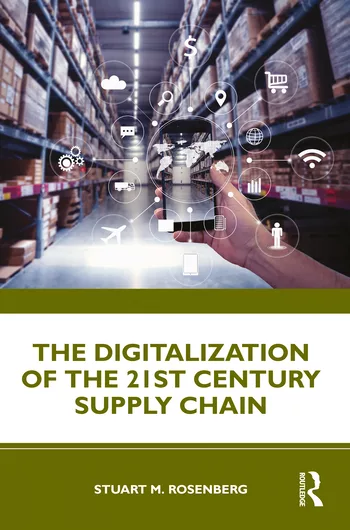
  • digitalization.jpg

    The Digitalization of the 21st Century Supply Chain

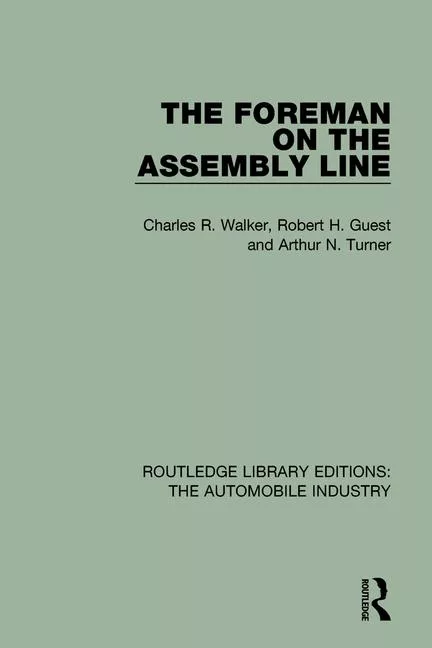
  • foreman.jpg

    The Foreman on the Assembly Line

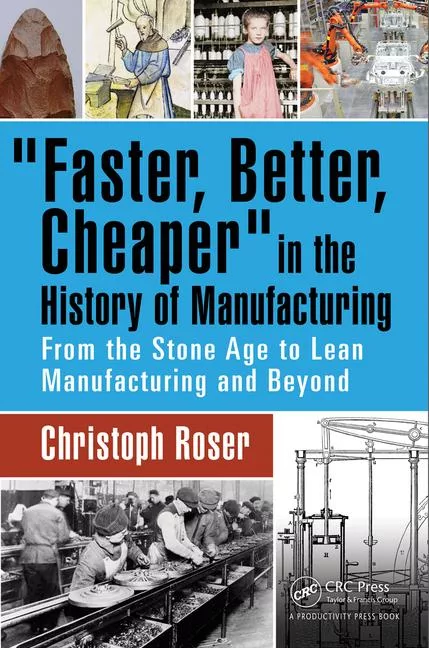
  • history.jpg

    Faster, Better, Cheaper in the History of Manufacturing: From the Stone Age to Lean Manufacturing and Beyond

See More Products
×

Never miss the latest news and trends driving the manufacturing industry

Stay in the know on the latest assembly trends.

JOIN TODAY!
  • RESOURCES
    • Advertise
    • Contact Us
    • Directories
    • Manufacturing Division
    • Store
    • Want More?
  • SIGN UP TODAY
    • Create Account
    • eMagazine
    • Newsletters
    • Customer Service
    • Manage Preferences
  • SERVICES
    • Marketing Services
    • Reprints
    • Market Research
    • List Rental
    • Survey/Respondent Access
  • STAY CONNECTED
    • LinkedIn
    • Facebook
    • Instagram
    • YouTube
    • X (Twitter)
  • PRIVACY
    • PRIVACY POLICY
    • TERMS & CONDITIONS
    • DO NOT SELL MY PERSONAL INFORMATION
    • PRIVACY REQUEST
    • ACCESSIBILITY

Copyright ©2026. All Rights Reserved BNP Media, Inc. and BNP Media II, LLC.

Design, CMS, Hosting & Web Development :: ePublishing