Assembly Magazine logo
search
Ask ASSEMBLY AI
cart
facebook twitter linkedin youtube
  • Sign In
  • Create Account
  • Sign Out
  • My Account
Assembly Magazine logo
  • TRENDS
    • Ask ASSEMBLY AI
    • Trends
    • News
    • New Products
  • INDUSTRIES
    • Aerospace
    • Appliance
    • DFMA Assembly
    • Medical Devices
    • Green Manufacturing
    • Lean Manufacturing
    • Machinery Assembly
    • Electronics Assembly
    • Automotive
  • TECHNOLOGIES
    • Adhesives & Dispensing
    • Assembly Presses
    • Automated Assembly Systems
    • Manufacturing Management
    • Manufacturing Software
    • Motion Control
    • Screwdriving & Riveting
    • Robotics
    • Test & Inspection
    • Plastics & Metal Welding
    • Wire Processing
    • Workstations
  • AUTONOMOUS & ELECTRIC MOBILITY
    • AEM Magazine Archives
    • Autonomy
    • Electrification
    • Mobility Services
    • Assembly & Testing
    • AV/EM News
  • MEDIA
    • Ask ASSEMBLY AI
    • Podcasts
    • Assembly News Now
    • Assembly TV
    • Webinars
    • eBooks
  • EVENTS
    • Calendar
    • The ASSEMBLY Show
  • MORE
    • Exclusives >
      • Plant of the Year
      • Capital Spending
    • Buyers Guide >
      • Supplier Insights
    • Classifieds
    • Featured Products
    • Newsletters
    • Store
    • White Papers
    • Columns
    • Sponsor Insights
  • INFOCENTER
    • Assembly & Test Solutions
  • EMAGAZINE
    • eMagazine
    • Archive Issues
    • Advertise
    • Contact Us
    • Sign Up
Columns

DTL: Plastic Solar Panels Harness the Sun's Rays

February 7, 2006

As oil and gas prices continue to skyrocket, interest in renewable energy is starting to take center stage. One of the most abundant sources is solar power. However, solar panels have traditionally been expensive to mass-produce. Researchers at the University of California at Los Angeles (UCLA) have developed a more affordable way to harness the sun's rays by using solar cells made out of everyday plastics.

A team of engineers at the Henry Samueli School of Engineering and Applied Science led by professor Yang Yang recently unveiled an innovative polymer that can store solar energy. They believe it can be mass-produced at only 10 percent to 20 percent of the current cost of traditional cells, which would help make the technology more economically viable.

The price for silicon solar modules typically is around three to four times more expensive than fossil fuel. While prices have dropped since the early 1980s, the module itself still represents nearly half of the total installed cost of a traditional solar energy system.

Currently, nearly 90 percent of solar cells in the world are made from a refined, highly purified form of silicon-the same material used in manufacturing integrated circuits and computer chips. High demand from the computer industry has sharply reduced the availability of quality silicon, resulting in prohibitively high costs that rule out solar energy as an option for the average consumer.

The UCLA solar cell features a single layer of plastic sandwiched between two conductive electrodes. Yang claims that it is "easy to mass-produce and costs much less to make-roughly one-third of the cost of traditional silicon solar cell technology." The polymers used in its construction are commercially available in such large quantities that Yang hopes cost-conscious consumers worldwide will quickly adopt the technology.

"Solar energy is a clean alternative energy source," explains Yang. "It's clear, given the current energy crisis, that we need to embrace new sources of renewable energy that are good for our planet. I believe very strongly in using technology to provide affordable options that all consumers can put into practice."

Independent tests on the new solar cell already have received high marks. The National Renewable Energy Laboratory (NREL, Golden, CO) has helped the UCLA team ensure the accuracy of their findings. The efficiency of the cell is the percentage of energy the solar cell gathers from the total amount of energy, or sunshine, that actually hits it.

Looking for quick answers on assembly and manufacturing topics? Try Ask ASM, our new smart AI search tool. Ask ASM →

According to Yang, the 4.4 percent efficiency rating is the highest number yet published for plastic solar cells. "As in any research, achieving precise efficiency benchmarks is a critical step," he points out. "Particularly in this kind of research, where reported efficiency numbers can vary so widely, we're grateful to the NREL for assisting us in confirming the accuracy of our work."

Given the strides the team already has made with the technology, Yang believes they will be able to double the efficiency percentage in a short period of time. The target for polymer solar cell performance is ultimately about 15 percent to 20 percent efficiency, with a 15 to 20 year lifespan. Large-sized silicon modules with the same lifespan typically have a 14 percent to 18 percent efficiency rating.

However, the plastic solar cell is still a few years away from being commercially available. "We hope that, ultimately, solar energy can be extensively used in the commercial sector, as well as the private sector," says Yang.

"Imagine solar cells installed in cars to absorb solar energy to replace the traditional use of diesel and gas," adds Yang. "People will vie to park their cars on the top level of parking garages so their cars can be charged under sunlight. Using the same principle, cell phones can also be charged by solar energy. There are a wide variety of applications."

Share This Story

Looking for a reprint of this article?
From high-res PDFs to custom plaques, order your copy today!

Recommended Content

JOIN TODAY
To unlock your recommendations.

Already have an account? Sign In

  • Made in the U.S.A.

    Consumer Products Manufacturing: Made in the USA

    Supply chain lessons learned during the coronavirus...
    Automated Assembly Systems
    By: Austin Weber
  • Best Practices for Press-Fit Assembly

    Best Practices for Press-Fit Assembly

    In manufacturing, ironclad formulas for success are hard...
    Assembly Presses
    By: Jim Camillo
  • aem0523leader-tesla1.jpg

    Tesla Rethinks the Assembly Line

    Engineers at Tesla Inc. have developed a new process that...
    Automotive Assembly
    By: Austin Weber
Manage My Account
  • eMagazine Subscription
  • Assembly Newsletters
  • Online Registration
  • Subscription Customer Service
  • Manage My Preferences

More Videos

Sponsored Content

Sponsored Content is a special paid section where industry companies provide high quality, objective, non-commercial content around topics of interest to the ASSEMBLY audience. All Sponsored Content is supplied by the advertising company and any opinions expressed in this article are those of the author and not necessarily reflect the views of ASSEMBLY or its parent company, BNP Media. Interested in participating in our Sponsored Content section? Contact your local rep!

close
  • ultrasonic welding
    Sponsored bySonobond Ultrasonics

    Engineering Efficiency in High-Performance Assembly: How Ultrasonic Welding Enhances Throughput, Reliability and Quality

  • UV curing system
    Sponsored byDymax

    Why UV Intensity Alone Doesn’t Define Curing Performance

  • wooden pallets
    Sponsored byLEAN Manufacturing Products

    Eliminating Waste on the Shop Floor: Applying Lean Principles to Improve Manufacturing Efficiency

Popular Stories

ASSEMBLY News Now, episode-30: Volvo Redesigns EV Manufacturing

Volvo Redesigns EV Manufacturing

Boeing CEO Kelly Ortberg announces 1 billion investment

Boeing Plans $1 Billion Wichita Investment, Workforce Training Center

automated consumer goods assembly system

Best Practices for Cycle Time Optimization

Watch the latest episode of ANN now!

Events

July 24, 2025

From Shop Floor to CFO: How Manufacturers Are Closing the Loop Between Operations and Finance

On Demand Learn how manufacturers are bridging the gap between the shop floor and ERP systems to gain real-time visibility, streamline operations, and kick-start digital transformation—without waiting years.

Sponsored by:

PicoStratusGreen
July 30, 2025

Buffer Analysis and Design Fundamentals for Manufacturing Excellence

On Demand In this presentation, Dr. Herman Tang shares practical insights from his industry experience and research on buffer management in manufacturing operations.

View All Submit An Event

Poll

Difficult Assembly Processes

Which assembly process gives you the most difficulty?
View Results Poll Archive

Products

Manufacturing Cost Policy Deployment (MCPD) Profitability Scenarios: Systematic and Systemic Improvement of Manufacturing Costs

Manufacturing Cost Policy Deployment (MCPD) Profitability Scenarios: Systematic and Systemic Improvement of Manufacturing Costs

See More Products
Register for webinar - Modernizing Automotive Assembly: Why Upgrading Legacy MES is a Business Imperative

Related Articles

  • Moving Forward: Sun Rises on New Plant for Making Solar Panels

    See More
  • Uni-Solar to Provide GM Solar Panels

    See More
  • Special Conveyors Transfer Solar Panels on Assembly Line

    See More

Related Products

See More Products
  • robustplastic.jpg

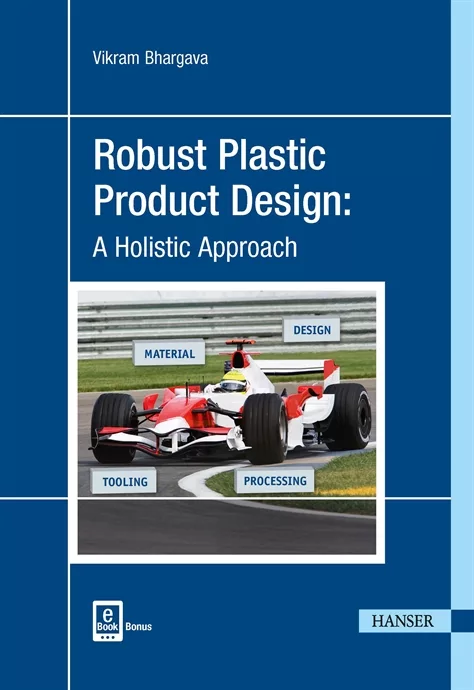
    Robust Plastic Product Design: A Holistic Approach

  • 0001346.jpeg

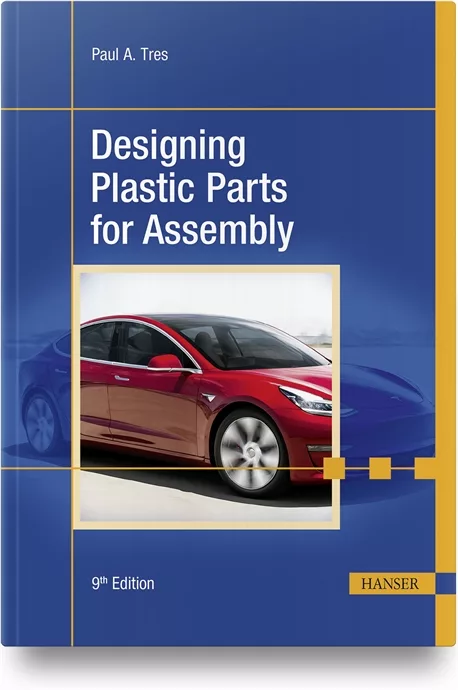
    Designing Plastic Parts for Assembly 9E

  • foreman.jpg

    The Foreman on the Assembly Line

See More Products

Related Directories

  • Melink Solar

×

Never miss the latest news and trends driving the manufacturing industry

Stay in the know on the latest assembly trends.

JOIN TODAY!
  • RESOURCES
    • Advertise
    • Contact Us
    • Directories
    • Manufacturing Division
    • Store
    • Want More?
  • SIGN UP TODAY
    • Create Account
    • eMagazine
    • Newsletters
    • Customer Service
    • Manage Preferences
  • SERVICES
    • Marketing Services
    • Reprints
    • Market Research
    • List Rental
    • Survey/Respondent Access
  • STAY CONNECTED
    • LinkedIn
    • Facebook
    • Instagram
    • YouTube
    • X (Twitter)
  • PRIVACY
    • PRIVACY POLICY
    • TERMS & CONDITIONS
    • DO NOT SELL MY PERSONAL INFORMATION
    • PRIVACY REQUEST
    • ACCESSIBILITY

Copyright ©2026. All Rights Reserved BNP Media, Inc. and BNP Media II, LLC.

Design, CMS, Hosting & Web Development :: ePublishing