Then & Now: The 1876 Centennial Exposition
The event was one of three famous 19th century world's fairs. It was sandwiched between the 1851 Crystal Palace Exhibition in London and the 1893 World's Columbian Exposition in Chicago. Historians claim the Philadelphia fair transformed the global image of the United States. Before 1876, Europe had generally viewed the United States as an upstart country.
Thousands of exhibits and products on display in Philadelphia celebrated the 100th anniversary of the signing of the Declaration of Independence. The Centennial Exposition, held from May 10 to Nov. 10, featured more than 30,000 exhibitors spread out in 190 buildings on a 256-acre site in Fairmount Park. Almost 10 million visitors (the U.S. population at the time was only 46 million) from around the world attended the event.
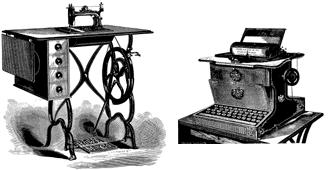
The Philadelphia fair highlighted Yankee ingenuity and served as a coming out party for American manufacturers. Mass-produced products on display included sewing machines, typewriters, stoves, lanterns and guns, plus horse-drawn wagons, carriages and agricultural equipment. Powerful dynamos, pumps and turbines also attracted oohs and aahs from the throngs of visitors.
One of the highlights of the fair was the first public showing of the arm and torch of the Statue of Liberty (the rest of the giant statue would not be completed in New York Harbor until 1886). The Centennial Exposition also witnessed the debut of the world's first monorail system, which featured a steam locomotive and passenger car straddling a single, elevated iron rail that rested several feet off the ground. The locomotive ran on two wheels, with the rear wheel being driven by a rotary steam engine.

Another young inventor named Thomas Edison also participated in the world's fair. He displayed several new devices, including an "automatic telegraph system" and an "electric pen." Undoubtedly, Edison's visit to the Centennial Exposition sparked many ideas in his head, including the incandescent light bulb, which was still 3 years away.
The items on display inspired nu-merous inventors and entrepreneurs besides Bell and Edison, such as George Eastman and George Westinghouse, who both attended the fair and later achieved widespread fame and fortune. Among other inventions, Eastman created a process for mass-producing dry photographic plates in 1879, while Westinghouse developed alternating current generating equipment during the 1880s.
Another individual deeply affected by the fair was Elmer Sperry, the man who invented the gyrocompass for ships and airplanes and accumulated more than 400 patents during his lifetime. He attended the Centennial Exposition through an invitation of the YMCA. Later in life, Sperry called the visit his most memorable boyhood experience. To show his gratitude, Sperry donated $1 million to the YMCA when he passed away in 1930.
Looking for quick answers on assembly and manufacturing topics? Try Ask ASM, our new smart AI search tool. Ask ASM
The 6-month world's fair also had a profound impact on the U.S. manufacturing landscape. For instance, it exposed many people to the "American system" of interchangeable parts for the first time. Manufacturers who visited Philadelphia in 1876 ordered thousands of state-of-the-art machines for boosting productivity and reducing costs. They also went home with hundreds of new ideas for making their factories run more efficiently. Indeed, just 4 years after the Centennial Exposition, more than 10,000 U.S. patents were issued for a wide variety of machines and devices.
According to many visitors, the most impressive building on the fairgrounds was the 558,000-square-foot Machinery Hall, which was more than twice the size of ATExpo. The huge glass and iron structure was filled with a wide assortment of hand tools, machine tools, material handling equipment and the latest fastener technology, plus miles of overhead belts and pulleys for driving steam-powered line shafts. In fact, there were 8,000 operating machines in the 14-acre building.
The atmosphere in the Philadelphia exhibit hall was entirely different from what you'll find at this year's ATExpo. In 1876, steam and hydraulic power ruled; electricity was just in its infancy. Many of the machines and tools on display were for woodworking applications, because wood was the primary material at the time. In fact, many products were assembled almost entirely with wood, including ships, carriages and wagons, railroad cars, streetcars and furniture, plus shipping crates, trunks and barrels.
Iron and steel were just gaining widespread use, especially for mass-produced items such as sewing machines and typewriters. Aluminum, plastic and other materials that engineers take for granted today were light-years away. Adhesives, welding and other joining processes were unheard of.
Industries that form the backbone of today's economy, such as aerospace, automotive and electronics, were unimaginable in 1876. All assembly work was done entirely by hand with manual tools. The most sophisticated automated manufacturing equipment at the time was used for applications in the textile industry, such as braiding machines.

Other companies, such as William H. Haskell & Co. (Pawtucket, RI) and Plumb, Burdict & Barnard (Buffalo, NY), showcased a wide variety of coach screws, plow bolts and other machine-made fasteners. The latter company boasted that new machines allowed it to produce 100,000 bolts and screws per day, compared to only 8,000 by using traditional methods.
"Ingenious machines have been constructed to fashion metal into all conceivable shapes, without resorting to the slow and laborious forgings and other hand processes of olden times," said a contemporary account. "Bolts and nuts manufactured by machinery are much cheaper than those made by hand. Between the saving in cost price and in cost of time in using, the introduction of machine-made bolts and nuts has done much toward cheapening the construction of heavy iron work, and has so reduced the time necessary for their erection as to build iron products than wooden ones."
William Sellers, a prominent ma-chine tool builder based in Philadelphia, played a leading role in the development of the Centennial Exposition. He ensured that the world's fair would include state-of-the-art equipment for manufacturers.
One new tool that attracted a lot of attention was a universal grinding machine displayed by Brown & Sharpe Manufacturing Co. (Providence, RI). The device allowed manufacturers to first harden articles and then grind them with precise accuracy. An early application for the machine was to grind needle bars for sewing machines. According to the patent application, the universal grinder was "a machine on which straight, tapering, curved and irregular work, either inside or outside, can be ground with great accuracy." Unfortunately, the inventor, Joseph R. Brown, died suddenly in 1876, so his innovative machine was patented posthumously in 1877.
Air-powered tools were another new technology on display in Philadelphia. James Clayton's Pump Works (Brooklyn, NY) showcased a line of air compressors and pumps that featured dual horizontal air and steam cylinders. One firm that participated in the Centennial Exposition has a booth at this year's ATExpo: Ingersoll-Rand Co. (Annandale, NJ). In 1876, company founder Simon Ingersoll displayed a steam-powered rock drill that he had patented a few years earlier.
Another product that made its public debut at the Centennial Exposition is still making headlines today, albeit for a different reason. Contemporary reports marveled at a revolutionary new material called "asbestos." A large deposit of the mineral was discovered in Quebec, Canada, in 1876. Asbestos was touted for its unique fire-proof qualities. After widespread use in building materials, floor tiles, brakes, boilers, pipes, tubes and industrial equipment, asbestos is now the center of controversy and the subject of multimillion dollar lawsuits stemming from asbestosis disease.
The highlight of the Machinery Hall was a huge, 1,400-horsepower steam engine that powered all the exhibits in the building through 5 miles of overhead line belts, shafts and pulleys. It was built by the George H. Corliss Co. (Providence, RI).
The 70-foot tall machine weighed more than 650 tons and was the largest steam engine ever built. It had two 40-inch diameter cylinders, with a 10-foot stroke, connected with two large walking beams to a spur gear between the cylinders. The gear was the heaviest cut wheel ever made. It had a 24-inch diameter face and weighed 56 tons.
After the world's fair, the steam engine was purchased by the Pullman Co., dismantled and moved to the South Side of Chicago. It served the company's railroad passenger car assembly plant for 30 years until Pullman switched to electricity in 1910.
Today, many of the items on display in the Machinery Hall at the 1876 Centennial Exposition are housed in the Smithsonian Institution (Washington, DC). The site of the fair, Fairmount Park, still exists and provides an urban oasis in the middle of Philadelphia. In fact, with 4,180 acres, it is the largest landscaped park in the United States. Several remnants of the world's fair still stand in the park, such as Memorial Hall, which contains a scale model of the entire Centennial Exposition. M
''Then & Now" is an occasional series of articles that reflect on the people, products, plants and processes of the past.
Looking for a reprint of this article?
From high-res PDFs to custom plaques, order your copy today!