Assembly in Action: Lifters Improve Safety, Productivity
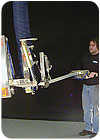
Workers at the 3M plant in Medina, OH, manufacture and ship a wide range of products, including heavy rolls of pressure-sensitive consumer labels. A few years ago, the company initiated a workplace safety program to reduce the number of on-the-job injuries. Central to this effort was a push to reduce the number of back injuries resulting from lifting, pushing, pulling, holding or carrying heavy loads.
According to the Bureau of Labor Statistics, more than 1 million workers nationwide suffer back injuries each year, and back injuries account for one of every five workplace injuries or illnesses. In 2006, injuries related to lifting, pushing, pulling, holding, carrying or throwing cost businesses $12.4 billion in direct costs, according to the 2008 Liberty Mutual Workplace Safety Index. A single back injury can cost an employer up to $65,000.
To help reduce its exposure to these problems, the 3M plant implemented a pneumatic, lift assistance device made by AirOlift Lifting Systems. AirOlift customized the system for handling rolls of all sizes, while one of its representatives conducted a number of on-site training sessions to ensure operators were using it correctly.
The system proved so successful that since buying its first lift assistance device, 3M has added several more.
"At the time we installed the first lifter, lifting, handling and packing heavy, pressure-sensitive rolls of consumer labels for shipment at the plant was very labor intensive. Workers might handle a couple of hundred rolls per shift, each ranging from 50 to 250 pounds, which could wear them out or expose them to potential lift injury," says plant maintenance supervisor Jim Joreski. "Since installing the equipment, we've eliminated lift-related injuries in that part of the plant process. Productivity is up about 40 percent over the previous method, and there's no problem with operator fatigue or repetitive motion injury."
To ensure complete worker safety, each lifting device includes a number of features to ensure operators always have complete control of whatever load they are handling. For example, each device includes a set of sensors that assure the load cannot be released until it's placed. If there's ever a complete loss of air, the device slowly lowers the items it is holding to the ground, protecting operators and eliminating product damage.
Because the system is pneumatically operated, there is no danger of shock or any other kind of electric hazard resulting from frayed wires. There is also no need to run costly electrical connections to the work area.
"From higher productivity alone, a study showed payback on our AirOlift equipment in about two years, but payback could be immediate if it prevents even one back injury," Joreski says. "It has saved wear and tear on our people and boosted morale."
For more on lifting systems, call 800-605-8612 or visit www.airolift.com.
Looking for a reprint of this article?
From high-res PDFs to custom plaques, order your copy today!