Assembly Magazine logo
search
Ask ASSEMBLY AI
cart
facebook twitter linkedin youtube
  • Sign In
  • Create Account
  • Sign Out
  • My Account
Assembly Magazine logo
  • TRENDS
    • Ask ASSEMBLY AI
    • Trends
    • News
    • New Products
  • INDUSTRIES
    • Aerospace
    • Appliance
    • DFMA Assembly
    • Medical Devices
    • Green Manufacturing
    • Lean Manufacturing
    • Machinery Assembly
    • Electronics Assembly
    • Automotive
  • TECHNOLOGIES
    • Adhesives & Dispensing
    • Assembly Presses
    • Automated Assembly Systems
    • Manufacturing Management
    • Manufacturing Software
    • Motion Control
    • Screwdriving & Riveting
    • Robotics
    • Test & Inspection
    • Plastics & Metal Welding
    • Wire Processing
    • Workstations
  • AUTONOMOUS & ELECTRIC MOBILITY
    • AEM Magazine Archives
    • Autonomy
    • Electrification
    • Mobility Services
    • Assembly & Testing
    • AV/EM News
  • MEDIA
    • Ask ASSEMBLY AI
    • Podcasts
    • Assembly News Now
    • Assembly TV
    • Webinars
    • eBooks
  • EVENTS
    • Calendar
    • The ASSEMBLY Show
  • MORE
    • Exclusives >
      • Plant of the Year
      • Capital Spending
    • Buyers Guide >
      • Supplier Insights
    • Classifieds
    • Featured Products
    • Newsletters
    • Store
    • White Papers
    • Columns
    • Sponsor Insights
  • INFOCENTER
    • Assembly & Test Solutions
  • EMAGAZINE
    • eMagazine
    • Archive Issues
    • Advertise
    • Contact Us
    • Sign Up
Automotive AssemblyAdhesives & Dispensing Assembly

Bonding Lines with Dr. Dave: Sealing Porous Metals by Design

By Dr. Dave Dunn
August 1, 2012

Most castings and powdered metal parts have porosity. Porosity provides a leak path into or out of castings. In powdered metal parts, porosity can cause severe plating problems. Vacuum impregnation with a polymer seals these pores.

There are three types of sealants:

sodium silicates

unsaturated polyesters

acrylics

Water solutions of sodium silicate are the oldest. These inexpensive sealants can withstand temperatures over 500 C. They suffer from high shrinkage and long processing and curing times. They are best suited for sealing macroporosity.

Unsaturated polyesters are diluted with styrene monomer. These fairly low-cost sealants must be cured at high temperatures for long times. Their high viscosity makes them most suitable for sealing large pores.

Low-viscosity acrylics have come to the fore with the increased use of aluminum and magnesium in automotive parts. Usually methacrylate monomers, acrylics have revolutionized porosity sealing because of their ability to penetrate both macroporosity and microporosity and to cure quickly.

The earliest acrylics were based on anaerobic resins. Batch processing typically involved placing parts in a basket, immersing them in the resin, and removing air from the system and the pores by pulling a vacuum. On release of the vacuum, the sealant flowed into the pores.

Next, the basket would be raised out of the bath and spun to remove excess resin, which was reused. Because anaerobic resins were expensive compared with sodium silicates and polyesters, this step was critical to the economic viability of the process. After centrifuging, the parts were rinsed in a chlorinated solvent and then placed in an activator bath, which was also a chlorinated solvent. This process was carried out at room temperature—heating the parts might cause the resin to bleed from the pores. Later, aqueous washing and activating solutions replaced the solvents.

Looking for quick answers on assembly and manufacturing topics? Try Ask ASM, our new smart AI search tool. Ask ASM →

Initially, the anaerobic process proved attractive for new installations, but it was difficult to convert long-time users of silicates or polyesters, due to the high capital costs. This hurdle was overcome with heat-cure versions of
methacrylate resins, which could be cured in less than 30 minutes using peroxide initiators at 90 C. Manufacturers could use this new resin with their existing polyester equipment, cure the parts in hot water, and get better performance with a much cleaner and easier to handle system.

Another major innovation was the use of azo initiators for the heat cure, which mitigated the effect of metals on the stability of the sealants. All sealant manufacturers now use this cure system. Incorporating emulsifiers and hydrophilic monomers into sealant chemistries allows manufacturers to rinse parts in plain water, resulting in significant cost savings.

Today, sealants are being formulated for specific applications. For example, resins for sealing microporosity in advanced aluminum castings in the auto industry are different from the chemistries for sealing powdered metal components. Sealants have also been formulated to ensure complete washing of blind and tapped holes.

New sealants include:

  • Low-viscosity, fast-processing sealants for aluminum castings.
  • Highly washable anaerobic sealants for powdered metal components.
  • Flexible sealants for plastic-to-metal connections.
  • Flame-retardant sealants for electronic applications.
  • Fuel-resistant sealants.

One company, Godfrey and Wing Inc., has introduced the Continuous Flow Impregnation (CFI) System. A dry vacuum and pressure process, the system uses robots to seal one part at a time. Compared with batch processes, the CFI system uses no labor, less sealant, and less water and energy. It can seal a part in less than 100 seconds.            

Editor’s note: Dave Dunn, Ph.D., is a former vice president and director of research at Loctite Corp. If you have a question about adhesive bonding, call 330-562-2930, e-mail DrDave242@windstream.net, or visit www.fldenterprises.com.

KEYWORDS: aluminum castings coatings and finishes leak testing sealants

Share This Story

Looking for a reprint of this article?
From high-res PDFs to custom plaques, order your copy today!

Dave Dunn, Ph.D., is a former vice president and director of research at Loctite Corp. If you have a question about adhesive bonding, call 330-562-2930, e-mail DrDave242@windstream.net, or visit www.fldenterprises.com.

Recommended Content

JOIN TODAY
To unlock your recommendations.

Already have an account? Sign In

  • Made in the U.S.A.

    Consumer Products Manufacturing: Made in the USA

    Supply chain lessons learned during the coronavirus...
    Automated Assembly Systems
    By: Austin Weber
  • Best Practices for Press-Fit Assembly

    Best Practices for Press-Fit Assembly

    In manufacturing, ironclad formulas for success are hard...
    Assembly Presses
    By: Jim Camillo
  • aem0523leader-tesla1.jpg

    Tesla Rethinks the Assembly Line

    Engineers at Tesla Inc. have developed a new process that...
    Assembly and Testing
    By: Austin Weber
Manage My Account
  • eMagazine Subscription
  • Assembly Newsletters
  • Online Registration
  • Subscription Customer Service
  • Manage My Preferences

More Videos

Sponsored Content

Sponsored Content is a special paid section where industry companies provide high quality, objective, non-commercial content around topics of interest to the ASSEMBLY audience. All Sponsored Content is supplied by the advertising company and any opinions expressed in this article are those of the author and not necessarily reflect the views of ASSEMBLY or its parent company, BNP Media. Interested in participating in our Sponsored Content section? Contact your local rep!

close
  • ultrasonic welding
    Sponsored bySonobond Ultrasonics

    Engineering Efficiency in High-Performance Assembly: How Ultrasonic Welding Enhances Throughput, Reliability and Quality

  • UV curing system
    Sponsored byDymax

    Why UV Intensity Alone Doesn’t Define Curing Performance

  • wooden pallets
    Sponsored byLEAN Manufacturing Products

    Eliminating Waste on the Shop Floor: Applying Lean Principles to Improve Manufacturing Efficiency

Popular Stories

ASSEMBLY News Now, episode-30: Volvo Redesigns EV Manufacturing

Volvo Redesigns EV Manufacturing

Boeing CEO Kelly Ortberg announces 1 billion investment

Boeing Plans $1 Billion Wichita Investment, Workforce Training Center

automated consumer goods assembly system

Best Practices for Cycle Time Optimization

Watch the latest episode of ANN now!

Events

July 24, 2025

From Shop Floor to CFO: How Manufacturers Are Closing the Loop Between Operations and Finance

On Demand Learn how manufacturers are bridging the gap between the shop floor and ERP systems to gain real-time visibility, streamline operations, and kick-start digital transformation—without waiting years.

Sponsored by:

PicoStratusGreen
July 30, 2025

Buffer Analysis and Design Fundamentals for Manufacturing Excellence

On Demand In this presentation, Dr. Herman Tang shares practical insights from his industry experience and research on buffer management in manufacturing operations.

View All Submit An Event

Poll

Difficult Assembly Processes

Which assembly process gives you the most difficulty?
View Results Poll Archive

Products

Manufacturing Cost Policy Deployment (MCPD) Profitability Scenarios: Systematic and Systemic Improvement of Manufacturing Costs

Manufacturing Cost Policy Deployment (MCPD) Profitability Scenarios: Systematic and Systemic Improvement of Manufacturing Costs

See More Products
Register for webinar - Modernizing Automotive Assembly: Why Upgrading Legacy MES is a Business Imperative

Related Articles

  • Flex’s multi-industry success is by design

    Flex’s Multi-Industry Success is by Design

    See More
  • Pope

    Eric Pope, Winner of the Shingo Prize for Operational Excellence, to Discuss Culture by Design During Keynote at The ASSEMBLY Show

    See More
  • Bonding Lines: Hotmelts-Modern Ancients

    See More

Related Products

See More Products
  • Collaborative Product Assembly Design and Assembly Planning, 1st Edition

  • design for.jpg

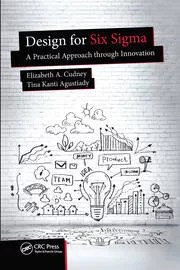
    Design for Six Sigma: A Practical Approach through Innovation

See More Products

Related Directories

  • Glide-Line by NCC Automated Systems

    Glide-Line designs and manufactures modular conveyor and panel/pallet handling systems for assembly automation, packaging, and material handling. Its products include timing belt conveyors, twin-strand pallet systems, multi-strand configurations, vertical transfer units, stackers and custom transfer solutions—engineered for flexibility, precision, and efficiency across industries from electronics and medical devices to consumer goods and automotive manufacturing.
×

Never miss the latest news and trends driving the manufacturing industry

Stay in the know on the latest assembly trends.

JOIN TODAY!
  • RESOURCES
    • Advertise
    • Contact Us
    • Directories
    • Manufacturing Division
    • Store
    • Want More?
  • SIGN UP TODAY
    • Create Account
    • eMagazine
    • Newsletters
    • Customer Service
    • Manage Preferences
  • SERVICES
    • Marketing Services
    • Reprints
    • Market Research
    • List Rental
    • Survey/Respondent Access
  • STAY CONNECTED
    • LinkedIn
    • Facebook
    • Instagram
    • YouTube
    • X (Twitter)
  • PRIVACY
    • PRIVACY POLICY
    • TERMS & CONDITIONS
    • DO NOT SELL MY PERSONAL INFORMATION
    • PRIVACY REQUEST
    • ACCESSIBILITY

Copyright ©2026. All Rights Reserved BNP Media, Inc. and BNP Media II, LLC.

Design, CMS, Hosting & Web Development :: ePublishing