Assembly Magazine logo
search
Ask ASSEMBLY AI
cart
facebook twitter linkedin youtube
  • Sign In
  • Create Account
  • Sign Out
  • My Account
Assembly Magazine logo
  • TRENDS
    • Ask ASSEMBLY AI
    • Trends
    • News
    • New Products
  • INDUSTRIES
    • Aerospace
    • Appliance
    • DFMA Assembly
    • Medical Devices
    • Green Manufacturing
    • Lean Manufacturing
    • Machinery Assembly
    • Electronics Assembly
    • Automotive
  • TECHNOLOGIES
    • Adhesives & Dispensing
    • Assembly Presses
    • Automated Assembly Systems
    • Manufacturing Management
    • Manufacturing Software
    • Motion Control
    • Screwdriving & Riveting
    • Robotics
    • Test & Inspection
    • Plastics & Metal Welding
    • Wire Processing
    • Workstations
  • AUTONOMOUS & ELECTRIC MOBILITY
    • AEM Magazine Archives
    • Autonomy
    • Electrification
    • Mobility Services
    • Assembly & Testing
    • AV/EM News
  • MEDIA
    • Ask ASSEMBLY AI
    • Podcasts
    • Assembly News Now
    • Assembly TV
    • Webinars
    • eBooks
  • EVENTS
    • Calendar
    • The ASSEMBLY Show
  • MORE
    • Exclusives >
      • Plant of the Year
      • Capital Spending
    • Buyers Guide >
      • Supplier Insights
    • Classifieds
    • Featured Products
    • Newsletters
    • Store
    • White Papers
    • Columns
    • Sponsor Insights
  • INFOCENTER
    • Assembly & Test Solutions
  • EMAGAZINE
    • eMagazine
    • Archive Issues
    • Advertise
    • Contact Us
    • Sign Up

Lean Manufacturing: Are We Really Getting It?

March 1, 2006
Continuous improvement is key to long-term success.

What happens in 10 years when everyone implements lean manufacturing and it's no longer a competitive advantage? While such a day will probably never occur, the question is provocative.

The key to lean success tomorrow starts with continuous improvement today. In fact, if you don't implement a continuous improvement structure, you're wasting your time with any lean manufacturing initiatives.

Continuous improvement is one of the main tenets of lean manufacturing. Unfortunately, it's not a high priority in some organizations. The focus is often on value streams, cellular manufacturing, one-piece flow and material flow.

Although this presents an effective way to transform an organization from mass production to lean manufacturing, there must be a new emphasis placed on continuing to improve the changes that are being made. This leads to a culture of continuous improvement that will become a competitive advantage in the future.

Many manufacturers simply attempt to sustain their improvements. But, sustaining change is not the same thing as continuous improvement. If you sustain the changes that are made, then you can expect the results that you get to decline. That's because your competition is probably not willing to just sustain its position.

There are three ways that manufacturers can foster a culture of continuous improvement:

  • Abandon the "hit and run" method of change.
  • Develop your own continuous improvement team.
  • Implement standard auditing patterns.


Avoid Hit and Run

Kaizen events are a popular way to begin implementing lean systems. However, these events can be counterproductive if they are used incorrectly.

Some organizations call their improvement initiatives kaizen events when they are actually hit-and-run events, where a team is assembled for a certain amount of time to do one project. While this usually takes one week to accomplish, it can vary. However, the problem is not the amount of time it takes to accomplish the project; it is the actual accomplishment of the project.

Looking for quick answers on assembly and manufacturing topics? Try Ask ASM, our new smart AI search tool. Ask ASM →

If an organization is truly implementing a lean manufacturing system, the project should never be complete. But, in hit-and-run events, the team often leaves upon completing the project.

Typically, the project reverts back to its old way within the next couple of months. There is no support for the area after the event is over. In essence, the team develops a new change and throws it over the fence to manufacturing. This can lead to confusion, frustration and anger from the shop floor. As a result, the changes fail to achieve their goal.

To focus on continuous improvement, manufacturers should attempt hit-and-run baby steps, such as:

  • Including members of the area to be changed, along with those from other areas.
  • Developing a 6-month plan for the area. This plan should include a daily visit from someone on the original team to see how the project is progressing and if anything needs to be changed or added.
  • Reconvening the team on a monthly basis at the area.
  • Posting visual records of the changes at the area of change where they can be seen by management, as well as by operators.
  • Developing an environment where communication is strongly encouraged.


Emphasize Team Building

Continuous improvement should be part of everyone's job description and must be taken seriously. Management should develop ways to encourage its importance.

If you are currently in the process of implementing lean manufacturing, you may be freeing up operators. If you're wondering the best way to utilize them, consider creating a continuous improvement team. Despite what some people think, all team members don't need to have engineering degrees.

Operators are the greatest source of process knowledge. They are the individuals who know the assembly process inside and out.

A place on the continuous improvement team should not be permanent. Terms should last only 6 to 12 months. If the continuous improvement team does its job, not only will processes improve, but the knowledge base of the employees will continue to improve. This should lead to a more educated, efficient workforce that serves as a strategic asset to the organization.

To be effective, continuous improvement teams must be run correctly. When developing a team, the following guidelines should be considered:

  • Pick a leader with a good deal of lean knowledge. Often, the leader of this team is the individual who is coordinating many of the lean initiatives in the plant.
  • Provide direction. Though the team members do not necessarily have to have a great deal of lean knowledge, the direction needs to be set by management so that the goals of the team are clear.
  • Remember that the goal of the team is to improve process knowledge. This is an excellent way to train employees in lean manufacturing techniques.
  • Be sure to avoid hit-and-run change. This can often do more harm than good.


Standardize Auditing

What is the No. 1 reason why manufacturers fail to implement lean principles? The answer is simple: Leadership. It's the same reason why a plant is successful.

Leaders ensure that continuous improvement is part of a plant's culture by focusing attention on audits. However, auditing cannot be delegated. Management must go to the plant floor and evaluate the process.

On any successful lean journey, management needs to be closely involved. When management delegates auditing, it sends a message to the workforce that the change is not important.

It's important to explain the purpose of audits. They should not be used as "gotcha" tools that try to catch someone doing something wrong. Audits are used to generate information that can be used for continuous improvement and to check that the systems that have been put in place are still valid.

If you talk to operators, they will usually explain what can be done to improve the process. It is then up to you to improve the process. If you do not improve the process, then the likelihood of the operators telling you anything else is minimal. If you are out on the plant floor, operators will see you and likely talk with you about how to improve the process, thus increasing information flow.

Management must verify that the planning and development of ideas that have been implemented are working. The alternative is to hope that this is happening. "Hope" is used in manufacturing to mean, "If I do not go look, I will not know that it is not working." This type of attitude does not foster a culture of continuous improvement.

Lean manufacturing success depends on leadership being on the plant floor. Leaders should try to organize their day so that they always spend time on the assembly line.


A Continuous Journey

Manufacturers that neglect continuous improvement will either be forced to start over on their lean journey or be forced to go out of business. Continuous improvement is not something that just appears. Organizations do not arrive at a lean manufacturing state; they continually strive to get there.

Engineers and operators are not born with continuous improvement skills. It's a concept that needs to be taught, engrained, nurtured and fostered; it's not something that's hoped for and then forgotten.

Manufacturers must develop an organizational structure that supports continuous improvement. Then, that structure must be engrained in all areas of the organization: sales, purchasing, logistics, R&D and human resources.

Lean manufacturing is a journey, not a destination. It is not lean manufacturing that will be the competitive advantage of the future. Continuous improvement will be the competitive edge, as processes and manufacturing systems become more and more efficient. However, only those organizations that continue to adapt and improve will truly realize how to capitalize on the future.

Special thanks to Dr. Ken Armstrong, a professor of management at the Anderson University Falls School of Business (Anderson, IN), for his assistance in developing this article.

Share This Story

Looking for a reprint of this article?
From high-res PDFs to custom plaques, order your copy today!

Recommended Content

JOIN TODAY
To unlock your recommendations.

Already have an account? Sign In

  • Made in the U.S.A.

    Consumer Products Manufacturing: Made in the USA

    Supply chain lessons learned during the coronavirus...
    Automated Assembly Systems
    By: Austin Weber
  • Best Practices for Press-Fit Assembly

    Best Practices for Press-Fit Assembly

    In manufacturing, ironclad formulas for success are hard...
    Assembly Presses
    By: Jim Camillo
  • aem0523leader-tesla1.jpg

    Tesla Rethinks the Assembly Line

    Engineers at Tesla Inc. have developed a new process that...
    Assembly and Testing
    By: Austin Weber
Manage My Account
  • eMagazine Subscription
  • Assembly Newsletters
  • Online Registration
  • Subscription Customer Service
  • Manage My Preferences

More Videos

Sponsored Content

Sponsored Content is a special paid section where industry companies provide high quality, objective, non-commercial content around topics of interest to the ASSEMBLY audience. All Sponsored Content is supplied by the advertising company and any opinions expressed in this article are those of the author and not necessarily reflect the views of ASSEMBLY or its parent company, BNP Media. Interested in participating in our Sponsored Content section? Contact your local rep!

close
  • ultrasonic welding
    Sponsored bySonobond Ultrasonics

    Engineering Efficiency in High-Performance Assembly: How Ultrasonic Welding Enhances Throughput, Reliability and Quality

  • UV curing system
    Sponsored byDymax

    Why UV Intensity Alone Doesn’t Define Curing Performance

  • wooden pallets
    Sponsored byLEAN Manufacturing Products

    Eliminating Waste on the Shop Floor: Applying Lean Principles to Improve Manufacturing Efficiency

Popular Stories

ASSEMBLY News Now, episode-30: Volvo Redesigns EV Manufacturing

Volvo Redesigns EV Manufacturing

Boeing CEO Kelly Ortberg announces 1 billion investment

Boeing Plans $1 Billion Wichita Investment, Workforce Training Center

automated consumer goods assembly system

Best Practices for Cycle Time Optimization

Watch the latest episode of ANN now!

Events

July 24, 2025

From Shop Floor to CFO: How Manufacturers Are Closing the Loop Between Operations and Finance

On Demand Learn how manufacturers are bridging the gap between the shop floor and ERP systems to gain real-time visibility, streamline operations, and kick-start digital transformation—without waiting years.

Sponsored by:

PicoStratusGreen
July 30, 2025

Buffer Analysis and Design Fundamentals for Manufacturing Excellence

On Demand In this presentation, Dr. Herman Tang shares practical insights from his industry experience and research on buffer management in manufacturing operations.

View All Submit An Event

Poll

Difficult Assembly Processes

Which assembly process gives you the most difficulty?
View Results Poll Archive

Products

Manufacturing Cost Policy Deployment (MCPD) Profitability Scenarios: Systematic and Systemic Improvement of Manufacturing Costs

Manufacturing Cost Policy Deployment (MCPD) Profitability Scenarios: Systematic and Systemic Improvement of Manufacturing Costs

See More Products
Register for webinar - Modernizing Automotive Assembly: Why Upgrading Legacy MES is a Business Imperative

Related Articles

  • Hoffmann on Testing: Why Are We Still Dragging our Feet on the Metric System?

    See More
  • Nordson EFD-Obsessed With Process Control? So Are We.

    See More
  • Lean Manufacturing and Flexible Assembly Are Ways of Life at Winnebago Industries

    See More

Related Products

See More Products
  • achieving

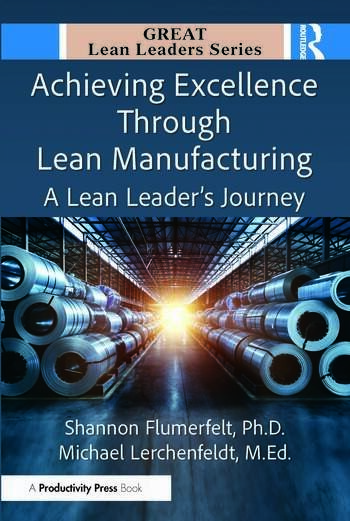
    Achieving Excellence Through Lean Manufacturing: A Lean Leader’s Journey

  • history.jpg

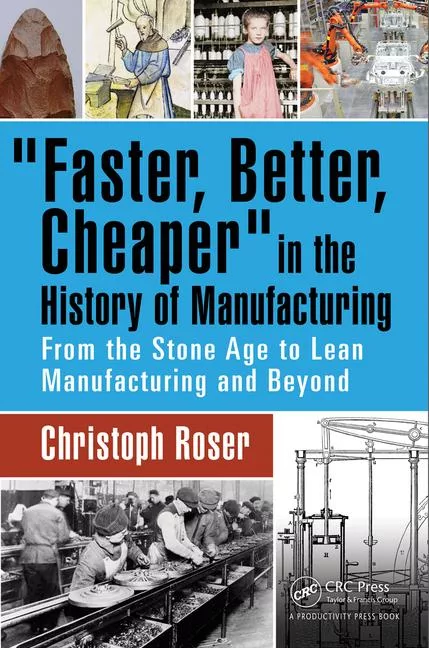
    Faster, Better, Cheaper in the History of Manufacturing: From the Stone Age to Lean Manufacturing and Beyond

  • lean.jpg

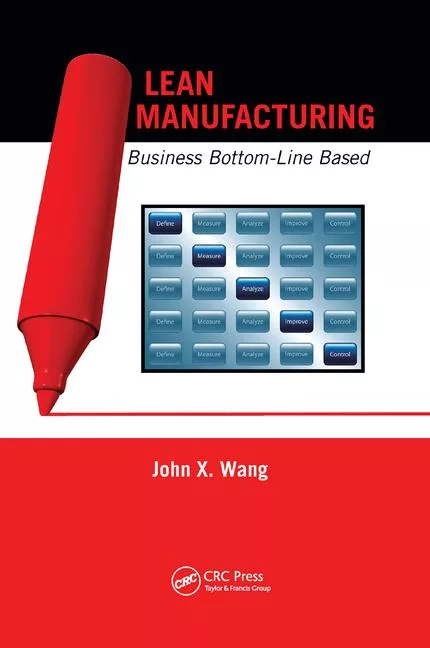
    Lean Manufacturing: Business Bottom-Line Based

See More Products

Events

View AllSubmit An Event
  • August 20, 2025

    K.I.S.S. MES (Keep It Simple, Stupid): Why Modern Manufacturers Are Choosing Modular MES with Real Shop Floor Control

    On Demand If you’re tired of MES that overpromises and underdelivers, it’s time to simplify. Learn how a modular approach gives you control where it counts—without the baggage.Sponsored by:
View AllSubmit An Event

Related Directories

  • Lean Manufacturing Products

    Lean Manufacturing Products LLC is a leading provider of innovative solutions designed to enhance operational efficiency and productivity in various industries. Specializing in lean manufacturing principles, we offer a comprehensive range of high-quality products, including racking systems, safety equipment, and modular storage solutions. Our mission is to help companies streamline their processes, reduce waste, and create more effective work environments. With a commitment to exceptional customer service and cutting-edge design, Lean Manufacturing Products LLC partners with businesses to implement best practices that drive success and foster continuous improvement.
  • ARS Automation Inc.

    DistributorsAIR-OILdplasha@airoil.comBERTELKAMPCIMTECDOIGFINCH AUTOMATIONFORTVILLEFPE AutomationGIBSONKNOTTSMOTION AI (BRASS)MSD Robotic DivisionOHLHEISEROLYMPUSPERFORMANCE FEEDERSPOWERMATIONRALPH w. EARLSchneider & CompanyTriad TechnologiesUchimuraWE ASSIST BOT
  • Lean Factory America

    Our products aid in the elimination of waste, a cornerstone of lean manufacturing, by helping to eliminate errors, overproduction, inefficient processes, inventory, unnecessary transportation of product and unnecessary movement of personnel. Solutions are also highly configurable and customizable to provide customers with systems that are safe to both their personnel and products. The result is increased manufacturing efficiency and profitability for the customer.
×

Never miss the latest news and trends driving the manufacturing industry

Stay in the know on the latest assembly trends.

JOIN TODAY!
  • RESOURCES
    • Advertise
    • Contact Us
    • Directories
    • Manufacturing Division
    • Store
    • Want More?
  • SIGN UP TODAY
    • Create Account
    • eMagazine
    • Newsletters
    • Customer Service
    • Manage Preferences
  • SERVICES
    • Marketing Services
    • Reprints
    • Market Research
    • List Rental
    • Survey/Respondent Access
  • STAY CONNECTED
    • LinkedIn
    • Facebook
    • Instagram
    • YouTube
    • X (Twitter)
  • PRIVACY
    • PRIVACY POLICY
    • TERMS & CONDITIONS
    • DO NOT SELL MY PERSONAL INFORMATION
    • PRIVACY REQUEST
    • ACCESSIBILITY

Copyright ©2026. All Rights Reserved BNP Media, Inc. and BNP Media II, LLC.

Design, CMS, Hosting & Web Development :: ePublishing