Machine Vision: Troubleshooting Vision Systems
If a vision system isn’t working optimally, engineers should check for mechanical, electrical and optical problems.

Vision systems can rapidly and accurately locate parts and find defects. However, if the system starts missing defects or signaling false positives, assemblers can lose confidence in it. It’s therefore imperative for engineers to quickly identify the cause of the problem and fix it.
Sometimes, the problem is easy to spot. In other cases, finding the cause of the problem requires some detective work. Either way, engineers will find that most problems with vision systems can be grouped into three broad categories: mechanical, electrical and optical.
When troubleshooting vision systems, one of the first questions Steve Maves poses is how the problem started. “Did the system start to behave poorly suddenly, or was it a slow, gradual change?” asks Maves, manager of application engineering with PPT Vision. “If it’s a gradual change, the problem is likely to be something affecting the light reaching the camera. Maybe there’s dirt on the lens, or the light source is wearing out.
“Normally, though, it’s a sudden change. It worked before, but now it doesn’t. At that point, you have to talk through what changed and make a differential diagnosis.”
When a vision system suddenly stops working, a mechanical problem is the most common cause. Vibration or an impact has knocked the camera, lens or lighting out of position so they’re no longer focused on the features of interest. This sort of problem is easily prevented by fixturing the camera and lighting securely and using a setscrew to lock down the lens once it’s focused.
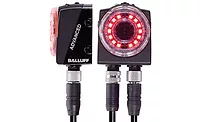
“A standard 3/4-inch screw mount is fine for attaching a camera to a tripod, but it’s ridiculous for industrial applications,” says Mark Sippel, product marketing manager for Balluff Inc. “You want at least two mounting points. Our Sharpshooter camera has two screw holes on each side and four on the back.”
Electrical problems are another common cause of sudden changes in vision system performance. Fortunately, they’re typically easy to spot. Lights on the camera and controller indicate the status of electrical connections. The problem could simply be that a cable has come unplugged.
A less obvious electrical problem involves the network to which the camera is attached. “The trickiest problems lately have involved Ethernet networks,” explains Maves. “The customer connects the camera, the software works great, then the connection drops.
“The underlying issue isn’t the camera; it’s the network. It wasn’t designed properly. When there’s too much traffic on the network, it drives up the response time between the computer and the camera, which might be hundreds of meters away.”

“If you see slight blurring, the camera may be experiencing vibration or the exposure time may be too long,” says Sippel. “If the exposure time is too long, that may be an indication that there’s not enough light.”
Professional photographers can tell if they’ve produced a quality digital image by looking at its histogram-a frequency graph that displays where all of the brightness levels in the scene are found, from the darkest to the brightest. Engineers can do the same with the images obtained by a vision system. However, engineers should keep in mind that what makes a good photograph isn’t necessarily what makes a good image for inspection or measurement.
“The name of the game in machine vision isn’t to create a nice-looking image, it’s to make an image where you have the greatest possible contrast between the good condition and the bad condition,” says Maves. “Often, when you’re looking for the presence or absence of a part, it’s easier to cast a shadow of the part, and look for the presence or absence of the shadow, than it is to look directly at the part, especially if the color of the part varies.
“In other cases, you may want to intentionally blur the image to wipe out small variations that don’t help to differentiate good parts from bad parts. You can do that by defocusing the lens or using a low-pass filter in the software.”
If the illumination or the composition of the image hasn’t changed, the problem may lie with the parts themselves, rather than the vision system. “Often, a manufacturer or supplier will change the plastic a part is made from,” says Doug Kurzynski, project manager for Keyence Corp. of America. “The new parts may look like the old parts, but they may not have the same reflective properties, and that could be enough to throw off the system.”
Another valuable source of troubleshooting information is the system configuration file, which shows tools and settings for the application. When troubleshooting vision systems, engineers should resist the temptation to adjust the system software.
“We often see users who know a bit about the vision software, so when there’s a problem, they get in the habit of going into the software to tweak it,” explains Maves. “But when something mechanical, electrical or optical is going wrong, that’s the wrong thing to do. You have to fix the underlying problem first.”
Emulation software is also valuable. With emulation software, application engineers can simulate what’s going on in the system-but without the camera. “With emulation software, we’ve been able to work through problems in hours rather than days,” says Sippel.

Vision systems need little preventive maintenance. However, if the production environment is dirty, oily, humid or dusty, it’s a good idea to put the camera in an enclosure. It’s easier to clean the exterior of the enclosure than it is to clean the lens. A careless technician could damage the optics or alter the camera’s focus.
Engineers should also take steps to mitigate heat, vibration, static discharge, electrical irregularities and electrical noise, all of which can create problems for vision systems, says Kurzynski. Engineers should minimize the amount of system electronics mounted on the machine. Cameras should be electrically isolated with their own dedicated, stable power supplies. Communication cables should be isolated from motor cables.
An adjustable lens is helpful. “It’s a lot easier to turn a lens than move a camera,” Sippel points out.
Most vision applications today are lit by LEDs, so engineers shouldn’t have to worry about replacing lights. LEDs will perform for years with no decrease in illumination, even in 24/7 operations. If the application is lit by a fluorescent lamp, engineers will need to keep an eye on the bulb’s performance. “A fluorescent light gets a lot dimmer as it gets older,” says Maves.
Some vision software packages include tools that monitor the brightness and sharpness of the images obtained by the camera. If the light starts to degrade, the software issues an alarm.
Depending on the conditions in the assembly plant, engineers may want to shield the application from ambient light. Alternatively, engineers can illuminate the application with LEDs of a single color-usually red-and attach a filter to the lens that accepts only that wavelength.
* White Paper: Reducing Planned and Unplanned Downtime With Vision Systems.
* Machine Vision Dos and Don’ts.
* AIA: Machine Vision Guarantees Fit.
Vision systems can rapidly and accurately locate parts and find defects. However, if the system starts missing defects or signaling false positives, assemblers can lose confidence in it. It’s therefore imperative for engineers to quickly identify the cause of the problem and fix it.
Sometimes, the problem is easy to spot. In other cases, finding the cause of the problem requires some detective work. Either way, engineers will find that most problems with vision systems can be grouped into three broad categories: mechanical, electrical and optical.
When troubleshooting vision systems, one of the first questions Steve Maves poses is how the problem started. “Did the system start to behave poorly suddenly, or was it a slow, gradual change?” asks Maves, manager of application engineering with PPT Vision. “If it’s a gradual change, the problem is likely to be something affecting the light reaching the camera. Maybe there’s dirt on the lens, or the light source is wearing out.
“Normally, though, it’s a sudden change. It worked before, but now it doesn’t. At that point, you have to talk through what changed and make a differential diagnosis.”
When a vision system suddenly stops working, a mechanical problem is the most common cause. Vibration or an impact has knocked the camera, lens or lighting out of position so they’re no longer focused on the features of interest. This sort of problem is easily prevented by fixturing the camera and lighting securely and using a setscrew to lock down the lens once it’s focused.
“A standard 3/4-inch screw mount is fine for attaching a camera to a tripod, but it’s ridiculous for industrial applications,” says Mark Sippel, product marketing manager for Balluff Inc. “You want at least two mounting points. Our Sharpshooter camera has two screw holes on each side and four on the back.”
Electrical problems are another common cause of sudden changes in vision system performance. Fortunately, they’re typically easy to spot. Lights on the camera and controller indicate the status of electrical connections. The problem could simply be that a cable has come unplugged.
A less obvious electrical problem involves the network to which the camera is attached. “The trickiest problems lately have involved Ethernet networks,” explains Maves. “The customer connects the camera, the software works great, then the connection drops.
“The underlying issue isn’t the camera; it’s the network. It wasn’t designed properly. When there’s too much traffic on the network, it drives up the response time between the computer and the camera, which might be hundreds of meters away.”
Shading correction is a real-time filter that evens out large random shadows or glare on a target surface, leaving behind smaller defined points that could be defects. Without the filter, a vision system may be unable to consistently detect the defect on this connector housing. With the filter, as seen here, the defect is obvious. Photos courtesy Keyence Corp. of America
VSI: Vision System Investigation
When solving a vision problem, application engineers can learn a lot by examining recent and archived images taken by the system. Are the recent images brighter or darker than earlier ones? Have bright spots or shadows appeared? Has the center of attention shifted?“If you see slight blurring, the camera may be experiencing vibration or the exposure time may be too long,” says Sippel. “If the exposure time is too long, that may be an indication that there’s not enough light.”
Professional photographers can tell if they’ve produced a quality digital image by looking at its histogram-a frequency graph that displays where all of the brightness levels in the scene are found, from the darkest to the brightest. Engineers can do the same with the images obtained by a vision system. However, engineers should keep in mind that what makes a good photograph isn’t necessarily what makes a good image for inspection or measurement.
“The name of the game in machine vision isn’t to create a nice-looking image, it’s to make an image where you have the greatest possible contrast between the good condition and the bad condition,” says Maves. “Often, when you’re looking for the presence or absence of a part, it’s easier to cast a shadow of the part, and look for the presence or absence of the shadow, than it is to look directly at the part, especially if the color of the part varies.
“In other cases, you may want to intentionally blur the image to wipe out small variations that don’t help to differentiate good parts from bad parts. You can do that by defocusing the lens or using a low-pass filter in the software.”
If the illumination or the composition of the image hasn’t changed, the problem may lie with the parts themselves, rather than the vision system. “Often, a manufacturer or supplier will change the plastic a part is made from,” says Doug Kurzynski, project manager for Keyence Corp. of America. “The new parts may look like the old parts, but they may not have the same reflective properties, and that could be enough to throw off the system.”
Another valuable source of troubleshooting information is the system configuration file, which shows tools and settings for the application. When troubleshooting vision systems, engineers should resist the temptation to adjust the system software.
“We often see users who know a bit about the vision software, so when there’s a problem, they get in the habit of going into the software to tweak it,” explains Maves. “But when something mechanical, electrical or optical is going wrong, that’s the wrong thing to do. You have to fix the underlying problem first.”
Emulation software is also valuable. With emulation software, application engineers can simulate what’s going on in the system-but without the camera. “With emulation software, we’ve been able to work through problems in hours rather than days,” says Sippel.
The Preserve Intensity filter automatically corrects for intensity changes in the image due to fluctuating light levels. In this example, the vision system must detect the presence of a screw. In normal lighting, the screw is easily detectable when the original image is converted to a binary image. However, in lower light, the screw is undetectable when converted to a binary image. The filter boosts the light level so a good binary image can be produced, as seen here. Photo courtesy Keyence Corp. of America
Setup for Success
Thanks to improvements in both camera and software technology, today’s vision systems are quite robust, and problems are rare. Still, engineers can take a number of steps to ensure that vision systems perform as expected.Vision systems need little preventive maintenance. However, if the production environment is dirty, oily, humid or dusty, it’s a good idea to put the camera in an enclosure. It’s easier to clean the exterior of the enclosure than it is to clean the lens. A careless technician could damage the optics or alter the camera’s focus.
Engineers should also take steps to mitigate heat, vibration, static discharge, electrical irregularities and electrical noise, all of which can create problems for vision systems, says Kurzynski. Engineers should minimize the amount of system electronics mounted on the machine. Cameras should be electrically isolated with their own dedicated, stable power supplies. Communication cables should be isolated from motor cables.
An adjustable lens is helpful. “It’s a lot easier to turn a lens than move a camera,” Sippel points out.
Most vision applications today are lit by LEDs, so engineers shouldn’t have to worry about replacing lights. LEDs will perform for years with no decrease in illumination, even in 24/7 operations. If the application is lit by a fluorescent lamp, engineers will need to keep an eye on the bulb’s performance. “A fluorescent light gets a lot dimmer as it gets older,” says Maves.
Some vision software packages include tools that monitor the brightness and sharpness of the images obtained by the camera. If the light starts to degrade, the software issues an alarm.
Depending on the conditions in the assembly plant, engineers may want to shield the application from ambient light. Alternatively, engineers can illuminate the application with LEDs of a single color-usually red-and attach a filter to the lens that accepts only that wavelength.
ASSEMBLY ONLINE
For more information on vision systems, visit www.assemblymag.com to read these articles:* White Paper: Reducing Planned and Unplanned Downtime With Vision Systems.
* Machine Vision Dos and Don’ts.
* AIA: Machine Vision Guarantees Fit.
Looking for a reprint of this article?
From high-res PDFs to custom plaques, order your copy today!