Flexible Assembly
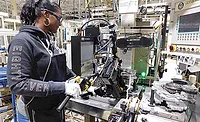
 Agile assembly systems allow manufacturers to react quickly to shifting customer demands and shorter product life cycles. With flexible automation, manufacturers can produce a wider variety of products; alter the mix of options or features; add new processes or assembly stations easily; and change volumes with minimal investment and changeover loss. Flexible assembly also allows manufacturers to implement production closer to a desired product launch date, with lower changeover costs and shorter timelines for those changeovers.
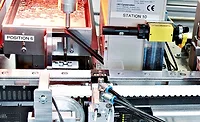
A flexible assembly system typically consists of a standard platform and a series of interchangeable process and test modules that can be removed, modified and replaced quickly and easily. It allows for the future assembly of similar, possibly unrelated or currently undefined products.
For all its benefits, though, actually implementing a flexible system can be complex and expensive.
"Flexible assembly is a worthy goal, but trying to achieve it can be frustrating," says Ed Zimmerman, P.E., director of technical operations at Apex Automation Inc. (Elizabethtown, PA). Zimmerman notes that dedicated automation systems require engineers to address current or short-term issues only, which is relatively simple compared to trying to design for future needs as well. There are also limits to the flexibility that can be created, even in highly adaptable systems.
"Engineers, management and accounting need to remember that true flexible assembly, like zero defects, will not be realized," he adds. "The best you can hope for is that your results are asymptotic to the goal."
According to Zimmerman, companies that are successful in justifying the higher cost on the front end of a flexible project don't adhere strictly to time-based payback periods. "They can make a logical business case for the projected residual value of a system after its initial use-many times without being able to point to the bottom line, hard-money justification," he says.
Looking for quick answers on assembly and manufacturing topics? Try Ask ASM, our new smart AI search tool. Ask ASM
Looking for a reprint of this article?
From high-res PDFs to custom plaques, order your copy today!