Assembly Magazine logo
search
Ask ASSEMBLY AI
cart
facebook twitter linkedin youtube
  • Sign In
  • Create Account
  • Sign Out
  • My Account
Assembly Magazine logo
  • TRENDS
    • Ask ASSEMBLY AI
    • Trends
    • News
    • New Products
  • INDUSTRIES
    • Aerospace
    • Appliance
    • DFMA Assembly
    • Medical Devices
    • Green Manufacturing
    • Lean Manufacturing
    • Machinery Assembly
    • Electronics Assembly
    • Automotive
  • TECHNOLOGIES
    • Adhesives & Dispensing
    • Assembly Presses
    • Automated Assembly Systems
    • Manufacturing Management
    • Manufacturing Software
    • Motion Control
    • Screwdriving & Riveting
    • Robotics
    • Test & Inspection
    • Plastics & Metal Welding
    • Wire Processing
    • Workstations
  • AUTONOMOUS & ELECTRIC MOBILITY
    • AEM Magazine Archives
    • Autonomy
    • Electrification
    • Mobility Services
    • Assembly & Testing
    • AV/EM News
  • MEDIA
    • Ask ASSEMBLY AI
    • Podcasts
    • Assembly News Now
    • Assembly TV
    • Webinars
    • eBooks
  • EVENTS
    • Calendar
    • The ASSEMBLY Show
  • MORE
    • Exclusives >
      • Plant of the Year
      • Capital Spending
    • Buyers Guide >
      • Supplier Insights
    • Classifieds
    • Featured Products
    • Newsletters
    • Store
    • White Papers
    • Columns
    • Sponsor Insights
  • INFOCENTER
    • Assembly & Test Solutions
  • EMAGAZINE
    • eMagazine
    • Archive Issues
    • Advertise
    • Contact Us
    • Sign Up
Columns

Bonding Lines: Cyanoacrylates for Assembly

By Dr. George W. Ritter
January 30, 2007


Wouldn’t an adhesive that bonds to everything, cures instantly, survives temperature extremes and never breaks be a super glue? Well, almost. Cyanoacrylate adhesives (CAs) have been in common use for about 40 years, but for most of that time, their major attribute was curing quickly. Otherwise, they were brittle, finicky with surfaces, had limited temperature capability, and couldn’t tolerate bond line gaps. Fast, yes, but hardly super.

Technology has caught up with marketing. New CAs are tougher and fill gaps better, with better surface tolerance and much higher temperature resistance. The industry has shaken out, leaving a few suppliers with competitive instincts focused on improvements. Newer formulations offer far more than cure speed as their come-on advantage, although speed is still an important attribute.

Cyanoacrylate adhesives are a subset of the acrylic family. Acrylics inherently cure rapidly. Other members of the acrylic family include the anaerobic adhesives and UV-curable adhesives. CAs have a chemical backbone that allows the resin to cure when exposed to moisture or hydroxyl groups. Metals, ceramics and glasses have both, so CAs bond readily to these materials. This is also why CAs bond skin instantly and have found renewed applicability in wound closure. CAs do not cure on acidic surfaces so freshly pickled metals require neutralization before bonding.

Plastics and rubber are not inherently polar and have little adsorbed moisture, so primers are necessary to provide surface reactivity. Mixed CA resins feature better molecular compatibility with plastic surfaces, but even with these improvements, most CA bonding is done on metals and glasses. Curing on less compatible surfaces will take longer, a reality that must be allowed for in production.

In fact, CAs don’t completely cure instantly. They gel rapidly, depending on the surface, so officially they are “rapid fixturing.” The actual full cure takes place over hours and may be accelerated by heating. Rapid fixturing is important because it allows sequential assembly while minimizing the time the joint is susceptible to being disturbed as the adhesive sets.

Acrylic chemistry allows wide flexibility in formulating. Toughening agents and fillers combat brittleness and improve gap filling. New co-curing chemistry and secondary heat curing have increased temperature limits of CAs. Significant advances in formulating greatly broadened the structural applicability of CAs to include even routine “third hand” fixturing on assembly lines.

While thicker bond lines can now be tolerated, close-fitting joints and bond lines less than 0.01 inch are still favored. Compressive loading is preferred and peel moments should be avoided. Most CAs have low viscosity (10 to 500 centipoise) so they spread easily and can even penetrate some joints by capillary action. Dispensing by syringe or drop dispensers is commonplace. Automated dispensing equipment is available at modest cost from many suppliers. Some systems even feature patterned, automated dispensing on X-Y-Z tables.

CAs may seem expensive, but they offer significant trade-offs in labor cost, capital investment and quality by virtue of their speed and room-temperature cure. Any product that requires rapid assembly of small components may benefit from using a CA adhesive. Consumable cost can be minimized with reproducible and precise automated dispensing. Most CAs are one-part systems so there are no losses from mixing and no pot life issues. Standard CAs function up to 180 F and require no post-curing. A secondary heat cure, typically in an oven, is required for those adhesives featuring high temperature resistance-up to 350 F.

Most CAs do not require mixing, are stable in air. They do not require refrigeration, but should be stored in a low-humidity environment. Health and disposal issues with CAs are minimal. Other than caution for bonding to skin, handling requirements are not extraordinary nor are there fume issues.

Super? Well, maybe not. But advances in technology have brought cyanoacrylate adhesives into major league status. Once a novelty for fixing teacups, they have come into their own as a genuine advantage in assembly. These versatile adhesives are easy to use and available worldwide. They are well worth considering for the right assembly applications.

Share This Story

Looking for a reprint of this article?
From high-res PDFs to custom plaques, order your copy today!

Technology Leader for Adhesives and Plastics
Edison Welding Institute, Columbus, OH

EWI is the largest research and applications facility in North America dedicated to the art and science of materials joining.

Recommended Content

JOIN TODAY
To unlock your recommendations.

Already have an account? Sign In

  • Made in the U.S.A.

    Consumer Products Manufacturing: Made in the USA

    Supply chain lessons learned during the coronavirus...
    Automated Assembly Systems
    By: Austin Weber
  • Best Practices for Press-Fit Assembly

    Best Practices for Press-Fit Assembly

    In manufacturing, ironclad formulas for success are hard...
    Assembly Presses
    By: Jim Camillo
  • aem0523leader-tesla1.jpg

    Tesla Rethinks the Assembly Line

    Engineers at Tesla Inc. have developed a new process that...
    Industries
    By: Austin Weber
Manage My Account
  • eMagazine Subscription
  • Assembly Newsletters
  • Online Registration
  • Subscription Customer Service
  • Manage My Preferences

More Videos

Sponsored Content

Sponsored Content is a special paid section where industry companies provide high quality, objective, non-commercial content around topics of interest to the ASSEMBLY audience. All Sponsored Content is supplied by the advertising company and any opinions expressed in this article are those of the author and not necessarily reflect the views of ASSEMBLY or its parent company, BNP Media. Interested in participating in our Sponsored Content section? Contact your local rep!

close
  • ultrasonic welding
    Sponsored bySonobond Ultrasonics

    Engineering Efficiency in High-Performance Assembly: How Ultrasonic Welding Enhances Throughput, Reliability and Quality

  • UV curing system
    Sponsored byDymax

    Why UV Intensity Alone Doesn’t Define Curing Performance

  • wooden pallets
    Sponsored byLEAN Manufacturing Products

    Eliminating Waste on the Shop Floor: Applying Lean Principles to Improve Manufacturing Efficiency

Popular Stories

ASSEMBLY News Now, episode-30: Volvo Redesigns EV Manufacturing

Volvo Redesigns EV Manufacturing

Boeing CEO Kelly Ortberg announces 1 billion investment

Boeing Plans $1 Billion Wichita Investment, Workforce Training Center

automated consumer goods assembly system

Best Practices for Cycle Time Optimization

Watch the latest episode of ANN now!

Events

July 24, 2025

From Shop Floor to CFO: How Manufacturers Are Closing the Loop Between Operations and Finance

On Demand Learn how manufacturers are bridging the gap between the shop floor and ERP systems to gain real-time visibility, streamline operations, and kick-start digital transformation—without waiting years.

Sponsored by:

PicoStratusGreen
July 30, 2025

Buffer Analysis and Design Fundamentals for Manufacturing Excellence

On Demand In this presentation, Dr. Herman Tang shares practical insights from his industry experience and research on buffer management in manufacturing operations.

View All Submit An Event

Poll

Difficult Assembly Processes

Which assembly process gives you the most difficulty?
View Results Poll Archive

Products

Manufacturing Cost Policy Deployment (MCPD) Profitability Scenarios: Systematic and Systemic Improvement of Manufacturing Costs

Manufacturing Cost Policy Deployment (MCPD) Profitability Scenarios: Systematic and Systemic Improvement of Manufacturing Costs

See More Products
Register for webinar - Modernizing Automotive Assembly: Why Upgrading Legacy MES is a Business Imperative

Related Articles

  • Cyanoacrylates for Assembly

    Cyanoacrylates for Assembly

    See More
  • Bonding Lines: Acrylic Adhesives Forte-Versatility

    See More
  • Bonding Lines: Hotmelts-Modern Ancients

    See More

Related Products

See More Products
  • 0001346.jpeg

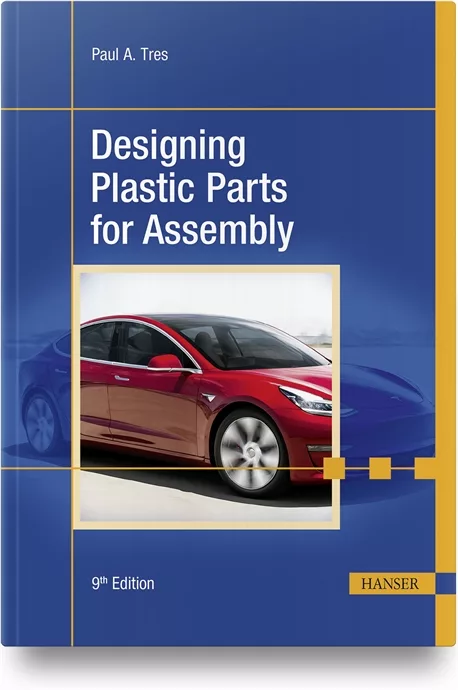
    Designing Plastic Parts for Assembly 9E

  • Product Design for Manufacture and Assembly, Third Edition

  • Collaborative Product Assembly Design and Assembly Planning, 1st Edition

See More Products

Related Directories

  • Retrocausal - AI Copilots For Manufacturing Assembly Optimization

×

Never miss the latest news and trends driving the manufacturing industry

Stay in the know on the latest assembly trends.

JOIN TODAY!
  • RESOURCES
    • Advertise
    • Contact Us
    • Directories
    • Manufacturing Division
    • Store
    • Want More?
  • SIGN UP TODAY
    • Create Account
    • eMagazine
    • Newsletters
    • Customer Service
    • Manage Preferences
  • SERVICES
    • Marketing Services
    • Reprints
    • Market Research
    • List Rental
    • Survey/Respondent Access
  • STAY CONNECTED
    • LinkedIn
    • Facebook
    • Instagram
    • YouTube
    • X (Twitter)
  • PRIVACY
    • PRIVACY POLICY
    • TERMS & CONDITIONS
    • DO NOT SELL MY PERSONAL INFORMATION
    • PRIVACY REQUEST
    • ACCESSIBILITY

Copyright ©2026. All Rights Reserved BNP Media, Inc. and BNP Media II, LLC.

Design, CMS, Hosting & Web Development :: ePublishing