Assembly Magazine logo
search
Ask ASSEMBLY AI
cart
facebook twitter linkedin youtube
  • Sign In
  • Create Account
  • Sign Out
  • My Account
Assembly Magazine logo
  • TRENDS
    • Ask ASSEMBLY AI
    • Trends
    • News
    • New Products
  • INDUSTRIES
    • Aerospace
    • Appliance
    • DFMA Assembly
    • Medical Devices
    • Green Manufacturing
    • Lean Manufacturing
    • Machinery Assembly
    • Electronics Assembly
    • Automotive
  • TECHNOLOGIES
    • Adhesives & Dispensing
    • Assembly Presses
    • Automated Assembly Systems
    • Manufacturing Management
    • Manufacturing Software
    • Motion Control
    • Screwdriving & Riveting
    • Robotics
    • Test & Inspection
    • Plastics & Metal Welding
    • Wire Processing
    • Workstations
  • AUTONOMOUS & ELECTRIC MOBILITY
    • AEM Magazine Archives
    • Autonomy
    • Electrification
    • Mobility Services
    • Assembly & Testing
    • AV/EM News
  • MEDIA
    • Ask ASSEMBLY AI
    • Podcasts
    • Assembly News Now
    • Assembly TV
    • Webinars
    • eBooks
  • EVENTS
    • Calendar
    • The ASSEMBLY Show
  • MORE
    • Exclusives >
      • Plant of the Year
      • Capital Spending
    • Buyers Guide >
      • Supplier Insights
    • Classifieds
    • Featured Products
    • Newsletters
    • Store
    • White Papers
    • Columns
    • Sponsor Insights
  • INFOCENTER
    • Assembly & Test Solutions
  • EMAGAZINE
    • eMagazine
    • Archive Issues
    • Advertise
    • Contact Us
    • Sign Up
Columns

Bonding Lines: Acrylic Adhesives Forte-Versatility

By Dr. George W. Ritter
August 1, 2007

Editor’s note: ASSEMBLY magazine is launching three new columns this year. “Bonding Lines,” is dedicated to adhesive bonding and dispensing and is also running in February, May and November.


Adhesives and polymers are traditionally named for their chemical structure or a chemical reactivity site. So it is that acrylics are named for a reactive group that will polymerize. Acrylics are the largest group of “addition” polymers, so called because they add to themselves or other structures that look chemically like an acrylic. They react by a chemical mechanism that differs from epoxies, polyesters or urethanes, in that it requires only one type of monomer instead of two. This reaction can be quite rapid and yields high molecular weights quickly. An acrylic may reach full strength in seconds or hours; other adhesives may require weeks.

This highly energetic reaction chemistry makes it possible for acrylics to co-react with other materials containing an activated carbon-carbon double bond that mimics the acrylic group. Incorporating styrene, unsaturated rubber, or other acrylic resins is relatively easy. This results in a highly variable polymer backbone that allows tailoring acrylic adhesives to meet a wide range of operating needs and conditions.

Acrylic adhesives are often composed of mixed monomers that react to form a co-polymer. Common reactive monomers such as methyl methacrylate and styrene are also solvents in their own right, producing a low-viscosity mix with good solvating ability. In addition, the reactive diluents become part of the reaction mixture, producing very low levels of volatile organic compounds (VOC). The solvating ability provides the acrylic adhesive with some ability to cut through oil, and the low viscosity provides very good surface wetting.

This wetting ability, plus a wide variety of chemical formulations, gives acrylic adhesives their forte: extreme versatility in bonding a wide range of substrates. Acrylic adhesives are available to bond almost any material. They are used with metals, most plastics, composites, and natural or synthetic rubber compounds. Adhesives formulated to bond to olefins, low energy surfaces, and other “non-bondable” surfaces are often acrylics. The wide formulating range also enables wide performance ranges. Acrylic monomers have pendant-modifying groups that change the properties of the polymer. By selecting different monomers, acrylics can be formulated for use from sub-zero environments up to about 350 F, with crosslinking. Toughening agents can be added to increase durability. The acrylic backbone is inherently chemically resistant although extremes of pH are problematic because of attack on the pendant groups.

Long pendant groups, such as afforded by butyl acrylates, produce a very soft polymer. This provides inherent pressure sensitivity. Ethyl- and butyl-acrylate monomers are common in pressure sensitive adhesive (PSA) formulations. Methyl methacrylate and styrene monomers produce high-strength segments for good creep and temperature resistance. Acrylic-based PSAs represent a huge class of adhesives. Structural two-sided tapes allow bonding in the absence of pastes or liquids and with minimal waste. PSAs are used in more applications than any other adhesive, so the technology afforded by acrylic chemistry has helped to build the global adhesives industry.

One of the most revolutionary applications of acrylic chemistry has been the development of resins with photocatalysts that initiate rapid polymerization in response to UV and also, in some cases, to visible light. The latter have a particular advantage in that visible light diffuses more than UV, making it easier to initiate curing through a somewhat opaque barrier. Most UV-curable adhesives and many UV-curable coatings are acrylic-based. Reducing VOC content and eliminating the need for a bake oven are as attractive as the increased processing speed. Light-curing adhesives and coatings represent a considerable “greening” opportunity.

Light-curing technology has been extended to the development of dental restorative resins which can replace traditional mercury amalgams in many applications. This has an obvious benefit to the long-term health of the patient and eliminates exposure to mercury for dental practitioners. These resins further demonstrate the advances that have been made in odor control for acrylic adhesives. Newer formulations are noticeably easier on the senses than previous systems.

Speed and versatility are two attributes that are hard to beat in the adhesives industry. Joining two materials quickly and reliably provides a tremendous manufacturing asset. Their ability to build strength quickly and tolerate imperfect surfaces, combined with a broad service operating range, allows acrylic adhesives to provide new manufacturing possibilities for many industries.

Share This Story

Looking for a reprint of this article?
From high-res PDFs to custom plaques, order your copy today!

Technology Leader for Adhesives and Plastics
Edison Welding Institute, Columbus, OH

EWI is the largest research and applications facility in North America dedicated to the art and science of materials joining.

Recommended Content

JOIN TODAY
To unlock your recommendations.

Already have an account? Sign In

  • Made in the U.S.A.

    Consumer Products Manufacturing: Made in the USA

    Supply chain lessons learned during the coronavirus...
    Automated Assembly Systems
    By: Austin Weber
  • Best Practices for Press-Fit Assembly

    Best Practices for Press-Fit Assembly

    In manufacturing, ironclad formulas for success are hard...
    Assembly Presses
    By: Jim Camillo
  • aem0523leader-tesla1.jpg

    Tesla Rethinks the Assembly Line

    Engineers at Tesla Inc. have developed a new process that...
    Automotive Assembly
    By: Austin Weber
Manage My Account
  • eMagazine Subscription
  • Assembly Newsletters
  • Online Registration
  • Subscription Customer Service
  • Manage My Preferences

More Videos

Sponsored Content

Sponsored Content is a special paid section where industry companies provide high quality, objective, non-commercial content around topics of interest to the ASSEMBLY audience. All Sponsored Content is supplied by the advertising company and any opinions expressed in this article are those of the author and not necessarily reflect the views of ASSEMBLY or its parent company, BNP Media. Interested in participating in our Sponsored Content section? Contact your local rep!

close
  • ultrasonic welding
    Sponsored bySonobond Ultrasonics

    Engineering Efficiency in High-Performance Assembly: How Ultrasonic Welding Enhances Throughput, Reliability and Quality

  • UV curing system
    Sponsored byDymax

    Why UV Intensity Alone Doesn’t Define Curing Performance

  • wooden pallets
    Sponsored byLEAN Manufacturing Products

    Eliminating Waste on the Shop Floor: Applying Lean Principles to Improve Manufacturing Efficiency

Popular Stories

ASSEMBLY News Now, episode-30: Volvo Redesigns EV Manufacturing

Volvo Redesigns EV Manufacturing

Boeing CEO Kelly Ortberg announces 1 billion investment

Boeing Plans $1 Billion Wichita Investment, Workforce Training Center

GE Appliances Worker on Line

GE Appliances Expands Factory AI With 800 Gemini Enterprise Agents

Watch the latest episode of ANN now!

Events

July 24, 2025

From Shop Floor to CFO: How Manufacturers Are Closing the Loop Between Operations and Finance

On Demand Learn how manufacturers are bridging the gap between the shop floor and ERP systems to gain real-time visibility, streamline operations, and kick-start digital transformation—without waiting years.

Sponsored by:

PicoStratusGreen
July 30, 2025

Buffer Analysis and Design Fundamentals for Manufacturing Excellence

On Demand In this presentation, Dr. Herman Tang shares practical insights from his industry experience and research on buffer management in manufacturing operations.

View All Submit An Event

Poll

Difficult Assembly Processes

Which assembly process gives you the most difficulty?
View Results Poll Archive

Products

Manufacturing Cost Policy Deployment (MCPD) Profitability Scenarios: Systematic and Systemic Improvement of Manufacturing Costs

Manufacturing Cost Policy Deployment (MCPD) Profitability Scenarios: Systematic and Systemic Improvement of Manufacturing Costs

See More Products
Register for webinar - Modernizing Automotive Assembly: Why Upgrading Legacy MES is a Business Imperative

Related Articles

  • Bonding Lines: "Epoxy Those Parts"

    See More
  • Bonding Lines: Cyanoacrylates for Assembly

    See More
  • Bonding Lines: Hotmelts-Modern Ancients

    See More

Related Products

See More Products
  • 0001349.jpeg

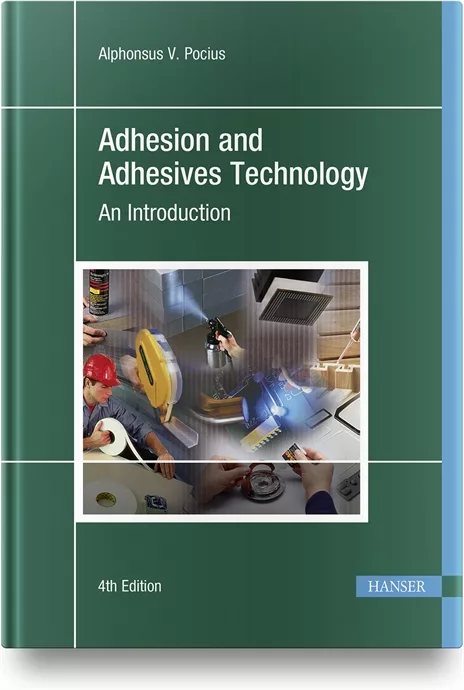
    Adhesion and Adhesives Technology 4e

  • Testing Adhesive Joints: Best Practices

  • The Automotive Body Manufacturing Systems and Processes

See More Products

Events

View AllSubmit An Event
  • August 14, 2025

    Adhesives, Dispensing and Curing Technology Panel Discussion

    On Demand Get ready for The ASSEMBLY Show happening October 21 – 23 at the Donald E. Stephens Convention Center in Rosemont, Illinois. Join us for an exclusive pre-show webinar to learn about the pros and cons of major adhesive chemistries and how to choose the best dispensing method for your application.
View AllSubmit An Event

Related Directories

  • Master Bond Inc.

    Master Bond is a custom formulator of adhesives, sealants, coatings, potting and encapsulation compounds with over 3,000 grades of one and two part epoxies, silicones and UV curable compounds. Systems meet precise application requirements and are employed in high-tech industries including aerospace, electronics, automotive, optical, medical, oil and chemical processing.
  • Adhesives Research Inc.

    Adhesives Research is a global leader in providing adhesive design flexibility, fast development capabilities, combined with unique turnkey solutions. Adhesives Research has a broad range of commercially available products and specially developed adhesive and coating platform technologies for the bonding, assembly and functional performance of Medical devices, Electronics and Industrial applications.
×

Never miss the latest news and trends driving the manufacturing industry

Stay in the know on the latest assembly trends.

JOIN TODAY!
  • RESOURCES
    • Advertise
    • Contact Us
    • Directories
    • Manufacturing Division
    • Store
    • Want More?
  • SIGN UP TODAY
    • Create Account
    • eMagazine
    • Newsletters
    • Customer Service
    • Manage Preferences
  • SERVICES
    • Marketing Services
    • Reprints
    • Market Research
    • List Rental
    • Survey/Respondent Access
  • STAY CONNECTED
    • LinkedIn
    • Facebook
    • Instagram
    • YouTube
    • X (Twitter)
  • PRIVACY
    • PRIVACY POLICY
    • TERMS & CONDITIONS
    • DO NOT SELL MY PERSONAL INFORMATION
    • PRIVACY REQUEST
    • ACCESSIBILITY

Copyright ©2026. All Rights Reserved BNP Media, Inc. and BNP Media II, LLC.

Design, CMS, Hosting & Web Development :: ePublishing