Assembly Magazine logo
search
Ask ASSEMBLY AI
cart
facebook twitter linkedin youtube
  • Sign In
  • Create Account
  • Sign Out
  • My Account
Assembly Magazine logo
  • TRENDS
    • Ask ASSEMBLY AI
    • Trends
    • News
    • New Products
  • INDUSTRIES
    • Aerospace
    • Appliance
    • DFMA Assembly
    • Medical Devices
    • Green Manufacturing
    • Lean Manufacturing
    • Machinery Assembly
    • Electronics Assembly
    • Automotive
  • TECHNOLOGIES
    • Adhesives & Dispensing
    • Assembly Presses
    • Automated Assembly Systems
    • Manufacturing Management
    • Manufacturing Software
    • Motion Control
    • Screwdriving & Riveting
    • Robotics
    • Test & Inspection
    • Plastics & Metal Welding
    • Wire Processing
    • Workstations
  • AUTONOMOUS & ELECTRIC MOBILITY
    • AEM Magazine Archives
    • Autonomy
    • Electrification
    • Mobility Services
    • Assembly & Testing
    • AV/EM News
  • MEDIA
    • Ask ASSEMBLY AI
    • Podcasts
    • Assembly News Now
    • Assembly TV
    • Webinars
    • eBooks
  • EVENTS
    • Calendar
    • The ASSEMBLY Show
  • MORE
    • Exclusives >
      • Plant of the Year
      • Capital Spending
    • Buyers Guide >
      • Supplier Insights
    • Classifieds
    • Featured Products
    • Newsletters
    • Store
    • White Papers
    • Columns
    • Sponsor Insights
  • INFOCENTER
    • Assembly & Test Solutions
  • EMAGAZINE
    • eMagazine
    • Archive Issues
    • Advertise
    • Contact Us
    • Sign Up

Hybrid Riveting: The Best of Both Worlds

August 16, 2005

Joining dissimilar materials has long posed a challenge for design engineers. However, by combining different technologies such as adhesive bonding and mechanical fasteners, manufacturers can create strong, rigid assemblies that incorporate the best of both worlds.

Hybrid joining comes in many different forms, but is typically defined as "the combination of two or more joining techniques to produce joints with properties additional to those obtained from a single technique," says Ewen Kellar, principal project leader of the polymers group at The Welding Institute (TWI, Cambridge, England). "The most common types of hybrid joints are used for joining sheet materials and involve an adhesive in conjunction with a single-point joint technique, such as a rivet."

According to Kellar, techniques such as riv-bonding have been successfully used to join aluminum sheets in aerospace and automotive applications. Typically, an adhesive is applied to the surfaces to be joined prior to assembly. The parts are then joined with rivets. Compared to joints made only with rivets, riv-bonding offers benefits such as:

  • Continuous, leak-tight joints.
  • Higher-strength joints.
  • Increased joint stiffness.
  • Improved peel and impact resistance, because crack growth away from the joint is arrested by the adhesive bond.

"Although purists may argue that a high quality, all-bonded structure is aesthetically and structurally superior, or that a bolted structure is the simplest and most effective solution, both approaches have their shortcomings," Kellar says. "The hybrid joint offers the benefits of both systems in that the number of fasteners can be reduced significantly, thereby reducing the effect of hole damage and increasing the fatigue resistance of the structure....The fasteners that remain can act as a backup mechanism in the event of significant adhesive failure."

When riv-bonding, the presence of adhesive does not change the basic setting operation. But, it may influence the setting parameters and the load-displacement characteristics. Adhesives can also have a lubricating effect on the riveting process, a variable that needs to be taken into account during rivet and die selection, says Michael LaPensee, vice president of applications and marketing at Henrob Corp. (Novi, MI).

To reduce cycle times and prevent contaminating riveting tools with adhesive, engineers at TWI have developed a new hybrid riveting process called AdhFAST. This system is unique in that components can be assembled dry, checked for tolerance and then injected with adhesive at the final stage.

"This ensures a simplified process with increased quality control, maximizing the benefits of hybrid joint technology," says Steve Westgate, technical specialist in TWI's laser and sheet processes group. "Adhesive dispensing can be metered, with minimal wastage, making the process cleaner, with resultant health, safety and economic benefits."

According to Westgate, the adhesive is injected into the joint through specially designed fasteners. The fasteners also incorporate a means of controlling the spacing between the top and bottom substrates.

Looking for quick answers on assembly and manufacturing topics? Try Ask ASM, our new smart AI search tool. Ask ASM →

"This gives greater control of bond-line thickness and, therefore, improved process reliability and joint quality," he says. "The AdhFAST fastener can be either in the form of a specially designed component or, in some cases, a standard commercial fastener to which some modification has been made."

As automakers in particular continue to experiment with lightweight materials, most observers predict that hybrid riveting applications will grow.

"Automobiles have historically been assembled using multiple spot welds and, in more recent years, self-piercing rivets," says LaPensee. "However, as the requirements for stiffer and quieter vehicles become more demanding, the use of adhesives is becoming more widespread."

LaPensee notes that adhesives alone typically have very poor peel strength, which compromises vehicle crash performance. "The solution is to use a hybrid riv-bonded joint where the adhesive is the primary joining mechanism providing the stiffness and noise, vibration and harshness characteristics," he says. "The rivets get a free ride, but become the primary joining mechanism during a crash event when the adhesive would normally peel."

In recent years, several European manufacturers have demonstrated that aluminum bodies assembled using riv-bonding technology can equal or exceed chassis stiffness requirements. Successful aluminum-intensive vehicles that use riv-bonding technology include the Audi A8, the BMW 5 Series and the Jaguar XJ.

"The new BMW 5 Series uses aluminum and steel from A pillar to A pillar," says Joe Butvin, director of sales and marketing at Bollhoff-Rivnut Inc. (Kendallville, IN). "[BMW uses] 600 self-piercing rivets to assemble the components and most have adhesive involved."

The Jaguar XJ features an aluminum-sheet-intensive monocoque construction. It is assembled using lightweight aluminum joined by self-piercing rivets and epoxy adhesive. Jaguar engineers claim they adopted state-of-the-art techniques from the aerospace industry.

"The XJ's body is 60 percent stiffer yet 40 percent lighter than before," says Mike Richardson, research manager at Jaguar Cars Ltd. (Coventry, England). "In the XJ8, that translates into an overall weight savings of almost 200 pounds."

Share This Story

Looking for a reprint of this article?
From high-res PDFs to custom plaques, order your copy today!

Recommended Content

JOIN TODAY
To unlock your recommendations.

Already have an account? Sign In

  • Made in the U.S.A.

    Consumer Products Manufacturing: Made in the USA

    Supply chain lessons learned during the coronavirus...
    Automated Assembly Systems
    By: Austin Weber
  • Best Practices for Press-Fit Assembly

    Best Practices for Press-Fit Assembly

    In manufacturing, ironclad formulas for success are hard...
    Assembly Presses
    By: Jim Camillo
  • aem0523leader-tesla1.jpg

    Tesla Rethinks the Assembly Line

    Engineers at Tesla Inc. have developed a new process that...
    Assembly and Testing
    By: Austin Weber
Manage My Account
  • eMagazine Subscription
  • Assembly Newsletters
  • Online Registration
  • Subscription Customer Service
  • Manage My Preferences

More Videos

Sponsored Content

Sponsored Content is a special paid section where industry companies provide high quality, objective, non-commercial content around topics of interest to the ASSEMBLY audience. All Sponsored Content is supplied by the advertising company and any opinions expressed in this article are those of the author and not necessarily reflect the views of ASSEMBLY or its parent company, BNP Media. Interested in participating in our Sponsored Content section? Contact your local rep!

close
  • ultrasonic welding
    Sponsored bySonobond Ultrasonics

    Engineering Efficiency in High-Performance Assembly: How Ultrasonic Welding Enhances Throughput, Reliability and Quality

  • UV curing system
    Sponsored byDymax

    Why UV Intensity Alone Doesn’t Define Curing Performance

  • wooden pallets
    Sponsored byLEAN Manufacturing Products

    Eliminating Waste on the Shop Floor: Applying Lean Principles to Improve Manufacturing Efficiency

Popular Stories

ASSEMBLY News Now, episode-30: Volvo Redesigns EV Manufacturing

Volvo Redesigns EV Manufacturing

automated consumer goods assembly system

Best Practices for Cycle Time Optimization

Boeing CEO Kelly Ortberg announces 1 billion investment

Boeing Plans $1 Billion Wichita Investment, Workforce Training Center

Watch the latest episode of ANN now!

Events

July 24, 2025

From Shop Floor to CFO: How Manufacturers Are Closing the Loop Between Operations and Finance

On Demand Learn how manufacturers are bridging the gap between the shop floor and ERP systems to gain real-time visibility, streamline operations, and kick-start digital transformation—without waiting years.

Sponsored by:

PicoStratusGreen
July 30, 2025

Buffer Analysis and Design Fundamentals for Manufacturing Excellence

On Demand In this presentation, Dr. Herman Tang shares practical insights from his industry experience and research on buffer management in manufacturing operations.

View All Submit An Event

Poll

Difficult Assembly Processes

Which assembly process gives you the most difficulty?
View Results Poll Archive

Products

Manufacturing Cost Policy Deployment (MCPD) Profitability Scenarios: Systematic and Systemic Improvement of Manufacturing Costs

Manufacturing Cost Policy Deployment (MCPD) Profitability Scenarios: Systematic and Systemic Improvement of Manufacturing Costs

See More Products
Register for webinar - Modernizing Automotive Assembly: Why Upgrading Legacy MES is a Business Imperative

Related Articles

  • bollhoff

    The best of two worlds combined for modern multi-material designs

    See More
  • blind rivets

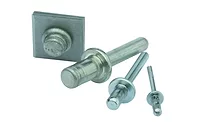
    Hybrid Riveting

    See More

Related Products

See More Products
  • Testing Adhesive Joints: Best Practices

  • supply chain.jpg

    Supply Chain Management Best Practices, 3rd Edition

  • digitalization.jpg

    The Digitalization of the 21st Century Supply Chain

See More Products

Related Directories

  • MC Machinery Systems Inc.

    MC Machinery Systems customers get the best of both worlds: a single source for a diverse arsenal of manufacturing technologies and our expansive and knowledgeable support network. Our expertise spans virtually every aspect of metalworking--from simple fabrication to CNC-driven, automated manufacturing cells.
  • AWT World Trade Inc.

    AWT World Trade, Inc., has been your complete manufacturing source for over 45 years. Products include a wide variety of both manual/automatic textile and graphics presses; and gas, electric and UV dryers; t-shirt printers; wood, and aluminum frames, as well as our exclusive Fab-Lok frames; drying & storage racks to fit every budget and application; squeegee holders, handles, blades and sharpeners; cleaning and reclaiming systems; exposing units; color mixers; vacuum holddown tables; replacement blankets and much more! Visit us at www.awt-gpi.com
×

Never miss the latest news and trends driving the manufacturing industry

Stay in the know on the latest assembly trends.

JOIN TODAY!
  • RESOURCES
    • Advertise
    • Contact Us
    • Directories
    • Manufacturing Division
    • Store
    • Want More?
  • SIGN UP TODAY
    • Create Account
    • eMagazine
    • Newsletters
    • Customer Service
    • Manage Preferences
  • SERVICES
    • Marketing Services
    • Reprints
    • Market Research
    • List Rental
    • Survey/Respondent Access
  • STAY CONNECTED
    • LinkedIn
    • Facebook
    • Instagram
    • YouTube
    • X (Twitter)
  • PRIVACY
    • PRIVACY POLICY
    • TERMS & CONDITIONS
    • DO NOT SELL MY PERSONAL INFORMATION
    • PRIVACY REQUEST
    • ACCESSIBILITY

Copyright ©2026. All Rights Reserved BNP Media, Inc. and BNP Media II, LLC.

Design, CMS, Hosting & Web Development :: ePublishing