Assembly Magazine logo
search
Ask ASSEMBLY AI
cart
facebook twitter linkedin youtube
  • Sign In
  • Create Account
  • Sign Out
  • My Account
Assembly Magazine logo
  • TRENDS
    • Ask ASSEMBLY AI
    • Trends
    • News
    • New Products
  • INDUSTRIES
    • Aerospace
    • Appliance
    • DFMA Assembly
    • Medical Devices
    • Green Manufacturing
    • Lean Manufacturing
    • Machinery Assembly
    • Electronics Assembly
    • Automotive
  • TECHNOLOGIES
    • Adhesives & Dispensing
    • Assembly Presses
    • Automated Assembly Systems
    • Manufacturing Management
    • Manufacturing Software
    • Motion Control
    • Screwdriving & Riveting
    • Robotics
    • Test & Inspection
    • Plastics & Metal Welding
    • Wire Processing
    • Workstations
  • AUTONOMOUS & ELECTRIC MOBILITY
    • AEM Magazine Archives
    • Autonomy
    • Electrification
    • Mobility Services
    • Assembly & Testing
    • AV/EM News
  • MEDIA
    • Ask ASSEMBLY AI
    • Podcasts
    • Assembly News Now
    • Assembly TV
    • Webinars
    • eBooks
  • EVENTS
    • Calendar
    • The ASSEMBLY Show
  • MORE
    • Exclusives >
      • Plant of the Year
      • Capital Spending
    • Buyers Guide >
      • Supplier Insights
    • Classifieds
    • Featured Products
    • Newsletters
    • Store
    • White Papers
    • Columns
    • Sponsor Insights
  • INFOCENTER
    • Assembly & Test Solutions
  • EMAGAZINE
    • eMagazine
    • Archive Issues
    • Advertise
    • Contact Us
    • Sign Up
Columns

Uncommon Sense: Cut Inventory to Get Lean?

May 1, 2002


In the past, most operations managers used the income statement in managing their businesses, and they weren’t too concerned about inventory. Shipping late or losing an order would hurt their careers far more than having a lot of money tied up in inventory.

When the prime rate went over 20 percent, inventory became a significant cost on the income statement, and suddenly even the most tradition-bound operations manager took notice. The pendulum swung and, in many cases, the objective quickly became slashing inventories of finished goods, work-in-process and supplied components, regardless of the impact on operations.

The prime rate today is 4.75 percent and not likely to go much above that for at least the next year or so. However, most operations managers and all consultants still focus on eliminating inventories! Let’s look at two common approaches and their consequences.

  • One familiar approach is Just in Time. The JiT philosophy is that a supplier should be able to respond to customer demand from current output. This makes sense philosophically, and if demand stays constant it can be achieved. But demand rarely stays constant for long, if at all. One way to deal with this is to invest in enough capacity to produce at peak demand and have idle capital equipment during down markets. Alternatively, you could build inventory to accommodate peak demand and have excess inventory when demand is soft.

    Either alternative presupposes you’ve achieved maximum agility, flexibility and cost-effectiveness. However, someone in the supply chain must either carry inventory or overinvest, no matter how lean you’ve become!

  • Another approach is the rigid sequential process that builds only one product. In this process, work is handed directly from one process step to the next, each process step has exactly the same work content as the one before and after, and nothing ever breaks down. Too bad this never occurs in real life! Real process streams have to deal with product families, each of which requires different process steps with different work content, changeover time and replenishment.
The rigid sequential process can’t achieve the planned output because each process step is inefficient and the effects are cumulative. In a sequential process when one step shuts down they all shut down. And because each step shuts down at random, the time out of production is the sum of all downtime. If a process includes 20 steps, and each is inefficient by 1 percent, the best you can expect to achieve is 80 percent of planned output.

The answer is to add buffer, but the question is how much and where? Trial and error is one approach, but the best answer is to create a mathematical model of the process stream and test it under varying operating conditions.

The effect of any perturbation on the dynamic behavior of a process stream is often quite subtle, and intuitive solutions are usually wrong. Simulation shows you where the constraints are and how much buffer is needed.

There’s absolutely no doubt that if a firm is to be competitive—especially in today’s market—it has to operate at optimum efficiency, and controlling inventory is essential to optimizing efficiency. There’s an optimimum tradeoff between investing in hardware and inventory; between managing with the income statement and the balance sheet. The successful operations manager will find that optimum tradeoff.

Looking for quick answers on assembly and manufacturing topics? Try Ask ASM, our new smart AI search tool. Ask ASM →

Share This Story

Looking for a reprint of this article?
From high-res PDFs to custom plaques, order your copy today!

Recommended Content

JOIN TODAY
To unlock your recommendations.

Already have an account? Sign In

  • Made in the U.S.A.

    Consumer Products Manufacturing: Made in the USA

    Supply chain lessons learned during the coronavirus...
    Automated Assembly Systems
    By: Austin Weber
  • Best Practices for Press-Fit Assembly

    Best Practices for Press-Fit Assembly

    In manufacturing, ironclad formulas for success are hard...
    Assembly Presses
    By: Jim Camillo
  • aem0523leader-tesla1.jpg

    Tesla Rethinks the Assembly Line

    Engineers at Tesla Inc. have developed a new process that...
    Industries
    By: Austin Weber
Manage My Account
  • eMagazine Subscription
  • Assembly Newsletters
  • Online Registration
  • Subscription Customer Service
  • Manage My Preferences

More Videos

Sponsored Content

Sponsored Content is a special paid section where industry companies provide high quality, objective, non-commercial content around topics of interest to the ASSEMBLY audience. All Sponsored Content is supplied by the advertising company and any opinions expressed in this article are those of the author and not necessarily reflect the views of ASSEMBLY or its parent company, BNP Media. Interested in participating in our Sponsored Content section? Contact your local rep!

close
  • ultrasonic welding
    Sponsored bySonobond Ultrasonics

    Engineering Efficiency in High-Performance Assembly: How Ultrasonic Welding Enhances Throughput, Reliability and Quality

  • UV curing system
    Sponsored byDymax

    Why UV Intensity Alone Doesn’t Define Curing Performance

  • wooden pallets
    Sponsored byLEAN Manufacturing Products

    Eliminating Waste on the Shop Floor: Applying Lean Principles to Improve Manufacturing Efficiency

Popular Stories

ASSEMBLY News Now, episode-30: Volvo Redesigns EV Manufacturing

Volvo Redesigns EV Manufacturing

Boeing CEO Kelly Ortberg announces 1 billion investment

Boeing Plans $1 Billion Wichita Investment, Workforce Training Center

GE Appliances Worker on Line

GE Appliances Expands Factory AI With 800 Gemini Enterprise Agents

Watch the latest episode of ANN now!

Events

July 24, 2025

From Shop Floor to CFO: How Manufacturers Are Closing the Loop Between Operations and Finance

On Demand Learn how manufacturers are bridging the gap between the shop floor and ERP systems to gain real-time visibility, streamline operations, and kick-start digital transformation—without waiting years.

Sponsored by:

PicoStratusGreen
July 30, 2025

Buffer Analysis and Design Fundamentals for Manufacturing Excellence

On Demand In this presentation, Dr. Herman Tang shares practical insights from his industry experience and research on buffer management in manufacturing operations.

View All Submit An Event

Poll

Difficult Assembly Processes

Which assembly process gives you the most difficulty?
View Results Poll Archive

Products

Manufacturing Cost Policy Deployment (MCPD) Profitability Scenarios: Systematic and Systemic Improvement of Manufacturing Costs

Manufacturing Cost Policy Deployment (MCPD) Profitability Scenarios: Systematic and Systemic Improvement of Manufacturing Costs

See More Products
Register for webinar - Modernizing Automotive Assembly: Why Upgrading Legacy MES is a Business Imperative

Related Articles

  • Uncommon Sense: Does Outsourcing Cut Costs?

    See More
  • Uncommon Sense: Inventory: Friend or Foe?

    See More
  • Uncommon Sense: The Truth About Inventory

    See More

Related Products

See More Products
  • Kaizen Assembly: Designing, Constructing, and Managing a Lean Assembly Line

  • pocket.jpg

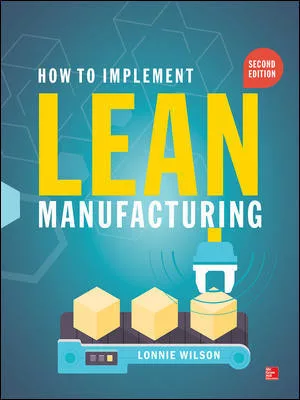
    How To Implement Lean Manufacturing, Second Edition

  • leaner

    Leaner Manufacturing: How to Make the Lean Production Process Easier, Faster, and More Cost-Effective

See More Products

Events

View AllSubmit An Event
  • May 20, 2026

    Stop the Shortages: Inventory Strategies That Keep Production Moving

    On Demand Join this webinar to discover how manufacturers can achieve optimal inventory levels, preventing assembly line shutdowns due to missing parts.
View AllSubmit An Event

Related Directories

  • Lean Factory America

    Our products aid in the elimination of waste, a cornerstone of lean manufacturing, by helping to eliminate errors, overproduction, inefficient processes, inventory, unnecessary transportation of product and unnecessary movement of personnel. Solutions are also highly configurable and customizable to provide customers with systems that are safe to both their personnel and products. The result is increased manufacturing efficiency and profitability for the customer.
  • Lean Manufacturing Products

    Lean Manufacturing Products LLC is a leading provider of innovative solutions designed to enhance operational efficiency and productivity in various industries. Specializing in lean manufacturing principles, we offer a comprehensive range of high-quality products, including racking systems, safety equipment, and modular storage solutions. Our mission is to help companies streamline their processes, reduce waste, and create more effective work environments. With a commitment to exceptional customer service and cutting-edge design, Lean Manufacturing Products LLC partners with businesses to implement best practices that drive success and foster continuous improvement.
×

Never miss the latest news and trends driving the manufacturing industry

Stay in the know on the latest assembly trends.

JOIN TODAY!
  • RESOURCES
    • Advertise
    • Contact Us
    • Directories
    • Manufacturing Division
    • Store
    • Want More?
  • SIGN UP TODAY
    • Create Account
    • eMagazine
    • Newsletters
    • Customer Service
    • Manage Preferences
  • SERVICES
    • Marketing Services
    • Reprints
    • Market Research
    • List Rental
    • Survey/Respondent Access
  • STAY CONNECTED
    • LinkedIn
    • Facebook
    • Instagram
    • YouTube
    • X (Twitter)
  • PRIVACY
    • PRIVACY POLICY
    • TERMS & CONDITIONS
    • DO NOT SELL MY PERSONAL INFORMATION
    • PRIVACY REQUEST
    • ACCESSIBILITY

Copyright ©2026. All Rights Reserved BNP Media, Inc. and BNP Media II, LLC.

Design, CMS, Hosting & Web Development :: ePublishing