Assembly Magazine logo
search
Ask ASSEMBLY AI
cart
facebook twitter linkedin youtube
  • Sign In
  • Create Account
  • Sign Out
  • My Account
Assembly Magazine logo
  • TRENDS
    • Ask ASSEMBLY AI
    • Trends
    • News
    • New Products
  • INDUSTRIES
    • Aerospace
    • Appliance
    • DFMA Assembly
    • Medical Devices
    • Green Manufacturing
    • Lean Manufacturing
    • Machinery Assembly
    • Electronics Assembly
    • Automotive
  • TECHNOLOGIES
    • Adhesives & Dispensing
    • Assembly Presses
    • Automated Assembly Systems
    • Manufacturing Management
    • Manufacturing Software
    • Motion Control
    • Screwdriving & Riveting
    • Robotics
    • Test & Inspection
    • Plastics & Metal Welding
    • Wire Processing
    • Workstations
  • AUTONOMOUS & ELECTRIC MOBILITY
    • AEM Magazine Archives
    • Autonomy
    • Electrification
    • Mobility Services
    • Assembly & Testing
    • AV/EM News
  • MEDIA
    • Ask ASSEMBLY AI
    • Podcasts
    • Assembly News Now
    • Assembly TV
    • Webinars
    • eBooks
  • EVENTS
    • Calendar
    • The ASSEMBLY Show
  • MORE
    • Exclusives >
      • Plant of the Year
      • Capital Spending
    • Buyers Guide >
      • Supplier Insights
    • Classifieds
    • Featured Products
    • Newsletters
    • Store
    • White Papers
    • Columns
    • Sponsor Insights
  • INFOCENTER
    • Assembly & Test Solutions
  • EMAGAZINE
    • eMagazine
    • Archive Issues
    • Advertise
    • Contact Us
    • Sign Up
DFMA AssemblyLean Manufacturing Assembly

What’s Your Perspective?

Risk looks differently depending on perspective.

By Dr. Mike Shipulski
June 3, 2013

To move your company to a better place, it matters more where you are than where you want to go. And before you can see clearly where you are, you must clarify your perspective.

For example, depending on your perspective, a cylinder looks differently. From the side its projection looks like a rectangle, from the top a circle, and from an off-angle a cylinder. Three different perspectives create three fundamentally different shapes. The shapes don’t just look differently, they are different. Which one’s right? Strangely, all three are. Perspective is that powerful.

With different perspectives there can be no consensus on the starting point never mind the destination. Imagine the chaotic meeting to define the destination where there’s fundamental disagreement on the starting point. The from-the-side contingent is adamant the starting point is a rectangle; the from-the-top disciples swear it’s a circle; and the off-axis zealot says it’s a cylinder. Three groups in viscous disagreement, all camps right. It’s difficult to get to the right destination with disagreement on the starting point.

Enough about geometry. Here are some real life examples:

Success looks differently depending on perspective. Perspective 1: Everything is good. We’re making lots of money, and we’re growing. Our products are good and our jobs are secure. Let’s do what we did last time because it worked. Let’s protect what we have. Perspective 2: Things are good, for now. Our products are good, but competitors are developing better ones. Let’s do the tough work to obsolete our best stuff. Someone’s going to do it, and it should be us.

Both perspectives are valid. If you want to grind it out, the first one is the way to go, and if you want to innovate, the second is better. But problems arise when a grind-it-out company tries to innovate and an innovation-driven company wants to grind it out. (Think transition from start-up to grown-up.)

Risk looks differently depending on perspective. Manufacturing’s perspective is this: We make the same thing every day. We’ve got known inputs, known processes, and known outputs. We’re concerned about disruptions in our daily routine. We’re concerned about things that get in the way of doing what we do. Product development’s perspective is this: We must change our product to improve performance and reduce cost, but the solution is unknown. Anything we change creates technical risk and schedule risk, so we’ve got to meet the new specifications and take the least risk doing it. The innovator’s perspective is this: We must invent things that don’t exist, solve problems no one recognizes, and commercialize them. To truly innovate, we must force ourselves out of our comfort zone. We must forcibly inject more risk than we can tolerate.

All three perspectives are valid, and thankfully we have all three. Within each group, there are likely shared perspectives, but not across the groups. To move the whole organization, before talk of a new destination, the right first step is a campaign to shift and align perspectives.

To start, senior leaders take the show on the road to educate on the new realities. Whether it’s increased competition, importance of emerging markets, or disruptive new technologies, the goal is to paint a new picture so everyone understands why it’s time for a new perspective. The biggest failure mode is to jump right into the grand new perspective without explaining why existing perspectives must change. The second biggest failure mode is to assume that a single presentation from the CEO will immediately shift perspectives.

 Perspective is more important and more powerful than our behavior suggests. We should change our behavior. 

Looking for quick answers on assembly and manufacturing topics? Try Ask ASM, our new smart AI search tool. Ask ASM →

KEYWORDS: design management manufacturing innovation product design

Share This Story

Looking for a reprint of this article?
From high-res PDFs to custom plaques, order your copy today!

Mike Shipulski is a leading authority on lean manufacturing, product development, and design for manufacturing and assembly. His column appeared every other month, alternating with Austin Weber’s “On Campus.” E-mail Mike with comments via mike@shipulski.com or follow his blog at www.shipulski.com.


Recommended Content

JOIN TODAY
To unlock your recommendations.

Already have an account? Sign In

  • Made in the U.S.A.

    Consumer Products Manufacturing: Made in the USA

    Supply chain lessons learned during the coronavirus...
    Automated Assembly Systems
    By: Austin Weber
  • Best Practices for Press-Fit Assembly

    Best Practices for Press-Fit Assembly

    In manufacturing, ironclad formulas for success are hard...
    Assembly Presses
    By: Jim Camillo
  • aem0523leader-tesla1.jpg

    Tesla Rethinks the Assembly Line

    Engineers at Tesla Inc. have developed a new process that...
    Electrification
    By: Austin Weber
Manage My Account
  • eMagazine Subscription
  • Assembly Newsletters
  • Online Registration
  • Subscription Customer Service
  • Manage My Preferences

More Videos

Sponsored Content

Sponsored Content is a special paid section where industry companies provide high quality, objective, non-commercial content around topics of interest to the ASSEMBLY audience. All Sponsored Content is supplied by the advertising company and any opinions expressed in this article are those of the author and not necessarily reflect the views of ASSEMBLY or its parent company, BNP Media. Interested in participating in our Sponsored Content section? Contact your local rep!

close
  • ultrasonic welding
    Sponsored bySonobond Ultrasonics

    Engineering Efficiency in High-Performance Assembly: How Ultrasonic Welding Enhances Throughput, Reliability and Quality

  • UV curing system
    Sponsored byDymax

    Why UV Intensity Alone Doesn’t Define Curing Performance

  • wooden pallets
    Sponsored byLEAN Manufacturing Products

    Eliminating Waste on the Shop Floor: Applying Lean Principles to Improve Manufacturing Efficiency

Popular Stories

ASSEMBLY News Now, episode-30: Volvo Redesigns EV Manufacturing

Volvo Redesigns EV Manufacturing

Boeing CEO Kelly Ortberg announces 1 billion investment

Boeing Plans $1 Billion Wichita Investment, Workforce Training Center

automated consumer goods assembly system

Best Practices for Cycle Time Optimization

Watch the latest episode of ANN now!

Events

July 24, 2025

From Shop Floor to CFO: How Manufacturers Are Closing the Loop Between Operations and Finance

On Demand Learn how manufacturers are bridging the gap between the shop floor and ERP systems to gain real-time visibility, streamline operations, and kick-start digital transformation—without waiting years.

Sponsored by:

PicoStratusGreen
July 30, 2025

Buffer Analysis and Design Fundamentals for Manufacturing Excellence

On Demand In this presentation, Dr. Herman Tang shares practical insights from his industry experience and research on buffer management in manufacturing operations.

View All Submit An Event

Poll

Difficult Assembly Processes

Which assembly process gives you the most difficulty?
View Results Poll Archive

Products

Manufacturing Cost Policy Deployment (MCPD) Profitability Scenarios: Systematic and Systemic Improvement of Manufacturing Costs

Manufacturing Cost Policy Deployment (MCPD) Profitability Scenarios: Systematic and Systemic Improvement of Manufacturing Costs

See More Products
Register for webinar - Modernizing Automotive Assembly: Why Upgrading Legacy MES is a Business Imperative

Related Articles

  • What's Your Carbon Footprint? Find Out at Assembly Summit

    See More
  • Shipulski on Design: How to Make Your Green Programs Actionable

    See More

Related Products

See More Products
  • 4 perspective.jpg

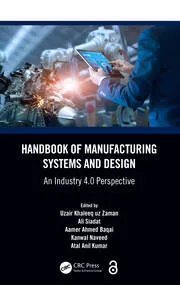
    Handbook of Manufacturing Systems and Design: An Industry 4.0 Perspective

  • november 2019 assembly

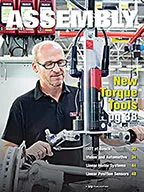
    ASSEMBLY November 2019 Issue

See More Products

Related Directories

  • IFSYS North America

    IFSYS core competence: Topnotch Parts Feeding and Parts Orientation Technology. No matter what parts your production process needs, we offer the right Feeder solution. IFSYS Technology is high feeding performance with low noise emissions, maximum protection of parts and low susceptibility to faults with our Step Feeder Systems & more. Step- and Bowl-Feeders, Blow-Feeding, Vibrational Feeders, Flexible Feeding Technology, Palletizing Systems and other customized Parts Feeding Systems plus measuring technology, optical sorting and screwing systems!
  • Visumatic Industrial Products

    Visumatic Industrial Products - the experts in automated fastening technology. Automatic feed and drive equipment to install screws, nuts, bolts, rings, pins, clips, rivets and specialty fasteners. Engineered products ranging from hand operated guns to machine builder robot EOAT, all robustly built for companies doing product assembly work.
×

Never miss the latest news and trends driving the manufacturing industry

Stay in the know on the latest assembly trends.

JOIN TODAY!
  • RESOURCES
    • Advertise
    • Contact Us
    • Directories
    • Manufacturing Division
    • Store
    • Want More?
  • SIGN UP TODAY
    • Create Account
    • eMagazine
    • Newsletters
    • Customer Service
    • Manage Preferences
  • SERVICES
    • Marketing Services
    • Reprints
    • Market Research
    • List Rental
    • Survey/Respondent Access
  • STAY CONNECTED
    • LinkedIn
    • Facebook
    • Instagram
    • YouTube
    • X (Twitter)
  • PRIVACY
    • PRIVACY POLICY
    • TERMS & CONDITIONS
    • DO NOT SELL MY PERSONAL INFORMATION
    • PRIVACY REQUEST
    • ACCESSIBILITY

Copyright ©2026. All Rights Reserved BNP Media, Inc. and BNP Media II, LLC.

Design, CMS, Hosting & Web Development :: ePublishing