Assembly Magazine logo
search
Ask ASSEMBLY AI
cart
facebook twitter linkedin youtube
  • Sign In
  • Create Account
  • Sign Out
  • My Account
Assembly Magazine logo
  • TRENDS
    • Ask ASSEMBLY AI
    • Trends
    • News
    • New Products
  • INDUSTRIES
    • Aerospace
    • Appliance
    • DFMA Assembly
    • Medical Devices
    • Green Manufacturing
    • Lean Manufacturing
    • Machinery Assembly
    • Electronics Assembly
    • Automotive
  • TECHNOLOGIES
    • Adhesives & Dispensing
    • Assembly Presses
    • Automated Assembly Systems
    • Manufacturing Management
    • Manufacturing Software
    • Motion Control
    • Screwdriving & Riveting
    • Robotics
    • Test & Inspection
    • Plastics & Metal Welding
    • Wire Processing
    • Workstations
  • AUTONOMOUS & ELECTRIC MOBILITY
    • AEM Magazine Archives
    • Autonomy
    • Electrification
    • Mobility Services
    • Assembly & Testing
    • AV/EM News
  • MEDIA
    • Ask ASSEMBLY AI
    • Podcasts
    • Assembly News Now
    • Assembly TV
    • Webinars
    • eBooks
  • EVENTS
    • Calendar
    • The ASSEMBLY Show
  • MORE
    • Exclusives >
      • Plant of the Year
      • Capital Spending
    • Buyers Guide >
      • Supplier Insights
    • Classifieds
    • Featured Products
    • Newsletters
    • Store
    • White Papers
    • Columns
    • Sponsor Insights
  • INFOCENTER
    • Assembly & Test Solutions
  • EMAGAZINE
    • eMagazine
    • Archive Issues
    • Advertise
    • Contact Us
    • Sign Up
IndustriesAutonomous & Electric MobilityAutomotive AssemblyElectrification

Making Sense of Battery Management System Sensors

Small sensors play a big role in EV efficiency and performance.
By John Challen
aem0522sensors1.jpg

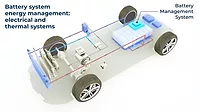
Electric vehicles need sensors to monitor battery current, temperature and voltage. Illustration courtesy TE Connectivity

aem0522sensors2.jpg

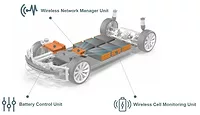
Continuously monitoring and managing the flow of power in, out and around high voltage battery modules are essential functions of battery management systems. Illustration courtesy TE Connectivity

aem0522sensors3.jpg

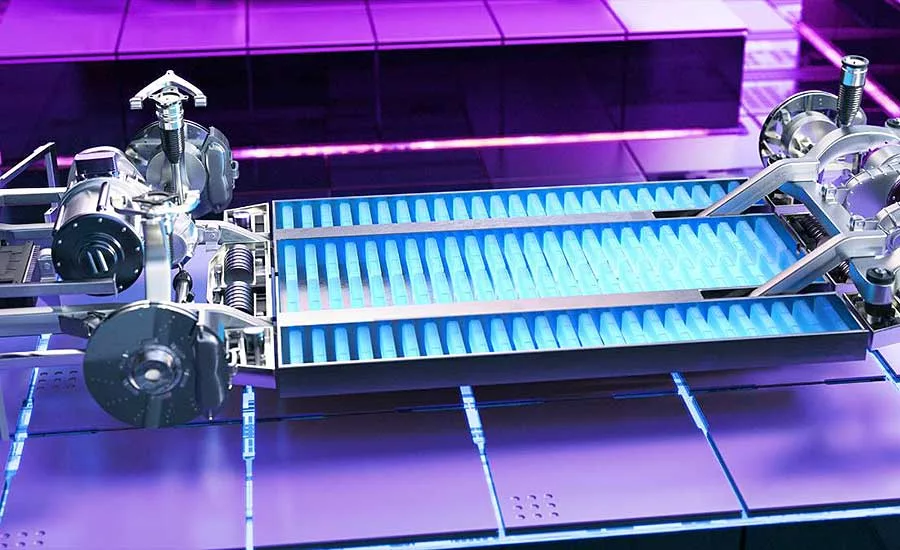
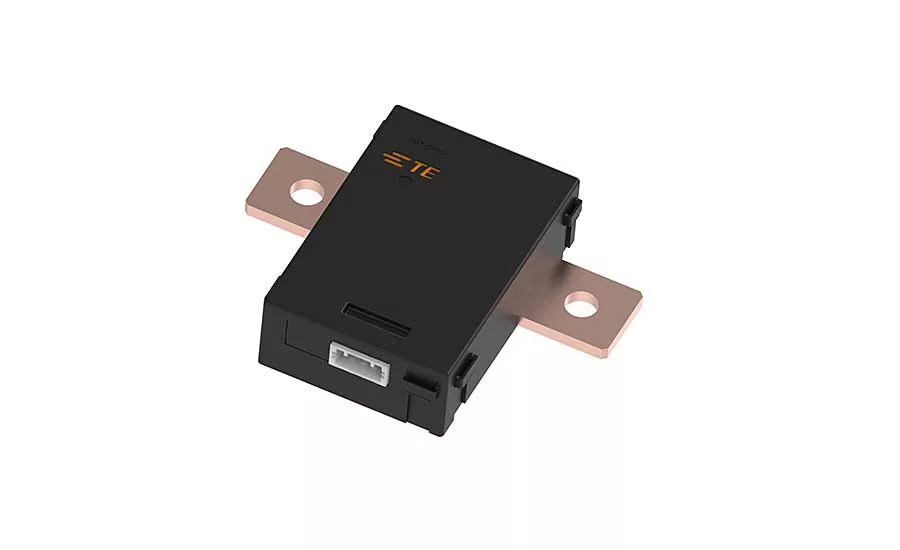
Sensors help monitor battery modules to prevent weak performance or failure. Photo courtesy TE Connectivity
aem0522sensors4.jpg

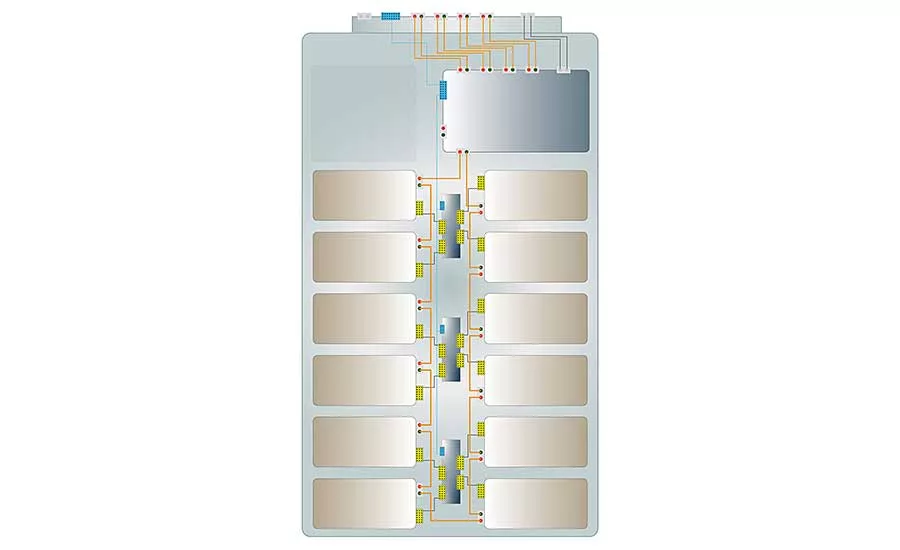
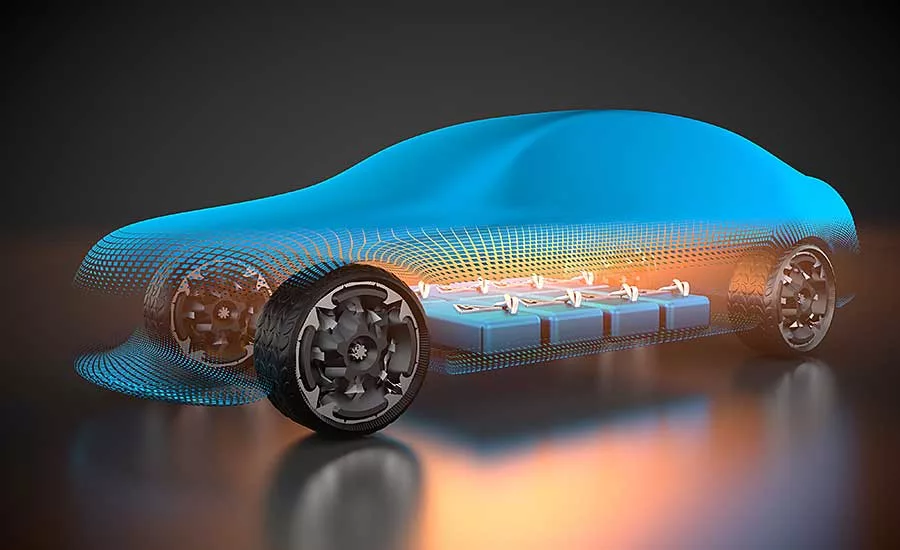
ABattery management systems are crucial for the smooth operation of lithium-ion batteries. Illustration courtesy dSPACE GmbH

aem0522sensors1.jpg
aem0522sensors2.jpg
aem0522sensors3.jpg
aem0522sensors4.jpg
May 27, 2022

Whether it rolls, floats or flies, every electric vehicle needs sensors to monitor current, temperature and voltage. Battery management systems (BMS) are the “brains” responsible for the efficiency, safety and longevity of lithium-ion batteries. The primary role of a BMS is to ensure the battery operates within its safe operating area by continuously monitoring its current state and logging performance data in real-time.

Battery management is now front and center in vehicle development due to the fact that it is at the heart of everything that an EV has to offer. Driving range, performance and charging times all depend upon a strong and stable battery management setup.

Sensors are required to monitor the battery and power train system, and ensure that the demands of drivers can be met over a sustained period of time. One company at the forefront of BMS technology is TE Connectivity, an American-Swiss operation that designs and manufactures a wide variety of connectors, sensors and other devices

From its headquarters in Schaffhausen, Switzerland, TE Connectivity works with numerous OEMs around the world as they look to transition from gas to electric power trains. Its line of passive, active and Hall current sensors are integral components of EVs, responsible for monitoring the health and state of batteries.

TE's sensors manage the current inside battery units and power electronics, such as inverters. In addition, the company’s compact sensors support reliable temperature sensing.

"If we really want to commit to emission targets globally, there is no way around improving electric vehicles,” says Monika Kuklok, director of product management for transportation sensors at TE Connectivity. “While I used to think that roughly 40 percent of vehicles would be electric by 2033, I now think that [threshold] will be reached before then.”

For that to happen, of course, improvements in charging times and vehicle ranges need to take place, which is where the likes of TE comes in. Current sensors for battery management systems do a lot, but there is a lot of R&D work going on.

Looking for quick answers on assembly and manufacturing topics? Try Ask ASM, our new smart AI search tool. Ask ASM →

“There are different architectures and technologies used today and the market is in flux,” claims Kuklok. “Currently, we are between three sensor technologies: shunt-based, magnetic-based and fluxgate.

Among those options, shunt is the one that we believe in the most. That’s not saying that the others don’t offer a viable solution, but the shunt-based technology has advantages.

“One of them is accuracy,” explains Kuklok. “It gives you the best idea of what is going in and out of the BMS. There are also advantages when it comes to monitoring maximum overcurrent and degraded accuracy measurement, plus the shunt-based technology is robust against magnetic fields.”

“The other advantage is that shunt is a very simple and cost-effective solution,” adds Kuklok. “When you think about how you would integrate the technology into a bigger system, all of these factors make a difference. Cost is a big factor in electric vehicles.  [It] will [determine] the technology that’s ultimately used.”

TE Connectivity has integrated a negative temperature coefficient (NTC) measurement into the setup. “When you have high currents running, you can get heat, which is never good,” says Kuklok. “The integration of an NTC is something we hold a patent on and we believe [will provide] customers some additional benefits, such as giving an even quicker signal if the temperature reaches a critical state.”

Currently, there are passive shunt-based products available from TE, but the next development stage from the company will be active shunt. “This evolution moves away from an analog signal and instead runs information on a digital output,” explains Kuklok. “However, there are so many different architectures around at the moment that each OEM is trying to figure out whether it should use a standalone current sensor or integrate it somewhere within the system.

“[Engineers] might also be questioning if they need an active shunt—and if so, how many—and contemplating where to put the sensor,” adds Kuklok. “I don't believe there will be just one solution. We will see different options coexist for quite some time.”

According to Kuklok, TE is working on alternatives. “We don't have fluxgate, but we do offer a hybrid between shunt and magnetic,” she says. “That is also related to the ability to deal with higher currents, so the combination can serve up to 3,000A, or even 4,000A. That is where the hybrid offers advantages and why we are investigating it as a possible solution.”

Battery management sensors will also play a critical role in next-generation recharging systems. “When it comes to the current sensors—and the contribution they can make to charging—it is really about the level of accuracy in communicating the state of charge,” says Kuklok.

“If you look at the [options] today, there isn’t a really high level of accuracy,” claims Kuklok. “You don't exactly know how much of the battery has charged and how much still needs to be charged. So, that’s really where a current sensor comes in play.

“The more accurate you can get, the more current you can [use to] measure the state of the charge,” Kuklok points out. “And, the easier it is to work out how many minutes of charging you actually need.”

Kuklok believes that some products currently in development will push the boundaries of what is possible, and that the elusive eight-minute charging time target (equivalent to the amount of time it typically takes to refuel a gas-powered vehicle) will be possible with the help of improved sensor technology.

“[Just a few years ago], people were trying to prove that it was possible to actually run an electric vehicle,” says Kuklok. “Today, they are everywhere on the road, with longer driving ranges. If you think about the technological progress that has been made [recently], it's tremendous. So, it’s now down to us to squeeze out anything we can to get to that highest state of accuracy with the sensors.”


Modular System Is Designed to Test Battery Management Systems

dSPACE GmbH has developed a modular system that enables engineers to test battery management systems. Its core component is a high-precision cell voltage emulation board.

“Battery management systems are crucial for the smooth operation of lithium-ion batteries, as they manage the efficient use of available capacity, ensure optimum temperatures, and avoid overcharging, as well as deep discharges,” says Stefan Walter, product manager for electromobility and electric drives at dSPACE. “High-performance energy storage systems are gaining in importance for electromobility applications, where increasingly demanding performance requirements call for battery systems with ever higher voltages.

“With the new cell voltage emulation board and the scalable system concept, we [provide] a powerful [system] for testing battery management systems at the high-voltage level that satisfies even the most demanding test requirement,” claims Walter. “[Engineers] will be able to effectively validate and optimize their BMS, thereby benefiting from shorter time to market.”

The system supports the validation of battery management systems up to 1,500 volts. The low-latency, real-time-capable integration of the cell voltage emulation to the SCALEXIO system via IOCNET allows for fast updates of the individually emulated cell voltages independent of the number of cells and battery size.

According to Walter, the modular concept makes the system scalable and flexible. In addition, he says a safety compartment concept makes it easy to wire the cell channels, reduces the length of the wires to the test system and allows for easy calibration of the individual cells. Integrated fault simulation lets engineers simulate electrical faults, such as short circuits or cable breaks, as well as defective battery cells.

“It is also possible to integrate FPGA applications for faster interaction with the BMS under test,” says Walter. “This opens up new ways to emulate cutting-edge technology, such as online electrochemical impedance spectroscopy, with high precision. The new cell voltage emulation board ensures cell voltage generation with high precision down to 300 µV.”

KEYWORDS: electric vehicle battery electric vehicles sensors

Share This Story

Looking for a reprint of this article?
From high-res PDFs to custom plaques, order your copy today!

Recommended Content

JOIN TODAY
To unlock your recommendations.

Already have an account? Sign In

  • Made in the U.S.A.

    Consumer Products Manufacturing: Made in the USA

    Supply chain lessons learned during the coronavirus...
    Automated Assembly Systems
    By: Austin Weber
  • Best Practices for Press-Fit Assembly

    Best Practices for Press-Fit Assembly

    In manufacturing, ironclad formulas for success are hard...
    Assembly Presses
    By: Jim Camillo
  • aem0523leader-tesla1.jpg

    Tesla Rethinks the Assembly Line

    Engineers at Tesla Inc. have developed a new process that...
    Assembly and Testing
    By: Austin Weber
Manage My Account
  • eMagazine Subscription
  • Assembly Newsletters
  • Online Registration
  • Subscription Customer Service
  • Manage My Preferences

More Videos

Sponsored Content

Sponsored Content is a special paid section where industry companies provide high quality, objective, non-commercial content around topics of interest to the ASSEMBLY audience. All Sponsored Content is supplied by the advertising company and any opinions expressed in this article are those of the author and not necessarily reflect the views of ASSEMBLY or its parent company, BNP Media. Interested in participating in our Sponsored Content section? Contact your local rep!

close
  • ultrasonic welding
    Sponsored bySonobond Ultrasonics

    Engineering Efficiency in High-Performance Assembly: How Ultrasonic Welding Enhances Throughput, Reliability and Quality

  • UV curing system
    Sponsored byDymax

    Why UV Intensity Alone Doesn’t Define Curing Performance

  • wooden pallets
    Sponsored byLEAN Manufacturing Products

    Eliminating Waste on the Shop Floor: Applying Lean Principles to Improve Manufacturing Efficiency

Popular Stories

ASSEMBLY News Now, episode-30: Volvo Redesigns EV Manufacturing

Volvo Redesigns EV Manufacturing

Boeing CEO Kelly Ortberg announces 1 billion investment

Boeing Plans $1 Billion Wichita Investment, Workforce Training Center

GE Appliances Worker on Line

GE Appliances Expands Factory AI With 800 Gemini Enterprise Agents

Watch the latest episode of ANN now!

Events

July 24, 2025

From Shop Floor to CFO: How Manufacturers Are Closing the Loop Between Operations and Finance

On Demand Learn how manufacturers are bridging the gap between the shop floor and ERP systems to gain real-time visibility, streamline operations, and kick-start digital transformation—without waiting years.

Sponsored by:

PicoStratusGreen
July 30, 2025

Buffer Analysis and Design Fundamentals for Manufacturing Excellence

On Demand In this presentation, Dr. Herman Tang shares practical insights from his industry experience and research on buffer management in manufacturing operations.

View All Submit An Event

Poll

Difficult Assembly Processes

Which assembly process gives you the most difficulty?
View Results Poll Archive

Products

Manufacturing Cost Policy Deployment (MCPD) Profitability Scenarios: Systematic and Systemic Improvement of Manufacturing Costs

Manufacturing Cost Policy Deployment (MCPD) Profitability Scenarios: Systematic and Systemic Improvement of Manufacturing Costs

See More Products
Register for webinar - Modernizing Automotive Assembly: Why Upgrading Legacy MES is a Business Imperative

Related Articles

  • database

    Making Sense of Machine Data With Time Series Databases

    See More
  • Marelli.jpg

    Marelli Unveils Wireless Distributed Battery Management System

    See More
  • Visteon.jpg

    Visteon Unveils Wireless Battery Management System

    See More

Related Products

See More Products
  • project management.jpg

    Project Management of Complex and Embedded Systems

  • essentials.jpg

    Essentials of Supply Chain Management, 5th Edition

  • total quality.jpg

    Total Quality Management for Project Management

See More Products

Related Directories

  • HTM Sensors

×

Never miss the latest news and trends driving the manufacturing industry

Stay in the know on the latest assembly trends.

JOIN TODAY!
  • RESOURCES
    • Advertise
    • Contact Us
    • Directories
    • Manufacturing Division
    • Store
    • Want More?
  • SIGN UP TODAY
    • Create Account
    • eMagazine
    • Newsletters
    • Customer Service
    • Manage Preferences
  • SERVICES
    • Marketing Services
    • Reprints
    • Market Research
    • List Rental
    • Survey/Respondent Access
  • STAY CONNECTED
    • LinkedIn
    • Facebook
    • Instagram
    • YouTube
    • X (Twitter)
  • PRIVACY
    • PRIVACY POLICY
    • TERMS & CONDITIONS
    • DO NOT SELL MY PERSONAL INFORMATION
    • PRIVACY REQUEST
    • ACCESSIBILITY

Copyright ©2026. All Rights Reserved BNP Media, Inc. and BNP Media II, LLC.

Design, CMS, Hosting & Web Development :: ePublishing