Assembly Magazine logo
search
Ask ASSEMBLY AI
cart
facebook twitter linkedin youtube
  • Sign In
  • Create Account
  • Sign Out
  • My Account
Assembly Magazine logo
  • TRENDS
    • Ask ASSEMBLY AI
    • Trends
    • News
    • New Products
  • INDUSTRIES
    • Aerospace
    • Appliance
    • DFMA Assembly
    • Medical Devices
    • Green Manufacturing
    • Lean Manufacturing
    • Machinery Assembly
    • Electronics Assembly
    • Automotive
  • TECHNOLOGIES
    • Adhesives & Dispensing
    • Assembly Presses
    • Automated Assembly Systems
    • Manufacturing Management
    • Manufacturing Software
    • Motion Control
    • Screwdriving & Riveting
    • Robotics
    • Test & Inspection
    • Plastics & Metal Welding
    • Wire Processing
    • Workstations
  • AUTONOMOUS & ELECTRIC MOBILITY
    • AEM Magazine Archives
    • Autonomy
    • Electrification
    • Mobility Services
    • Assembly & Testing
    • AV/EM News
  • MEDIA
    • Ask ASSEMBLY AI
    • Podcasts
    • Assembly News Now
    • Assembly TV
    • Webinars
    • eBooks
  • EVENTS
    • Calendar
    • The ASSEMBLY Show
  • MORE
    • Exclusives >
      • Plant of the Year
      • Capital Spending
    • Buyers Guide >
      • Supplier Insights
    • Classifieds
    • Featured Products
    • Newsletters
    • Store
    • White Papers
    • Columns
    • Sponsor Insights
  • INFOCENTER
    • Assembly & Test Solutions
  • EMAGAZINE
    • eMagazine
    • Archive Issues
    • Advertise
    • Contact Us
    • Sign Up
Workstations Assembly

Eight Principles for Ergonomic Workstation Design
By Chad Johnson
bosch-ergo-4.jpg

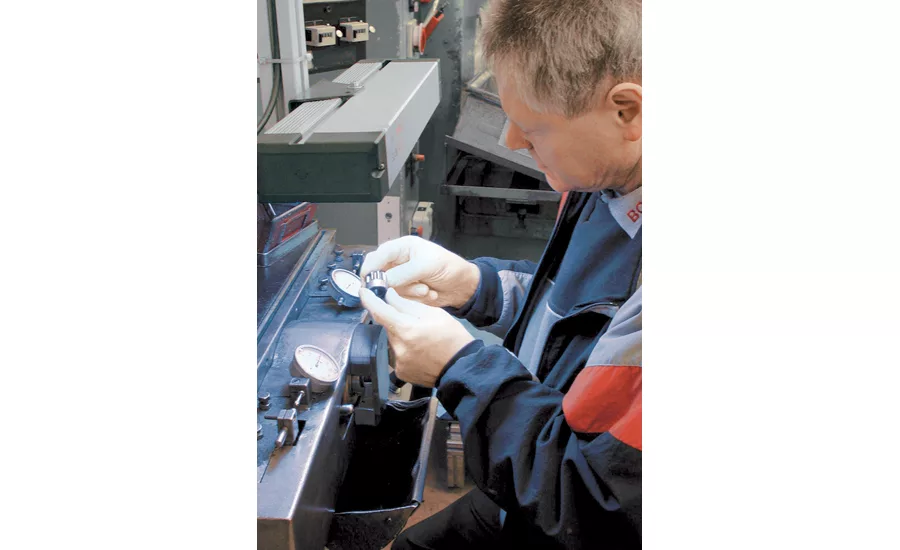
Lighting is an important consideration when designing a workstation. Proper lighting prevents premature fatigue, improves worker concentration and reduces the risk of errors.

bosch-ergo-2.jpg
bosch-ergo-1.jpg
bosch-ergo-4.jpg
bosch-ergo-2.jpg
bosch-ergo-1.jpg
October 24, 2022

One of the most important resources in manufacturing, even in the age of automation, is people. Ergonomically designed workstations for workers mean higher performance, work quality, motivation and employee satisfaction, as well as fewer absences due to injuries.

In short: A strong understanding of ergonomics is a huge plus for productivity, efficiency and employee happiness. 

These eight ergonomic principles cover the most essential aspects of the layout and design of ergonomic workstations and flow rack systems. 


Consider Body Height and Working Height

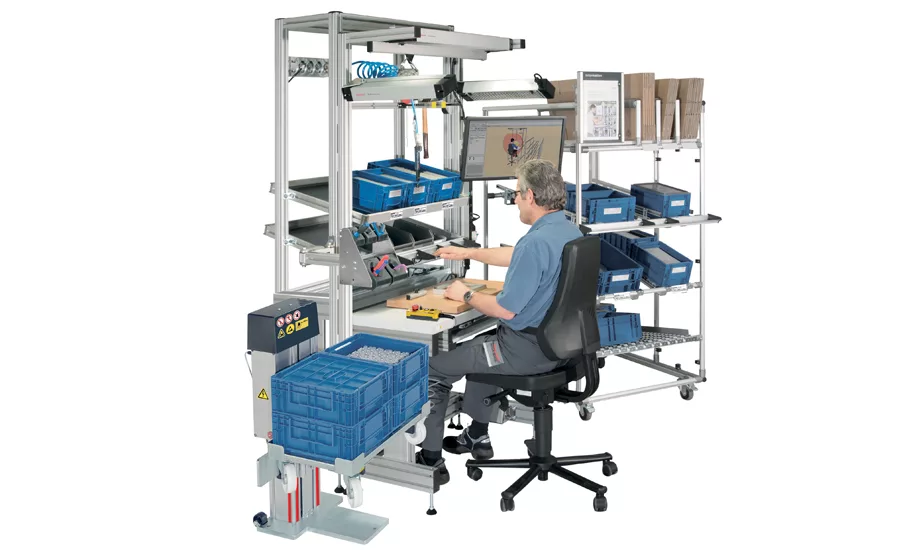
Manual workstations must accommodate a wide range of body heights. However, one of the most important factors for designing workstations is working height. The optimum working height is based on the body height and the type of activity to be performed. If you take all body heights into consideration, the average optimum working height for most tasks is 1,125 millimeters for sit-down and stand-up workstations.


Ensure Proper Lighting 

The right light, adapted to the activity at the workstation, is a prerequisite for high efficiency and processing quality. Optimum lighting prevents premature fatigue, improves concentration, and reduces the risk of errors. When installing lighting at workstations, try to avoid light that causes glare, reflection or strong contrasts. 


Optimize Grab Area 

Easy access to all the materials required at the workstation must be guaranteed. All containers, equipment and operating elements must be arranged within the physiological range of movement for employees to easily reach and grab what they need throughout their shift. One of the largest considerations for optimizing the grab area is to identify ways to avoid torso rotations and shoulder movements, particularly when under exertion, to reduce strain. 

Looking for quick answers on assembly and manufacturing topics? Try Ask ASM, our new smart AI search tool. Ask ASM →


Customize Work Equipment 

To maintain performance, promote productivity, and ensure workers are comfortable throughout their shift, workstations must be precisely adjusted to the individual employee and activity. Correct adjustment of the equipment minimizes unnecessary movements, thus reducing physical exertion and employee absences.


Optimize Work Area Height

The work area should always be between 800 and 1,500 millimeters high. Working above heart level (over 1,500 millimeters) and bending (below 800 millimeters) puts employees under disproportionate strain by impacting blood circulation and reducing oxygen supply to the muscles. Promoting dynamic activities, such as a combination of standing and sitting, is recommended, because static activity can cause strain. 


Strategically Position Parts 

All reach distances should be as short as possible to avoid unnecessary movements. Grab containers and parts containers that are in direct reach of the employee are ideal. The position of these containers should enable a flowing movement that curves upward away from the body when parts are removed. Consider storing heavy parts within reach in the lower containers and give frequently grabbed parts the shortest reach distance.


Consider Range of Vision 

Unnecessary head and eye movements are a common cause of work strain and should be avoided as much as possible. Workers have two vision areas: field of view and visual field. The field of view is where workers can see something without moving their eyes or head. In the visual field, objects can be seen by moving the eyes. Maintaining objects at a uniform distance to the worker’s eyes eliminates the need for refocusing and makes it easier to complete tasks. 


Use Planning Aids 

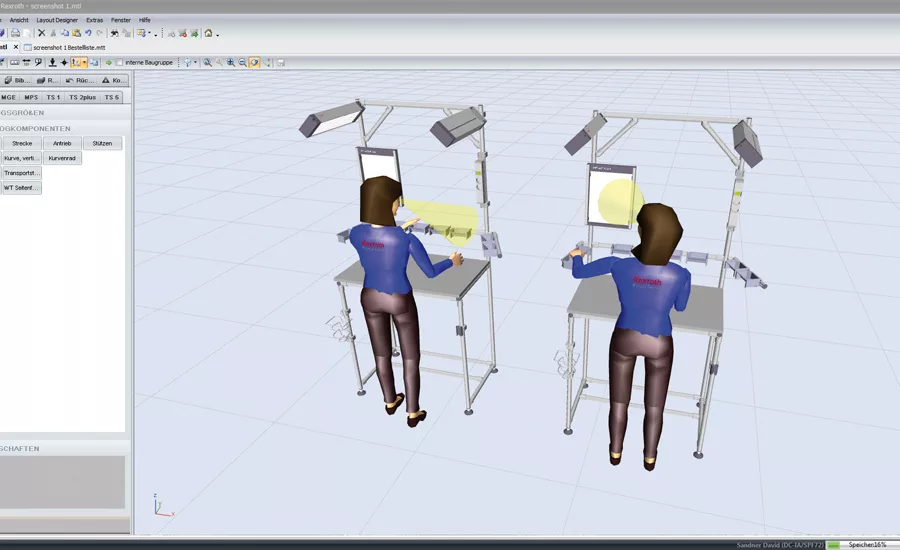
Properly implementing ergonomic workstations can feel daunting with so many factors to consider throughout the process. Help make it easier by using planning aids like Bosch Rexroth’s MTpro to design workstations. This user-friendly software accelerates and simplifies planning of application-specific workstations by adapting configurations for individual workers based on ergonomic best practices. 
KEYWORDS: ergonomics

Share This Story

Looking for a reprint of this article?
From high-res PDFs to custom plaques, order your copy today!

Product Manager for MGE Products
Bosch Rexroth
Charlotte, NC

Recommended Content

JOIN TODAY
To unlock your recommendations.

Already have an account? Sign In

  • Made in the U.S.A.

    Consumer Products Manufacturing: Made in the USA

    Supply chain lessons learned during the coronavirus...
    Automated Assembly Systems
    By: Austin Weber
  • Best Practices for Press-Fit Assembly

    Best Practices for Press-Fit Assembly

    In manufacturing, ironclad formulas for success are hard...
    Assembly Presses
    By: Jim Camillo
  • aem0523leader-tesla1.jpg

    Tesla Rethinks the Assembly Line

    Engineers at Tesla Inc. have developed a new process that...
    Automotive Assembly
    By: Austin Weber
Manage My Account
  • eMagazine Subscription
  • Assembly Newsletters
  • Online Registration
  • Subscription Customer Service
  • Manage My Preferences

More Videos

Sponsored Content

Sponsored Content is a special paid section where industry companies provide high quality, objective, non-commercial content around topics of interest to the ASSEMBLY audience. All Sponsored Content is supplied by the advertising company and any opinions expressed in this article are those of the author and not necessarily reflect the views of ASSEMBLY or its parent company, BNP Media. Interested in participating in our Sponsored Content section? Contact your local rep!

close
  • ultrasonic welding
    Sponsored bySonobond Ultrasonics

    Engineering Efficiency in High-Performance Assembly: How Ultrasonic Welding Enhances Throughput, Reliability and Quality

  • UV curing system
    Sponsored byDymax

    Why UV Intensity Alone Doesn’t Define Curing Performance

  • wooden pallets
    Sponsored byLEAN Manufacturing Products

    Eliminating Waste on the Shop Floor: Applying Lean Principles to Improve Manufacturing Efficiency

Popular Stories

Ferrari

Ferrari Unveils Four-Door EV

ASSEMBLY News Now, episode-30: Volvo Redesigns EV Manufacturing

Volvo Redesigns EV Manufacturing

Robots working at Toyota Plant in Japan

Toyota Deploys Geekplus Robots for Factory Material Handling

Watch the latest episode of ANN now!

Events

July 24, 2025

From Shop Floor to CFO: How Manufacturers Are Closing the Loop Between Operations and Finance

On Demand Learn how manufacturers are bridging the gap between the shop floor and ERP systems to gain real-time visibility, streamline operations, and kick-start digital transformation—without waiting years.

Sponsored by:

PicoStratusGreen
July 30, 2025

Buffer Analysis and Design Fundamentals for Manufacturing Excellence

On Demand In this presentation, Dr. Herman Tang shares practical insights from his industry experience and research on buffer management in manufacturing operations.

View All Submit An Event

Poll

Difficult Assembly Processes

Which assembly process gives you the most difficulty?
View Results Poll Archive

Products

Manufacturing Cost Policy Deployment (MCPD) Profitability Scenarios: Systematic and Systemic Improvement of Manufacturing Costs

Manufacturing Cost Policy Deployment (MCPD) Profitability Scenarios: Systematic and Systemic Improvement of Manufacturing Costs

See More Products
ebook

Related Articles

  • AI-ML 5-25

    Agencies Issue Guiding Principles For AI/ML-Enabled Medical Devices

    See More
  • Reaching for the Ergonomic Star

    See More

Related Products

See More Products
  • strong.jpg

    Strong Supply Chains Through Resilient Operations: Five Principles for Leaders to Win in a Volatile World

  • planning.webp

    Quality Planning and Assurance: Principles, Approaches, and Methods for Product and Service Development

  • Welding: Principles & Practices

See More Products

Events

View AllSubmit An Event
  • June 19, 2014

    Advanced Ergonomic Design Workshop

     This workshop takes you beyond identifying and assessing ergonomic risk, and leads you into “designing out” the risk to begin with.  Through hands-on experiences and group activities, some of which may be held off-site, participants will learn how to evaluate existing equipment and propose methodologies for good ergonomic design. This workshop is for people who have previously participated in the Applied Industrial Ergonomics training course.  
View AllSubmit An Event

Related Directories

  • Worksmart Systems Inc.

    Worksmart Systems' Fleximate® Integrated Transport System combines a hybrid free conveyor with an ergonomic workstation. Linking multiple stations forms a lean assembly cell optimized for single-piece production flow. Equipped with a wide range of accessories and requiring just one tool, it effortlessly simplifies achieving maximum efficiency and supports continuous improvement.
×

Never miss the latest news and trends driving the manufacturing industry

Stay in the know on the latest assembly trends.

JOIN TODAY!
  • RESOURCES
    • Advertise
    • Contact Us
    • Directories
    • Manufacturing Division
    • Store
    • Want More?
  • SIGN UP TODAY
    • Create Account
    • eMagazine
    • Newsletters
    • Customer Service
    • Manage Preferences
  • SERVICES
    • Marketing Services
    • Reprints
    • Market Research
    • List Rental
    • Survey/Respondent Access
  • STAY CONNECTED
    • LinkedIn
    • Facebook
    • Instagram
    • YouTube
    • X (Twitter)
  • PRIVACY
    • PRIVACY POLICY
    • TERMS & CONDITIONS
    • DO NOT SELL MY PERSONAL INFORMATION
    • PRIVACY REQUEST
    • ACCESSIBILITY

Copyright ©2026. All Rights Reserved BNP Media, Inc. and BNP Media II, LLC.

Design, CMS, Hosting & Web Development :: ePublishing