Austin has been senior editor for ASSEMBLY Magazine since September 1999. He has more than 25 years of b-to-b publishing experience and has written about a wide variety of manufacturing and engineering topics. Austin is a native of Chicago and a graduate of the University of Michigan.
This month, the Washington State Cougars face off on the gridiron against their arch-rival, the Washington Huskies. The winner receives the coveted Apple Cup and bragging rights in the Pacific Northwest.
As automakers and suppliers search for new ways to reduce vehicle weight, some engineers are experimenting with natural fibers. Bamboo, cotton, hemp, jute, kenaf, rice and other crops can be used to produce high-strength composite structures for automotive applications.
The automotive industry is undergoing the biggest transformation in its 130-year history. Automakers and suppliers around the world are scrambling to develop autonomous vehicles. And, they’re under increasing pressure from outsiders ranging from Silicon Valley tech giants to startup entrepreneurs.
JACKSON, MN--Farmers never take a day off. Nor do their tractors. Growers rely on their machines to plow, plant, till, spray, bale and harvest a wide variety of crops in all sorts of conditions.
The University of Washington campus in Seattle is a short drive from companies such as Amazon and Microsoft that are famous for their disruptive technology. Engineers at the school hope their new telephone will also become a game changer in the competitive world of consumer electronics.
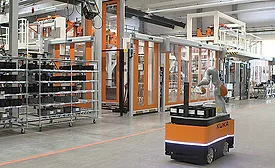
Robots used to be thought of strictly as stationary machines. They were bolted to a floor, table, ceiling or wall and that’s where they stayed. But, that’s beginning to change.
Light-emitting diode (LED) lighting is one of the hottest segments in the electrical equipment industry today. And, as more consumers seek energy-efficient alternatives to traditional incandescent and fluorescent products, global shipments of LED fixtures, luminaires and modules are expected to grow more than 12 percent annually over the next five years.
Jabil Inc., a U.S.-based global manufacturing services company with electronics design, supply chain, production and product management capabilities, is investing heavily in metal additive manufacturing.