Assembly Magazine logo
search
Ask ASSEMBLY AI
cart
facebook twitter linkedin youtube
  • Sign In
  • Create Account
  • Sign Out
  • My Account
Assembly Magazine logo
  • TRENDS
    • Ask ASSEMBLY AI
    • Trends
    • News
    • New Products
  • INDUSTRIES
    • Aerospace
    • Appliance
    • DFMA Assembly
    • Medical Devices
    • Green Manufacturing
    • Lean Manufacturing
    • Machinery Assembly
    • Electronics Assembly
    • Automotive
  • TECHNOLOGIES
    • Adhesives & Dispensing
    • Assembly Presses
    • Automated Assembly Systems
    • Manufacturing Management
    • Manufacturing Software
    • Motion Control
    • Screwdriving & Riveting
    • Robotics
    • Test & Inspection
    • Plastics & Metal Welding
    • Wire Processing
    • Workstations
  • AUTONOMOUS & ELECTRIC MOBILITY
    • AEM Magazine Archives
    • Autonomy
    • Electrification
    • Mobility Services
    • Assembly & Testing
    • AV/EM News
  • MEDIA
    • Ask ASSEMBLY AI
    • Podcasts
    • Assembly News Now
    • Assembly TV
    • Webinars
    • eBooks
  • EVENTS
    • Calendar
    • The ASSEMBLY Show
  • MORE
    • Exclusives >
      • Plant of the Year
      • Capital Spending
    • Buyers Guide >
      • Supplier Insights
    • Classifieds
    • Featured Products
    • Newsletters
    • Store
    • White Papers
    • Columns
    • Sponsor Insights
  • INFOCENTER
    • Assembly & Test Solutions
  • EMAGAZINE
    • eMagazine
    • Archive Issues
    • Advertise
    • Contact Us
    • Sign Up
Columns

Assembly in Action: Robotic Welding Cell Keeps Shop on Top

January 1, 2002

Becoming a leading supplier to the automotive industry takes a lot of hard work, and staying on top can be an even tougher challenge. However, it’s been a challenge that Schaller Corp. (Chesterfield, MI) has met head on for more than 20 years. Schaller Corp. is a supplier of brackets, supports and other structural components to automotive and truck manufacturers. The company has a proven track record of anticipating its customers’ demands and needs.

"We’ve always considered ourselves a value-added supplier," says Royal Clippert, tooling manager. "We provide quality, processes and services outside the boundaries of the typical stamping supplier classification. Early on, we began offering assembly processes for many of the components we stamped. And today, in addition to production stampings and assemblies, the Schaller Group has been formed and has become a source for a broad range of stamping services, including development of prototype parts, and tool and die building."

This value-added aspect also extends to the company’s ongoing goal to continuously improve. One example of process improvement is the acquisition and installation of two robotic welding cells at the company. The cells were engineered and built by Custom Machines Inc. (CMI, Adrian, MI), specialists in the manufacture and integration of custom assembly machines and complete turnkey systems. The new cells have replaced older systems that were a combination of automation and manual operations. These systems were made virtually obsolete by part changes for the 2002 vehicle model year.

The new CMI cells provide a high level of flexibility, allowing for potential engineering and future design changes. They also have reduced manpower requirements. "The new assemblies required a quantum jump in the process," Clippert notes, "with the part size and number of components doubling, and the addition of a secondary forming operation. The robotic welding cells have been the bridge we needed to achieve the quality, throughput and machine reliability required."

The parts and assemblies being formed and assembled by the cells are referred to as left and right side cab hold-down brackets. Each consists of a rail, a subassembly and three tap plates, which are welded together to form a single unit. The assembled, U-shaped brackets are used to build pickup trucks. After attachment to the cab floor plan, these brackets function as the mounting surface between the cab and the vehicle’s frame. They also provide a secure means for attaching the seating mechanisms via the tap plates. The brackets weigh approximately 10 pounds, measure 3 feet long and are 8 inches wide.

Prior to the installation of the two new systems, the dedicated units consisted of a four-station rotary table with eight welding guns, in addition to a material handling person. Also, the previous assembly configuration consisted of only three components.

There is a cell for the left side and one for the right side bracket. These cells include the secondary forming press, an intracell material handling robot, two seven-axis servo robots equipped with resistance welding guns, a six-station 89.2-inch-diameter indexing table, a fourth robot that unloads and packs the assemblies into their dedicated shipping containers, and a feed and positioning mechanism for the tap plates.

The first robot picks up the rail from the stamping press and loads it at the first position of the indexing table. It then picks up the subassembly from its load conveyor and places it in position on the rail. The table rotates to the first welding station, where the robot welds the three tap plates in place and places two welds on the subassembly. The table rotates again to the second station, where the second welding robot completes eight additional welds on the subassembly.

Looking for quick answers on assembly and manufacturing topics? Try Ask ASM, our new smart AI search tool. Ask ASM →

A total of 16 welds are performed on each bracket. Incorporated into the cell are sensors that ensure tap plate pickup and placement, plus rail and subassembly presence. There is also a station for checking threads on the subassembly. The cycle time to complete one hold-down bracket is 23.5 seconds, resulting in approximately 153 pieces per hour.

The final rotation moves the assemblies into position for the fourth robot to unload the assemblies, placing them in the shipping containers that hold 102 units. A single cell attendant delivers parts to the cell and removes shipping containers when full.

To develop the system, Schaller first defined and created an overview of the process. This plan was presented to CMI engineers, and working together, the two teamed up to refine and formalize the system’s design. From there, CMI completed the engineering work and building process, including software generations and control integration between the various units.

A critical factor in the success of the cells, according to Clippert, has been the synchronization of the assembly and welding operations with the cycle time and performance of the press. "The man-machine interface is one of the system’s most impressive features," he notes. "The overall control is eloquent in its performance, a powerful voice that speaks to all the other elements and makes them function as one."

For more information on welding cells, call Custom Machines Inc. at 517-265-5759, visit www.custommachinesinc.com or Reply 1.

Share This Story

Looking for a reprint of this article?
From high-res PDFs to custom plaques, order your copy today!

Recommended Content

JOIN TODAY
To unlock your recommendations.

Already have an account? Sign In

  • Made in the U.S.A.

    Consumer Products Manufacturing: Made in the USA

    Supply chain lessons learned during the coronavirus...
    Automated Assembly Systems
    By: Austin Weber
  • Best Practices for Press-Fit Assembly

    Best Practices for Press-Fit Assembly

    In manufacturing, ironclad formulas for success are hard...
    Assembly Presses
    By: Jim Camillo
  • aem0523leader-tesla1.jpg

    Tesla Rethinks the Assembly Line

    Engineers at Tesla Inc. have developed a new process that...
    Industries
    By: Austin Weber
Manage My Account
  • eMagazine Subscription
  • Assembly Newsletters
  • Online Registration
  • Subscription Customer Service
  • Manage My Preferences

More Videos

Sponsored Content

Sponsored Content is a special paid section where industry companies provide high quality, objective, non-commercial content around topics of interest to the ASSEMBLY audience. All Sponsored Content is supplied by the advertising company and any opinions expressed in this article are those of the author and not necessarily reflect the views of ASSEMBLY or its parent company, BNP Media. Interested in participating in our Sponsored Content section? Contact your local rep!

close
  • ultrasonic welding
    Sponsored bySonobond Ultrasonics

    Engineering Efficiency in High-Performance Assembly: How Ultrasonic Welding Enhances Throughput, Reliability and Quality

  • UV curing system
    Sponsored byDymax

    Why UV Intensity Alone Doesn’t Define Curing Performance

  • wooden pallets
    Sponsored byLEAN Manufacturing Products

    Eliminating Waste on the Shop Floor: Applying Lean Principles to Improve Manufacturing Efficiency

Popular Stories

ASSEMBLY News Now, episode-30: Volvo Redesigns EV Manufacturing

Volvo Redesigns EV Manufacturing

Boeing CEO Kelly Ortberg announces 1 billion investment

Boeing Plans $1 Billion Wichita Investment, Workforce Training Center

GE Appliances Worker on Line

GE Appliances Expands Factory AI With 800 Gemini Enterprise Agents

Watch the latest episode of ANN now!

Events

July 24, 2025

From Shop Floor to CFO: How Manufacturers Are Closing the Loop Between Operations and Finance

On Demand Learn how manufacturers are bridging the gap between the shop floor and ERP systems to gain real-time visibility, streamline operations, and kick-start digital transformation—without waiting years.

Sponsored by:

PicoStratusGreen
July 30, 2025

Buffer Analysis and Design Fundamentals for Manufacturing Excellence

On Demand In this presentation, Dr. Herman Tang shares practical insights from his industry experience and research on buffer management in manufacturing operations.

View All Submit An Event

Poll

Difficult Assembly Processes

Which assembly process gives you the most difficulty?
View Results Poll Archive

Products

Manufacturing Cost Policy Deployment (MCPD) Profitability Scenarios: Systematic and Systemic Improvement of Manufacturing Costs

Manufacturing Cost Policy Deployment (MCPD) Profitability Scenarios: Systematic and Systemic Improvement of Manufacturing Costs

See More Products
Register for webinar - Modernizing Automotive Assembly: Why Upgrading Legacy MES is a Business Imperative

Related Articles

  • Assembly In Action: Robotic Welders Increase Fabricator's Capacity

    See More
  • Assembly in Action: Robotic Adhesive Dispenser Increases Lavatory Life

    See More
  • Assembly in Action: Robotic Laser Cuts and Pierces Frame Rails

    See More

Related Products

See More Products
  • digital.jpg

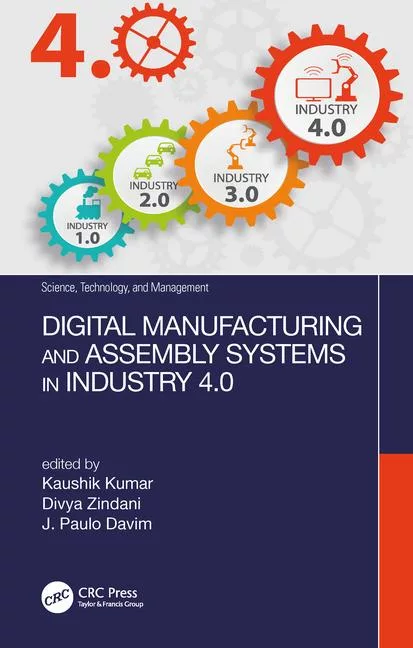
    Digital Manufacturing and Assembly Systems in Industry 4.0

  • Kaizen Assembly: Designing, Constructing, and Managing a Lean Assembly Line

  • Robotic Micro-Assembly

See More Products

Events

View AllSubmit An Event
  • October 30, 2025

    Assembly Simulation in Action: 3 Approaches Driving OEM Savings

    On Demand Participants will gain actionable insights and real-world examples that demonstrate how digital simulation supports assembly planning, geometry assurance, and quality control. Sponsored by:
View AllSubmit An Event

Related Directories

  • One-Off Robotics

    One-Off Robotics is an advanced equipment manufacturer designing and building the world's most innovative robotic fabrication systems. We specialize in robotic metal additive manufacturing and robotic milling, offering both stationary and portable, field-deployable systems engineered for demanding production environments. Our technologies enable additive, subtractive, and hybrid fabrication processes, supporting applications across Defense, Aerospace, Research, and Specialized Production sectors.
  • Load Cell Central

    Load Cell Central is a leading load cell manufacturer, delivering cutting-edge custom solutions for electronic weighing systems and components, weighing assemblies, and load cell repairs. Our expertise spans a wide range of applications, including the development of custom electronic load cell-based weighing systems, interchangeable replacement load cells, and specialized load cells and weighing assemblies. Whether you're in need of industrial scales, a load cell, or solutions for force measurement, center of gravity, or process and batching control by weight, we are committed to providing innovative, economical solutions. Our approach is comprehensive, guiding clients from the initial concept through to completion, with ongoing support long after the sale. At Load Cell Central, we pride ourselves on our technical expertise, customer-centric approach, and unwavering commitment to quality in every aspect of our service.
  • mta robotics AG

    With over 50 years experience, mta robotics globally commercialize selective soldering and volumetric dispensing systems. As a result, our comprehensive product range includes: standalone components, simple manual systems, semi-automated table-top robots as well as fully automated turnkey production cells.
×

Never miss the latest news and trends driving the manufacturing industry

Stay in the know on the latest assembly trends.

JOIN TODAY!
  • RESOURCES
    • Advertise
    • Contact Us
    • Directories
    • Manufacturing Division
    • Store
    • Want More?
  • SIGN UP TODAY
    • Create Account
    • eMagazine
    • Newsletters
    • Customer Service
    • Manage Preferences
  • SERVICES
    • Marketing Services
    • Reprints
    • Market Research
    • List Rental
    • Survey/Respondent Access
  • STAY CONNECTED
    • LinkedIn
    • Facebook
    • Instagram
    • YouTube
    • X (Twitter)
  • PRIVACY
    • PRIVACY POLICY
    • TERMS & CONDITIONS
    • DO NOT SELL MY PERSONAL INFORMATION
    • PRIVACY REQUEST
    • ACCESSIBILITY

Copyright ©2026. All Rights Reserved BNP Media, Inc. and BNP Media II, LLC.

Design, CMS, Hosting & Web Development :: ePublishing