Assembly Magazine logo
search
Ask ASSEMBLY AI
cart
facebook twitter linkedin youtube
  • Sign In
  • Create Account
  • Sign Out
  • My Account
Assembly Magazine logo
  • TRENDS
    • Ask ASSEMBLY AI
    • Trends
    • News
    • New Products
  • INDUSTRIES
    • Aerospace
    • Appliance
    • DFMA Assembly
    • Medical Devices
    • Green Manufacturing
    • Lean Manufacturing
    • Machinery Assembly
    • Electronics Assembly
    • Automotive
  • TECHNOLOGIES
    • Adhesives & Dispensing
    • Assembly Presses
    • Automated Assembly Systems
    • Manufacturing Management
    • Manufacturing Software
    • Motion Control
    • Screwdriving & Riveting
    • Robotics
    • Test & Inspection
    • Plastics & Metal Welding
    • Wire Processing
    • Workstations
  • AUTONOMOUS & ELECTRIC MOBILITY
    • AEM Magazine Archives
    • Autonomy
    • Electrification
    • Mobility Services
    • Assembly & Testing
    • AV/EM News
  • MEDIA
    • Ask ASSEMBLY AI
    • Podcasts
    • Assembly News Now
    • Assembly TV
    • Webinars
    • eBooks
  • EVENTS
    • Calendar
    • The ASSEMBLY Show
  • MORE
    • Exclusives >
      • Plant of the Year
      • Capital Spending
    • Buyers Guide >
      • Supplier Insights
    • Classifieds
    • Featured Products
    • Newsletters
    • Store
    • White Papers
    • Columns
    • Sponsor Insights
  • INFOCENTER
    • Assembly & Test Solutions
  • EMAGAZINE
    • eMagazine
    • Archive Issues
    • Advertise
    • Contact Us
    • Sign Up
Columns

AIA: Robots Cut Gasket Costs

December 7, 2004

Lamson & Sessions (Cleveland) produces thermoplastic conduit, enclosures, wiring outlet boxes and accessories for the electrical, construction, consumer, power and communications markets. Among its specific products, the company manufactures millions of injection-molded PVC electrical wiring boxes and junction boxes per year.

To obtain approval from Underwriters Laboratories and the Canadian Standards Association, each box requires a gasket seal to prevent water intrusion. For more than 20 years, the company used die-cut foam gaskets with adhesive backing to perform the sealing operation. But with 13 different box sizes and an increasing production schedule, the manual application of the gaskets became increasingly unwieldy and expensive. Variation in the size of the gaskets could also result in poor seals.

To eliminate these problems, Lamson & Sessions decided to change over to a form-in-place (FIP) gasket technique, using robotics to ensure consistency and precision. The company selected the system integration company Radco Industries (Toledo, OH) to design the line. Radco incorporated a pair of FANUC (Rochester Hills, MI) robots into the system: a FANUC LR Mate 100iB and a FANUC M-710iB/45. The latter is paired with a two-component meter-mix dispensing system, with triple servomotor portioning and mixing. It is also equipped with HandingTool application-specific software to guide it while dispensing the FIP gasket.

The LR Mate 100iB robot is equipped with a quick-change, vacuum-based, end-of-arm tool, to transfer the electrical boxes to an infrared curing oven. This small, five-axis robot is often used in laboratory applications. In this case, it was programmed to handle the parts as gently as possible to avoid disturbing the integrity of the dispensed gasket.

Other system components include a 20-kilowat, infrared oven with an automatic stainless steel link belt conveyor and a three-station indexing dial from Camco (Wheeling, IL).

When gasketing, an operator manually loads parts into fixtures on the indexing dial. The fixtures are made of ultra high molecular weight polyethylene, a tough material with a chemical resistant surface. As parts are loaded, the system assigns and stores a unique signal for each of the 13 box sizes. A light curtain prevents operator injury.

The robot dispenses a bead of urethane foam around each part to form the FIP gasket. Bead rates depend on the mix of the material, the speed of the robot and the size and features of each part, such as corners and a "ramped blend" that occurs at the start and finish of each gasket. Dispense rates vary from 3 ips for the smallest parts to 6 ips for the larger parts. The foam gaskets typically take 3 minutes to gel.

Looking for quick answers on assembly and manufacturing topics? Try Ask ASM, our new smart AI search tool. Ask ASM →

Upon completion of all of the gaskets, the M-710iB/45 stops, and the table indexes to the unload position where the LR Mate 100iB transfers the parts to the curing oven conveyor. The robot picks from one to six parts at a time depending on weight and dispense cycle time. The curing oven conveyor has a variable speed drive to maximize throughput regardless of the amount of parts being unloaded.

All three stations function simultaneously-load-dispense-unload. Unload time is always less than dispense time, which makes throughput dependant on dispense speed. Average processing time is 4 seconds per part.

The curing oven reaches the correct temperature and humidity level before dispensing begins. A temperature indicator, which is tied into the control system, signals the robot to begin dispensing when the oven is ready. Automatic temperature gauging helps streamline the entire process. Finished products exit the curing oven into storage bins, where they are sorted and prepared for shipment.

Since the system was installed, Lamson & Sessions estimates it paid for itself in about 12 months. The company also experienced an increase in product quality, and now has the flexibility to easily process new product models.

"From initial construction to final testing, Radco Industries accommodated our on-the-fly changes," says George Foos, senior project engineer at Lamson & Sessions. "The changes proved to be painless and really enhanced the functionality and user friendliness of the system. The system is well conceived and innovative. It's highly durable, as in ‘built like a tank.' I'm sure this system will be running production 20 years from now."

For more information on systems integration, call 800-283-0792 or visit www.radcoindustries.com.

For more information on indexing dials, call 800-645-5207 or visit www.camcoindex.com.

For more information on robots call 800-477-6268 or visit www.fanucrobotics.com.

Share This Story

Looking for a reprint of this article?
From high-res PDFs to custom plaques, order your copy today!

Recommended Content

JOIN TODAY
To unlock your recommendations.

Already have an account? Sign In

  • Made in the U.S.A.

    Consumer Products Manufacturing: Made in the USA

    Supply chain lessons learned during the coronavirus...
    Automated Assembly Systems
    By: Austin Weber
  • Best Practices for Press-Fit Assembly

    Best Practices for Press-Fit Assembly

    In manufacturing, ironclad formulas for success are hard...
    Assembly Presses
    By: Jim Camillo
  • aem0523leader-tesla1.jpg

    Tesla Rethinks the Assembly Line

    Engineers at Tesla Inc. have developed a new process that...
    Automotive Assembly
    By: Austin Weber
Manage My Account
  • eMagazine Subscription
  • Assembly Newsletters
  • Online Registration
  • Subscription Customer Service
  • Manage My Preferences

More Videos

Sponsored Content

Sponsored Content is a special paid section where industry companies provide high quality, objective, non-commercial content around topics of interest to the ASSEMBLY audience. All Sponsored Content is supplied by the advertising company and any opinions expressed in this article are those of the author and not necessarily reflect the views of ASSEMBLY or its parent company, BNP Media. Interested in participating in our Sponsored Content section? Contact your local rep!

close
  • ultrasonic welding
    Sponsored bySonobond Ultrasonics

    Engineering Efficiency in High-Performance Assembly: How Ultrasonic Welding Enhances Throughput, Reliability and Quality

  • UV curing system
    Sponsored byDymax

    Why UV Intensity Alone Doesn’t Define Curing Performance

  • wooden pallets
    Sponsored byLEAN Manufacturing Products

    Eliminating Waste on the Shop Floor: Applying Lean Principles to Improve Manufacturing Efficiency

Popular Stories

ASSEMBLY News Now, episode-30: Volvo Redesigns EV Manufacturing

Volvo Redesigns EV Manufacturing

Boeing CEO Kelly Ortberg announces 1 billion investment

Boeing Plans $1 Billion Wichita Investment, Workforce Training Center

automated consumer goods assembly system

Best Practices for Cycle Time Optimization

Watch the latest episode of ANN now!

Events

July 24, 2025

From Shop Floor to CFO: How Manufacturers Are Closing the Loop Between Operations and Finance

On Demand Learn how manufacturers are bridging the gap between the shop floor and ERP systems to gain real-time visibility, streamline operations, and kick-start digital transformation—without waiting years.

Sponsored by:

PicoStratusGreen
July 30, 2025

Buffer Analysis and Design Fundamentals for Manufacturing Excellence

On Demand In this presentation, Dr. Herman Tang shares practical insights from his industry experience and research on buffer management in manufacturing operations.

View All Submit An Event

Poll

Difficult Assembly Processes

Which assembly process gives you the most difficulty?
View Results Poll Archive

Products

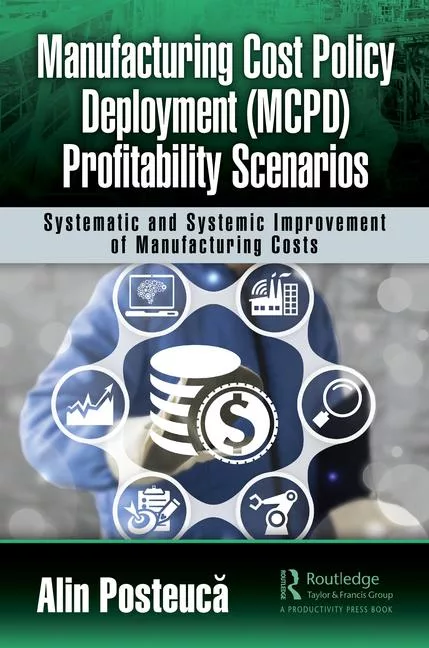
Manufacturing Cost Policy Deployment (MCPD) Profitability Scenarios: Systematic and Systemic Improvement of Manufacturing Costs

Manufacturing Cost Policy Deployment (MCPD) Profitability Scenarios: Systematic and Systemic Improvement of Manufacturing Costs

See More Products
Register for webinar - Modernizing Automotive Assembly: Why Upgrading Legacy MES is a Business Imperative

Related Articles

  • AIA: Robots Provide Guidance for Medical Device Assembly System

    See More
  • AIA: Robots Test Inhalers

    See More
  • AIA: Robots Install Sound-proofing Pads

    See More

Related Products

See More Products
  • reducing.jpg

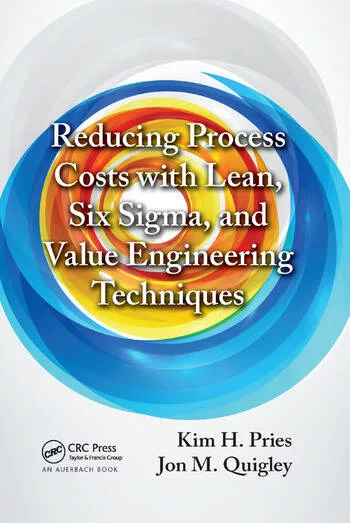
    Reducing Process Costs with Lean, Six Sigma, and Value Engineering Techniques

  • 9781138498730.jpg

    Manufacturing Cost Policy Deployment (MCPD) Profitability Scenarios: Systematic and Systemic Improvement of Manufacturing Costs

See More Products

Events

View AllSubmit An Event
  • December 4, 2025

    Cut Scrap and Prevent Rework: Smarter AI Inspection for Manufacturing

    On Demand If you’re ready to cut scrap, prevent rework, and build with confidence, this is a conversation you won’t want to miss. Sponsored by:
View AllSubmit An Event

Related Directories

  • Epson Robots

    DistributorsCALIFORNIAEpson Robots1650 Glenn Curtiss St.Carson,  CA(562) 290-5997  www.epsonrobots.cominfo@robots.epson.com
×

Never miss the latest news and trends driving the manufacturing industry

Stay in the know on the latest assembly trends.

JOIN TODAY!
  • RESOURCES
    • Advertise
    • Contact Us
    • Directories
    • Manufacturing Division
    • Store
    • Want More?
  • SIGN UP TODAY
    • Create Account
    • eMagazine
    • Newsletters
    • Customer Service
    • Manage Preferences
  • SERVICES
    • Marketing Services
    • Reprints
    • Market Research
    • List Rental
    • Survey/Respondent Access
  • STAY CONNECTED
    • LinkedIn
    • Facebook
    • Instagram
    • YouTube
    • X (Twitter)
  • PRIVACY
    • PRIVACY POLICY
    • TERMS & CONDITIONS
    • DO NOT SELL MY PERSONAL INFORMATION
    • PRIVACY REQUEST
    • ACCESSIBILITY

Copyright ©2026. All Rights Reserved BNP Media, Inc. and BNP Media II, LLC.

Design, CMS, Hosting & Web Development :: ePublishing