Assembly Magazine logo
search
Ask ASSEMBLY AI
cart
facebook twitter linkedin youtube
  • Sign In
  • Create Account
  • Sign Out
  • My Account
Assembly Magazine logo
  • TRENDS
    • Ask ASSEMBLY AI
    • Trends
    • News
    • New Products
  • INDUSTRIES
    • Aerospace
    • Appliance
    • DFMA Assembly
    • Medical Devices
    • Green Manufacturing
    • Lean Manufacturing
    • Machinery Assembly
    • Electronics Assembly
    • Automotive
  • TECHNOLOGIES
    • Adhesives & Dispensing
    • Assembly Presses
    • Automated Assembly Systems
    • Manufacturing Management
    • Manufacturing Software
    • Motion Control
    • Screwdriving & Riveting
    • Robotics
    • Test & Inspection
    • Plastics & Metal Welding
    • Wire Processing
    • Workstations
  • AUTONOMOUS & ELECTRIC MOBILITY
    • AEM Magazine Archives
    • Autonomy
    • Electrification
    • Mobility Services
    • Assembly & Testing
    • AV/EM News
  • MEDIA
    • Ask ASSEMBLY AI
    • Podcasts
    • Assembly News Now
    • Assembly TV
    • Webinars
    • eBooks
  • EVENTS
    • Calendar
    • The ASSEMBLY Show
  • MORE
    • Exclusives >
      • Plant of the Year
      • Capital Spending
    • Buyers Guide >
      • Supplier Insights
    • Classifieds
    • Featured Products
    • Newsletters
    • Store
    • White Papers
    • Columns
    • Sponsor Insights
  • INFOCENTER
    • Assembly & Test Solutions
  • EMAGAZINE
    • eMagazine
    • Archive Issues
    • Advertise
    • Contact Us
    • Sign Up

Want to Implement Lean Manufacturing? Get SMART!

August 1, 2002

Lean manufacturing is based on many principles, but the two principles that have the greatest impact on an organization are eliminating waste and continuous improvement. Why are these principles important? Because as a manufacturer your survival may depend on it. The companies that will succeed in the next 5 to 10 years are the lean companies—the ones generating higher production with lower overhead. The others, like dinosaurs, will become extinct. They will be priced out of business.

While lean is a terrific concept, it is not a new one. Lean dates back to the early 1900s when Henry Ford, founder of the Ford Motor Co., proclaimed that any process that doesn’t add value creates waste. Almost everything about manufacturing has changed in the last 100 years, except the lean manufacturing concept, because it still makes sense. Lean helps produce what every customer treasures most—value.

Lean manufacturing produces value in reduced inventory, scrap, rework and lead-time from order to delivery. Lean also creates value because less floor space is required for product assembly and less time is needed for changeover. Finally, lean generates value by enabling employees to function at maximum efficiency through streamlining the manufacturing cycle and increasing production—without adding costs.

If the benefits of lean are so obvious, why aren’t more manufacturers doing it? Because starting and maintaining lean habits is not easy. It’s a never-ending process. It is self-defeating to make the up-front investment to get lean, and then fail to stay that way once the goal is achieved.

Even some who have made the switch don’t understand this concept, including a plant superintendent who once said, "I’m almost finished with my continuous improvement program." With this flawed logic, his plant undoubtedly never reached its full potential as a lean manufacturer.

The Benefits of Lean

So how does a manufacturer get lean? Let’s use an automobile assembly plant as an example. A good starting place for the lean process might be the engine assembly line. Inventory value is high, parts come from a variety of suppliers, and there is usually great potential to save floor space and labor.

Engine line suppliers often provide components in large, bulky containers full of material. Each container represents several days’ worth of inventory, and there’s usually a backup container sitting on the floor behind it. All that inventory is rarely necessary. Four hours or less of inventory should be adequate.

The problem with keeping a lot of inventory—besides its cost—is that the amount of material along the assembly line often dictates the space between operations. Using the lean approach, the line is set up according to value being added by the operator. All parts and tools necessary to assemble the product are then fit into the operator’s value-adding space.

Lean lines feature individual, U-shaped workcells that allow for fluctuating manpower. When demand increases, operators are added to the cell. When demand decreases, operators are moved to more vital cells. This ensures that manpower is always deployed where it’s needed most.

Looking for quick answers on assembly and manufacturing topics? Try Ask ASM, our new smart AI search tool. Ask ASM →

Cells can also eliminate production steps, because operators are required to perform multiple functions. For example, operators can perform inspections as part of their normal job functions, rather than having one operator assemble the product and another inspect it down the line. Not only does this consolidate tasks, it also prevents rework problems that occur when inspections take place later in the assembly process.

Another benefit of lean lines is that they are safer than mass production lines. A lean line has very little inventory backup, allowing operators to clearly see each other. On mass production lines, they may be hidden behind a wall of inventory, increasing the chance of injury.

Lean cells are devoid of floor debris, such as metal bands, pallets and cardboard. Operators in a cell are close enough to communicate with one another, which not only promotes teamwork but also cleanliness and efficiency. On a mass production line, workers tend to be spread across a large area, making communication difficult and often resulting in a disorganized work space.

Because lean manufacturing frees up floor space, jobs that are currently outsourced can be internalized. That adds to the value-per-square-foot of the facility.

Lean Equipment

The initial investment in converting to lean can be less than $10,000. Obviously it’s not realistic to revise an en-tire plant for that amount, but there are small steps that can pay immediate dividends.

The best lean assembly lines are supported by modular material handling systems. These systems are made up of S.M.A.R.T. structures—simple, mobile, adjustable, reusable and temporary. These structures, such as tool pedestals, tilted flow racks and mobile carts, help operators eliminate waste and increase production while performing a job.

Simple. Ideally, material handling structures alongside an assembly line should be constructed of fundamental components. The drawings required to make the structures should be elementary, and only basic tools and skills should be necessary to assemble the structures. If required, an operator should be able to create a structure to solve a problem independently within hours of identifying the situation’s requirements.

Mobile. Material handling structures should be easily relocated. If the workstation needs cleaning, the material handing structure should easily be rolled out of the way so the floor can be swept.

Adjustable. Customers, products and demand will all change. Operators will also change, perhaps from a lanky, right-handed person today to a shorter, left-handed one tomorrow. To be ergonomic, workstations should have a crank mechanism that easily raises or lowers the work surface to the desired height.

Reusability. On mass production lines, structures are welded and painted for onetime use. With reusable structures, a flow rack one day could become a table or a cart the next.

Temporary. Ideally, structures should be designed and built to last just for the current product’s life cycle or until the next improvement is implemented. This is not to say that the components themselves should not be extremely durable. Indeed, if used correctly, the components should last for decades. Some material handling structures have been exposed to the elements for 30 years and are still functioning the way they were designed.

An effective material handling system must meet all of the above criteria. In addition to being S.M.A.R.T., the flexibility of the system boosts employee morale because it generates ideas and encourages creative thinking. Employees can investigate more effective methods of using a material handling system in performing tasks. Having the power to implement positive change is a strong intangible—people enjoy working in that environment.

Facility size isn’t a factor in deciding to use lean material handling systems. They work as effectively for manufacturers that employ thousands as they do for plants with less than 100 employees.

There is no definitive blueprint for a lean plant. There are lean plants that do not use material handling systems, just as there are mass production plants that do use them. However, to achieve the greatest value in manufacturing, the most beneficial combination is a lean philosophy that relies on a material handling system to help eliminate waste and promote continuous improvement. In other words, a lean line is an effective method for beefing up the bottom line.

Share This Story

Looking for a reprint of this article?
From high-res PDFs to custom plaques, order your copy today!

Recommended Content

JOIN TODAY
To unlock your recommendations.

Already have an account? Sign In

  • Made in the U.S.A.

    Consumer Products Manufacturing: Made in the USA

    Supply chain lessons learned during the coronavirus...
    Automated Assembly Systems
    By: Austin Weber
  • Best Practices for Press-Fit Assembly

    Best Practices for Press-Fit Assembly

    In manufacturing, ironclad formulas for success are hard...
    Assembly Presses
    By: Jim Camillo
  • aem0523leader-tesla1.jpg

    Tesla Rethinks the Assembly Line

    Engineers at Tesla Inc. have developed a new process that...
    Assembly and Testing
    By: Austin Weber
Manage My Account
  • eMagazine Subscription
  • Assembly Newsletters
  • Online Registration
  • Subscription Customer Service
  • Manage My Preferences

More Videos

Sponsored Content

Sponsored Content is a special paid section where industry companies provide high quality, objective, non-commercial content around topics of interest to the ASSEMBLY audience. All Sponsored Content is supplied by the advertising company and any opinions expressed in this article are those of the author and not necessarily reflect the views of ASSEMBLY or its parent company, BNP Media. Interested in participating in our Sponsored Content section? Contact your local rep!

close
  • ultrasonic welding
    Sponsored bySonobond Ultrasonics

    Engineering Efficiency in High-Performance Assembly: How Ultrasonic Welding Enhances Throughput, Reliability and Quality

  • UV curing system
    Sponsored byDymax

    Why UV Intensity Alone Doesn’t Define Curing Performance

  • wooden pallets
    Sponsored byLEAN Manufacturing Products

    Eliminating Waste on the Shop Floor: Applying Lean Principles to Improve Manufacturing Efficiency

Popular Stories

ASSEMBLY News Now, episode-30: Volvo Redesigns EV Manufacturing

Volvo Redesigns EV Manufacturing

Boeing CEO Kelly Ortberg announces 1 billion investment

Boeing Plans $1 Billion Wichita Investment, Workforce Training Center

GE Appliances Worker on Line

GE Appliances Expands Factory AI With 800 Gemini Enterprise Agents

Watch the latest episode of ANN now!

Events

July 24, 2025

From Shop Floor to CFO: How Manufacturers Are Closing the Loop Between Operations and Finance

On Demand Learn how manufacturers are bridging the gap between the shop floor and ERP systems to gain real-time visibility, streamline operations, and kick-start digital transformation—without waiting years.

Sponsored by:

PicoStratusGreen
July 30, 2025

Buffer Analysis and Design Fundamentals for Manufacturing Excellence

On Demand In this presentation, Dr. Herman Tang shares practical insights from his industry experience and research on buffer management in manufacturing operations.

View All Submit An Event

Poll

Difficult Assembly Processes

Which assembly process gives you the most difficulty?
View Results Poll Archive

Products

Manufacturing Cost Policy Deployment (MCPD) Profitability Scenarios: Systematic and Systemic Improvement of Manufacturing Costs

Manufacturing Cost Policy Deployment (MCPD) Profitability Scenarios: Systematic and Systemic Improvement of Manufacturing Costs

See More Products
Register for webinar - Modernizing Automotive Assembly: Why Upgrading Legacy MES is a Business Imperative

Related Articles

  • Lean Manufacturing: Get on Board

    See More
  • Forward Thinking: Want to Grow? Think Lean, First

    See More
  • How to Implement a Precision Indexing Conveyor in Automotive Manufacturing

    How to Implement a Precision Indexing Conveyor in Automotive Manufacturing

    See More

Related Products

See More Products
  • pocket.jpg

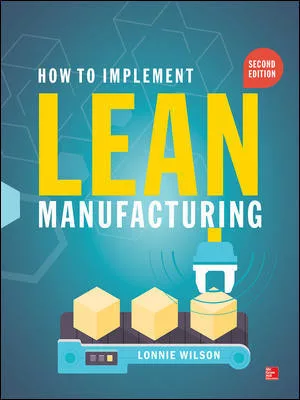
    How To Implement Lean Manufacturing, Second Edition

  • history.jpg

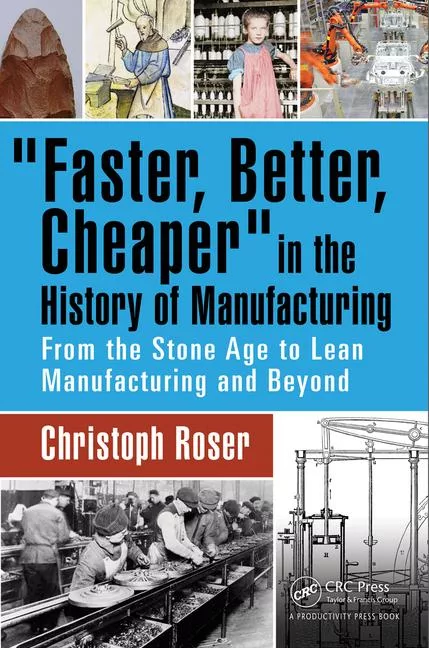
    Faster, Better, Cheaper in the History of Manufacturing: From the Stone Age to Lean Manufacturing and Beyond

  • achieving

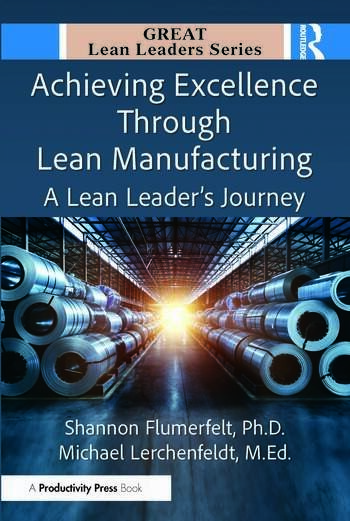
    Achieving Excellence Through Lean Manufacturing: A Lean Leader’s Journey

See More Products

Related Directories

  • Lean Manufacturing Products

    Lean Manufacturing Products LLC is a leading provider of innovative solutions designed to enhance operational efficiency and productivity in various industries. Specializing in lean manufacturing principles, we offer a comprehensive range of high-quality products, including racking systems, safety equipment, and modular storage solutions. Our mission is to help companies streamline their processes, reduce waste, and create more effective work environments. With a commitment to exceptional customer service and cutting-edge design, Lean Manufacturing Products LLC partners with businesses to implement best practices that drive success and foster continuous improvement.
  • Lean Factory America

    Our products aid in the elimination of waste, a cornerstone of lean manufacturing, by helping to eliminate errors, overproduction, inefficient processes, inventory, unnecessary transportation of product and unnecessary movement of personnel. Solutions are also highly configurable and customizable to provide customers with systems that are safe to both their personnel and products. The result is increased manufacturing efficiency and profitability for the customer.
×

Never miss the latest news and trends driving the manufacturing industry

Stay in the know on the latest assembly trends.

JOIN TODAY!
  • RESOURCES
    • Advertise
    • Contact Us
    • Directories
    • Manufacturing Division
    • Store
    • Want More?
  • SIGN UP TODAY
    • Create Account
    • eMagazine
    • Newsletters
    • Customer Service
    • Manage Preferences
  • SERVICES
    • Marketing Services
    • Reprints
    • Market Research
    • List Rental
    • Survey/Respondent Access
  • STAY CONNECTED
    • LinkedIn
    • Facebook
    • Instagram
    • YouTube
    • X (Twitter)
  • PRIVACY
    • PRIVACY POLICY
    • TERMS & CONDITIONS
    • DO NOT SELL MY PERSONAL INFORMATION
    • PRIVACY REQUEST
    • ACCESSIBILITY

Copyright ©2026. All Rights Reserved BNP Media, Inc. and BNP Media II, LLC.

Design, CMS, Hosting & Web Development :: ePublishing