Assembly Magazine logo
search
Ask ASSEMBLY AI
cart
facebook twitter linkedin youtube
  • Sign In
  • Create Account
  • Sign Out
  • My Account
Assembly Magazine logo
  • TRENDS
    • Ask ASSEMBLY AI
    • Trends
    • News
    • New Products
  • INDUSTRIES
    • Aerospace
    • Appliance
    • DFMA Assembly
    • Medical Devices
    • Green Manufacturing
    • Lean Manufacturing
    • Machinery Assembly
    • Electronics Assembly
    • Automotive
  • TECHNOLOGIES
    • Adhesives & Dispensing
    • Assembly Presses
    • Automated Assembly Systems
    • Manufacturing Management
    • Manufacturing Software
    • Motion Control
    • Screwdriving & Riveting
    • Robotics
    • Test & Inspection
    • Plastics & Metal Welding
    • Wire Processing
    • Workstations
  • AUTONOMOUS & ELECTRIC MOBILITY
    • AEM Magazine Archives
    • Autonomy
    • Electrification
    • Mobility Services
    • Assembly & Testing
    • AV/EM News
  • MEDIA
    • Ask ASSEMBLY AI
    • Podcasts
    • Assembly News Now
    • Assembly TV
    • Webinars
    • eBooks
  • EVENTS
    • Calendar
    • The ASSEMBLY Show
  • MORE
    • Exclusives >
      • Plant of the Year
      • Capital Spending
    • Buyers Guide >
      • Supplier Insights
    • Classifieds
    • Featured Products
    • Newsletters
    • Store
    • White Papers
    • Columns
    • Sponsor Insights
  • INFOCENTER
    • Assembly & Test Solutions
  • EMAGAZINE
    • eMagazine
    • Archive Issues
    • Advertise
    • Contact Us
    • Sign Up
Columns

X-Y-Z: Rack and Pinion Systems Are Rugged, Efficient

By John Sprovieri
September 6, 2005
A rack-and-pinion system for linear motion can support multiple carriages that can move independently.

Every time you turn a corner in your car, you're using a mechanism that can also be found in gantries, machine tools and other automated equipment: a rack and pinion.

Rack-and-pinion systems convert rotary motion into linear motion, or vice versa. The rack is a straight bar with teeth cut across it-a gear with infinite radius. The teeth are flat-sided and involute. The pinion is a round gear with mating teeth. Rotating the pinion moves the rack side to side. Moving the rack turns the pinion.

The rack and pinion can be made from steel, stainless steel, aluminum, brass and plastic. Gear teeth can be made in straight, helical, worm and herringbone styles. Straight teeth are perpendicular to the rack length; helical teeth are at an angle to it. Helical teeth run quieter than straight teeth, especially at high speeds. Helical teeth also have a higher contact ratio than straight teeth, which increases the system's load capacity. However, a rack and pinion with helical teeth is more difficult to set up and align than a mechanism with straight teeth.

One example of a rack-and-pinion positioning system is the MKZ linear module from Bosch Rexroth Corp. Linear Motion and Assembly Technologies (Charlotte, NC). Two ball rails, with two runner blocks each, are mounted to an aluminum frame. An aluminum carriage is mounted to the blocks. The rack is attached to the side of the frame, and the pinion, gearbox and motor are attached to the carriage.

Compared with other mechanisms for linear positioning, rack-and-pinion systems are rugged, efficient and economical. They are as fast as other types of linear motion systems. However, depending on the design and how well the gear teeth are made, they are not as accurate. In addition, a brake is required if the rack and pinion is used in vertical motion applications.

On the other hand, rack-and-pinion systems have some unique advantages, says Danielle Collins, product manager for linear modules at Bosch. Whereas travel length tops out at approximately 6 meters for ballscrew systems and 14 meters for belt-driven systems, travel length for rack-and-pinion systems is unlimited. And, unlike ballscrew or belt-driven systems, rack-and-pinion systems can support multiple carriages that can move independently of one another.

"That can save you space and integration time," says Collins. "We recently built a very long rack-and-pinion module, with multiple carriages, for a medical manufacturing application. Each carriage moved independently and carried a vertically oriented linear axis. Each carriage made a series of stops to dip a part into a chemical bath. If you had to do that with belt-driven modules, you'd need four or five units."

Looking for quick answers on assembly and manufacturing topics? Try Ask ASM, our new smart AI search tool. Ask ASM →

The accuracy of a rack and pinion is determined by three variables: backlash, pitch deviation and tooth quality. Backlash is the amount of clearance between the flanks of the gear teeth. It varies with the design and quality of the components, and with how well the two are aligned. Backlash can be eliminated with a split-pinion system. A split pinion consists of two pinion halves and an axial spring pack. The pinions mesh with opposite tooth flanks on the same rack. The axial spring pack preloads the system to ensure that no backlash develops during operation.

Pitch deviation is the difference between the theoretical rack length and its actual length. This varies with the quality of the rack. Some servo systems can compensate for this error by using a laser interferometer to map out the errors. Racks with zero cumulative pitch deviation can be made, even for long travel lengths, but they're expensive.

Tooth quality is a measure of how accurately the tooth flanks are manufactured. This affects the precision and smoothness of the system. Hardened and ground rack and pinion assemblies are the most precise.

When specifying a rack and pinion, engineers should consider the load, the orientation of the axis, speed, travel length, precision requirements, environment and duty cycle. When calculating the load, engineers should include external loads, such as the force that might be exerted on the carriage by a screwdriving operation.

Share This Story

Looking for a reprint of this article?
From high-res PDFs to custom plaques, order your copy today!

John has been with ASSEMBLY magazine since February 1997. John was formerly with a national medical news magazine, and has written for Pathology Today and the Green Bay Press-Gazette. John holds a B.A. in journalism from Northwestern University, Medill School of Journalism.

Recommended Content

JOIN TODAY
To unlock your recommendations.

Already have an account? Sign In

  • Made in the U.S.A.

    Consumer Products Manufacturing: Made in the USA

    Supply chain lessons learned during the coronavirus...
    Automated Assembly Systems
    By: Austin Weber
  • Best Practices for Press-Fit Assembly

    Best Practices for Press-Fit Assembly

    In manufacturing, ironclad formulas for success are hard...
    Assembly Presses
    By: Jim Camillo
  • aem0523leader-tesla1.jpg

    Tesla Rethinks the Assembly Line

    Engineers at Tesla Inc. have developed a new process that...
    Automotive Assembly
    By: Austin Weber
Manage My Account
  • eMagazine Subscription
  • Assembly Newsletters
  • Online Registration
  • Subscription Customer Service
  • Manage My Preferences

More Videos

Sponsored Content

Sponsored Content is a special paid section where industry companies provide high quality, objective, non-commercial content around topics of interest to the ASSEMBLY audience. All Sponsored Content is supplied by the advertising company and any opinions expressed in this article are those of the author and not necessarily reflect the views of ASSEMBLY or its parent company, BNP Media. Interested in participating in our Sponsored Content section? Contact your local rep!

close
  • ultrasonic welding
    Sponsored bySonobond Ultrasonics

    Engineering Efficiency in High-Performance Assembly: How Ultrasonic Welding Enhances Throughput, Reliability and Quality

  • UV curing system
    Sponsored byDymax

    Why UV Intensity Alone Doesn’t Define Curing Performance

  • wooden pallets
    Sponsored byLEAN Manufacturing Products

    Eliminating Waste on the Shop Floor: Applying Lean Principles to Improve Manufacturing Efficiency

Popular Stories

ASSEMBLY News Now, episode-30: Volvo Redesigns EV Manufacturing

Volvo Redesigns EV Manufacturing

automated consumer goods assembly system

Best Practices for Cycle Time Optimization

Boeing CEO Kelly Ortberg announces 1 billion investment

Boeing Plans $1 Billion Wichita Investment, Workforce Training Center

Watch the latest episode of ANN now!

Events

July 24, 2025

From Shop Floor to CFO: How Manufacturers Are Closing the Loop Between Operations and Finance

On Demand Learn how manufacturers are bridging the gap between the shop floor and ERP systems to gain real-time visibility, streamline operations, and kick-start digital transformation—without waiting years.

Sponsored by:

PicoStratusGreen
July 30, 2025

Buffer Analysis and Design Fundamentals for Manufacturing Excellence

On Demand In this presentation, Dr. Herman Tang shares practical insights from his industry experience and research on buffer management in manufacturing operations.

View All Submit An Event

Poll

Difficult Assembly Processes

Which assembly process gives you the most difficulty?
View Results Poll Archive

Products

Manufacturing Cost Policy Deployment (MCPD) Profitability Scenarios: Systematic and Systemic Improvement of Manufacturing Costs

Manufacturing Cost Policy Deployment (MCPD) Profitability Scenarios: Systematic and Systemic Improvement of Manufacturing Costs

See More Products
Register for webinar - Modernizing Automotive Assembly: Why Upgrading Legacy MES is a Business Imperative

Related Articles

  • X-Y-Z: Belt Drives Are a Cinch

    See More
  • X-Y-Z: Shocking! Motion Control Cables Are Made to Flex

    See More
  • X-Y-Z: 'Plain' Bearings Are Anything But

    See More

Related Products

See More Products
  • digital.jpg

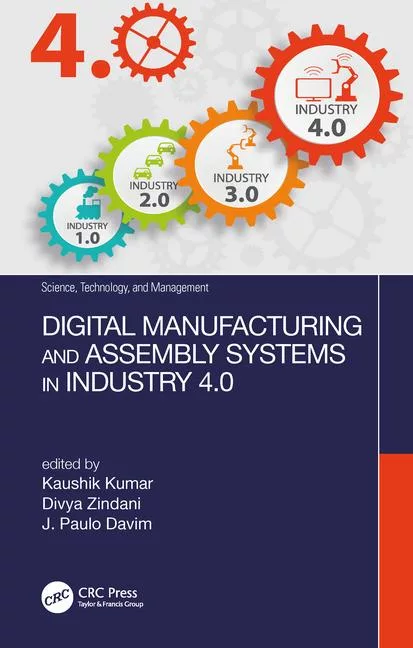
    Digital Manufacturing and Assembly Systems in Industry 4.0

  • flexible manu.jpg

    Flexible Manufacturing Systems

  • 9780367532604.jpg

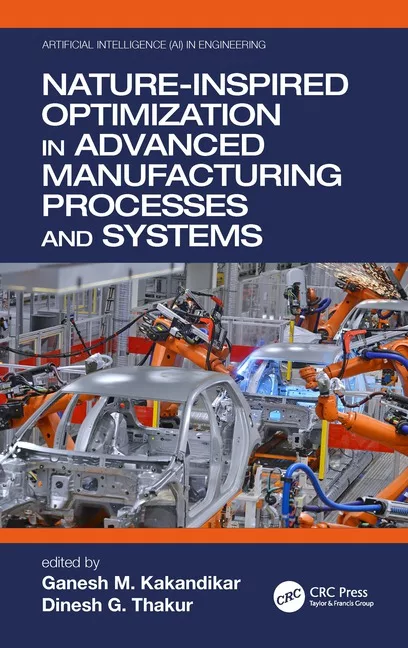
    Nature-Inspired Optimization in Advanced Manufacturing Processes and Systems

See More Products

Related Directories

  • Rack Engineering Div.

  • XenomatiX

×

Never miss the latest news and trends driving the manufacturing industry

Stay in the know on the latest assembly trends.

JOIN TODAY!
  • RESOURCES
    • Advertise
    • Contact Us
    • Directories
    • Manufacturing Division
    • Store
    • Want More?
  • SIGN UP TODAY
    • Create Account
    • eMagazine
    • Newsletters
    • Customer Service
    • Manage Preferences
  • SERVICES
    • Marketing Services
    • Reprints
    • Market Research
    • List Rental
    • Survey/Respondent Access
  • STAY CONNECTED
    • LinkedIn
    • Facebook
    • Instagram
    • YouTube
    • X (Twitter)
  • PRIVACY
    • PRIVACY POLICY
    • TERMS & CONDITIONS
    • DO NOT SELL MY PERSONAL INFORMATION
    • PRIVACY REQUEST
    • ACCESSIBILITY

Copyright ©2026. All Rights Reserved BNP Media, Inc. and BNP Media II, LLC.

Design, CMS, Hosting & Web Development :: ePublishing