Test and Inspection
Best Practices for Lighting in Vision Systems
Good lighting is crucial for successful machine vision applications.
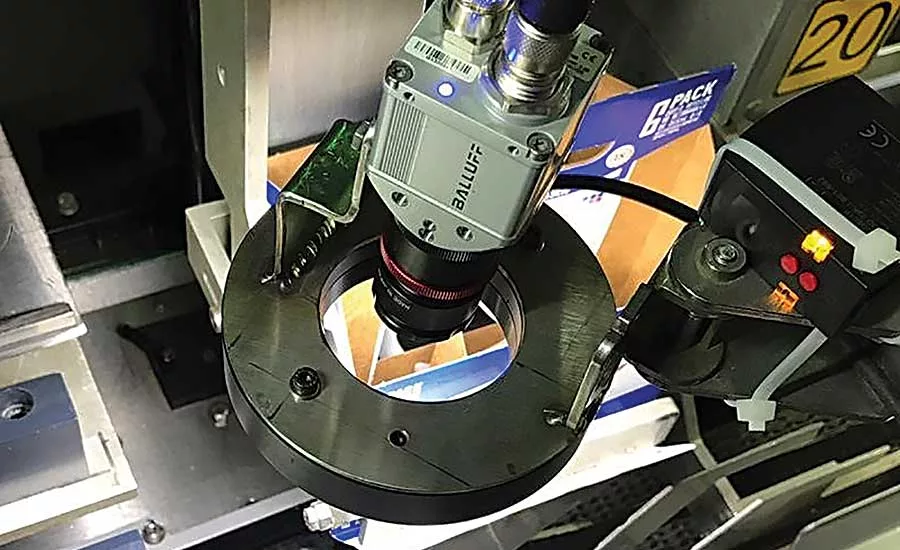
Correct lighting is the most crucial element for successful machine vision applications. To successfully apply machine vision, basic lighting concepts and lighting techniques for industrial applications should be understood.
Machine vision systems and smart cameras are capable of precision measurements. Precision measurements are needed for inspection and quality control purposes. To facilitate exact measurement, the vision system must identify edges and other part features by maximizing contrast through various lights and lighting techniques. With many machine vision applications, solving lighting issues is tantamount to solving the application itself.
Many questions arise concerning lighting: What type of light should be used-spot, ring or dome light? Maybe an on-axis, linear light or backlight is needed. Should color be considered? Experience may help, but even lighting veterans begin the process by choosing a light and working through a process of elimination. Each light is tested by varying its angle and height above the parts. Keeping an assortment of lights on mobile testing equipment can lead to quick solutions.
Lighting can be a complicated challenge. However, some applications can use ambient light. To use ambient lighting, applications need consistent artificial light with no variations due to skylights, windows, or lights being turned off and on. If ambient light can consistently light the defect area so that a vision system can conduct an inspection, it may work.
Types of Inspection
Lighting techniques can be applied according to what you are trying to find, such as color variations, surface defects, and presence or absence of parts.
Color inspection applications may involve minimal changes in color. As in other lighting challenges, different combinations of light may be necessary to emphasize the color you are looking for. It should be noted that colored light is useful for monochrome cameras, as well as color camera systems.
One challenging application involved a lot code printed on the bottom of a reflective, dark blue bottle. A curve in the bottom of the bottle, which created uneven lighting or reflections, added an additional hurdle. This inspection application was solved using a blue LED light in combination with a dome light. This combination created the needed contrast.
Looking for quick answers on assembly and manufacturing topics? Try Ask ASM, our new smart AI search tool. Ask ASM
Surface defects can be the most difficult to inspect, because defects can be inconsistent. The number of defects and their sizes are important issues, as well as identifying the defect as a dent, scratch, scuff or crack. Each of these can differ in size and shape. The location of the defect on the part should also be considered.
An example of a difficult flaw detection application was a clear lens for the dome light in a truck. The surface to be inspected was highly reflective. Two lighting methods were tried. One method involved flooding the lens with diffuse, even illumination with a dome light. The second method used reflection to identify the defects. The use of diffused lighting didn't provide the needed contrast. However, reflective lighting and multiple cameras provided the right contrast.
Presence and absence applications have been a major part of the explosive growth in the machine vision industry over the last 5 years. The majority of presence and absence applications are straightforward in both lighting and inspecting.
Spot, linear and ring lights work well for detecting the presence of screws, inserts, springs, washers and foam. Black, low-contrast and reflective parts are the most difficult to detect. But with the correct assortment of lights and experimentation, the right solution can be found.
Lighting and Materials
An experienced lighting integrator knows that all parts of the lighting system are dynamic. Assuming that the part to be inspected is static can result in problems. A lighting technician should know the part well and realize that conditions affecting the display of the part can change. Doing the work on the front end can prevent hours of troubleshooting the machine on the plant floor later.
With the correct lighting choice, a defect will always display itself in one of three ways: bright defect and dark background, dark defect and bright background, or a color difference. By changing the type of light, many applications can be illuminated to show the defects light and the background dark, or vice versa.
Although every application is unique, similar lighting techniques can allow some inspection processes to be grouped together.
In plastics applications, the chemicals in some plastics glow when exposed to infrared light. These materials cause plastics to absorb, reflect, transmit or radiate light differently. For example, dark-colored plastics may appear white under infrared light. Therefore, different colored lighting, such as red, green, blue or a combination of colors, can be very helpful in identifying defects.
Common inspections on plastic parts include "short shots"(insufficient plastics in the mold), flash and carbon specks. A challenging aspect of inspecting plastics is inconsistent parts. Surface textures on many plastics change from part to part and batch to batch. Slight variations in temperature, ingredients and molds can cause deviations over time. As a result, it is always a good idea to supply several part samples to the vision integrator.
In automotive applications, low-contrast inspections, such as black features on black parts, are best suited for low-angle, dark-field illumination or laser light. Low-angle or dark-field illumination will expose corners or edges, creating an outline of the part. This can help reduce or eliminate variations related to different colored parts. Different colored parts can be inspected without changing lighting or camera settings. Dark-field lighting will solve low-contrast situations, but the light has to be at a low angle or very close to the part. Laser light focused on specific areas can illuminate low-contrast parts and even give height direction.
An example of a low-contrast automotive application is a black rubber bumper on a black plastic armrest. The contrast between the bumper and armrest can be less than 10 percent.
When inspecting metals, effective lighting can be challenging. The reflective qualities of many metals make them difficult to light evenly. Metal stampings can have oil on the surface, causing a reflection. Some stampings also may be highly reflective, while the next batch may be very dark with little reflectivity. Metal can also change in reflectivity because of the carbon in the metal. Metal can bend or form differently from part to part, and the texture or surface of the metal can illuminate differently from sheet to sheet, or on every roll of stock. Using a backlighting technique is the best approach for inspecting reflective metal.
Precision Measurements
Precision measurements and tight tolerances are required in many inspections. And because backlighting provides more contrast between the background and the part, it is the best technique for this level of measurement.
Backlighting involves light traveling in one direction toward the vision system instead of two directions as with a front light. While the light travels toward the camera, the part blocks the light, creating a high contrast on the edges. This allows sub-pixel measuring to accurately hold tolerances. Measurements of 0.01 inch, and even 0.0001 inch, have been achieved using backlighting.
Some standard techniques for accomplishing correct lighting for precision measurement include masking the area around the part to minimize ambient light, cleaning the area or the part to ensure dirt doesn't influence the measurement, and controlling or monitoring temperature, which can expand or contract a part enough to affect measurement.
It's easy enough to say that correct lighting is required for effective machine vision applications, but finding the best lighting solution requires a broad array of lights and-most importantly-knowledge and experience. Anyone can purchase lights, but it takes skilled integrators to know how to use that equipment in the most effective manner.
Looking for a reprint of this article?
From high-res PDFs to custom plaques, order your copy today!