Robots Light the Way to Faster Assembly
To keep up with a growing volume of orders, Ruud Lighting automated its assembly process.
Thomas Edison changed the world and revolutionized the lighting industry with his invention of the lightbulb in 1879. Since then, high-intensity discharge, fluorescent, and more recently, LED lighting fixtures have shaped the industry, paving the way for expansion among manufacturers such as Ruud Lighting Inc. of Racine, WI.
Founded in 1982, Ruud has grown into one of the world’s largest family-owned lighting companies with offices around the globe. The company sells indoor and outdoor commercial lighting fixtures directly to electrical contractors.
Invented in the late 1960s, the LED was the first new lighting technology since the innovations of the 1930s, which included fluorescent, metal halide and high-pressure sodium lighting. LED fixtures are environmentally responsible and energy-efficient, using 50 percent to 75 percent less energy than other high-efficiency light sources.
With increasing market interest in boosting energy efficiency and eliminating hazardous materials such as mercury in light fixtures, Ruud Lighting focused its business on LED technology. As demand for the company’s LED optic assemblies grew, production was unable to keep up with the growing volume of orders. Assembly capacity was limited, and quality consistency was less than desired. The manual placement of optical lenses into LED light-engine assemblies was a particular drag on cycle time and efficiency. The labor-intensive process required an assembler to manually pick a lens, inspect it for correct orientation, and then place it in the right compartment at the right angle.
To gain a competitive advantage and improve its production model, Ruud Lighting needed to take this particular step to the next level. The company wanted to increase production speed, improve efficiency, maintain consistent quality and reduce repetitive tasks for its workers. To accomplish these goals, automating the process with robotics was required.
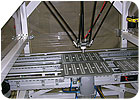
Based in Greenville, WI, QComp is a certified preferred partner of ABB Robotics. QComp’s services include system design, programming, complete system build, testing, installation and support through the life of the robot system. QComp suggested that Ruud Lighting consider an automated cell with a vision-guided ABB FlexPicker robot. This four-axis delta-style robot operates at up to 180 cycles per minute, accurately and with high repeatability. With a mean time between failures of 250,000 hours, the FlexPicker is durable enough to run in a 24/7 operation.
“When we looked at ABB’s ‘fastest pick-and-place robot in the world,’ we immediately knew that this was the robot for our application-a system we could showcase to our customers,” says Scot Siebers, industrial engineering manager at Ruud Lighting.
“Ruud Lighting’s LED technology is state-of-the-art, and they are constantly looking to improve their processes [to increase] efficiency and profitability,” says Tom Doyle, president of QComp. “QComp’s research has shown that our robotic picking system will help them more efficiently use their production floor space, maximize their return on investment, and have minimal production interruption.”
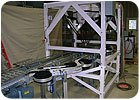
Plastic lenses, the size of a nickel, are fed into the cell from a vibratory bowl. The lenses are presented to the robot one at a time through a linear air track mechanism.
Each type of lens has a specific inner and outer profile. The orientation of the lens in the light-engine assembly determines the characteristics of the light emitted by the fixture. This enables Ruud to provide fixtures for a multitude of applications. For example, depending on the type and orientation of the lenses, an LED light engine could provide a narrow, medium or wide light distribution.
The lenses coming into the cell have identifying characters etched into them. The vision system reads these characters to determine the type and orientation of each lens. With this information, the FlexPicker picks, orients and places individual lenses into a light engine. The number of lenses in a light engine varies depending on the application.
The light engines then move down an assembly line where numerous other components are added. Finally, the light engines are configured and assembled into a variety of LED lighting fixtures. The cell can accommodate different light-engine covers and lens shapes, making it extremely flexible.
Since implementing the cell, lenses are picked, placed and oriented correctly 100 percent of the time, which was impossible when the process was done manually, says Siebers.
Ruud Lighting is on track to keep up with demand and has seen a great change in production. The company’s production process finally complements its technologically innovative products.
“This entire project has been on the cutting edge of technology when it comes to the future of lighting as we know it,” says Siebers. “Never before has the lighting industry seen such a huge paradigm shift since the invention of the lightbulb. It is a very exciting time for our company and the lighting industry.”
One last and exciting note, the cell will be showcased on an upcoming episode of the television show “How It’s Made” on the Discovery channel this fall.
For more information on automated assembly systems, call QComp Technologies at 920-757-0775 or visit www.qcomptech.com.
For more information on robots, call ABB Robotics at 248-391-8440 or visit www.abb.com.
For more information on vision systems, call Cognex at 877-264-6391 or visit www.cognex.com.
For more information on energy-efficient lighting, call Ruud at 262-886-1900 or visit www.ruudlighting.com.
ASSEMBLY ONLINE
For more information on robotic assembly, visit www.assemblymag.com to read these articles:
* Assembly in Action: Robots Facilitate Production Boost.
* Assembly in Action: Robots Weld Seat Backs.
* Assembly in Action: Robots Cut Welding Times in Half.
Thomas Edison changed the world and revolutionized the lighting industry with his invention of the lightbulb in 1879. Since then, high-intensity discharge, fluorescent, and more recently, LED lighting fixtures have shaped the industry, paving the way for expansion among manufacturers such as Ruud Lighting Inc. of Racine, WI.
Founded in 1982, Ruud has grown into one of the world’s largest family-owned lighting companies with offices around the globe. The company sells indoor and outdoor commercial lighting fixtures directly to electrical contractors.
Invented in the late 1960s, the LED was the first new lighting technology since the innovations of the 1930s, which included fluorescent, metal halide and high-pressure sodium lighting. LED fixtures are environmentally responsible and energy-efficient, using 50 percent to 75 percent less energy than other high-efficiency light sources.
With increasing market interest in boosting energy efficiency and eliminating hazardous materials such as mercury in light fixtures, Ruud Lighting focused its business on LED technology. As demand for the company’s LED optic assemblies grew, production was unable to keep up with the growing volume of orders. Assembly capacity was limited, and quality consistency was less than desired. The manual placement of optical lenses into LED light-engine assemblies was a particular drag on cycle time and efficiency. The labor-intensive process required an assembler to manually pick a lens, inspect it for correct orientation, and then place it in the right compartment at the right angle.
To gain a competitive advantage and improve its production model, Ruud Lighting needed to take this particular step to the next level. The company wanted to increase production speed, improve efficiency, maintain consistent quality and reduce repetitive tasks for its workers. To accomplish these goals, automating the process with robotics was required.
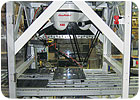
Lenses for LED light fixtures have identifying characters etched into them. A vision system reads these characters to determine the type and orientation of each lens. With this information, the robot picks, orients and places individual lenses into an assembly.
The Need for Speed
Ruud Lighting looked at several styles of robot, including Cartesian, SCARA and six-axis models, but none could perform at the speed they were looking for. ABB Robotics and QComp Technologies Inc. presented an alternative.Based in Greenville, WI, QComp is a certified preferred partner of ABB Robotics. QComp’s services include system design, programming, complete system build, testing, installation and support through the life of the robot system. QComp suggested that Ruud Lighting consider an automated cell with a vision-guided ABB FlexPicker robot. This four-axis delta-style robot operates at up to 180 cycles per minute, accurately and with high repeatability. With a mean time between failures of 250,000 hours, the FlexPicker is durable enough to run in a 24/7 operation.
“When we looked at ABB’s ‘fastest pick-and-place robot in the world,’ we immediately knew that this was the robot for our application-a system we could showcase to our customers,” says Scot Siebers, industrial engineering manager at Ruud Lighting.
“Ruud Lighting’s LED technology is state-of-the-art, and they are constantly looking to improve their processes [to increase] efficiency and profitability,” says Tom Doyle, president of QComp. “QComp’s research has shown that our robotic picking system will help them more efficiently use their production floor space, maximize their return on investment, and have minimal production interruption.”
The robotic system can identify, pick, orient and place a lens six times faster than an assembler can manually.
Automating Lens Placement
QComp designed and installed a modular, automated pick-and-place cell for the lenses. QComp paired the FlexPicker with a Cognex In-Sight vision system. The cell met all of Ruud’s requirements for flexibility, accuracy and consistent production pacePlastic lenses, the size of a nickel, are fed into the cell from a vibratory bowl. The lenses are presented to the robot one at a time through a linear air track mechanism.
Each type of lens has a specific inner and outer profile. The orientation of the lens in the light-engine assembly determines the characteristics of the light emitted by the fixture. This enables Ruud to provide fixtures for a multitude of applications. For example, depending on the type and orientation of the lenses, an LED light engine could provide a narrow, medium or wide light distribution.
The lenses coming into the cell have identifying characters etched into them. The vision system reads these characters to determine the type and orientation of each lens. With this information, the FlexPicker picks, orients and places individual lenses into a light engine. The number of lenses in a light engine varies depending on the application.
The light engines then move down an assembly line where numerous other components are added. Finally, the light engines are configured and assembled into a variety of LED lighting fixtures. The cell can accommodate different light-engine covers and lens shapes, making it extremely flexible.
‘Lighting Up' Production
The new system can identify, pick, orient and place a lens six times faster than an assembler can manually. This enables Ruud to use one robot cell to feed several light-engine assembly lines downstream, thus significantly reducing the ROI period. The robotic system also eliminates the ergonomic risks of repetition and fatigue when assembling components at such a fast pace.Since implementing the cell, lenses are picked, placed and oriented correctly 100 percent of the time, which was impossible when the process was done manually, says Siebers.
Ruud Lighting is on track to keep up with demand and has seen a great change in production. The company’s production process finally complements its technologically innovative products.
“This entire project has been on the cutting edge of technology when it comes to the future of lighting as we know it,” says Siebers. “Never before has the lighting industry seen such a huge paradigm shift since the invention of the lightbulb. It is a very exciting time for our company and the lighting industry.”
One last and exciting note, the cell will be showcased on an upcoming episode of the television show “How It’s Made” on the Discovery channel this fall.
For more information on automated assembly systems, call QComp Technologies at 920-757-0775 or visit www.qcomptech.com.
For more information on robots, call ABB Robotics at 248-391-8440 or visit www.abb.com.
For more information on vision systems, call Cognex at 877-264-6391 or visit www.cognex.com.
For more information on energy-efficient lighting, call Ruud at 262-886-1900 or visit www.ruudlighting.com.
ASSEMBLY ONLINE
For more information on robotic assembly, visit www.assemblymag.com to read these articles:
* Assembly in Action: Robots Facilitate Production Boost.
* Assembly in Action: Robots Weld Seat Backs.
* Assembly in Action: Robots Cut Welding Times in Half.
Looking for a reprint of this article?
From high-res PDFs to custom plaques, order your copy today!