Assembly Magazine logo
search
Ask ASSEMBLY AI
cart
facebook twitter linkedin youtube
  • Sign In
  • Create Account
  • Sign Out
  • My Account
Assembly Magazine logo
  • TRENDS
    • Ask ASSEMBLY AI
    • Trends
    • News
    • New Products
  • INDUSTRIES
    • Aerospace
    • Appliance
    • DFMA Assembly
    • Medical Devices
    • Green Manufacturing
    • Lean Manufacturing
    • Machinery Assembly
    • Electronics Assembly
    • Automotive
  • TECHNOLOGIES
    • Adhesives & Dispensing
    • Assembly Presses
    • Automated Assembly Systems
    • Manufacturing Management
    • Manufacturing Software
    • Motion Control
    • Screwdriving & Riveting
    • Robotics
    • Test & Inspection
    • Plastics & Metal Welding
    • Wire Processing
    • Workstations
  • AUTONOMOUS & ELECTRIC MOBILITY
    • AEM Magazine Archives
    • Autonomy
    • Electrification
    • Mobility Services
    • Assembly & Testing
    • AV/EM News
  • MEDIA
    • Ask ASSEMBLY AI
    • Podcasts
    • Assembly News Now
    • Assembly TV
    • Webinars
    • eBooks
  • EVENTS
    • Calendar
    • The ASSEMBLY Show
  • MORE
    • Exclusives >
      • Plant of the Year
      • Capital Spending
    • Buyers Guide >
      • Supplier Insights
    • Classifieds
    • Featured Products
    • Newsletters
    • Store
    • White Papers
    • Columns
    • Sponsor Insights
  • INFOCENTER
    • Assembly & Test Solutions
  • EMAGAZINE
    • eMagazine
    • Archive Issues
    • Advertise
    • Contact Us
    • Sign Up
Columns

Assembly in Action: Workcell Helps Interface Designer Find the Right Touch

March 1, 2003

TouchSensor Technologies LLC (Wheaton, IL) manufactures nonmechanical control interfaces for appliances, fitness equipment, vending machines and beverage-dispensing machines. The company keeps a watchful eye on quality. "Our outgoing product quality is critical," explains Bob Campbell, vice president of operations at TouchSensor. "One of our points of differentiation is an ultrareliable product. It is critical that it meets every specification before leaving our factory."

To meet that demand, TouchSensor hired Sibos Prime Inc. (Rockford, IL) to develop an automated system for testing the control panels. The company chose Sibos Prime because of its experience in building flexible automated test and assembly cells for quality-sensitive applications, such as cell phones and hearing aids. TouchSensor needed a system that would be flexible enough to accommodate a wide variety of panel sizes and an almost infinite number of possible sensor locations. Because TouchSensor’s panels are produced with both curved and flat surfaces, the test cell also had to accommodate test points at varying heights. A final requirement was growth: The test cell had to be able to support future expansion of TouchSensor’s technology.

TouchSensor’s panels do not use what we normally consider "buttons." A traditional button or switch consists of a base, spring, body and contacts. TouchSensor’s panels are different. Each button is replaced by a single, solid-state sensor pad activated by human touch. This technology is unlike the membrane-covered, mechanical switches found on many cooking ranges and fitness equipment. Sensing through decorated glass or formed plastic, TouchSensor’s switch has no moving parts to wear and potentially fail, and there is no membrane to tear, crack or degrade over time. These pad sensors are completely sealed within a rigid, laminated substrate that is impervious to many challenging environments.

Testing these pads requires more than simply verifying that the device turns on and off. The test process also must check the pads’ sensitivity, which can be specified by the customer without software. In addition, TouchSensor’s keypads can be used in safety circuits, which means the test process must be particularly robust. "It is also important that the user’s perception of the sensitivity is consistent from pad to pad and panel to panel," adds Campbell. "The Sibos solution allows us to confirm this, as well as objectively capture data for process control."

TouchSensor’s wide range of control panels—each of which may have its own individual specifications—presents a unique challenge to the testing process. Using a person’s finger to test each sensor pad’s "feel" brings up appreciable logistics and cost issues, not to mention concerns about repeatability, calibration and standardization.

TouchSensor needed a test cell capable of inspecting multiple panels with multiple button configurations on both flat and curved panels. The cell also had to test various keypad sequences. The solution was Sibos Prime’s NexGen robotic workcell.

The NexGen is based on Sibos Prime’s FirstGen workcell. The company built more than 80 FirstGen workcells for a major cell phone manufacturer, which used the machines to test phones.

The NexGen is a predesigned robot and chassis that easily integrates with various material handing equipment. The cell has six, heavy-duty drawers to provide easy access and ample room for test instruments and PCs.

Looking for quick answers on assembly and manufacturing topics? Try Ask ASM, our new smart AI search tool. Ask ASM →

The NexGen test cell designed for TouchSensor includes an Epson SCARA robot located between two, semiautomatic operator stations. The robot is located in the middle of the cell, with a dial table on either side of it. Two operators remove tested panels and place untested panels onto test fixtures on each dial. The test fixtures are then independently and automatically presented to the robot for testing. The operators work in opposite phase of one another, so that one panel is being tested while the other is changed out.

Multiple test probes are gripped by the robot in various configurations to test the sensitivity of the pads. These probes can be straight for testing flat panels or angled to test curved panels. Different sensors can be tested to different standards without interrupting the test cycle. The robot simply swaps out probes during the testing sequence.

The robot tests each panel in a predetermined sequence. But, this sequence is not without flexibility. Based on the results of presenting a probe to the button, the robot can retest the pad with the same probe or a different one. The robot can then be used as a statistical feedback tool to not only pass or fail the button or panel, but provide valuable feedback for optimizing the manufacturing process.

For more information about automated test cells, call 815-229-3800 or visit http://www.sibosprime.com.

Share This Story

Looking for a reprint of this article?
From high-res PDFs to custom plaques, order your copy today!

Recommended Content

JOIN TODAY
To unlock your recommendations.

Already have an account? Sign In

  • Made in the U.S.A.

    Consumer Products Manufacturing: Made in the USA

    Supply chain lessons learned during the coronavirus...
    Automated Assembly Systems
    By: Austin Weber
  • Best Practices for Press-Fit Assembly

    Best Practices for Press-Fit Assembly

    In manufacturing, ironclad formulas for success are hard...
    Assembly Presses
    By: Jim Camillo
  • aem0523leader-tesla1.jpg

    Tesla Rethinks the Assembly Line

    Engineers at Tesla Inc. have developed a new process that...
    Electrification
    By: Austin Weber
Manage My Account
  • eMagazine Subscription
  • Assembly Newsletters
  • Online Registration
  • Subscription Customer Service
  • Manage My Preferences

More Videos

Sponsored Content

Sponsored Content is a special paid section where industry companies provide high quality, objective, non-commercial content around topics of interest to the ASSEMBLY audience. All Sponsored Content is supplied by the advertising company and any opinions expressed in this article are those of the author and not necessarily reflect the views of ASSEMBLY or its parent company, BNP Media. Interested in participating in our Sponsored Content section? Contact your local rep!

close
  • ultrasonic welding
    Sponsored bySonobond Ultrasonics

    Engineering Efficiency in High-Performance Assembly: How Ultrasonic Welding Enhances Throughput, Reliability and Quality

  • UV curing system
    Sponsored byDymax

    Why UV Intensity Alone Doesn’t Define Curing Performance

  • wooden pallets
    Sponsored byLEAN Manufacturing Products

    Eliminating Waste on the Shop Floor: Applying Lean Principles to Improve Manufacturing Efficiency

Popular Stories

ASSEMBLY News Now, episode-30: Volvo Redesigns EV Manufacturing

Volvo Redesigns EV Manufacturing

Boeing CEO Kelly Ortberg announces 1 billion investment

Boeing Plans $1 Billion Wichita Investment, Workforce Training Center

GE Appliances Worker on Line

GE Appliances Expands Factory AI With 800 Gemini Enterprise Agents

Watch the latest episode of ANN now!

Events

July 24, 2025

From Shop Floor to CFO: How Manufacturers Are Closing the Loop Between Operations and Finance

On Demand Learn how manufacturers are bridging the gap between the shop floor and ERP systems to gain real-time visibility, streamline operations, and kick-start digital transformation—without waiting years.

Sponsored by:

PicoStratusGreen
July 30, 2025

Buffer Analysis and Design Fundamentals for Manufacturing Excellence

On Demand In this presentation, Dr. Herman Tang shares practical insights from his industry experience and research on buffer management in manufacturing operations.

View All Submit An Event

Poll

Difficult Assembly Processes

Which assembly process gives you the most difficulty?
View Results Poll Archive

Products

Manufacturing Cost Policy Deployment (MCPD) Profitability Scenarios: Systematic and Systemic Improvement of Manufacturing Costs

Manufacturing Cost Policy Deployment (MCPD) Profitability Scenarios: Systematic and Systemic Improvement of Manufacturing Costs

See More Products
Register for webinar - Modernizing Automotive Assembly: Why Upgrading Legacy MES is a Business Imperative

Related Articles

  • Assembly in Action: Flexible Workcell Installs Pump Covers

    See More
  • Find the Right Medical Adhesive

    Find the Right Medical Adhesive

    See More

Related Products

See More Products
  • digital.jpg

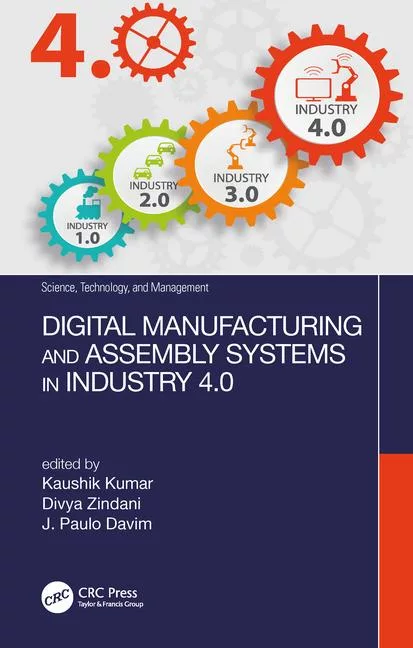
    Digital Manufacturing and Assembly Systems in Industry 4.0

  • Kaizen Assembly: Designing, Constructing, and Managing a Lean Assembly Line

  • history.jpg

    Faster, Better, Cheaper in the History of Manufacturing: From the Stone Age to Lean Manufacturing and Beyond

See More Products

Events

View AllSubmit An Event
  • October 30, 2025

    Assembly Simulation in Action: 3 Approaches Driving OEM Savings

    On Demand Participants will gain actionable insights and real-world examples that demonstrate how digital simulation supports assembly planning, geometry assurance, and quality control. Sponsored by:
View AllSubmit An Event

Related Directories

  • Pilot John International

    Pilot John International ® (PJi), founded more than 20 years ago, first as Carolina GSE, is the leading global distribution and service center in aviation ground support equipment, aircraft parts, and supplies. Our modern platform offers a user-friendly and interactive online shopping experience designed to support our mission of helping customers find the right products and services when they need them.
  • Action Feed Systems

×

Never miss the latest news and trends driving the manufacturing industry

Stay in the know on the latest assembly trends.

JOIN TODAY!
  • RESOURCES
    • Advertise
    • Contact Us
    • Directories
    • Manufacturing Division
    • Store
    • Want More?
  • SIGN UP TODAY
    • Create Account
    • eMagazine
    • Newsletters
    • Customer Service
    • Manage Preferences
  • SERVICES
    • Marketing Services
    • Reprints
    • Market Research
    • List Rental
    • Survey/Respondent Access
  • STAY CONNECTED
    • LinkedIn
    • Facebook
    • Instagram
    • YouTube
    • X (Twitter)
  • PRIVACY
    • PRIVACY POLICY
    • TERMS & CONDITIONS
    • DO NOT SELL MY PERSONAL INFORMATION
    • PRIVACY REQUEST
    • ACCESSIBILITY

Copyright ©2026. All Rights Reserved BNP Media, Inc. and BNP Media II, LLC.

Design, CMS, Hosting & Web Development :: ePublishing