Assembly Magazine logo
search
Ask ASSEMBLY AI
cart
facebook twitter linkedin youtube
  • Sign In
  • Create Account
  • Sign Out
  • My Account
Assembly Magazine logo
  • TRENDS
    • Ask ASSEMBLY AI
    • Trends
    • News
    • New Products
  • INDUSTRIES
    • Aerospace
    • Appliance
    • DFMA Assembly
    • Medical Devices
    • Green Manufacturing
    • Lean Manufacturing
    • Machinery Assembly
    • Electronics Assembly
    • Automotive
  • TECHNOLOGIES
    • Adhesives & Dispensing
    • Assembly Presses
    • Automated Assembly Systems
    • Manufacturing Management
    • Manufacturing Software
    • Motion Control
    • Screwdriving & Riveting
    • Robotics
    • Test & Inspection
    • Plastics & Metal Welding
    • Wire Processing
    • Workstations
  • AUTONOMOUS & ELECTRIC MOBILITY
    • AEM Magazine Archives
    • Autonomy
    • Electrification
    • Mobility Services
    • Assembly & Testing
    • AV/EM News
  • MEDIA
    • Ask ASSEMBLY AI
    • Podcasts
    • Assembly News Now
    • Assembly TV
    • Webinars
    • eBooks
  • EVENTS
    • Calendar
    • The ASSEMBLY Show
  • MORE
    • Exclusives >
      • Plant of the Year
      • Capital Spending
    • Buyers Guide >
      • Supplier Insights
    • Classifieds
    • Featured Products
    • Newsletters
    • Store
    • White Papers
    • Columns
    • Sponsor Insights
  • INFOCENTER
    • Assembly & Test Solutions
  • EMAGAZINE
    • eMagazine
    • Archive Issues
    • Advertise
    • Contact Us
    • Sign Up
Columns

Assembly in Action: The Old Grind Is Not What It Used to Be

February 1, 2001

In-Sink-Erator (Racine, WI) follows the old adage that when your company name is synonymous with your product, you not only own a place in your customers' mind, you own a piece of the market. To serve this market, you must stay productive in spite of production challenges.

This manufacturer of food waste disposals and hot water dispensers needed to increase production of the steel motor shell that houses the electric motor and stator. These food waste disposals range from 1/3 to 1 hp for residential units and 1/2 to 10 hp for food service units in commercial applications.

The company used to take a stamped steel sheet and roll form it to the correct diameter. Next, they would MIG-weld or resistance-weld the seam, expand it to the correct diameter and then put it in a lathe to cut and chamfer each end. This process would help ensure burr-free ends and keep the ends parallel. This procedure required handling between each station and a significant cycle time for each finished motor shell. It was also too slow to keep up with demand.

Newcor Bay City Div. (Bay City, MI) provided a better way to perform this procedure. Through automation, a motor shell starts with a mild cold-rolled steel blank that ranges in thickness from 0.047 to 0.049 inch. After a steel strip is blanked on a press, the blanks are palletized and placed in moveable stacks. They are then placed on the motor shell machines' conveyor and fed into a destacker. Here, an arm using suction cups picks up each blank. The steel blank is then roll-formed and transferred down the index rail to a mandrel where it is clamped. The edges are aligned within ±0.002 inch. The edge alignment is critical because it aligns the motor stator and the rotor. If it's off, the rotor shaft will not align properly, causing other manufacturing problems.

After clamping and alignment, the shell is resistance-welded using a mash seam weld. Then, it is sent to the process line part of the machine where the imperfections on the weld are nipped off. This process is used to keep both ends of the motor shell parallel. At the next station, two witness marks are stamped into the shell to align all the end parts to the motor shell. The motor shell is placed on an expander that increases the diameter about 0.03 inch.

The expander is important. During roll-forming and welding, the motor shell tends to taper. Expanding the steel beyond its yield point allows it to hold the diameter and not be subject to temperature changes.

With the motor shell equipment, the company was able to decrease cycle times, reduce scrap and get a better shell. The company now has three motor shell welders that run 24 hours a day, at least 5 days a week. They also run 5 to 8 hours on Saturday, as needed. Cycle time is 6-seconds per motor shell. Each machine also has the capability to easily be changed over to a different motor shell. The shells have the same diameter but different lengths.

On the latest motor shell welder, a servomotor is used to control the welding speed instead of an air-over-oil cylinder system. Now, pressing a button controls weld speed for different lengths of motor shells rather than setting switches. Currently, one employee services three machines.

For more information on automated welding, call Newcor Bay City Div. at 517-893-9505, visit www.baycity.newcor.com.

Looking for quick answers on assembly and manufacturing topics? Try Ask ASM, our new smart AI search tool. Ask ASM →

Share This Story

Looking for a reprint of this article?
From high-res PDFs to custom plaques, order your copy today!

Recommended Content

JOIN TODAY
To unlock your recommendations.

Already have an account? Sign In

  • Made in the U.S.A.

    Consumer Products Manufacturing: Made in the USA

    Supply chain lessons learned during the coronavirus...
    Automated Assembly Systems
    By: Austin Weber
  • Best Practices for Press-Fit Assembly

    Best Practices for Press-Fit Assembly

    In manufacturing, ironclad formulas for success are hard...
    Assembly Presses
    By: Jim Camillo
  • aem0523leader-tesla1.jpg

    Tesla Rethinks the Assembly Line

    Engineers at Tesla Inc. have developed a new process that...
    Electrification
    By: Austin Weber
Manage My Account
  • eMagazine Subscription
  • Assembly Newsletters
  • Online Registration
  • Subscription Customer Service
  • Manage My Preferences

More Videos

Sponsored Content

Sponsored Content is a special paid section where industry companies provide high quality, objective, non-commercial content around topics of interest to the ASSEMBLY audience. All Sponsored Content is supplied by the advertising company and any opinions expressed in this article are those of the author and not necessarily reflect the views of ASSEMBLY or its parent company, BNP Media. Interested in participating in our Sponsored Content section? Contact your local rep!

close
  • ultrasonic welding
    Sponsored bySonobond Ultrasonics

    Engineering Efficiency in High-Performance Assembly: How Ultrasonic Welding Enhances Throughput, Reliability and Quality

  • UV curing system
    Sponsored byDymax

    Why UV Intensity Alone Doesn’t Define Curing Performance

  • wooden pallets
    Sponsored byLEAN Manufacturing Products

    Eliminating Waste on the Shop Floor: Applying Lean Principles to Improve Manufacturing Efficiency

Popular Stories

ASSEMBLY News Now, episode-30: Volvo Redesigns EV Manufacturing

Volvo Redesigns EV Manufacturing

Boeing CEO Kelly Ortberg announces 1 billion investment

Boeing Plans $1 Billion Wichita Investment, Workforce Training Center

GE Appliances Worker on Line

GE Appliances Expands Factory AI With 800 Gemini Enterprise Agents

Watch the latest episode of ANN now!

Events

July 24, 2025

From Shop Floor to CFO: How Manufacturers Are Closing the Loop Between Operations and Finance

On Demand Learn how manufacturers are bridging the gap between the shop floor and ERP systems to gain real-time visibility, streamline operations, and kick-start digital transformation—without waiting years.

Sponsored by:

PicoStratusGreen
July 30, 2025

Buffer Analysis and Design Fundamentals for Manufacturing Excellence

On Demand In this presentation, Dr. Herman Tang shares practical insights from his industry experience and research on buffer management in manufacturing operations.

View All Submit An Event

Poll

Difficult Assembly Processes

Which assembly process gives you the most difficulty?
View Results Poll Archive

Products

Manufacturing Cost Policy Deployment (MCPD) Profitability Scenarios: Systematic and Systemic Improvement of Manufacturing Costs

Manufacturing Cost Policy Deployment (MCPD) Profitability Scenarios: Systematic and Systemic Improvement of Manufacturing Costs

See More Products
Register for webinar - Modernizing Automotive Assembly: Why Upgrading Legacy MES is a Business Imperative

Related Articles

  • Uncommon Sense: The Old ROI Ain’t What It Used to Be.

    See More
  • Summer Camp Ain't What It Used to Be

    See More
  • Assembly in Action: Modules Allow Machines to be Customized

    See More

Related Products

See More Products
  • digital.jpg

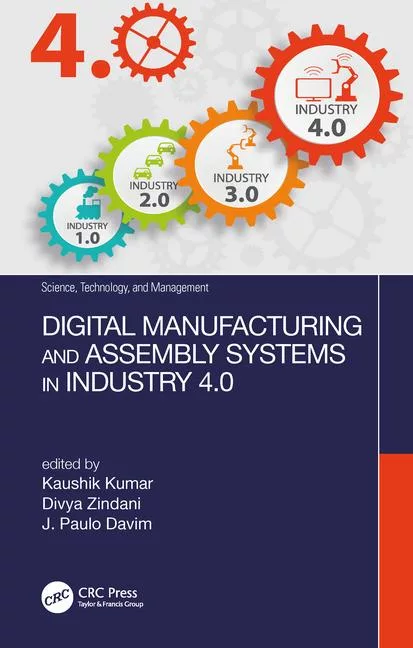
    Digital Manufacturing and Assembly Systems in Industry 4.0

  • history.jpg

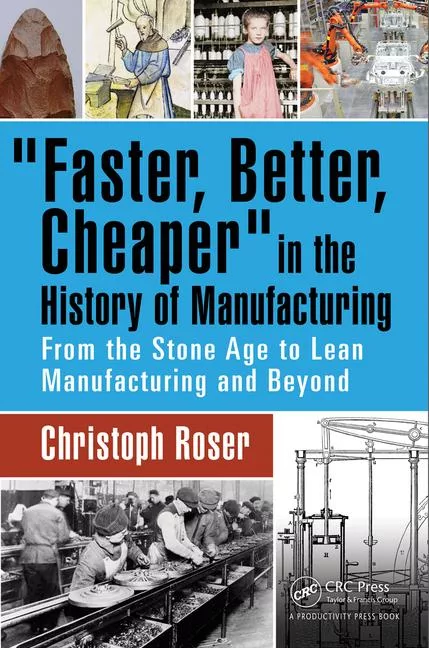
    Faster, Better, Cheaper in the History of Manufacturing: From the Stone Age to Lean Manufacturing and Beyond

  • Kaizen Assembly: Designing, Constructing, and Managing a Lean Assembly Line

See More Products

Events

View AllSubmit An Event
  • October 30, 2025

    Assembly Simulation in Action: 3 Approaches Driving OEM Savings

    On Demand Participants will gain actionable insights and real-world examples that demonstrate how digital simulation supports assembly planning, geometry assurance, and quality control. Sponsored by:
View AllSubmit An Event

Related Directories

  • Action Feed Systems

×

Never miss the latest news and trends driving the manufacturing industry

Stay in the know on the latest assembly trends.

JOIN TODAY!
  • RESOURCES
    • Advertise
    • Contact Us
    • Directories
    • Manufacturing Division
    • Store
    • Want More?
  • SIGN UP TODAY
    • Create Account
    • eMagazine
    • Newsletters
    • Customer Service
    • Manage Preferences
  • SERVICES
    • Marketing Services
    • Reprints
    • Market Research
    • List Rental
    • Survey/Respondent Access
  • STAY CONNECTED
    • LinkedIn
    • Facebook
    • Instagram
    • YouTube
    • X (Twitter)
  • PRIVACY
    • PRIVACY POLICY
    • TERMS & CONDITIONS
    • DO NOT SELL MY PERSONAL INFORMATION
    • PRIVACY REQUEST
    • ACCESSIBILITY

Copyright ©2026. All Rights Reserved BNP Media, Inc. and BNP Media II, LLC.

Design, CMS, Hosting & Web Development :: ePublishing