Assembly Magazine logo
search
Ask ASSEMBLY AI
cart
facebook twitter linkedin youtube
  • Sign In
  • Create Account
  • Sign Out
  • My Account
Assembly Magazine logo
  • TRENDS
    • Ask ASSEMBLY AI
    • Trends
    • News
    • New Products
  • INDUSTRIES
    • Aerospace
    • Appliance
    • DFMA Assembly
    • Medical Devices
    • Green Manufacturing
    • Lean Manufacturing
    • Machinery Assembly
    • Electronics Assembly
    • Automotive
  • TECHNOLOGIES
    • Adhesives & Dispensing
    • Assembly Presses
    • Automated Assembly Systems
    • Manufacturing Management
    • Manufacturing Software
    • Motion Control
    • Screwdriving & Riveting
    • Robotics
    • Test & Inspection
    • Plastics & Metal Welding
    • Wire Processing
    • Workstations
  • AUTONOMOUS & ELECTRIC MOBILITY
    • AEM Magazine Archives
    • Autonomy
    • Electrification
    • Mobility Services
    • Assembly & Testing
    • AV/EM News
  • MEDIA
    • Ask ASSEMBLY AI
    • Podcasts
    • Assembly News Now
    • Assembly TV
    • Webinars
    • eBooks
  • EVENTS
    • Calendar
    • The ASSEMBLY Show
  • MORE
    • Exclusives >
      • Plant of the Year
      • Capital Spending
    • Buyers Guide >
      • Supplier Insights
    • Classifieds
    • Featured Products
    • Newsletters
    • Store
    • White Papers
    • Columns
    • Sponsor Insights
  • INFOCENTER
    • Assembly & Test Solutions
  • EMAGAZINE
    • eMagazine
    • Archive Issues
    • Advertise
    • Contact Us
    • Sign Up
Columns

Manufacturing Insights: Interchangeable Parts and Concurrent Design

By Don Hegland
April 29, 2010
Modern assemblers owe a debt of gratitude to a Yankee craftsman born in 1781.



Producing interchangeable parts lies at the heart of modern manufacturing. Without the ability to join mass-produced parts, fed randomly from bulk supplies, most product assembly as we know it today would not exist.

Predictably, the driving force behind the quest for interchangeable parts came from the need to repair military firearms in the field. Before the 18th century, firearms were made one at a time by skilled craftsmen, and each one was unique with components that fit only that firearm. If a component failed, the entire gun was sent back for repair or scrapped.

In the late 18th century, French gunsmith Honoré le Blanc fabricated musket parts to what were then termed “allowable tolerances.” He demonstrated their interchangeability by assembling muskets from parts picked at random from bins. However, the French government-fearing it would lose control over the old crafts-buried the idea.

Eli Whitney picked up on le Blanc’s idea and gave a similar demonstration in America, which brought him a government contract for muskets. But Whitney was faking it-those demonstration parts were handcrafted by skilled workmen. The musket parts delivered under the contract weren’t interchangeable; Whitney never designed a process capable of producing interchangeable parts.

The man actually responsible for turning the principle of interchangeable parts into everyday practice was John H. Hall. Born in Maine in 1781, Hall had an interest in firearms and-ever the Yankee craftsman-had long sought to improve the muzzle-loading firearms of the day. Taking a novel approach, Hall designed a breechloading rifle that was significantly faster to reload than any muzzle-loader. He set up a business to make them, and although he received a government contract for his Hall Breechloaders, he was obliged to turn it down. The delivery date was impossible to achieve because at that point, Hall and his workmen were still handcrafting parts.

Hall observed that this handcrafting was the major impediment to increasing production speed, says Alexander Rose in his recent book American Rifle: A Biography. Hall then deduced that the solution was to eliminate the inevitable variations among handcrafted parts. This would allow rifles to be rapidly assembled from heaps of identical and interchangeable parts.

Because variations resulted from the human factor, the obvious solution was to replace people with machines. That such machines didn’t exist wasn’t a deterrent; Hall set out to design them. The real deterrent was money; he was nearly bankrupt. Hall boldly proposed to the government that he would manufacture rifles with interchangeable parts if he were awarded a sufficiently large contract.

By a fortuitous coincidence, the U.S. Army launched a major reorganization of its arms production facilities following the War of 1812, and Hall was appointed to establish the Rifle Works at the armory in Harpers Ferry, WV. Now Hall could make good on his proposal. It didn’t happen overnight, but he ultimately delivered thousands of breechloaders.

In his paper The Hall Breechloader: An Early Example of Concurrent Product and Process Design, David J. Williams shows that Hall not only addressed the problem of manufacturing interchangeable parts, he simultaneously addressed the challenges of designing the machines and production process for making the parts, and designing the rifle itself for easy manufacture. We can thus conclude that Hall was likely the first practitioner of these manufacturing practices that we take for granted today.

We owe much to this Yankee craftsman. Mechanics and managers who worked at the Rifle Works carried the principles of interchangeability and design for manufacture far and wide, establishing America as the manufacturing leader it is today.

Share This Story

Looking for a reprint of this article?
From high-res PDFs to custom plaques, order your copy today!

Editorial Director Emeritus

Recommended Content

JOIN TODAY
To unlock your recommendations.

Already have an account? Sign In

  • Made in the U.S.A.

    Consumer Products Manufacturing: Made in the USA

    Supply chain lessons learned during the coronavirus...
    Automated Assembly Systems
    By: Austin Weber
  • Best Practices for Press-Fit Assembly

    Best Practices for Press-Fit Assembly

    In manufacturing, ironclad formulas for success are hard...
    Assembly Presses
    By: Jim Camillo
  • aem0523leader-tesla1.jpg

    Tesla Rethinks the Assembly Line

    Engineers at Tesla Inc. have developed a new process that...
    Assembly and Testing
    By: Austin Weber
Manage My Account
  • eMagazine Subscription
  • Assembly Newsletters
  • Online Registration
  • Subscription Customer Service
  • Manage My Preferences

More Videos

Sponsored Content

Sponsored Content is a special paid section where industry companies provide high quality, objective, non-commercial content around topics of interest to the ASSEMBLY audience. All Sponsored Content is supplied by the advertising company and any opinions expressed in this article are those of the author and not necessarily reflect the views of ASSEMBLY or its parent company, BNP Media. Interested in participating in our Sponsored Content section? Contact your local rep!

close
  • ultrasonic welding
    Sponsored bySonobond Ultrasonics

    Engineering Efficiency in High-Performance Assembly: How Ultrasonic Welding Enhances Throughput, Reliability and Quality

  • UV curing system
    Sponsored byDymax

    Why UV Intensity Alone Doesn’t Define Curing Performance

  • wooden pallets
    Sponsored byLEAN Manufacturing Products

    Eliminating Waste on the Shop Floor: Applying Lean Principles to Improve Manufacturing Efficiency

Popular Stories

ASSEMBLY News Now, episode-30: Volvo Redesigns EV Manufacturing

Volvo Redesigns EV Manufacturing

Boeing CEO Kelly Ortberg announces 1 billion investment

Boeing Plans $1 Billion Wichita Investment, Workforce Training Center

GE Appliances Worker on Line

GE Appliances Expands Factory AI With 800 Gemini Enterprise Agents

Watch the latest episode of ANN now!

Events

July 24, 2025

From Shop Floor to CFO: How Manufacturers Are Closing the Loop Between Operations and Finance

On Demand Learn how manufacturers are bridging the gap between the shop floor and ERP systems to gain real-time visibility, streamline operations, and kick-start digital transformation—without waiting years.

Sponsored by:

PicoStratusGreen
July 30, 2025

Buffer Analysis and Design Fundamentals for Manufacturing Excellence

On Demand In this presentation, Dr. Herman Tang shares practical insights from his industry experience and research on buffer management in manufacturing operations.

View All Submit An Event

Poll

Difficult Assembly Processes

Which assembly process gives you the most difficulty?
View Results Poll Archive

Products

Manufacturing Cost Policy Deployment (MCPD) Profitability Scenarios: Systematic and Systemic Improvement of Manufacturing Costs

Manufacturing Cost Policy Deployment (MCPD) Profitability Scenarios: Systematic and Systemic Improvement of Manufacturing Costs

See More Products
Register for webinar - Modernizing Automotive Assembly: Why Upgrading Legacy MES is a Business Imperative

Related Articles

  • Manufacturing Insights: From Tinkering to Manufacturing

    See More
  • Manufacturing Insights: Looking Over the Horizon

    See More
  • Manufacturing Insights: Meet the new Automation Team

    See More

Related Products

See More Products
  • urban.jpg

    The Design of Urban Manufacturing

  • 4 perspective.jpg

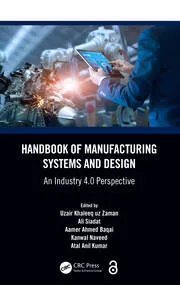
    Handbook of Manufacturing Systems and Design: An Industry 4.0 Perspective

  • manu.jpg

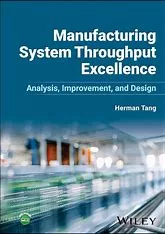
    Manufacturing System Throughput Excellence: Analysis, Improvement, and Design

See More Products

Events

View AllSubmit An Event
  • July 30, 2025

    Buffer Analysis and Design Fundamentals for Manufacturing Excellence

    On Demand In this presentation, Dr. Herman Tang shares practical insights from his industry experience and research on buffer management in manufacturing operations.
View AllSubmit An Event
×

Never miss the latest news and trends driving the manufacturing industry

Stay in the know on the latest assembly trends.

JOIN TODAY!
  • RESOURCES
    • Advertise
    • Contact Us
    • Directories
    • Manufacturing Division
    • Store
    • Want More?
  • SIGN UP TODAY
    • Create Account
    • eMagazine
    • Newsletters
    • Customer Service
    • Manage Preferences
  • SERVICES
    • Marketing Services
    • Reprints
    • Market Research
    • List Rental
    • Survey/Respondent Access
  • STAY CONNECTED
    • LinkedIn
    • Facebook
    • Instagram
    • YouTube
    • X (Twitter)
  • PRIVACY
    • PRIVACY POLICY
    • TERMS & CONDITIONS
    • DO NOT SELL MY PERSONAL INFORMATION
    • PRIVACY REQUEST
    • ACCESSIBILITY

Copyright ©2026. All Rights Reserved BNP Media, Inc. and BNP Media II, LLC.

Design, CMS, Hosting & Web Development :: ePublishing