Assembly Magazine logo
search
Ask ASSEMBLY AI
cart
facebook twitter linkedin youtube
  • Sign In
  • Create Account
  • Sign Out
  • My Account
Assembly Magazine logo
  • TRENDS
    • Ask ASSEMBLY AI
    • Trends
    • News
    • New Products
  • INDUSTRIES
    • Aerospace
    • Appliance
    • DFMA Assembly
    • Medical Devices
    • Green Manufacturing
    • Lean Manufacturing
    • Machinery Assembly
    • Electronics Assembly
    • Automotive
  • TECHNOLOGIES
    • Adhesives & Dispensing
    • Assembly Presses
    • Automated Assembly Systems
    • Manufacturing Management
    • Manufacturing Software
    • Motion Control
    • Screwdriving & Riveting
    • Robotics
    • Test & Inspection
    • Plastics & Metal Welding
    • Wire Processing
    • Workstations
  • AUTONOMOUS & ELECTRIC MOBILITY
    • AEM Magazine Archives
    • Autonomy
    • Electrification
    • Mobility Services
    • Assembly & Testing
    • AV/EM News
  • MEDIA
    • Ask ASSEMBLY AI
    • Podcasts
    • Assembly News Now
    • Assembly TV
    • Webinars
    • eBooks
  • EVENTS
    • Calendar
    • The ASSEMBLY Show
  • MORE
    • Exclusives >
      • Plant of the Year
      • Capital Spending
    • Buyers Guide >
      • Supplier Insights
    • Classifieds
    • Featured Products
    • Newsletters
    • Store
    • White Papers
    • Columns
    • Sponsor Insights
  • INFOCENTER
    • Assembly & Test Solutions
  • EMAGAZINE
    • eMagazine
    • Archive Issues
    • Advertise
    • Contact Us
    • Sign Up

The True Costs of Offshore Assembly

By Austin Weber
November 16, 2005

Today, offshore assembly is a fact of life. By shifting production to China, India, Mexico, Eastern Europe and other locations, manufacturers can reduce operating costs, improve return on invested capital, appease shareholders, and quickly enter and exit growing or mature markets.

For many manufacturers, assembling products in Asia, in particular, appears to be the most direct path to dramatic cost cutting. But, while countries such as China offer an abundant supply of cheap labor, a pro-business environment, a productive workforce, and strong government support for manufacturing, that does not mean doing business there will automatically improve your bottom line.

"While labor rates and material costs are easy to quantify, many other costs are not," warns Kevin Keegan, lead director of the Atlantic region communications and electronics practice at Pittiglio Rabin Todd & McGrath (PRTM, Waltham, MA). "These include the somewhat intangible-but very real-costs associated with managing cultural and language barriers, overcoming limited supply chain expertise, and coping with a supply chain rendered far less flexible because of the physical distance between the company and its manufacturing partner. In fact, the savings associated with lower labor and materials costs in China may be offset by these incremental costs."

"One needs to look at the total cost of producing, shipping and distributing," agrees Don Penkala, president of Granite Bay Consulting Inc. (Granite Bay, CA). "In my estimation, using an offshore manufacturing strategy is cheaper maybe 75 percent of the time, but certainly not 100 percent.....For high-volume, labor-intensive, commodity products, it is likely that offshore manufacturing will yield lower overall costs. But, this is often not the case for other types of products."

When looking at lead-time costs, manufacturers need to ask themselves a number of questions. For example, will they need to substantially increase inventories to keep from running out of stock? How will longer lead times impact warehousing and expediting costs, including air transportation? What is the potential for lost sales due to excessively long lead times or increased quality defects?

Companies also need to factor in costs like severance pay for displaced workers; shipping costs to and from Asia, which can add 15 percent or more to the cost of a product; travel costs to establish and maintain relationships with suppliers and customers; currency fluctuations; and various administrative costs.

"All of these must be well understood before the decision is made to go offshore," Penkala says. "Then, estimates must be made for the total system costs for offshore scenarios. The results are often surprising. Sometimes, the analysis confirms the efficiency of producing offshore. But, this analysis has resulted in some companies bringing operations back to the United States once the true costs are recognized."

Looking for quick answers on assembly and manufacturing topics? Try Ask ASM, our new smart AI search tool. Ask ASM →

For instance, in 2001, Epson Portland Inc. laid off 75 percent of the workforce at its printer cartridge plant in Hillsboro, OR, and shifted production to China. But, after looking at total delivered cost, Epson determined that tariffs, currency fluctuation, freight charges and other costs often negated offshore labor savings. The company has since ramped up production at its U.S. plant again. In fact, the facility is now producing five times as many cartridges per worker as its sister plant in China.

According to Penkala, the labor cost differential between a product made in China and one produced in the United States can be a factor of 10. However, the overall true costs can be much closer. In a study of 29 companies, Granite Bay Consulting found that the true cost savings with moving production to China was between -3.7 percent-meaning that there was a 4 percent cost disadvantage-and 20.6 percent, with an average savings of 11.4 percent.

"On the surface, this looks like good news for those contemplating offshore manufacturing," says Penkala. "But, for companies that embrace lean principles, 11 percent improvements are conservative. When a company successfully adopts lean principles, annualized gains of 10 percent to 25 percent are common. So the question that must be asked is ‘What is the benefit of offshore manufacturing vs. lean manufacturing here in the United States?'"

In addition, many companies fail to anticipate initial costs accurately, says Dave Young, senior vice president of Boston Consulting Group Inc. (Boston). "But, the paradox is that if companies don't face up to these initial costs and risks, their long-term costs will devour the companies' competitive standings."

According to Young, one-time expenses to identify low-cost suppliers, establish a logistics chain and train workers typically add 10 percent to 40 percent to the cost of goods sold in the first year. "Offshore production can be fraught with risk and potential missteps," he warns. "Seeking new markets and increased capabilities via globalization can be a difficult, complex process."

Share This Story

Looking for a reprint of this article?
From high-res PDFs to custom plaques, order your copy today!

Austinweber headshot
Austin has been senior editor for ASSEMBLY Magazine since September 1999. He has more than 21 years of b-to-b publishing experience and has written about a wide variety of manufacturing and engineering topics. Austin is a graduate of the University of Michigan.

Recommended Content

JOIN TODAY
To unlock your recommendations.

Already have an account? Sign In

  • Made in the U.S.A.

    Consumer Products Manufacturing: Made in the USA

    Supply chain lessons learned during the coronavirus...
    Automated Assembly Systems
    By: Austin Weber
  • Best Practices for Press-Fit Assembly

    Best Practices for Press-Fit Assembly

    In manufacturing, ironclad formulas for success are hard...
    Assembly Presses
    By: Jim Camillo
  • aem0523leader-tesla1.jpg

    Tesla Rethinks the Assembly Line

    Engineers at Tesla Inc. have developed a new process that...
    Industries
    By: Austin Weber
Manage My Account
  • eMagazine Subscription
  • Assembly Newsletters
  • Online Registration
  • Subscription Customer Service
  • Manage My Preferences

More Videos

Sponsored Content

Sponsored Content is a special paid section where industry companies provide high quality, objective, non-commercial content around topics of interest to the ASSEMBLY audience. All Sponsored Content is supplied by the advertising company and any opinions expressed in this article are those of the author and not necessarily reflect the views of ASSEMBLY or its parent company, BNP Media. Interested in participating in our Sponsored Content section? Contact your local rep!

close
  • ultrasonic welding
    Sponsored bySonobond Ultrasonics

    Engineering Efficiency in High-Performance Assembly: How Ultrasonic Welding Enhances Throughput, Reliability and Quality

  • UV curing system
    Sponsored byDymax

    Why UV Intensity Alone Doesn’t Define Curing Performance

  • wooden pallets
    Sponsored byLEAN Manufacturing Products

    Eliminating Waste on the Shop Floor: Applying Lean Principles to Improve Manufacturing Efficiency

Popular Stories

ASSEMBLY News Now, episode-30: Volvo Redesigns EV Manufacturing

Volvo Redesigns EV Manufacturing

Boeing CEO Kelly Ortberg announces 1 billion investment

Boeing Plans $1 Billion Wichita Investment, Workforce Training Center

GE Appliances Worker on Line

GE Appliances Expands Factory AI With 800 Gemini Enterprise Agents

Watch the latest episode of ANN now!

Events

July 24, 2025

From Shop Floor to CFO: How Manufacturers Are Closing the Loop Between Operations and Finance

On Demand Learn how manufacturers are bridging the gap between the shop floor and ERP systems to gain real-time visibility, streamline operations, and kick-start digital transformation—without waiting years.

Sponsored by:

PicoStratusGreen
July 30, 2025

Buffer Analysis and Design Fundamentals for Manufacturing Excellence

On Demand In this presentation, Dr. Herman Tang shares practical insights from his industry experience and research on buffer management in manufacturing operations.

View All Submit An Event

Poll

Difficult Assembly Processes

Which assembly process gives you the most difficulty?
View Results Poll Archive

Products

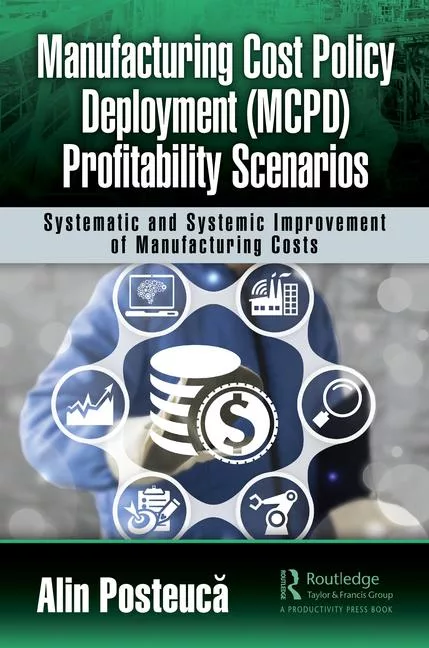
Manufacturing Cost Policy Deployment (MCPD) Profitability Scenarios: Systematic and Systemic Improvement of Manufacturing Costs

Manufacturing Cost Policy Deployment (MCPD) Profitability Scenarios: Systematic and Systemic Improvement of Manufacturing Costs

See More Products
Register for webinar - Modernizing Automotive Assembly: Why Upgrading Legacy MES is a Business Imperative

Related Articles

  • The True Cost of Offshore Assembly

    See More
  • Managing the Reality of Offshore Assembly

    See More
  • Managing the Reality of Offshore Assembly: Five Questions to Answer Before Going Offshore

    See More

Related Products

See More Products
  • The Basics of Self-Balancing Processes: True Lean Continuous Flow

  • 9781138498730.jpg

    Manufacturing Cost Policy Deployment (MCPD) Profitability Scenarios: Systematic and Systemic Improvement of Manufacturing Costs

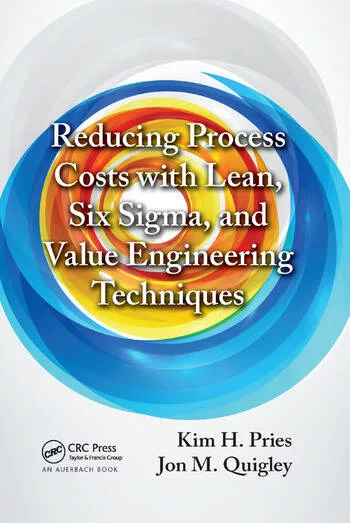
  • reducing.jpg

    Reducing Process Costs with Lean, Six Sigma, and Value Engineering Techniques

See More Products
×

Never miss the latest news and trends driving the manufacturing industry

Stay in the know on the latest assembly trends.

JOIN TODAY!
  • RESOURCES
    • Advertise
    • Contact Us
    • Directories
    • Manufacturing Division
    • Store
    • Want More?
  • SIGN UP TODAY
    • Create Account
    • eMagazine
    • Newsletters
    • Customer Service
    • Manage Preferences
  • SERVICES
    • Marketing Services
    • Reprints
    • Market Research
    • List Rental
    • Survey/Respondent Access
  • STAY CONNECTED
    • LinkedIn
    • Facebook
    • Instagram
    • YouTube
    • X (Twitter)
  • PRIVACY
    • PRIVACY POLICY
    • TERMS & CONDITIONS
    • DO NOT SELL MY PERSONAL INFORMATION
    • PRIVACY REQUEST
    • ACCESSIBILITY

Copyright ©2026. All Rights Reserved BNP Media, Inc. and BNP Media II, LLC.

Design, CMS, Hosting & Web Development :: ePublishing