Assembly Magazine logo
search
Ask ASSEMBLY AI
cart
facebook twitter linkedin youtube
  • Sign In
  • Create Account
  • Sign Out
  • My Account
Assembly Magazine logo
  • TRENDS
    • Ask ASSEMBLY AI
    • Trends
    • News
    • New Products
  • INDUSTRIES
    • Aerospace
    • Appliance
    • DFMA Assembly
    • Medical Devices
    • Green Manufacturing
    • Lean Manufacturing
    • Machinery Assembly
    • Electronics Assembly
    • Automotive
  • TECHNOLOGIES
    • Adhesives & Dispensing
    • Assembly Presses
    • Automated Assembly Systems
    • Manufacturing Management
    • Manufacturing Software
    • Motion Control
    • Screwdriving & Riveting
    • Robotics
    • Test & Inspection
    • Plastics & Metal Welding
    • Wire Processing
    • Workstations
  • AUTONOMOUS & ELECTRIC MOBILITY
    • AEM Magazine Archives
    • Autonomy
    • Electrification
    • Mobility Services
    • Assembly & Testing
    • AV/EM News
  • MEDIA
    • Ask ASSEMBLY AI
    • Podcasts
    • Assembly News Now
    • Assembly TV
    • Webinars
    • eBooks
  • EVENTS
    • Calendar
    • The ASSEMBLY Show
  • MORE
    • Exclusives >
      • Plant of the Year
      • Capital Spending
    • Buyers Guide >
      • Supplier Insights
    • Classifieds
    • Featured Products
    • Newsletters
    • Store
    • White Papers
    • Columns
    • Sponsor Insights
  • INFOCENTER
    • Assembly & Test Solutions
  • EMAGAZINE
    • eMagazine
    • Archive Issues
    • Advertise
    • Contact Us
    • Sign Up

A Peek Inside the Marion Plant

By Austin Weber
November 11, 2011
Assembly lines changed dramatically at Whirlpool's Marion, OH, factory over a  50-year period.


Whirlpool Corp. acquired a large factory from Motor Products Corp. in Marion, OH, in 1955 and converted it into a state-of-the-art dryer assembly plant. The facility was strategically located near an important rail hub-the tracks of the Chesapeake & Ohio, Erie and New York Central railroads all met in Marion (a decade earlier, the local railway station was an important canteen stop for World War II troop trains).

On August 29, 1956, the Marion facility hosted an open house, providing a unique look at Eisenhower-era plant operations. To celebrate that event, the plant issued a commemorative booklet to attendees. The publication illustrated the plant’s layout and key production processes.

Since acquiring the 240,000-square-foot plant the previous year, Whirlpool added a 10,000-square-foot rail car dock. That was important, because the Marion plant shipped dryers to “every state in the union and 60 foreign countries.”

The brochure boasted that “the total amount of money invested via property, plant and equipment runs approximately $7,000 per employee.” The plant contained 5 miles of conveyors. “From its start as a sheet of steel to the end as a dryer, it takes approximately 24 hours to make and assemble a complete unit.”

The plant featured state-of-the-art metal stamping presses; large welders for fabricating frames and cabinets; and an electrostatic paint system. Components such as gas burners were built on a subassembly line. Assemblers used pneumatic fastening equipment.

The plant floor contained numerous areas devoted to parts storage and stock cribs. Parts were delivered to the line in large, square wooden crates.

Whirlpool’s Marion plant was still going strong half a century later when ASSEMBLY profiled it in the August 2006 issue. In fact, the facility had just assembled its 100 millionth appliance-a Duet clothes dryer. But, the plant was undergoing a transformation driven by lean manufacturing.

The article explained how the assembly lines had recently been redesigned to accommodate just-in-time inventory, kanban and point-of-use parts supply. Engineers cleared out a 1,700-square-foot section of the plant and installed a new assembly line for the front-load Horizon dryer.

“The Horizon line is the first line that we’ve designed from the operator out,” said a materials engineer. To improve ergonomics, engineers slowed the pace of the line from the time typical of other lines in the plant. And, unlike the plant’s other lines, which are elevated approximately 2 feet off the floor, the Horizon line operated close to floor level. Even the lighting was improved.

The multiarm configuration of the Horizon line was designed for mixed-model assembly-besides the Whirlpool brand, assemblers built dryers under the Estate, Inglis, Kenmore, Kitchen-Aid, Maytag and Roper brand names. For example, a subassembly that was once produced in the plant's fabrication department was now done directly on the line. “Now, we don’t have to carry a lot of inventory, and we’re able to accommodate late-model differentiation,” the engineer told ASSEMBLY.

Compared with the Marion plant’s other assembly lines, fewer parts are stored on the Horizon line. “Instead of delivering a whole skid of 300 parts to an assembly station, we might bring in 50 parts at a time,” the engineer points out.

Another key difference on the Horizon line was in how the parts were delivered to the assembly stations. Instead of using forklifts to deliver parts, Whirlpool engineers opted for a system of carts pulled by electric tuggers.
KEYWORDS: manufacturing history Whirlpool

Share This Story

Looking for a reprint of this article?
From high-res PDFs to custom plaques, order your copy today!

Austinweber headshot
Austin has been senior editor for ASSEMBLY Magazine since September 1999. He has more than 21 years of b-to-b publishing experience and has written about a wide variety of manufacturing and engineering topics. Austin is a graduate of the University of Michigan.

Recommended Content

JOIN TODAY
To unlock your recommendations.

Already have an account? Sign In

  • Made in the U.S.A.

    Consumer Products Manufacturing: Made in the USA

    Supply chain lessons learned during the coronavirus...
    Automated Assembly Systems
    By: Austin Weber
  • Best Practices for Press-Fit Assembly

    Best Practices for Press-Fit Assembly

    In manufacturing, ironclad formulas for success are hard...
    Assembly Presses
    By: Jim Camillo
  • aem0523leader-tesla1.jpg

    Tesla Rethinks the Assembly Line

    Engineers at Tesla Inc. have developed a new process that...
    Automotive Assembly
    By: Austin Weber
Manage My Account
  • eMagazine Subscription
  • Assembly Newsletters
  • Online Registration
  • Subscription Customer Service
  • Manage My Preferences

More Videos

Sponsored Content

Sponsored Content is a special paid section where industry companies provide high quality, objective, non-commercial content around topics of interest to the ASSEMBLY audience. All Sponsored Content is supplied by the advertising company and any opinions expressed in this article are those of the author and not necessarily reflect the views of ASSEMBLY or its parent company, BNP Media. Interested in participating in our Sponsored Content section? Contact your local rep!

close
  • ultrasonic welding
    Sponsored bySonobond Ultrasonics

    Engineering Efficiency in High-Performance Assembly: How Ultrasonic Welding Enhances Throughput, Reliability and Quality

  • UV curing system
    Sponsored byDymax

    Why UV Intensity Alone Doesn’t Define Curing Performance

  • wooden pallets
    Sponsored byLEAN Manufacturing Products

    Eliminating Waste on the Shop Floor: Applying Lean Principles to Improve Manufacturing Efficiency

Popular Stories

ASSEMBLY News Now, episode-30: Volvo Redesigns EV Manufacturing

Volvo Redesigns EV Manufacturing

Boeing CEO Kelly Ortberg announces 1 billion investment

Boeing Plans $1 Billion Wichita Investment, Workforce Training Center

GE Appliances Worker on Line

GE Appliances Expands Factory AI With 800 Gemini Enterprise Agents

Watch the latest episode of ANN now!

Events

July 24, 2025

From Shop Floor to CFO: How Manufacturers Are Closing the Loop Between Operations and Finance

On Demand Learn how manufacturers are bridging the gap between the shop floor and ERP systems to gain real-time visibility, streamline operations, and kick-start digital transformation—without waiting years.

Sponsored by:

PicoStratusGreen
July 30, 2025

Buffer Analysis and Design Fundamentals for Manufacturing Excellence

On Demand In this presentation, Dr. Herman Tang shares practical insights from his industry experience and research on buffer management in manufacturing operations.

View All Submit An Event

Poll

Difficult Assembly Processes

Which assembly process gives you the most difficulty?
View Results Poll Archive

Products

Manufacturing Cost Policy Deployment (MCPD) Profitability Scenarios: Systematic and Systemic Improvement of Manufacturing Costs

Manufacturing Cost Policy Deployment (MCPD) Profitability Scenarios: Systematic and Systemic Improvement of Manufacturing Costs

See More Products
Register for webinar - Modernizing Automotive Assembly: Why Upgrading Legacy MES is a Business Imperative

Related Articles

  • "Wired" Provides Peek Inside the Chevy Volt Assembly Plant

    See More
  • Dryers Remain Centerpiece of Work at Whirlpool’s Marion Plant

    See More
  • Mustang-Mach-E_15.jpg

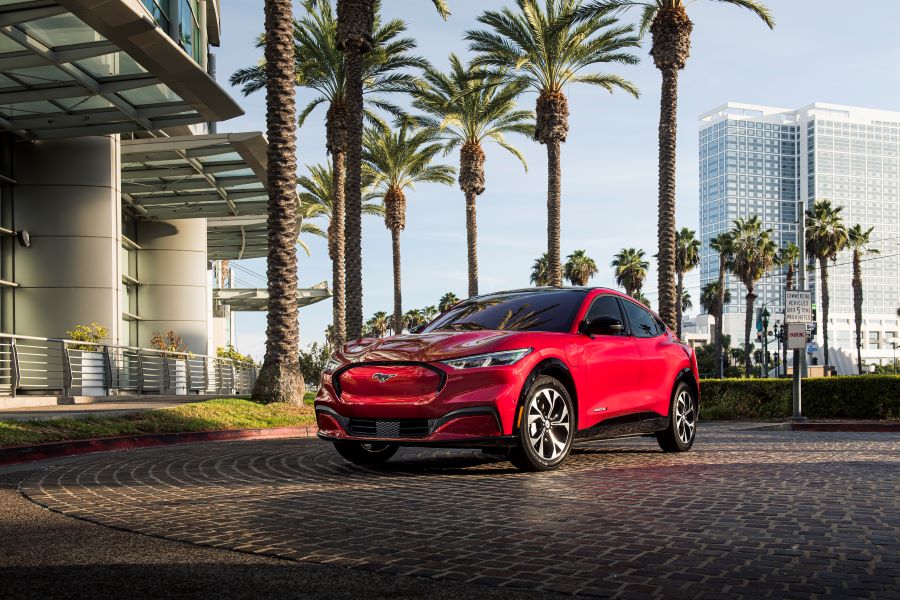
    Tech Teardown Provides Peek Inside Ford’s Mach-E

    See More

Related Products

See More Products
  • Kaizen Assembly: Designing, Constructing, and Managing a Lean Assembly Line

  • design for.jpg

    Design for Six Sigma: A Practical Approach through Innovation

See More Products
×

Never miss the latest news and trends driving the manufacturing industry

Stay in the know on the latest assembly trends.

JOIN TODAY!
  • RESOURCES
    • Advertise
    • Contact Us
    • Directories
    • Manufacturing Division
    • Store
    • Want More?
  • SIGN UP TODAY
    • Create Account
    • eMagazine
    • Newsletters
    • Customer Service
    • Manage Preferences
  • SERVICES
    • Marketing Services
    • Reprints
    • Market Research
    • List Rental
    • Survey/Respondent Access
  • STAY CONNECTED
    • LinkedIn
    • Facebook
    • Instagram
    • YouTube
    • X (Twitter)
  • PRIVACY
    • PRIVACY POLICY
    • TERMS & CONDITIONS
    • DO NOT SELL MY PERSONAL INFORMATION
    • PRIVACY REQUEST
    • ACCESSIBILITY

Copyright ©2026. All Rights Reserved BNP Media, Inc. and BNP Media II, LLC.

Design, CMS, Hosting & Web Development :: ePublishing