Assembly Magazine logo
search
Ask ASSEMBLY AI
cart
facebook twitter linkedin youtube
  • Sign In
  • Create Account
  • Sign Out
  • My Account
Assembly Magazine logo
  • TRENDS
    • Ask ASSEMBLY AI
    • Trends
    • News
    • New Products
  • INDUSTRIES
    • Aerospace
    • Appliance
    • DFMA Assembly
    • Medical Devices
    • Green Manufacturing
    • Lean Manufacturing
    • Machinery Assembly
    • Electronics Assembly
    • Automotive
  • TECHNOLOGIES
    • Adhesives & Dispensing
    • Assembly Presses
    • Automated Assembly Systems
    • Manufacturing Management
    • Manufacturing Software
    • Motion Control
    • Screwdriving & Riveting
    • Robotics
    • Test & Inspection
    • Plastics & Metal Welding
    • Wire Processing
    • Workstations
  • AUTONOMOUS & ELECTRIC MOBILITY
    • AEM Magazine Archives
    • Autonomy
    • Electrification
    • Mobility Services
    • Assembly & Testing
    • AV/EM News
  • MEDIA
    • Ask ASSEMBLY AI
    • Podcasts
    • Assembly News Now
    • Assembly TV
    • Webinars
    • eBooks
  • EVENTS
    • Calendar
    • The ASSEMBLY Show
  • MORE
    • Exclusives >
      • Plant of the Year
      • Capital Spending
    • Buyers Guide >
      • Supplier Insights
    • Classifieds
    • Featured Products
    • Newsletters
    • Store
    • White Papers
    • Columns
    • Sponsor Insights
  • INFOCENTER
    • Assembly & Test Solutions
  • EMAGAZINE
    • eMagazine
    • Archive Issues
    • Advertise
    • Contact Us
    • Sign Up
Aerospace Assembly

Manufacturer Purges Optoelectronic Systems of Moisture Problems

September 4, 2012
Optoelectronic systems are used in both commercial and military applications, where they are often mounted on aircraft, helicopters or missiles and transported at high elevations. These systems are often subjected to extremely low temperatures and atmospheric pressure, which can cause even minimal moisture present in an internal cavity or enclosure to condensate. 

Most of the moisture is present in hygroscopic materials, such as printed circuit boards or plastic components. The resulting condensation can fog mirrors and lenses, effectively blinding the equipment in potentially critical situations. Condensation also causes corrosion, affects performance and shortens the life span of an optoelectronic system.

To prevent moisture-related problems, manufacturers of laser, imaging, camera and other optical systems are increasingly mandating that the systems receive a nitrogen purge before field use. The process involves introducing ultra dry nitrogen (having a dew point of -94 F) under pressure into the system’s internal cavity or enclosure to create a dry environment.

“We found the internal electronics were the main culprit for a lot of residual moisture,” says Paul Ave, president of Advanced Laser Systems Technology, a company that designs and manufactures lasers and laser range-finding systems for the government and military. “If we don’t take care of that moisture with a nitrogen purge, it manifests as humidity inside the unit during temperature cycle testing.”

Advanced Laser Systems’ products are used in handheld thermal imagers, long-range surveillance systems, submarine periscopes and other equipment. For several years, the company had purged their
products with a traditional dual-point purge system, where nitrogen enters through one port and exits out another. Unfortunately, this system provided Ave no quantitative way to know when the required dew point level had been reached.

Advanced Laser Systems overcame this problem in 2010 by switching to the NEPS 1000 single-point system from AGM Container Controls.

Advanced Laser Systems purges about 100 products each month.

“The old school method is to just run nitrogen through the system, usually at an elevated temperature, to bake out any moisture,” says Ave. “If I purged for 6 to 8 hours, I had to assume it had thoroughly dried out the cavity. With the NEPS system, we do the same purge in 45 minutes and know for sure when we are done.”

Looking for quick answers on assembly and manufacturing topics? Try Ask ASM, our new smart AI search tool. Ask ASM →

The NEPS 1000 introduces pressurized nitrogen into the cavity or enclosure through a single port before a valve opens and the nitrogen backflows into the unit. There, the nitrogen passes a dew point monitor, which displays the current dew point level.

After the equipment is dehumidified, it is pressurized up to 5 psi before the nitrogen is vented to the atmosphere. The cycle is repeated until the equipment reaches the desired dew point level, at which point it automatically shuts off.

“The NEPS system is easy to use and streamlines operations,” says Ave. “It not only saves money by using significantly less nitrogen, but is a major timesaver.”

For more information on nitrogen purging systems, call 800-995-5590 or visit www.agmcontainer.com.


KEYWORDS: optoelectronics assembly

Share This Story

Looking for a reprint of this article?
From high-res PDFs to custom plaques, order your copy today!

Recommended Content

JOIN TODAY
To unlock your recommendations.

Already have an account? Sign In

  • Made in the U.S.A.

    Consumer Products Manufacturing: Made in the USA

    Supply chain lessons learned during the coronavirus...
    Automated Assembly Systems
    By: Austin Weber
  • Best Practices for Press-Fit Assembly

    Best Practices for Press-Fit Assembly

    In manufacturing, ironclad formulas for success are hard...
    Assembly Presses
    By: Jim Camillo
  • aem0523leader-tesla1.jpg

    Tesla Rethinks the Assembly Line

    Engineers at Tesla Inc. have developed a new process that...
    Automotive Assembly
    By: Austin Weber
Manage My Account
  • eMagazine Subscription
  • Assembly Newsletters
  • Online Registration
  • Subscription Customer Service
  • Manage My Preferences

More Videos

Sponsored Content

Sponsored Content is a special paid section where industry companies provide high quality, objective, non-commercial content around topics of interest to the ASSEMBLY audience. All Sponsored Content is supplied by the advertising company and any opinions expressed in this article are those of the author and not necessarily reflect the views of ASSEMBLY or its parent company, BNP Media. Interested in participating in our Sponsored Content section? Contact your local rep!

close
  • ultrasonic welding
    Sponsored bySonobond Ultrasonics

    Engineering Efficiency in High-Performance Assembly: How Ultrasonic Welding Enhances Throughput, Reliability and Quality

  • UV curing system
    Sponsored byDymax

    Why UV Intensity Alone Doesn’t Define Curing Performance

  • wooden pallets
    Sponsored byLEAN Manufacturing Products

    Eliminating Waste on the Shop Floor: Applying Lean Principles to Improve Manufacturing Efficiency

Popular Stories

Episode 31

Tesla’s Efficiency Edge Faces a Toyota Reality Check

can of soda pop

The “Diet Coke Problem” as Manufacturers Face Experts Retiring

Ford Hires Back Engineers When AI alone Fails

Ford Rehires Veteran Engineers to Improve AI, Vehicle Quality

Watch the latest episode of ANN now!

Events

July 24, 2025

From Shop Floor to CFO: How Manufacturers Are Closing the Loop Between Operations and Finance

On Demand Learn how manufacturers are bridging the gap between the shop floor and ERP systems to gain real-time visibility, streamline operations, and kick-start digital transformation—without waiting years.

Sponsored by:

PicoStratusGreen
July 30, 2025

Buffer Analysis and Design Fundamentals for Manufacturing Excellence

On Demand In this presentation, Dr. Herman Tang shares practical insights from his industry experience and research on buffer management in manufacturing operations.

View All Submit An Event

Poll

Difficult Assembly Processes

Which assembly process gives you the most difficulty?
View Results Poll Archive

Products

Manufacturing Cost Policy Deployment (MCPD) Profitability Scenarios: Systematic and Systemic Improvement of Manufacturing Costs

Manufacturing Cost Policy Deployment (MCPD) Profitability Scenarios: Systematic and Systemic Improvement of Manufacturing Costs

See More Products
ebook

Related Articles

  • Cognex vision system

    Vision Systems Automate Inspection of EV Components

    See More
  • Quality in Assembly: Vision Systems Ensure Quality of Medical Devices

    See More
  • Manufacturer of Propulsion Systems for Electric Vehicles to Build Carolina Plant

    See More

Related Products

See More Products
  • project management.jpg

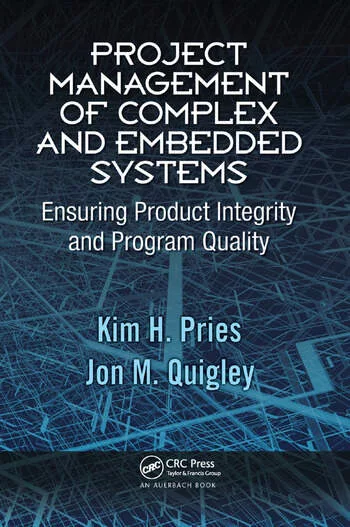
    Project Management of Complex and Embedded Systems

  • 1119722012.jpg

    Fundamentals of Modern Manufacturing: Materials, Processes, and Systems, 7th Edition

  • 4 perspective.jpg

    Handbook of Manufacturing Systems and Design: An Industry 4.0 Perspective

See More Products
×

Never miss the latest news and trends driving the manufacturing industry

Stay in the know on the latest assembly trends.

JOIN TODAY!
  • RESOURCES
    • Advertise
    • Contact Us
    • Directories
    • Manufacturing Division
    • Store
    • Want More?
  • SIGN UP TODAY
    • Create Account
    • eMagazine
    • Newsletters
    • Customer Service
    • Manage Preferences
  • SERVICES
    • Marketing Services
    • Reprints
    • Market Research
    • List Rental
    • Survey/Respondent Access
  • STAY CONNECTED
    • LinkedIn
    • Facebook
    • Instagram
    • YouTube
    • X (Twitter)
  • PRIVACY
    • PRIVACY POLICY
    • TERMS & CONDITIONS
    • DO NOT SELL MY PERSONAL INFORMATION
    • PRIVACY REQUEST
    • ACCESSIBILITY

Copyright ©2026. All Rights Reserved BNP Media, Inc. and BNP Media II, LLC.

Design, CMS, Hosting & Web Development :: ePublishing