Assembly Magazine logo
search
Ask ASSEMBLY AI
cart
facebook twitter linkedin youtube
  • Sign In
  • Create Account
  • Sign Out
  • My Account
Assembly Magazine logo
  • TRENDS
    • Ask ASSEMBLY AI
    • Trends
    • News
    • New Products
  • INDUSTRIES
    • Aerospace
    • Appliance
    • DFMA Assembly
    • Medical Devices
    • Green Manufacturing
    • Lean Manufacturing
    • Machinery Assembly
    • Electronics Assembly
    • Automotive
  • TECHNOLOGIES
    • Adhesives & Dispensing
    • Assembly Presses
    • Automated Assembly Systems
    • Manufacturing Management
    • Manufacturing Software
    • Motion Control
    • Screwdriving & Riveting
    • Robotics
    • Test & Inspection
    • Plastics & Metal Welding
    • Wire Processing
    • Workstations
  • AUTONOMOUS & ELECTRIC MOBILITY
    • AEM Magazine Archives
    • Autonomy
    • Electrification
    • Mobility Services
    • Assembly & Testing
    • AV/EM News
  • MEDIA
    • Ask ASSEMBLY AI
    • Podcasts
    • Assembly News Now
    • Assembly TV
    • Webinars
    • eBooks
  • EVENTS
    • Calendar
    • The ASSEMBLY Show
  • MORE
    • Exclusives >
      • Plant of the Year
      • Capital Spending
    • Buyers Guide >
      • Supplier Insights
    • Classifieds
    • Featured Products
    • Newsletters
    • Store
    • White Papers
    • Columns
    • Sponsor Insights
  • INFOCENTER
    • Assembly & Test Solutions
  • EMAGAZINE
    • eMagazine
    • Archive Issues
    • Advertise
    • Contact Us
    • Sign Up
Assembly PressesWire Processing Assembly

A New Paradigm in Crimping Press Design

By Rob Boyd
July 2, 2015

It goes without saying that manufacturers want the highest possible quality at the lowest possible cost. These days, everyone is trying to do more with less.

This is as true for automatic crimping presses as it is for any other product. Conventional designs use thick, steel side-plates or a cast frame in conjunction with a motor and gearbox combination. These proven designs work well. However, they are expensive to make. The high manufacturing costs are due to the high tolerance requirements for many of the components used in conventional crimping presses. The performance of conventional presses also degrades over time due to the design of the motor and gearbox.

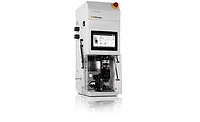
Recently, Schleuniger introduced a radical new design in automatic crimping presses. The new design created a compact, efficient and cost-effective press with high process capability and durability. The design is simple, easy to manufacture, and easy to set up and maintain. In addition, the new design takes into consideration application flexibility and integrated crimp-force monitoring.

The frame is made of formed sheet metal rather than solid pieces of heavy steel or a cast frame. Instead of the conventional motor and gearbox combination, a direct belt-drive system is used. A spring mechanism is incorporated into the press ram, providing excellent consistency and durability. Finally, the new press design is adjustable and easily accommodates the wide range of crimping applicators on the market.

Frame Design

Comparing the different frame designs explains why we chose the formed sheet metal design. Cast frames are inexpensive and rugged. However, volumes must be high for the initial investment costs to be justified. Welded frame constructions are also durable, but the manufacturing process is relatively expensive.

Similarly, using heavy, solid steel side-plates has been proven as a durable design. Unfortunately, the manufacturing process for these plates is expensive, since they require milling and plating processes. Furthermore, we determined that the solid steel side-plate construction is overkill for forces up to 20 kilonewtons. The force load distribution over the side-plates does not require the same thickness throughout their entire width to achieve the desired results for the target applications.

The forces exerted by the crimping process on the side-plates are opposing from front to back. High, outward forces are exerted on the front of the side plates (closest to the applicator). In contrast, lower inward forces are exerted on the back of the side plates. Between the front and the back, the forces cancel. Therefore, it is not necessary to have the same support structure—in other words, the same side-plate thickness—throughout the entire plate. The formed steel side plates support these forces where they are exerted, in the front and the back.

Looking for quick answers on assembly and manufacturing topics? Try Ask ASM, our new smart AI search tool. Ask ASM →

At first, building a crimping press out of formed sheet metal might seem to be a radical concept. However, it has been used successfully in other industries. One example is truck frames. Truck frames are made of formed sheet metal, and they support forces far greater than those realized on a crimping press.

Drive Design

The traditional gearmotor drive design for crimping presses is effective, yet expensive. The gearbox, shaft and ram coupling must be aligned perfectly to prevent premature bearing wear. Tolerances need to be tight, and that means higher prices. Furthermore, if the parts are installed incorrectly, components will wear prematurely. Finally, mechanical parts inevitably wear over time. After millions of cycles, excess play begins to degrade performance.

The challenge in rethinking the crimping press was to create a machine that could achieve the same or better durability and precision as the traditional gearbox, but with a simpler, lower cost design.

The implementation of a belt drive makes the design much simpler and, as a result, much easier to manufacture and assemble. Tolerances are less critical, because the flexible timing belt will compensate. Because of the looser tolerances, parts are less expensive. An added benefit of this design is that servicing is much easier as well.

A Spring Was the Key

How do you get precision from a system that has relaxed tolerances? It is true that relaxed tolerances inherently mean that there is more play in the system. However, the answer was quite simple: a spring. The key to our new design is a spring mechanism that compresses all of the excess play at the bottom of the crimping stroke, where the precision is needed most. This simple spring assembly also provides better process capability results. Throughout the life of the press, the spring mechanism continues to remove excess play as parts wear. Machine capability and precision remain consistent for a much longer period of time, therefore extending the life of the machine.

 Through external and long-term testing, the new design concepts have proven to provide performance and durability over an extended period of time. 

KEYWORDS: crimping wire termination

Share This Story

Looking for a reprint of this article?
From high-res PDFs to custom plaques, order your copy today!

Rob Boyd, Senior Product Manager, Schleuniger Inc., Manchester, NH

Recommended Content

JOIN TODAY
To unlock your recommendations.

Already have an account? Sign In

  • Made in the U.S.A.

    Consumer Products Manufacturing: Made in the USA

    Supply chain lessons learned during the coronavirus...
    Automated Assembly Systems
    By: Austin Weber
  • Best Practices for Press-Fit Assembly

    Best Practices for Press-Fit Assembly

    In manufacturing, ironclad formulas for success are hard...
    Assembly Presses
    By: Jim Camillo
  • aem0523leader-tesla1.jpg

    Tesla Rethinks the Assembly Line

    Engineers at Tesla Inc. have developed a new process that...
    Electrification
    By: Austin Weber
Manage My Account
  • eMagazine Subscription
  • Assembly Newsletters
  • Online Registration
  • Subscription Customer Service
  • Manage My Preferences

More Videos

Sponsored Content

Sponsored Content is a special paid section where industry companies provide high quality, objective, non-commercial content around topics of interest to the ASSEMBLY audience. All Sponsored Content is supplied by the advertising company and any opinions expressed in this article are those of the author and not necessarily reflect the views of ASSEMBLY or its parent company, BNP Media. Interested in participating in our Sponsored Content section? Contact your local rep!

close
  • ultrasonic welding
    Sponsored bySonobond Ultrasonics

    Engineering Efficiency in High-Performance Assembly: How Ultrasonic Welding Enhances Throughput, Reliability and Quality

  • UV curing system
    Sponsored byDymax

    Why UV Intensity Alone Doesn’t Define Curing Performance

  • wooden pallets
    Sponsored byLEAN Manufacturing Products

    Eliminating Waste on the Shop Floor: Applying Lean Principles to Improve Manufacturing Efficiency

Popular Stories

ASSEMBLY News Now, episode-30: Volvo Redesigns EV Manufacturing

Volvo Redesigns EV Manufacturing

Boeing CEO Kelly Ortberg announces 1 billion investment

Boeing Plans $1 Billion Wichita Investment, Workforce Training Center

GE Appliances Worker on Line

GE Appliances Expands Factory AI With 800 Gemini Enterprise Agents

Watch the latest episode of ANN now!

Events

July 24, 2025

From Shop Floor to CFO: How Manufacturers Are Closing the Loop Between Operations and Finance

On Demand Learn how manufacturers are bridging the gap between the shop floor and ERP systems to gain real-time visibility, streamline operations, and kick-start digital transformation—without waiting years.

Sponsored by:

PicoStratusGreen
July 30, 2025

Buffer Analysis and Design Fundamentals for Manufacturing Excellence

On Demand In this presentation, Dr. Herman Tang shares practical insights from his industry experience and research on buffer management in manufacturing operations.

View All Submit An Event

Poll

Difficult Assembly Processes

Which assembly process gives you the most difficulty?
View Results Poll Archive

Products

Manufacturing Cost Policy Deployment (MCPD) Profitability Scenarios: Systematic and Systemic Improvement of Manufacturing Costs

Manufacturing Cost Policy Deployment (MCPD) Profitability Scenarios: Systematic and Systemic Improvement of Manufacturing Costs

See More Products
Register for webinar - Modernizing Automotive Assembly: Why Upgrading Legacy MES is a Business Imperative

Related Articles

  • Time for a New Paradigm

    See More
  • UniCrimp 208 crimping press

    Crimping Press Is User-Friendly

    See More
  • Chrysler Unveils New Production Paradigm

    See More

Related Products

See More Products
  • design for.jpg

    Design for Six Sigma: A Practical Approach through Innovation

  • robustplastic.jpg

    Robust Plastic Product Design: A Holistic Approach

See More Products

Related Directories

  • Thermal Press Intl.

    Founded in 1976, Thermal Press International is a leading provider of plastic assembly equipment, specializing in heat staking, heat sealing, and film welding solutions. With a customer-centric approach, we deliver superior quality machines and manufacturing solutions resulting in enhanced productivity, minimized downtime, and increased peace of mind for our customers.
  • Greenerd Press & Machine Co.

    Greenerd designs and builds custom hydraulic presses with automation solutions for a range of industries and applications. Greenerd's extensive line of hydraulic presses are available in a variety of styles ranging including gap frame, straight-side, gib-guided, 4-post, bench, OBI and more, with unlimited size and tonnage capabilities. Greenerd has a long tradition of designing, engineering and manufacturing customized hydraulic presses with product handling solutions.
  • Vent A Kiln Corp.

    Vent-A-Kiln Corp., based in Buffalo, NY, is a company with over 40 years of experience specializing in the design and manufacture of fume-hood ventilation systems. Their primary focus is on source capture ventilation, meaning they design equipment to capture and remove contaminated air, heat, fumes, smoke, and odors directly at their origin, before they can disperse into the workspace. This approach is designed to ensure a safer and healthier work environment. Their signature product is the Vent-A-Kiln system, which was the world's first commercially manufactured ventilation system specifically designed for use with electric kilns, introduced in 1983. These overhead systems are engineered to address the harmful fumes, odors, and significant heat generated during the firing of ceramic kilns.
×

Never miss the latest news and trends driving the manufacturing industry

Stay in the know on the latest assembly trends.

JOIN TODAY!
  • RESOURCES
    • Advertise
    • Contact Us
    • Directories
    • Manufacturing Division
    • Store
    • Want More?
  • SIGN UP TODAY
    • Create Account
    • eMagazine
    • Newsletters
    • Customer Service
    • Manage Preferences
  • SERVICES
    • Marketing Services
    • Reprints
    • Market Research
    • List Rental
    • Survey/Respondent Access
  • STAY CONNECTED
    • LinkedIn
    • Facebook
    • Instagram
    • YouTube
    • X (Twitter)
  • PRIVACY
    • PRIVACY POLICY
    • TERMS & CONDITIONS
    • DO NOT SELL MY PERSONAL INFORMATION
    • PRIVACY REQUEST
    • ACCESSIBILITY

Copyright ©2026. All Rights Reserved BNP Media, Inc. and BNP Media II, LLC.

Design, CMS, Hosting & Web Development :: ePublishing