Position and Level Sensing Applications in Refrigerators and Freezers
Microprocessor-based electronics in refrigerators and freezers allow better control.
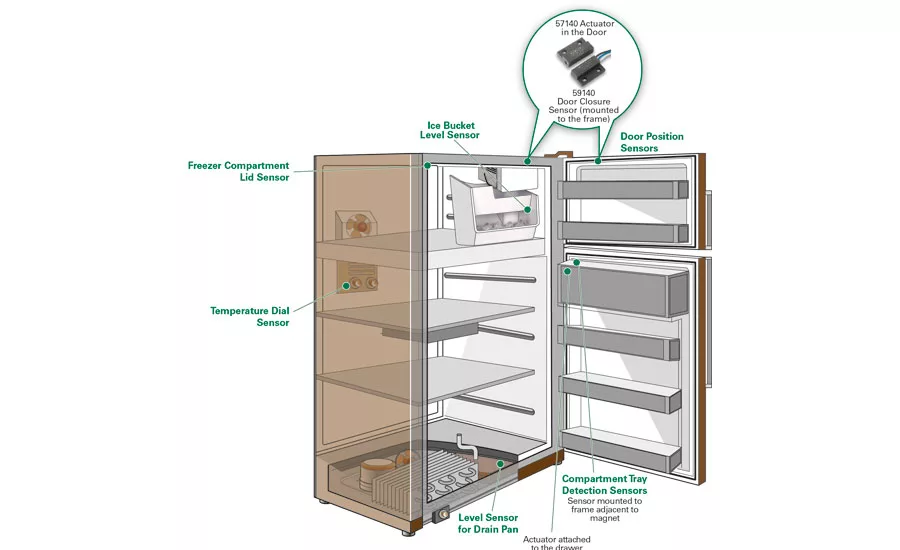
Figure 1. Common locations for sensors in a refrigerator.
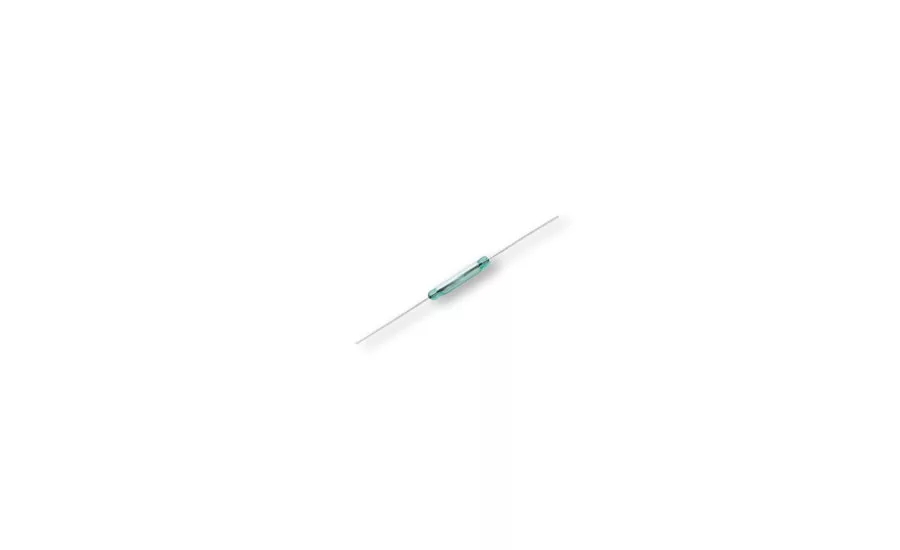
Figure 2. Low power axial lead reed switches are often a good choice for switching microcontroller logic-level loads.
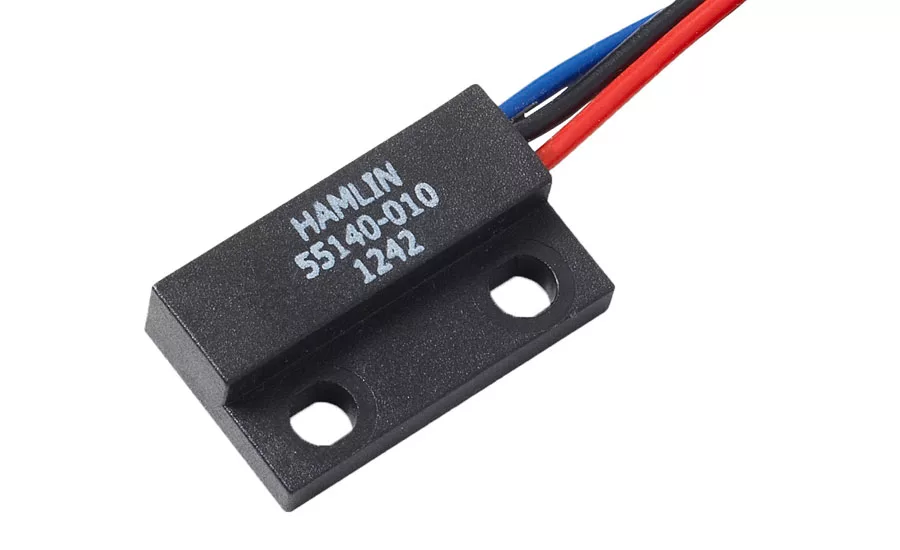
Figure 3. This Hall effect sensor’s rectangular package is ideally suited for mounting on a flat surface. Applications include water/ice dispenser lever position sensing.
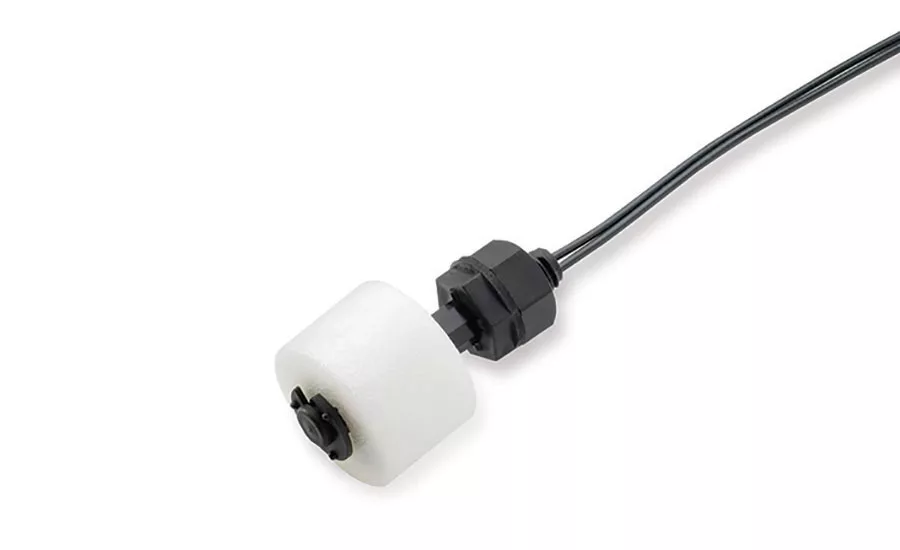
Figure 4. Designed for liquid-level sensing applications, this sensor has an integral float magnet and a reed switch.
Refrigerators, freezers, and wine coolers are among any household’s major energy consumers. In fact, according to the U.S. Energy Information Administration’s Residential Energy Consumption Survey, the refrigerator is the second-largest user of electricity (13.7%), right behind the air conditioner (14.1%). As with many other modern appliances, microprocessor-based electronics in refrigerators and freezers allow better control over various functions, allowing designs to better enable energy efficiency. These modern electronics also enable use of a variety of sensors to ensure reliable, safe, and more energy-efficient operation (Figure 1).
Reed sensors and Hall effect sensors are both highly reliable and will operate over millions of cycles with long-term integrity when used with microprocessor logic-level electrical loads. Both types of devices are operated by a magnetic field. Reed switches and sensors consume no power; Hall effect devices are semiconductors and will consume a small amount of current in both activated and de-activated states.
Refrigerator and Freezer Door Position Sensing
Refrigerators equipped with a microprocessor control unit are compatible with the use of noncontact-type sensing technologies such as reed switches/sensors and Hall effect sensors. These technologies are very compatible with the low DC voltage and current requirements of the microcontroller.
The traditional mechanical and plunger-type switches previously used for switching 120 VAC incandescent lights directly are no longer necessary. Modern refrigerators, freezers, or wine coolers that use a microcontroller have converted to an LED light to illuminate the interior compartment when the door is opened, which represents a huge advantage in terms of energy saving. A proximity sensor is needed to detect if the appliance door is open or closed.
A reed sensor (Figure 2) or Hall effect sensor can be used to detect the door’s position. For example, in refrigerators, a reed sensor is mounted to the frame of the appliance and a permanent magnet actuator is mounted to the door. Each reed switch or Hall effect sensor and magnet actuator is positioned in such a way that the reed switch or Hall effect sensor is activated when the door is closed, and the light will turn off. When the door is open, the magnet on the door is outside of the sensor’s activation range, so the sensor is deactivated and the light turns on. The controller uses reverse logic to control the light relative to the sensor activation.
The sensor units are not visible because they are mounted behind the panels of the frame or door, which greatly improves the aesthetic appeal of the appliance. Unlike mechanical or plunger switches that have visible levers or buttons, these noncontact sensors don’t require making physical contact to operate.
Water/Ice Dispenser Lever Position Sensing
The water and ice dispenser located on the front of a French door refrigerator unit presently doesn’t include a sensor for detecting its own on/off position. Adding a sensor would allow the microcontroller to support closed-loop operation for the dispenser. Various options are available, including a digital signal or a rotary ratio-metric output or even a linear ratio-metric output.
Looking for quick answers on assembly and manufacturing topics? Try Ask ASM, our new smart AI search tool. Ask ASM
The digital version would be a simple reed or Hall effect sensor mounted to the fixed frame, while the magnet would be attached to the moving lever (Figure 3). With this system, the water or ice is at one filling or flow rate; that is, it is either on or off.
However, using a ratio-metric output Hall effect sensor provides continuous feedback relative to the exact lever/magnet position on a linear scale. With the exact position being monitored by a microcontroller, the system can dispense the water at various flow rates. A noncontact sensing solution is preferable for improved long-term reliability. A programmable rotary Hall effect sensor would be ideal for this application.
For instance, when the lever is in its normal open position, the voltage output from the Hall effect sensor could be programmed to 0.5Vdc, while the maximum swing of lever movement would be programmed to 4.5Vdc. In between these values, the water flow rate can be controlled based on the exact position that the lever arm is positioned.
Drawer and Compartment Cover Position Sensing
A number of potential sensing applications are centered on the various compartments within a refrigerator and freezer. Compartment doors for butter or drawers for produce, meats, and deli foods can also be fitted with sensors for detecting opening or closure.
All of these sensors can be a reed or Hall effect element with a digital output. The magnet would be mounted in the moving tray or drawer, while the sensors would be in a fixed position on the framing. If the tray or draw is not closed properly, a light could be activated on the unit to alert the user to the problem.
Ice Bucket Fill-Level Sensing
Refrigerators/freezers equipped with an internal ice maker and bucket typically use a mechanical arm over the ice bucket to detect when the bucket is filled to the top and turn off the icemaker.
Currently, this function is controlled with a mechanical switch and valve. In appliances containing micro-controllers, a reed sensor can be fixed to the frame and a magnet can be attached to the arm, allowing a more reliable sensing mechanism than the existing mechanical units.
Temperature Control Dials Position Sensing
In older refrigerator/freezer combo designs, both the freezer and refrigerator compartments have rotary temperature adjustment dials, which are usually resistive film or potentiometer-type adjusters.
In micro-controller equipped systems, a noncontact sensing solution would be preferred for improved long-term reliability. A programmable rotary Hall effect sensor is ideal for this application; with 0.5V to 4.5Vdc output over 360 degrees of rotation.
Drain Pan Level Sensor
Most refrigerators have a shallow drain pan at the bottom for catching leaking water from the refrigerator or freezer compartment. Because this pan is typically not readily visible, it can be difficult to detect a leak until the water overflows and leaks out on the floor. A reed level sensor would be of great benefit for this application (Figure 4).
This digital output sensor can detect when the water level is too high in the drain pan and the controller would activate an alarm or light.
When to Use Reed vs. Hall Effect Sensors
A reed switch is a magnetically operated switch that in most situations is normally open when no magnetic field is present. When a magnetic field in proper alignment and of sufficient strength is present, the contacts of the reed switch will close and complete the circuit.
Reed switches and Hall effect sensors are magnetic switching devices, sometimes called “contactless” because the actuator/magnet does not need to make physical contact with the switch to change the state, unlike a micro-switch or a mechanical switch.
Reed switches are a perfect technology for switching microprocessor electrical loads of 1-12Vdc and a few milliamps of current. Reed switches have precious metal contacts, hermetically sealed within a glass envelope and filled with nitrogen gas. The switch can go through many millions of operations with no degradation or contact wear.
A digital Hall effect sensor is a semiconductor with unlimited life when driven by the proper voltage and current. Reed and Hall effect devices are long lasting and very reliable, even when used in applications with high humidity and varying temperatures.
Looking for a reprint of this article?
From high-res PDFs to custom plaques, order your copy today!