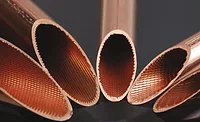
Smaller Diameter-Copper Tubes Support Manufacturing and Design
A report from the 2014 Purdue Conference
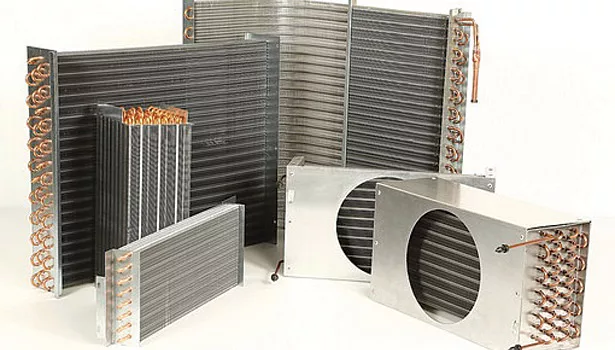

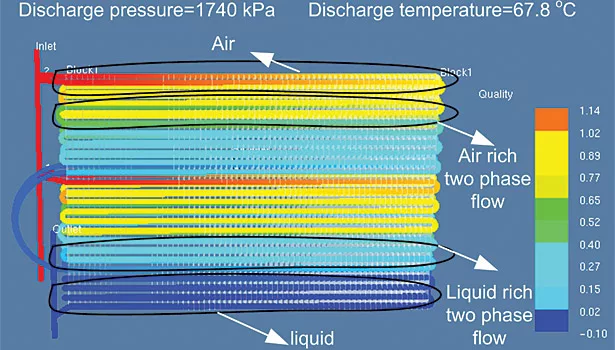
Research often leads to improvements in manufacturing and product development; and, conversely, experiences with manufacturing often pinpoint new topics for worthwhile research
Such is the nature of technology.
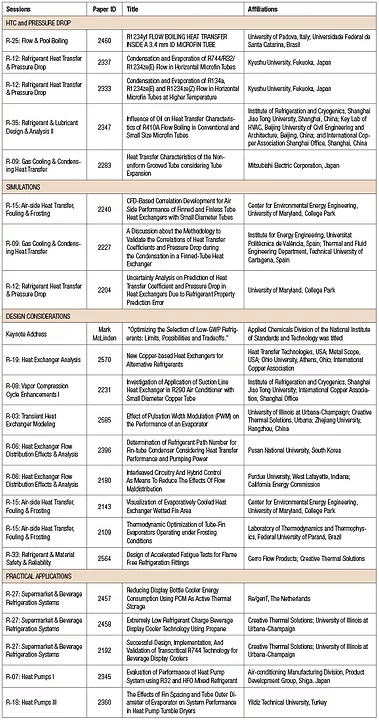
This interplay of research with product design and manufacturing was especially evident at the recent Purdue Conference on Refrigeration. Here is a brief synopsis of select research relating to laboratory experiments, simulations, heat exchanger design, and the manufacture of components and systems using smaller diameter copper tubes. Only the highlights of select papers are presented here and tabulated below. Interested readers can refer to the complete, searchable proceedings. Original papers can be downloaded at no charge from the conference website [1].
Heat Transfer Coefficients
One fundamental area of experimental research involves the measurement of heat transfer coefficients (HTCs) and pressure drops for various sizes of copper tubes. There was no lack of such papers this year, with researchers investigating the behavior of new refrigerants and the effects of tube size, inner-groove geometry, mixtures, and oil contamination.
Simone Mancin from the University of Padova described extensive experiments measuring boiling heat transfer with R1234yf as the refrigerant. The copper tube was inner-grooved with an inner diameter of only 3.4 mm at the microfin tip. The researchers measured two-phase heat transfer coefficients and pressure drops for the full range of vapor qualities, at three different flow rates and three different heat fluxes. (See paper ID 2460)
Chieko Kondou from Kyushu University described measurements of HTCs and pressure drops on fluorinated olefins (R1234ze), including mixtures with R744 and R32 for air conditioning systems as well as comparisons between R1234ze(E) and the isomer R1234ze(Z) at higher temperatures for industrial heat pump applications. The measurements were made on copper tubes with inner grooves and outer diameters of 6 mm. For the mixtures, which are under consideration for replacing conventional R410a as a refrigerant, lower HTCs were obtained because of higher mass transfer resistances; but this effect was mitigated at higher mass velocities, where the HTCs of the mixtures approached those of the single component. For the isomer study, at condensation temperatures of 65 °C, the pressure gradient of the isomer was about three times greater while the condensation HTC was approximately 2.6 times higher than those of R1234ze(E). Detailed measurements for both condensation and evaporation are presented in the two papers, which should be consulted for a full examination of the results. (See paper ID 2337 and ID 2333, respectively)
Looking for quick answers on assembly and manufacturing topics? Try Ask ASM, our new smart AI search tool. Ask ASM
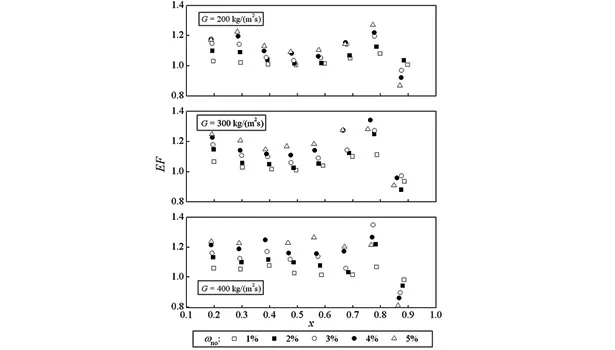
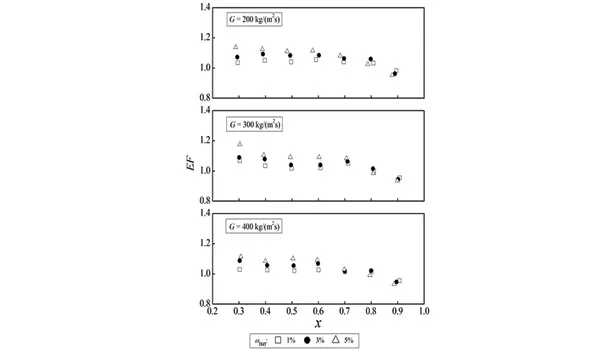
Haitao Hu from the Institute of Refrigeration and Cryogenics at Shanghai Jiao Tong University described experiments in which oil contamination actually increases the boiling HTCs. The results obtained were expressed in terms of an enhancement factor (EF) which compares the HTCs with oil and without oil at various oil concentrations (Figures 4 and 5). The outer diameters of the copper tubes were 4 mm and 5 mm. Since two different inside-the-tube microfin geometries were used for the 5 mm outer diameter tube, it is possible to discern the effect of fin height on the HTCs. Similar work had been performed in the past on tubes with diameters 7.0 mm and larger but until now there has been no work on R410A/oil mixture flow boiling in small diameter microfin tubes. (See paper ID 2347)
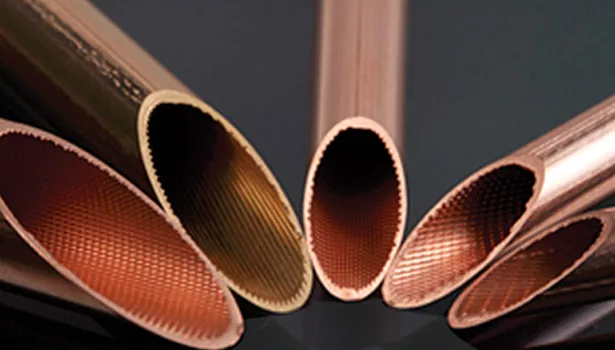
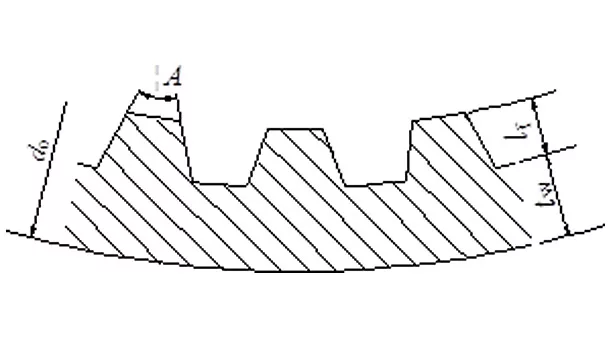
Sangmu Lee from Mitsubishi Electric Corporation, Japan, presented fascinating research on the heat transfer characteristics of a smaller diameter copper tube with non-uniform inner grooves. In other words, the microfins are of different heights, which has important effects on the performance of the tubes, considering the manufacturing process. Firstly, the taller fins protect the smaller fins when the tube is expanded by the bullet method. Secondly, the contact between the tube and the fin is better when this pattern is used. In the first case, the refrigerant side heat transfer is improved; in the second case, the airside heat transfer is improved. (See paper ID 2283)
The above papers on the measurement of heat transfer coefficients, so far, provide an essential link between theoretical product designs and the actual behavior of refrigerants in tubes. The goal is to obtain enough accurate data on the two-phase flow of various refrigerants through smaller-diameter copper tubes with various designs of inside-the-tube surface enhancements, or inner grooves.
Models and Simulations
Once the physical behavior is understood, the usual practice is to develop reliable correlations. Thus, the design space can be explored for a wide range of operating conditions. Designers can predict the cooling capacity and coefficients of performance of actual products without having to build prototypes. CFD software today can save a lot of time and help to get products to market faster. That is why the above experimentally measured values of HTCs and pressure drops are so vital.
Several papers on the subject of simulations and correlations are noteworthy.
A paper presented by Santiago Martinez-Ballester of the Institute for Energy Engineering, Universitat Politècnica de València, Spain, described a methodology for validating correlations. The investigation was focused on what data points need to be measured, e.g., what inlet temperatures, what sub-cooling, and what mass flow rates should be explored, in order to reliably predict the behavior of heat exchangers. The discussion was supported by actual experiments on a traditional air-to-water heat pump equipped with a finned round tube condenser. For simplicity, a smooth copper tube with a conventional diameter was used for this discussion. One conclusion is that the model was more sensitive to the air velocity than air temperature, sub-cooling and compressor speed.
At the other end of the scale of tube sizes, researchers from the University of Maryland simulated finned and finless copper tube heat exchangers with tube outer diameters ranging from 2 mm to 5 mm. According to Vikaunt Aute from the Center for Environmental Energy Engineering, not much is known about the physics at these smaller diameters and not many correlations exist to predict the pressure drop and heat transfer coefficient for such geometries. Experiments are needed to validate the correlations presented in this paper. Nonetheless, they can be used instead of CFD for the design and optimization of air-to-refrigerant heat exchangers, thereby saving computational time. (See paper ID 2240)
In another intriguing simulation from the University of Maryland, investigators sought to measure how uncertainties about refrigerant properties translate into uncertainties in the simulation of heat transfer coefficients. Using correlations found in the literature, refrigerants such as R1234yf, R1234ze (E), R134a, R32, R410A, R445A, D2Y60 and L41a were examined. For the sake of simplicity, although inner-grooved tubes would have increased the HTCs, smooth tubes with inner diameters of about 9-mm were used for the simulations at a refrigerant condensing temperature of 45 °C; and for boiling under at a refrigerant saturation temperature of 5 °C. Among other things, it was found that the uncertainties about the liquid heat conductivity translated into the largest uncertainty in simulation of heat transfer coefficients. (See paper ID 2204)
Design Considerations
The use of low-GWP refrigerants was an underlying theme of much of the current research. The keynote address by Mark McLinden of the Applied Chemicals Division of the National Institute of Standards and Technology was titled “Optimizing the Selection of Low-GWP Refrigerants: Limits, Possibilities and Tradeoffs.” According to McLinden, an exhaustive search of all known chemicals compounds, screening for physical properties and GWP, suggests that no other candidates are likely to emerge beyond those currently under consideration. That means manufacturers will need to work with the tradeoffs inherent in the current generation of eco-friendly refrigerants.
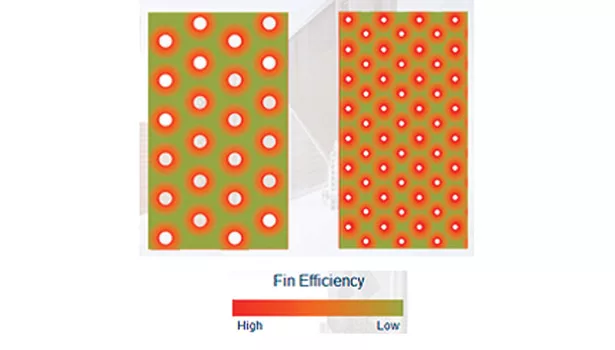
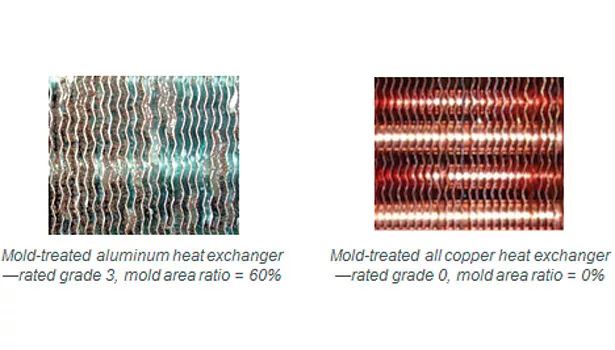
Yoram Shabtay of Heat Transfer Technologies examined copper RTPF heat exchangers for use with alternative refrigerants such as R290 (propane) and R744 (CO2) as well as R32 and R32-HFO blends. He pointed out that smaller diameter copper tubes are now the norm in heat exchanger design and comparisons with alternatives should include results for 5 mm copper tubes and not larger diameter copper tubes from the past (Figure 6). He also described how high-strength copper-alloy tube (CuFe2P) in small diameters or in copper microchannel tubes could be integrated with advanced compact heat-exchanger designs to meet the needs of higher pressure, more compact R744 (CO2) refrigeration systems. He concluded his presentation with a discussion of Life Cycle Climate Performance (LCCP). An all-copper heat exchanger can provide higher efficiency over product life cycles and consequently may be the best choice for compact heat exchangers when LCCP is taken account (Figure 7). (See paper 2570)
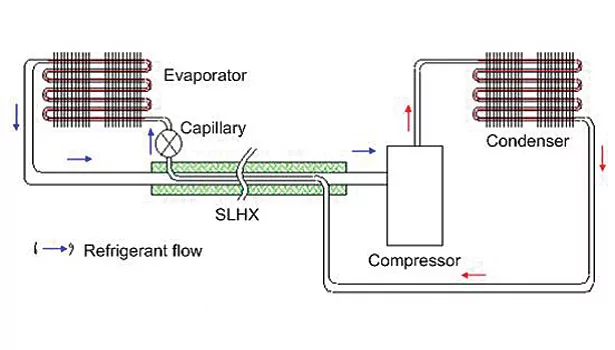
According to Professor Guoliang Ding of the Institute of Refrigeration and Cryogenics, Shanghai Jiao Tong University, there are four ways to improve the performance of air conditioners with smaller-diameter copper tubes. First is to optimize the refrigerant circuitry to reduce pressure drop; second is to enhance the air-side heat transfer; third is to optimize the distributor to achieve better refrigerant flow; and, finally, one could apply a suction line heat exchanger (SLHX) which uses the low temperature refrigerant from the suction line to cool down the refrigerant between the condenser and evaporator. In this research paper, which includes ICA coauthors, the theory of why a SLHX should increase efficiency is described and simulations are presented.
Additionally, a SLHX was installed in a 2600 W air conditioner made with smaller diameter copper tubes and propane (R290) as a refrigerant (Figures 8 and 9). According to the experimental results, the SLHX increased the cooling capacity by 5.3% and the COP by 4.5%; and the refrigerant charge was reduced by 6%. (See paper 2231)
Another way to increase heat transfer through the copper tubes in an evaporator may be through pulse width modulation. While there exists a vast body of research on the pulsating flow of liquids, experiments described by Ke Tang from Zhejiang University in Hangzhou, China may be the first performed on a refrigerant. In this case, the refrigerant was R134a and the pulsating flow was generated by a solenoid valve in the evaporator. Limited data has been obtained to date but more is expected. (See paper 2585)
Research from Pusan National University in South Korea focused on optimizing the tube circuitry for a condenser rated at 3,500 W and made with 7 mm copper tubes with wall thickness of 2.5 mm. There are numerous approaches to optimize tube circuitry. Here, an intuitive method with physical meaning was considered as it related to the pumping power and the heat transfer performance of the heat exchanger. The method was verified through analysis of various refrigerant circuitry. (See paper 2396)
The optimal circuitry may depend on the refrigerant flow rate. In a paper by researchers at Purdue University, a new interleaved circuitry was compared with active refrigerant flow control for different cases of maldistribution of refrigerant in an evaporator. The study focused on two circuits of an 8-circuit evaporator for a 3-ton (10.6 kW) R404a walk-in cooler refrigeration system (WCRS). The results show that interleaved circuitry recovers less of the performance losses than equalization of the exit superheats but its implementation would cost less. This research was supported financially by the California Energy Commission. (See paper 2396)
When the ambient temperature is very high, condenser performance can be boosted by applying water as a deluge, spray or mist cooling. The challenge is to minimize water use while yet maximizing the increase in cooling capacity of the system. Research conducted at the CEEE at University of Maryland was presented by Sahil Popli. The tube bank consisted of six rows of copper tubes; the design of the circuitry left some of the paths through the fins without tubes. Visualization was accomplished by inserting boroscopes into these paths. The results showed that deluge cooling was most effective, wetting up to 85% of the fin area; meanwhile, because of tight fin spacing optimized for dry operation, as much as 85% of the heat exchanger volume remained dry when front spray cooling was applied to the condenser. (See paper 2143)
An algebraic treatment of frosting was described by Christian Hermes from the University of Paraná, Brazil. The analysis yielded some useful guidelines for the design of tube-fin evaporator coils running under frosting conditions. In such light commercial refrigerators, tube diameters are typically 10 mm for the frosted tube-fin evaporator coils. Geometric factors and operating parameters influence not only the heat and mass transfer rates but also the frost growth and densification. (See paper 2109)
Chad Bowers of Creative Thermal Solutions reported on extensive series of tests on six different sizes of fittings designed to connect tubes between 6.35 mm and 28.5 mm. These fittings were subject to a stringent series of accelerated tests, including mechanical fatigue tests, pressure testing, freeze-thaw cycles, and vibrations. The new fittings are designed to reduce incidents of leaks due to unskilled use of open air flame brazing. (See paper 2564)
Practical Applications
The ultimate validation of experiments and modeling occurs when new products succeed in the marketplace. The competition is fierce and product development cycles are getting shorter. The research results and new technologies as described above are used to make products safer, economical and energy efficient.
A sampling of new product designs and product categories brought under the spotlight follows.
More and more, the vapor-compression refrigeration cycle is being used for heating. An outstanding example is the development of a heat pump tumble dryer as described by Cenk Onan. Yildiz Technical University, Turkey. Copper tubes with diameters as small as 6 mm were tested in this R744 application. Not surprisingly, the best moisture extraction rates and COPs were obtained with the smaller tube diameters (See paper 2360)
Practically every aspect of the design of a small-sized split-type heat pump system was outlined in a presentation by Tomoyuki Haikawa from Daikin who asserted that R32 refrigerant performed better than other low-GWP alternatives to R410a. The system under research had a nominal cooling capacity of 4.0 kW, and the indoor unit and outdoor unit were joined with 5 m length connection. (See paper 2345)
There were several papers dedicated to beverage display coolers, including one on transcritical R744 systems, which are well on the way to market acceptance. Stefan Elbel of Creative Thermal Solutions described a promising design of a glass door cooler that uses low cost components such as a round-tube-plate-fins heat exchangers for the gas cooler and evaporator, capillary tube and a fixed-speed compressor. (See paper 2192)
Meanwhile, Yadira Padilla Fuentes, also of Creative Thermal Solutions, described a beverage cooler design that uses propane as a refrigerant (See paper 2458)
Marcel van Beek from Re/genT in the Netherlands analyzed ways to reduce energy consumption of bottle coolers, including the use of phase change materials (PCMs) along with two evaporators. (See paper 2457)
The Shape of Things to Come
The above synopses give various snapshots of select areas of research with special emphasis on research relating to the use of smaller diameter copper tubes in heat exchangers for HVACR systems. The quality and scope of recent research has been remarkable. Some of the papers described here can serve as good starting points to delve deeper and learn more about the latest developments.
The limitations of available refrigerants have forced the industry to carefully weigh design options and adopt innovations that will lead to more efficient use of energy and materials.
MicroGroove Technology is a game changer. As manufacturers seek to improve system performance they can revisit their faithful friend, tried-and-true copper, and reconsider the tube diameters, internal enhancements and coil designs. As is often the case in the supply chain, a single basic innovation can lead to hundreds of product innovations.
For an overview of MicroGroove technology, the interested reader is referred to the article, “Building Better Appliances with Smaller-Diameter Copper Tubes” [2].
MicroGroove tubes represent the shape of things to come in appliance design.
References
[1] Fifteen International Refrigeration and Air Conditioning Conference at Purdue, July 14-17, 2014. www.conftool.com/2014Purdue/sessions.php
[2] Nigel D. Cotton, Bob Weed and Wenson Zheng, International Appliance Manufacturing., 2013 edition, page 33. View online at http://digital.bnpmedia.com/publication/?i=176977&p=34; or download reprint from www.microgroove.net/sites/default/files/iam_microgroove.pdf
Looking for a reprint of this article?
From high-res PDFs to custom plaques, order your copy today!