Reliable Bonding for Autonomous Driving
Ultrasonic welding is a fast, reliable method for attaching connectors to cables used in self-driving cars
For a long time, autonomous driving seemed like science fiction. Now, it is increasingly becoming a reality. In the next 10 years, driving as we know it will undergo greater changes than in the last 30 years.
Autonomous vehicles promise to make the human driver superfluous. Experts have divided the path to this goal into five successive levels of autonomy: assisted, semiautomated, highly automated, fully automated, and fully autonomous driving. With each passing level, more and more responsibility is taken away from the individual until all vehicle occupants ultimately become passengers, and no driver’s license is needed. Levels one and two are now offered as standard by all car brands. Stages three and four are in the test phase, and automotive OEMs are beginning to prepare for series production of such vehicles. Initial testing is underway for stage five.
At any level of autonomy, safety and reliability must have the highest priority. Any danger to vehicle occupants and other road users must be prevented. To achieve that level of safety, manufacturers rely on two approaches, similar to those used in aircraft technology: reliable technology and redundancy.
Sensors and camera systems are the key enabling technology for autonomous vehicles. However, these systems will work only if they are reliably connected to the control and regulation units. As a result, the wiring harness will be every bit as critical to the performance of autonomous vehicles.
The safety requirements for electrical and electronic systems for production road vehicles are detailed in ISO 26262. This international functional safety standard aims to address possible hazards caused by malfunctioning electronic and electrical systems in vehicles. ISO 26262 is a risk-based safety standard. The risk of hazardous operational situations is qualitatively assessed, and safety measures are defined to avoid or control systematic failures and to detect or control random hardware failures, or mitigate their effects.
Critical Connections
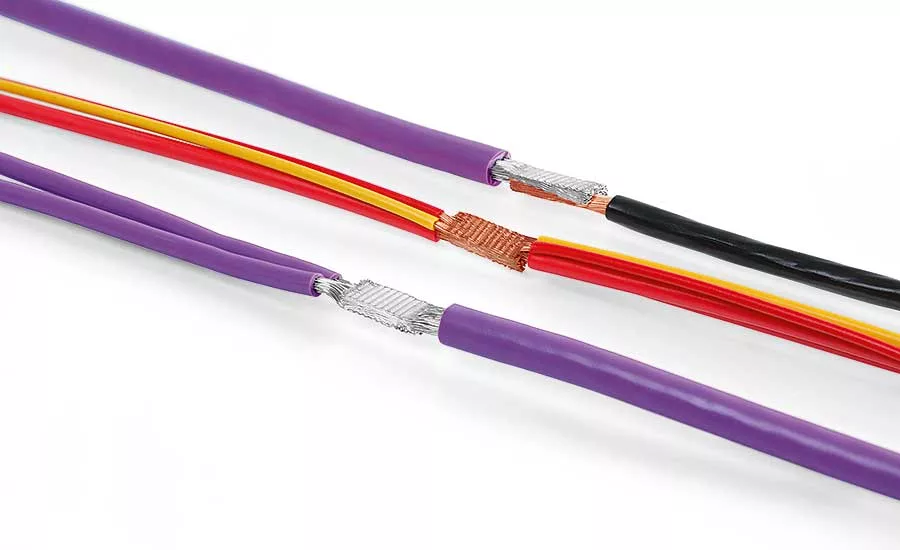
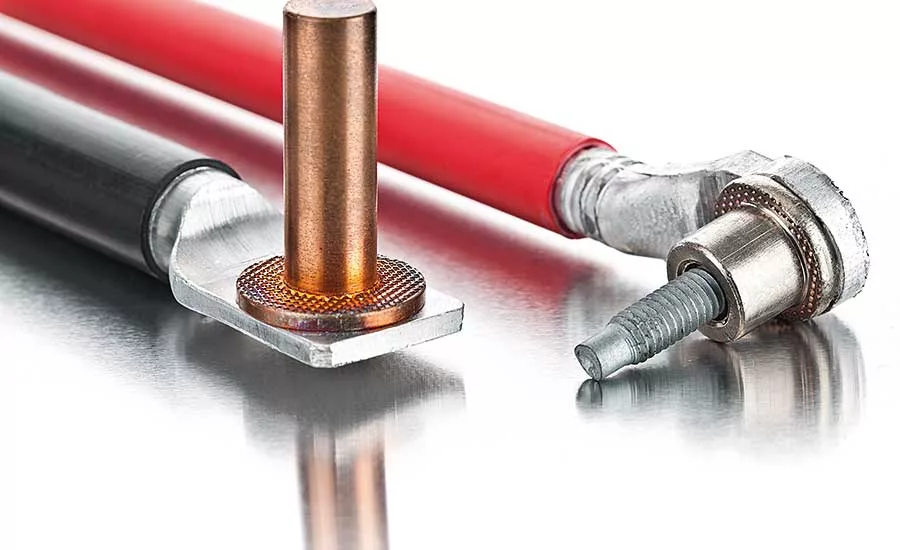
One way to ensure reliable connections in an automotive wiring harness—whether for autonomous vehicles or traditional ones—is with ultrasonic welding. The technology is a proven and reliable method for connecting wires to each other or to terminals. It offers fast processing times and extensive process control. The purely metallic connection is not subject to aging or fatigue. The firm bond also ensures very low contact resistance between components.
Ultrasonic welding can be used to join both similar and dissimilar materials, such as copper and aluminum. Additional consumables such as sleeves, solder or flux are not necessary, because the metals are welded together directly. In addition, ultrasonic welding produces low thermal stress on the parts. The material properties do not change and adjacent materials, such as insulation, remain intact.
Looking for quick answers on assembly and manufacturing topics? Try Ask ASM, our new smart AI search tool. Ask ASM
Depending on the level of automation of the system, bad parts can be disposed of immediately, and subsequent errors can be prevented.
Best Practices
Despite process control and error detection, the correct procedure should be followed when designing the joints and preparing for production. Industry standards, such as USCAR38 (for connecting stranded wire to terminals) and USCAR45 (for connecting stranded wire to stranded wire), provide a foundation for design. However, many automotive suppliers and cable assemblers have their own regulations and guidelines that also must be taken into account.
The connection point must be designed to withstand the mechanical, thermal and electrical loads during operation for the life of the vehicle. For example, the number of conductor strands to be joined together plays a role, because insertion becomes difficult above a certain number. To avoid rejects, no more than eight wires should be joined. Rejects can also be avoided by using an ultrasonic welding system that can detect incorrectly inserted strands.
To reliably detect missing strands, the smallest conductor cross-section should be at least 7 percent of the total cross-section. For joint cross-sections less than 5 square millimeters, that threshold is 9 percent. The largest cross-section should be no more than three times as large as the smallest one.
A special case when welding stranded wire is the symmetrical splice setup. If two to four conductors with the same cross-section are welded next to each other instead of overlapping, a vertical split splice may occur. This can be easily prevented by an asymmetrical node design. This sort of arrangement is not ideal, however, and is best avoided during the design stage.
Material Selection
The choice of material greatly affects welding quality. Copper with at least 99.9 percent purity, as well as aluminum with at least 99.5 percent purity, are most suitable for ultrasonic welding. Contamination with lead or tin coatings can have a negative effect. Extraction oils and additives on and between individual wires can also adversely affect weld quality.
When welding aluminum cables onto copper terminals, a nickel plating, 3 to 6 microns thick, on the terminals will ensure a high-strength connection. In addition, the points to be connected must be free of oil, grease, protective agents and dirt.
Proper storage of the materials is important to keeping them clean. High temperatures and long storage periods cause increased oxidation and an accumulation of drawing oils and plasticizers on the wire strands, all of which will negatively affect the weld. Ideally, wire should be stored for no more than six months in a clean, dry place protected from weather and without direct exposure to the sun or ultraviolet light. Temperature should be between 15 and 35 C. Needless to say, cables and joints should be protected from damage during storage and transport. (The German Electrical and Electronic Manufacturers’ Association offers a technical guide, TLF 0100, with additional helpful information.)
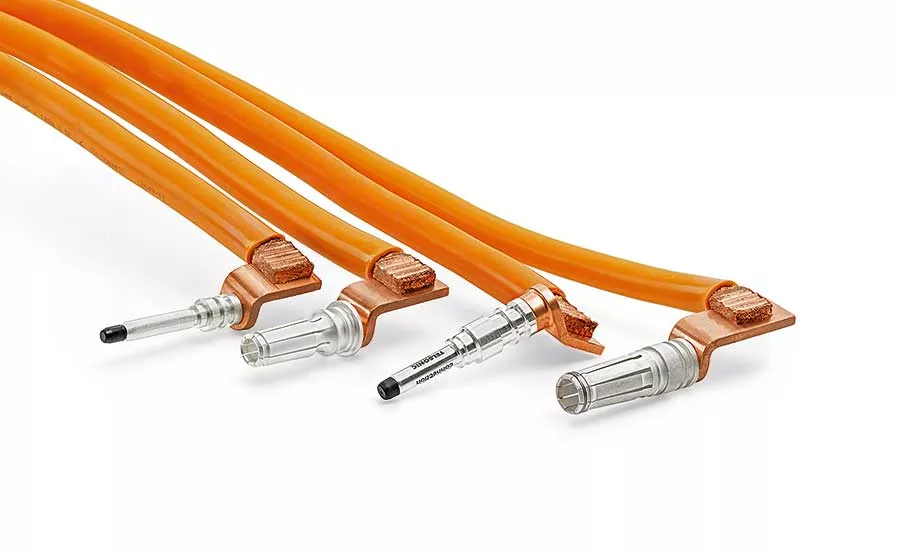
The production of cable sets is a semiautomatic process. Trained personnel load and unload the welding equipment. Some terminals, such as MAK high-current contacts, can be fed automatically. To prevent contamination of the parts, operators should wear gloves, and cables should be partially stripped. The insulation should be removed just before the wire is inserted into the welding area.
It’s a good idea to perform application tests at the beginning of a new production run and at regular intervals thereafter. Changes in the supply chain can result in modified material properties, so regular testing is important. It’s a good idea to protect machine settings with passwords, so that only trained personnel can make changes to the production parameters.
Reproducibility
To ensure a stable process, the parts to be joined must be inserted in a reproducible manner. There are guides and stops for this purpose.
Needless to say, ultrasonic welding systems must be well-maintained. Only original spare parts should be used, and technical aids, such as wire cutters and insertion aids, must not be manipulated or switched off. Modern welding systems enable item and age-testing of the parts to be joined. They log all welding data and can save it on a network drive. Complete order processing is also possible via integration with a manufacturing execution system, such as 4Wire CAO from DiIT GmbH.
Looking for a reprint of this article?
From high-res PDFs to custom plaques, order your copy today!