Seven Ways Lean Can Evolve
The future of lean lies in digital manufacturing.
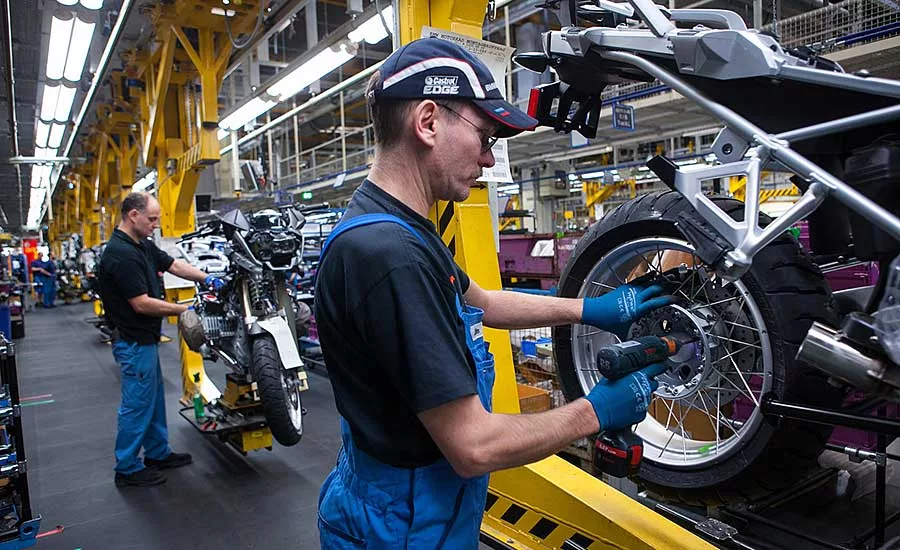
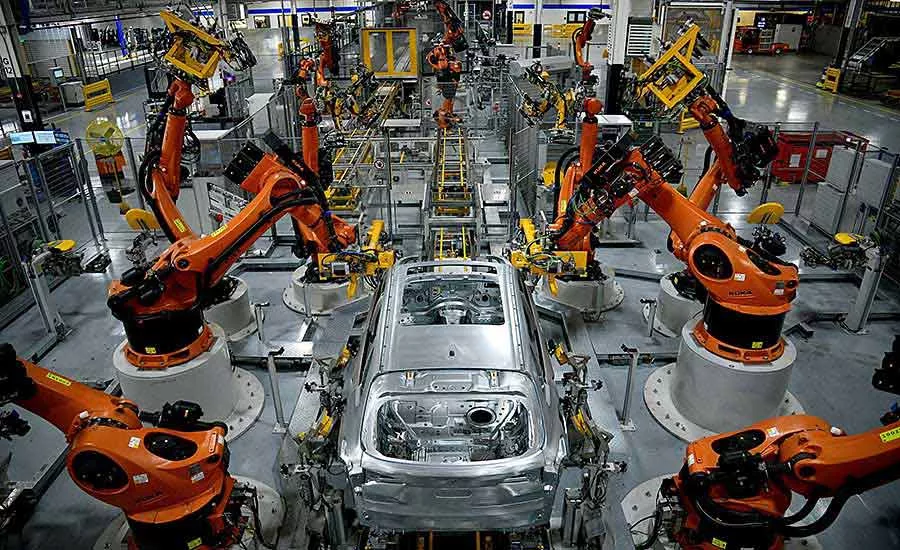
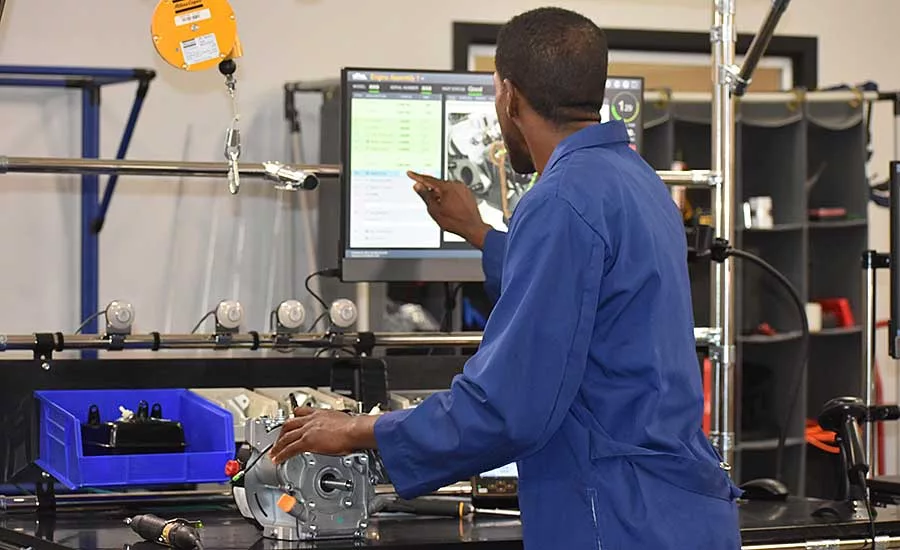
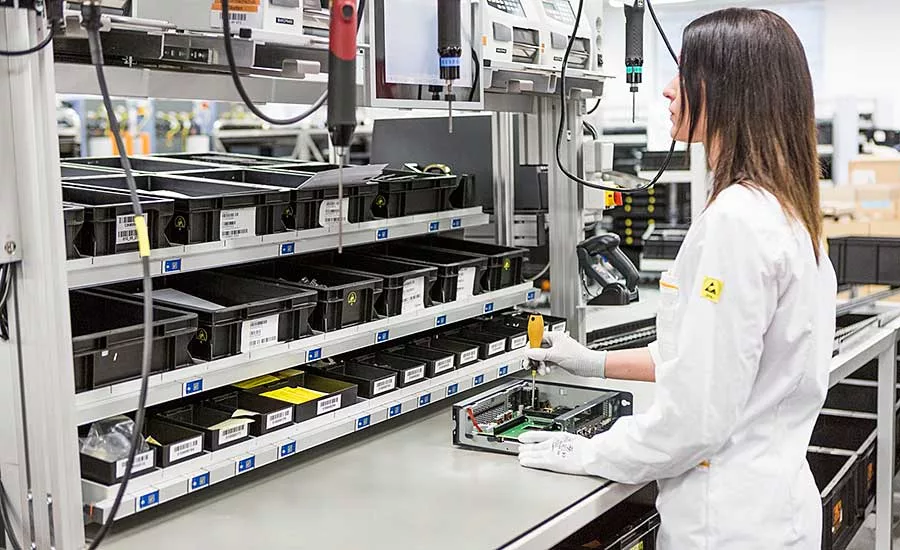
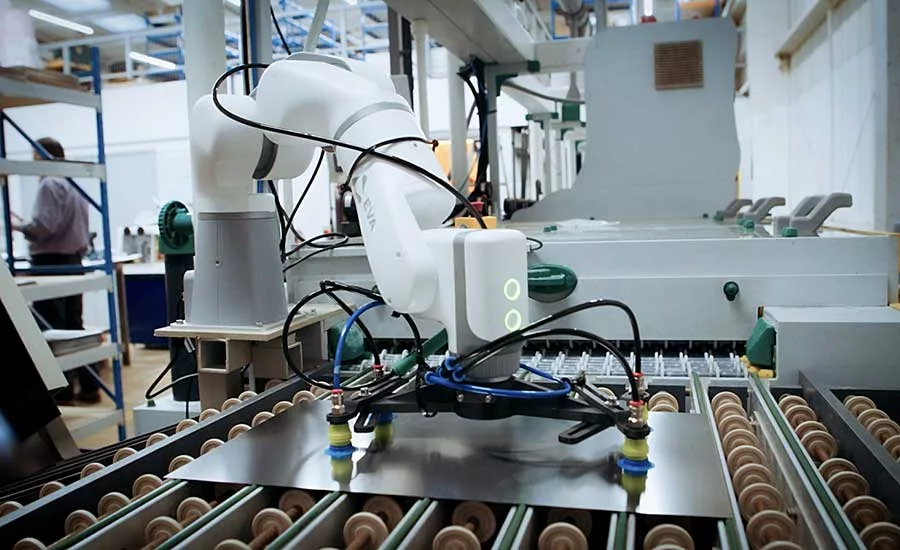
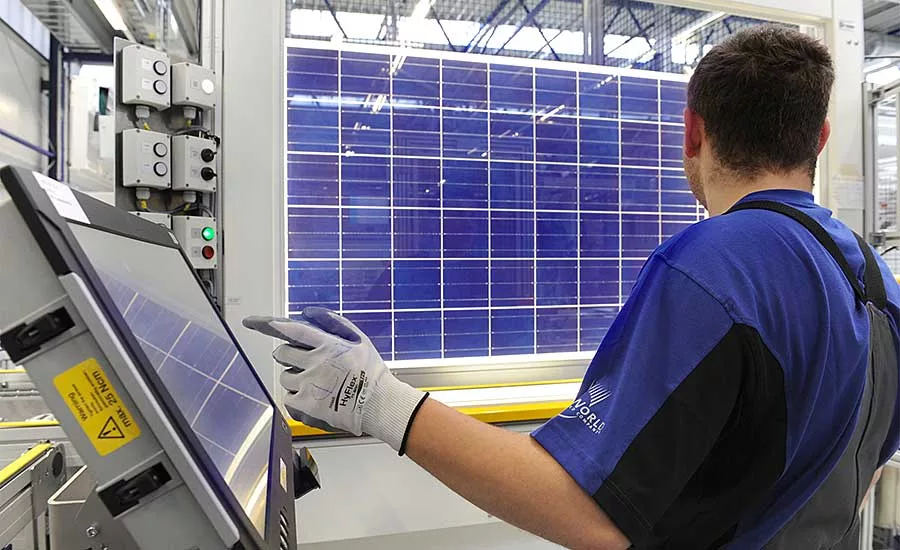
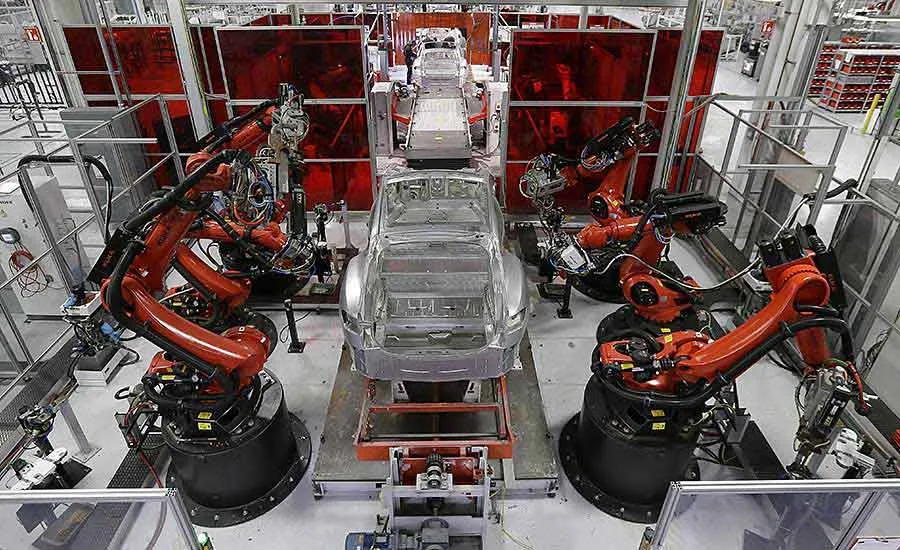
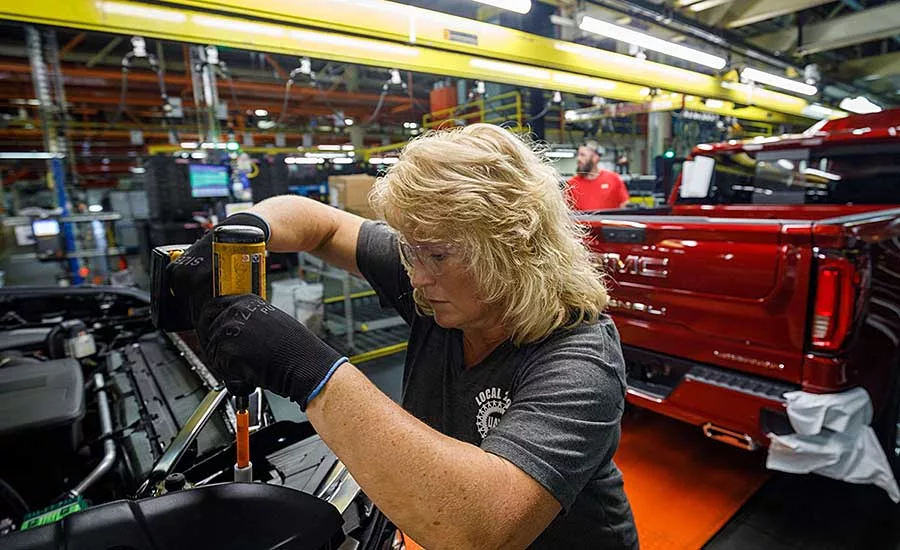
In the 1990s, lean manufacturing revolutionized how we organized and ran assembly lines. Now, manufacturing is undergoing another revolution—only this time, it’s digital. In the factory of the future, software and data analysis will be every bit as important to product assembly as robots, riveters and nutrunners.
How will this new revolution affect our efforts to become lean? Will it be an impediment or a help? After all, many manufacturers are still in the initial stages of lean development, and they are years behind in digital development.
I believe lean manufacturing can be a strong backbone for data analytics teams looking to optimize their operations on the fly. Let’s look at seven trends involving the convergence of lean and digital manufacturing.
Digital Manufacturing
In 2015, robotic process automation (RPA) was latest buzzword. RPA was the answer to all the worries and demands of frustrated manufacturers. Now, the Internet of Things (IoT) and blockchain are “the next big thing.” RPA enabled engineers to focus on more complex processes and leave repetitive work to automation. IoT went a step further and enabled engineers to manage processes remotely.
If companies don’t invest in these trends quickly enough, they will create a backlog for digital advancement. You don’t want to play catch-up with technology. A manufacturer that fails to invest in technology today will spend more later. Invariably, the company will need to hire a consultant who will take months to identify technology gaps. It will then have to spend even more money just to keep up with the competition. Investing $1 million today can save $50 million tomorrow.
Digital transformation in manufacturing typically follows three major steps. The first step, digitization, is simply getting rid of paper and storing all data electronically. Most companies are still at this stage.
The second step is digitalization: the use of digital technologies and digitized data to impact how work gets done, transform how customers and companies engage and interact, and create new (digital) revenue streams. Through digitalization, companies can ditch physical meetings and collaborate online. They can ditch manual file sharing and centralize resources in the cloud.
Looking for quick answers on assembly and manufacturing topics? Try Ask ASM, our new smart AI search tool. Ask ASM
The third and most advanced stage is digital transformation. Sensors, computers and software collect and analyze data from every aspect of the operation. “Big Data” drives decision-making, and potential problems are solved proactively before they create downtime or other issues. The manufacturing operation becomes a symphony of information flowing across the company to where it is needed the most.
Blockchain is another development that has enabled the companies to secure their information while sharing it externally. Consider a supply chain of coffee production. Blockchain can provide an end-to-end feedback loop from the coffee grower to the coffee shop. A coffee grower in Brazil can get updates on how well his product is selling in, say, Washington, DC. Armed with that information, the grower can improve his produce. This is exactly what Starbucks did in a partnership with Microsoft. The most attractive attribute of this concept is that it happens without any human intervention.
Most manufacturers are not at that stage yet. But, many retailers are. Not long ago, associates at an Amazon fulfillment center would have to walk more than 10 miles a day to retrieve products from warehouse shelves. Today, that task is handled by robots. The speed and accuracy of the operation is made possible by an army of scanners, sensors and smart conveyors, saving many hours of manual labor.
More Skilled Workers
There’s an ironic statistic in the United States. Some 9.8 million people are unemployed, and yet there are 826,000 job openings in manufacturing, according to the latest data from the U.S. Bureau of Labor Statistics. How is that possible? Clearly there’s a mismatch between the requirements of today’s manufacturing jobs and the skills of the available workforce.
Low-skilled jobs in manufacturing are disappearing. These are repetitive tasks that robots can do effortlessly. That’s not to see that people won’t be needed in manufacturing. Someone has to manage those robots, and that means we need more high-skilled workers.
For manufacturers, this is going to require investing in workforce training. Instead of having people perform mindless, repetitive tasks, automate those jobs and give people the opportunity to learn coding and the ability to operate those robots.
Amazon is already doing this. They expect to face a shortage of skilled workers beginning in 2025. But, rather than wait for the labor market to catch up to its needs, the company is investing in “data literacy” training to prepare its workforce for the jobs of the future.
I interviewed a senior official from a retail company in India. He leads the company’s supply chain and procurement arm in the northern part of the country. While discussing automation, he explained his vision for his workforce. He would like to do away with the functional training of his team. With RPA taking care of procurement in the supply chain, most purchase orders that would otherwise be manually entered into a spreadsheet would be generated automatically by software. Then, instead of using manpower for completing forms, the cognitive abilities of his workforce could be focused on negotiating costs with vendors or developing ways to shorten lead times. He wants to promote people who are smart to anticipate changes related to seasonal demands or shocks like the pandemic.
Evolution of Customer Empathy
Machines are getting smarter. They know their owner’s usage patterns, and many times they can anticipate their owner’s needs, even when an ambiguous order is given to them. For example, your Google accounts are so well connected that when you tell Google Maps, “take me home,” you wouldn’t expect it to ask you for more details.
So far, factories mostly use IoT technology for maintenance and warehousing applications. This automation or predictive support is not merely the realm of high-end, big-ticket devices, nor is it solely used to signal when something is wrong. It can also provide assistance with health and safety issues or with regular tasks that are now manual.
Everyone wants things to be simplified. The more thinking your device does, the less that’s required for you to do. A simple three-step solution to your problem is much better than a 60-minute phone call. Smart devices diagnose a problem by themselves and can predict the right solution.
Currently, 26 billion devices make up the worldwide IoT. That number is expected to balloon to 75 billion by 2025. Not all of those integrations will run smoothly. Some mechanical problems will still need a human touch. What will change is how you receive that support. With IoT devices sending and receiving massive amounts of data when you reach out, via chat or phone, the service will be far more personalized.
All of these solutions are meant to provide transparency of the process to the customer. If customers can track their shipments from one place to another at a click of a button, they are relieved. If they know how much value they are receiving for a service in quantified terms, their trust in the service builds. Digital services are meant to create that simplified visual control for your customer—whether internal or external.
Stronger KPIs
To succeed with IoT, manufacturers must include engineers who can help redesign assembly operations. They will also need to depend on network optimization specialists who can optimize supply chains. As people in these profiles shape and manage your portfolio of digital products, they can ensure that each one is directly tied to the desired customer experience and your planned business outcomes. Traditional success metrics will need to be recast across the organization: Incentives, adoption, value and performance will include the customer, and one set of metrics will cover multiple functions. Within a streamlined portfolio, different digital assets can even share product, price, promotion and customer data from a single source, contributing to an edgeless experience at scale across platforms.
Similarly, lean is more effective when it is applied across functions, and everyone is aiming at the same targets. When people from various positions in the end-to-end process chain come together to work on performance topics, they speak the same language and leverage the same way of working. Whether it is sales, marketing, product management, service, research and development, or manufacturing, everyone should be involved in daily management and problem solving. Ultimately, instead of working in islands, employees will be able to build bridges. This is how lean thinking becomes a crucial enabler in business transformation.
One of Bill Gates’ rules of automation says, “Any automation applied to an inefficient operation will [only] magnify the inefficiency.” Although lean will survive the Industry 4.0 revolution and co-exist with the technology that underpins it, the shape and utilization of its technical solutions will not change. For instance, advancements in technology have transformed the traditional physical kanban cards into electronic kanbans, and paper-based value stream mapping is now done electronically as well. In other cases, Industry 4.0 technologies may require some lean tools to be adapted, whereas other tools may even disappear. For example, it is easy to envisage that highly digitalized and automated production environments will limit the use of whiteboards and andon cords.
Enhanced Active Feedback Loop
I learned the plan-do-check-act cycle (PDCA) early in my manufacturing career.
If product development is thought of as the “plan” in a PDCA cycle, it becomes apparent how critical it is to apply lean thinking during this phase. The design phase should plan not only for the product, but also the value stream. This means understanding the product, process flow, material flow and information flow, and integrating all of this understanding into a harmonious system.
In manufacturing’s digital future, the feedback loop will come and go more frequently than before. We will iterate and build upon the product and use feedback from all sources, including the quality team, engineers, and even customers to correct and rebuild our products. In the past, automakers used to take five years to go from a drawing to a prototype for a new vehicle. Today, it’s more like nine to 10 months. The marketing and sales teams are playing a vital role in the feedback loop, ensuring that the voice of the customer is actually being heard.
If everyone in an organization has a key performance indicator to work on customer delight, the goals of the organization will be aligned, and processes become faster and leaner by themselves. Creation of an active feedback loop will carry the lean baton forward.
Data Galore
Data analytics will change the course of lean as we know it. As we move toward the “oil wells” of data for analysis, the work gets tougher to do. If managed well, companies can put their investments to good use by anticipating the future. With the advent of IoT and Industry 4.0, the reality is that data is being generated at a staggering speed and at high volumes, creating a need for an infrastructure that can store and manage this data more efficiently.
This is where cloud computing comes in. Cloud computing offers a platform for users to store and process vast amounts of data on remote servers. It enables organizations to use computer resources without having to develop a computing infrastructure on premise. Manufacturers’ global spending on cloud computing platforms is predicted to reach $9.2 billion by the end of 2021, according to IDC. A key factor behind this adoption is the benefit of being able to centralize operations, eliminating unwanted rework and delays so that information can be shared across an entire organization.
Nutanix predicted in 2019 that the adoption rate of cloud computing in manufacturing firms would more than double from 19 percent to 45 percent in 2021. This means that traditional IT infrastructure, which manufacturing controlled within their factories, is poised to blow out on a global scale through the cloud.
Different companies operate through public and private cloud sharing. In the case of a private cloud, which is also known as an internal or enterprise cloud, the data resides on a company’s intranet or hosted data center where all the company’s data is protected behind a firewall. The main drawback with a private cloud is that all management, maintenance, and updating of data centers is the owner’s responsibility.
With a public cloud, the management of the hosting technology is not the company’s responsibility. It is managed by a third party who is responsible for the maintenance of the data center. However, security is certainly a concern. At the end of the day, it all boils down to control. This is where hybrid cloud solutions come into play. Hybrid cloud solutions can provide a path by providing backup storage off-premises for conservation, protecting data from corruption, and establishing documentation that outlines the reliable data recovery process. This gives you the best of both worlds.
The cloud enables lean in many applications. Take connected cars, for example. Volkswagen was among the first companies to jump into this technology for their products and has partnered with Microsoft to develop an “automotive cloud” for itself. It aims to add more than 5 million Volkswagen products per year to its IoT with the help of this cloud service by 2022.
Sharing data has its merits for a physical environment like manufacturing, which is changing every day. With data sharing, we can see the silos being broken down. Customer service responses may feed into design choices. Production schedules may be adjusted on the fly to reflect supply chain realities. Entirely new business models may emerge from the synchronous integration of departments that had previously worked in series or parallel.
Get on the Floor and Lean On
At my first company, Tata Motors, we used to do gemba walks to determine the health of our processes. A gemba walk is an essential part of lean management. Gemba means “actual place” in Japanese, which simply means visiting the location where improvement is being performed. Its purpose is to allow managers and leaders to observe the actual work process, engage with employees, gain knowledge about the work process, and explore opportunities for continuous improvement.
To create a change, we must roll up our sleeves and experience the realities on the ground. Being present is a primary duty of the lean practitioner, which will never change even in our increasingly digital future. Getting on the shop floor is the most effective way to observe a process and plan for continuous improvement.
Gemba involves three essential steps: “Go and see, ask why, and respect people.” My mentor from Tata was a religious follower of this exercise. Even after he became a manufacturing head and had a team of 200 managers at his disposal, he continued doing gemba walks himself. At least 10 problems would get resolved through his daily gemba walks, which would have otherwise arrived on his desk a week later.
To sum this up in a single sentence: To understand, you need to see, identify the problems, and create action plans to solve them. So, what does that mean for the future? Nothing can replace gemba even in the coming years. It is still one of the most important ways to ensure effective control and monitoring.
Looking for a reprint of this article?
From high-res PDFs to custom plaques, order your copy today!