Assembly Magazine logo
search
Ask ASSEMBLY AI
cart
facebook twitter linkedin youtube
  • Sign In
  • Create Account
  • Sign Out
  • My Account
Assembly Magazine logo
  • TRENDS
    • Ask ASSEMBLY AI
    • Trends
    • News
    • New Products
  • INDUSTRIES
    • Aerospace
    • Appliance
    • DFMA Assembly
    • Medical Devices
    • Green Manufacturing
    • Lean Manufacturing
    • Machinery Assembly
    • Electronics Assembly
    • Automotive
  • TECHNOLOGIES
    • Adhesives & Dispensing
    • Assembly Presses
    • Automated Assembly Systems
    • Manufacturing Management
    • Manufacturing Software
    • Motion Control
    • Screwdriving & Riveting
    • Robotics
    • Test & Inspection
    • Plastics & Metal Welding
    • Wire Processing
    • Workstations
  • AUTONOMOUS & ELECTRIC MOBILITY
    • AEM Magazine Archives
    • Autonomy
    • Electrification
    • Mobility Services
    • Assembly & Testing
    • AV/EM News
  • MEDIA
    • Ask ASSEMBLY AI
    • Podcasts
    • Assembly News Now
    • Assembly TV
    • Webinars
    • eBooks
  • EVENTS
    • Calendar
    • The ASSEMBLY Show
  • MORE
    • Exclusives >
      • Plant of the Year
      • Capital Spending
    • Buyers Guide >
      • Supplier Insights
    • Classifieds
    • Featured Products
    • Newsletters
    • Store
    • White Papers
    • Columns
    • Sponsor Insights
  • INFOCENTER
    • Assembly & Test Solutions
  • EMAGAZINE
    • eMagazine
    • Archive Issues
    • Advertise
    • Contact Us
    • Sign Up
IndustriesAutonomous & Electric MobilityAutomotive AssemblyElectrification

Power Electronics Make EVs Run
By Austin Weber
Power Electronics Make EVs Run
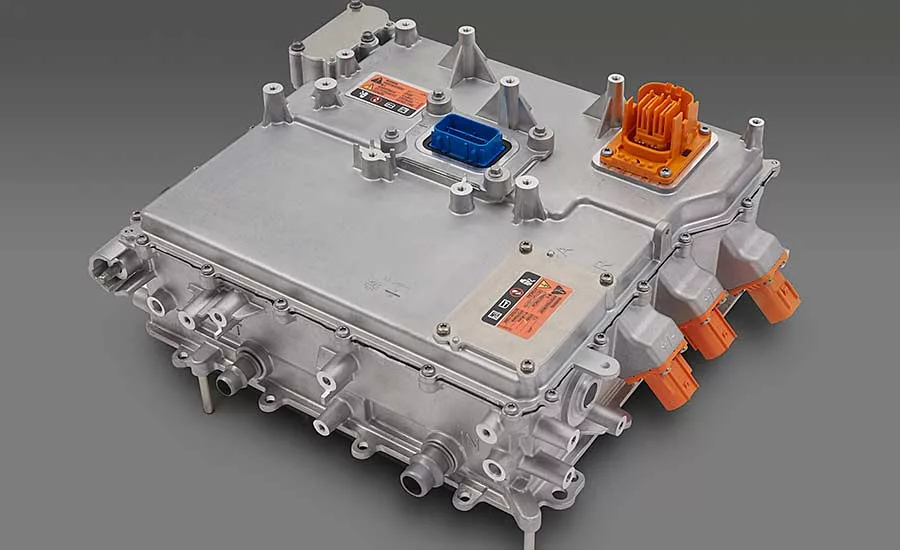
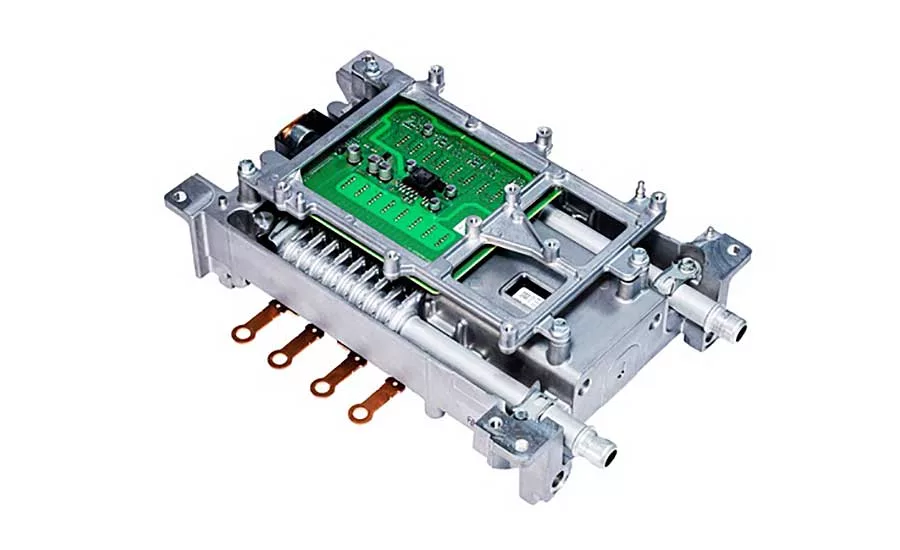
Power electronics play a key role in electric vehicles. Photo courtesy Continental AG
Power Electronics Make EVs Run
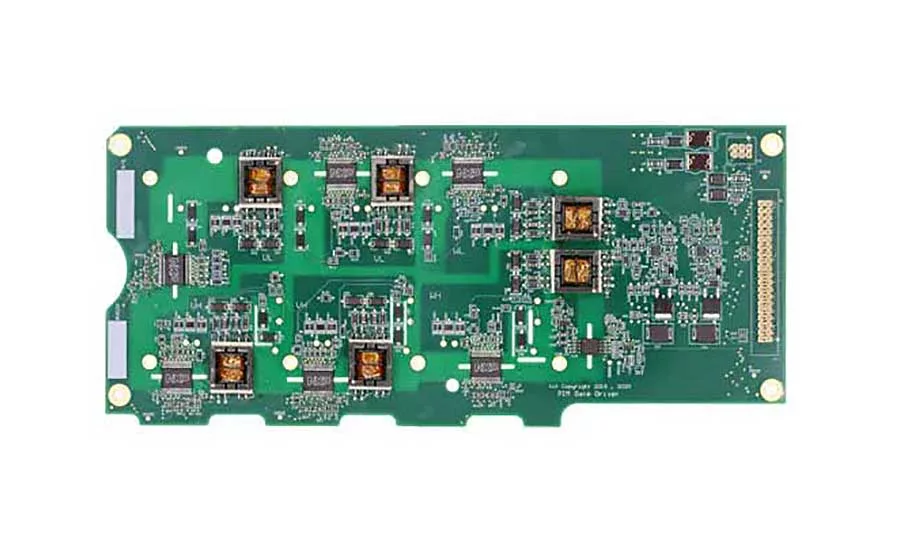
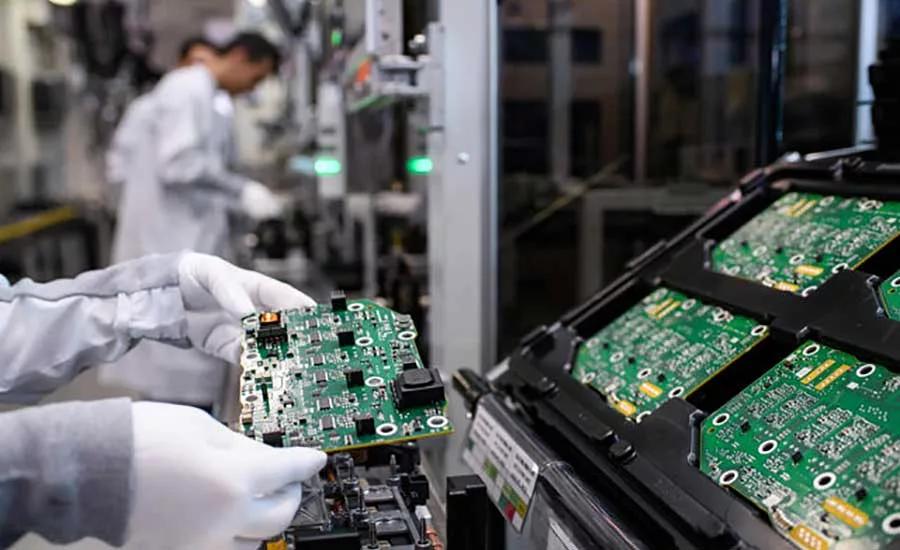
Power electronics process and control the flow of electrical energy in EVs. Photo courtesy Denso
Power Electronics Make EVs Run
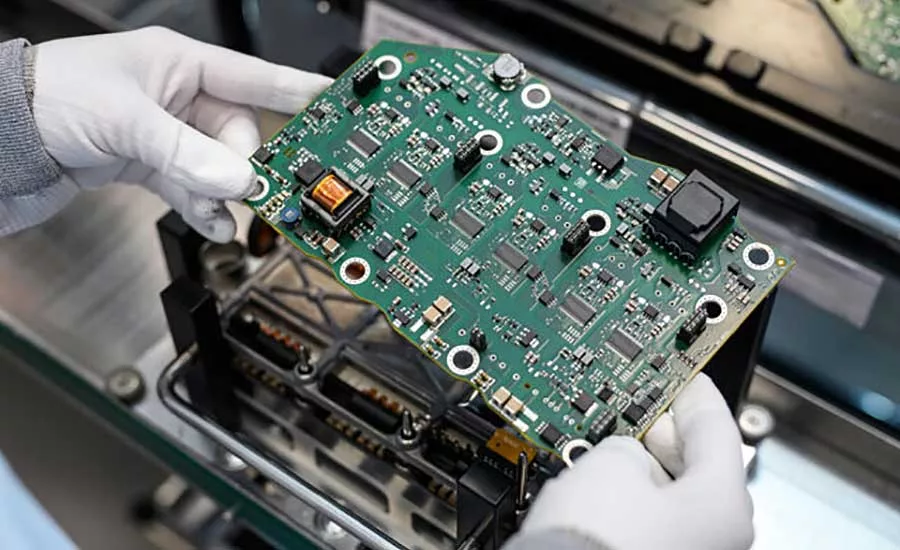
Power electronic components generate heat; if they are close to each other, heat can build up. Photo courtesy General Motors
Power Electronics Make EVs Run
More efficient power electronics can improve EV range by minimizing losses in power conversion from the battery. Photo courtesy NXP Semiconductors
Power Electronics Make EVs Run
Power electronics increase EV performance by handling higher currents and voltage levels. Photo courtesy Continental AG
Power Electronics Make EVs Run
February 23, 2022

While batteries and motors are the “lead actors” in electric vehicles, power electronics play an equally important behind-the-scenes role. Vehicle power electronics primarily process and control the flow of electrical energy in EVs. They also control the speed of electric motors and the torque they produce.

In addition, power electronics convert and distribute electrical power to other vehicle systems, such as heating and ventilation, lighting and infotainment. Power electronics components typically include inverters, DC/DC converters and chargers.

Traditionally, the microchips used in power electronics devices were made of ultra-pure silicon. However, this material is increasingly being replaced by silicon carbide (SiC), which offers numerous advantages over pure silicon. For example, silicon carbide semiconductors display better electrical conductivity and enable higher switching frequencies, while also ensuring that much less energy is dissipated in the form of heat.

SiC chips also allow power electronics applications to be operated at much higher temperatures. Power electronics equipped with SiC semiconductors enable longer ranges and faster recharging for EVs.

The U.S. Department of Energy Vehicle Technologies Office (VTO) is involved in a variety of R&D efforts to lower the cost and improve the performance of power electronics used in EVs. Autonomous & Electric Mobility recently asked Steven Boyd, VTO program manager for batteries and electrification, to discuss current trends and issues affecting power electronics.

AEM: Why are power electronics an important piece of the electric vehicle “puzzle”?

Boyd: Power electronics handle and process all of the energy stored in an EV’s battery to provide for necessary functions, including everything from spinning the motors used for vehicle propulsion to powering the air conditioning and radio.

Looking for quick answers on assembly and manufacturing topics? Try Ask ASM, our new smart AI search tool. Ask ASM →

AEM: How can power electronics increase EV range and performance?

Boyd: More efficient power electronics can improve EV range by minimizing losses in power conversion from the battery. Power electronics increase performance by handling higher currents and voltage levels that will provide more power to electric motors.

AEM: What is the latest trend or biggest issue involving EV power electronics?

Boyd: Silicon carbide is already appearing in current EVs. It will be in even more vehicles within a few years. Gallium nitrite is an emerging power semiconductor material that is maturing and may see its first vehicle applications soon. Both of these materials offer benefits such as higher efficiency over existing silicon semiconductor materials. New materials can also play a role in passive power electronic elements such as magnetics and capacitors. Managing the heat removal from power electronics is referred to as thermal management, and new materials can also play a role in improving heat rejection.

AEM: What area of EV power electronics is the most challenging to address?

Boyd: The cost of power electronics and their overall size must be reduced while keeping the efficiencies and lifetimes high. Integration of multiple components in a small package is challenging. There are many different components with individual, dedicated functionality that must be all fit close together so they minimize the size and weight of power electronics onboard a vehicle. Power electronic components generate heat; if they are close to each other, their heat affects each other, so taking heat out is an issue to overcome. In addition, capacitors occupy a large volume. It is challenging to reduce their sizes with existing capacitor dielectric materials and production processes.

AEM: How is the U.S. Department of Energy addressing this challenge with its R&D initiatives? Are you and your colleagues focusing on any particular aspect of EV power electronics?

Boyd: Our research focuses on developing revolutionary new power electronics that will leapfrog current on-the-road technologies. The electric drive program supports early-stage R&D for extreme high-power density motors that have the potential to enable radical new architectures by dramatic volume or space reductions and increased durability and reliability. The program’s goal is to develop an electric traction drive system at a cost of $6 per kilowatt for a 100-kilowatt peak system by 2025.

The Electric Drive Technologies Lab Consortium is leveraging U.S. research expertise and national lab facilities to improve the power density of electric drives by 10X compared to 2015, while reducing the cost by 50 percent and doubling lifetime miles within the next five years. The consortium is organized around three [main] projects, including a power electronics keystone. VTO also has multiple projects running in parallel to come up with solutions for all these challenges starting at the component level.

AEM: Which type of power electronics devices still need to be refined to improve performance or reduce production costs?

Boyd: Inverters, DC/DC converters and chargers are types of power electronics that can still be refined. They are all comprised of subcomponents, such as power semiconductors, power modules, gate drivers, capacitors, heat sinks, bus bars and magnetics, that can realize further improvements in performance, size, weight and efficiency.

AEM: Many automakers and suppliers are already developing 800-volt systems. What type of power electronics components do these next-generation high-voltage applications require? Can existing products be scaled up or do new types of products need to be developed?

Boyd: There are some components already available for 800-volt applications, like power semiconductors. We also have to consider the peripheral components, such as capacitors, that will have to be rated for high voltages. For commercial vehicles, the battery voltages might need 1,200-volt power electronics systems. In that case, there will be a need for new components to match these voltage levels, including higher voltage-rated power semiconductors.

AEM: How big an issue is cybersecurity with power electronics? What needs to be done to address this issue?

Boyd: Our efforts related to EV and electric vehicle supply equipment (EVSE) cybersecurity have primarily focused on the interface between the components in the EV charging ecosystem, such as the EV, the EVSE and the grid.  While manufacturers have worked to address cybersecurity of their specific products, DOE has identified vulnerabilities with potentially significant consequences that exist in the interface between these products. We are working with stakeholders to develop innovative defense strategies, detection methodologies, and response and recovery solutions to address these vulnerabilities.

KEYWORDS: electric vehicles power electronics

Share This Story

Looking for a reprint of this article?
From high-res PDFs to custom plaques, order your copy today!

Austinweber headshot
Austin has been senior editor for ASSEMBLY Magazine since September 1999. He has more than 21 years of b-to-b publishing experience and has written about a wide variety of manufacturing and engineering topics. Austin is a graduate of the University of Michigan.

Recommended Content

JOIN TODAY
To unlock your recommendations.

Already have an account? Sign In

  • Made in the U.S.A.

    Consumer Products Manufacturing: Made in the USA

    Supply chain lessons learned during the coronavirus...
    Automated Assembly Systems
    By: Austin Weber
  • Best Practices for Press-Fit Assembly

    Best Practices for Press-Fit Assembly

    In manufacturing, ironclad formulas for success are hard...
    Assembly Presses
    By: Jim Camillo
  • aem0523leader-tesla1.jpg

    Tesla Rethinks the Assembly Line

    Engineers at Tesla Inc. have developed a new process that...
    Electrification
    By: Austin Weber
Manage My Account
  • eMagazine Subscription
  • Assembly Newsletters
  • Online Registration
  • Subscription Customer Service
  • Manage My Preferences

More Videos

Sponsored Content

Sponsored Content is a special paid section where industry companies provide high quality, objective, non-commercial content around topics of interest to the ASSEMBLY audience. All Sponsored Content is supplied by the advertising company and any opinions expressed in this article are those of the author and not necessarily reflect the views of ASSEMBLY or its parent company, BNP Media. Interested in participating in our Sponsored Content section? Contact your local rep!

close
  • ultrasonic welding
    Sponsored bySonobond Ultrasonics

    Engineering Efficiency in High-Performance Assembly: How Ultrasonic Welding Enhances Throughput, Reliability and Quality

  • UV curing system
    Sponsored byDymax

    Why UV Intensity Alone Doesn’t Define Curing Performance

  • wooden pallets
    Sponsored byLEAN Manufacturing Products

    Eliminating Waste on the Shop Floor: Applying Lean Principles to Improve Manufacturing Efficiency

Popular Stories

ASSEMBLY News Now, episode-30: Volvo Redesigns EV Manufacturing

Volvo Redesigns EV Manufacturing

automated consumer goods assembly system

Best Practices for Cycle Time Optimization

Boeing CEO Kelly Ortberg announces 1 billion investment

Boeing Plans $1 Billion Wichita Investment, Workforce Training Center

Watch the latest episode of ANN now!

Events

July 24, 2025

From Shop Floor to CFO: How Manufacturers Are Closing the Loop Between Operations and Finance

On Demand Learn how manufacturers are bridging the gap between the shop floor and ERP systems to gain real-time visibility, streamline operations, and kick-start digital transformation—without waiting years.

Sponsored by:

PicoStratusGreen
July 30, 2025

Buffer Analysis and Design Fundamentals for Manufacturing Excellence

On Demand In this presentation, Dr. Herman Tang shares practical insights from his industry experience and research on buffer management in manufacturing operations.

View All Submit An Event

Poll

Difficult Assembly Processes

Which assembly process gives you the most difficulty?
View Results Poll Archive

Products

Manufacturing Cost Policy Deployment (MCPD) Profitability Scenarios: Systematic and Systemic Improvement of Manufacturing Costs

Manufacturing Cost Policy Deployment (MCPD) Profitability Scenarios: Systematic and Systemic Improvement of Manufacturing Costs

See More Products
Register for webinar - Modernizing Automotive Assembly: Why Upgrading Legacy MES is a Business Imperative

Related Articles

  • aem1222insight1.jpg

    Structural Batteries Could Make EVs Lighter

    See More
  • transparent 3D rendering of a car

    Zonal Wiring Architecture Will Make EVs Easier to Assemble

    See More
  • gm brightdrop

    GM Begins Prepping Ontario Assembly Plant to Make EVs

    See More

Related Products

See More Products
  • leaner

    Leaner Manufacturing: How to Make the Lean Production Process Easier, Faster, and More Cost-Effective

See More Products

Related Directories

  • MTM Power Messtechnik Mellenbach GmbH

    DistributorsCALIFORNIAMaster Electronics1301 Olympic Blvd.Santa Monica,  CA(310) 452-1229  www.masterelectronics.comsales@masterelectronics.com
×

Never miss the latest news and trends driving the manufacturing industry

Stay in the know on the latest assembly trends.

JOIN TODAY!
  • RESOURCES
    • Advertise
    • Contact Us
    • Directories
    • Manufacturing Division
    • Store
    • Want More?
  • SIGN UP TODAY
    • Create Account
    • eMagazine
    • Newsletters
    • Customer Service
    • Manage Preferences
  • SERVICES
    • Marketing Services
    • Reprints
    • Market Research
    • List Rental
    • Survey/Respondent Access
  • STAY CONNECTED
    • LinkedIn
    • Facebook
    • Instagram
    • YouTube
    • X (Twitter)
  • PRIVACY
    • PRIVACY POLICY
    • TERMS & CONDITIONS
    • DO NOT SELL MY PERSONAL INFORMATION
    • PRIVACY REQUEST
    • ACCESSIBILITY

Copyright ©2026. All Rights Reserved BNP Media, Inc. and BNP Media II, LLC.

Design, CMS, Hosting & Web Development :: ePublishing