Adhesive Dispensing & Curing
New Dispensing, Curing Technology Improves Productivity
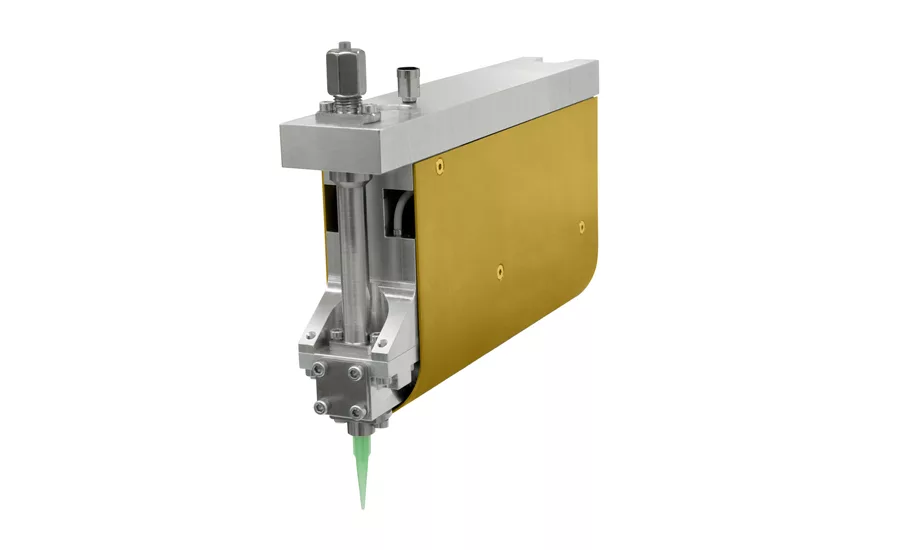
Whether it’s a handheld pneumatic benchtop dispenser or a needle valve mounted to a Cartesian robot, there are many technologies for getting an adhesive, sealant or lubricant from a bulk supply and onto a part. By automating the dispensing process, assemblers can minimize waste, ensure quality and increase productivity.
More than 22 suppliers of equipment for dispensing and curing adhesives displayed their latest technologies at The ASSEMBLY Show. Here is a small sample of what you can find on the show floor.
Meter Mix and Dispense
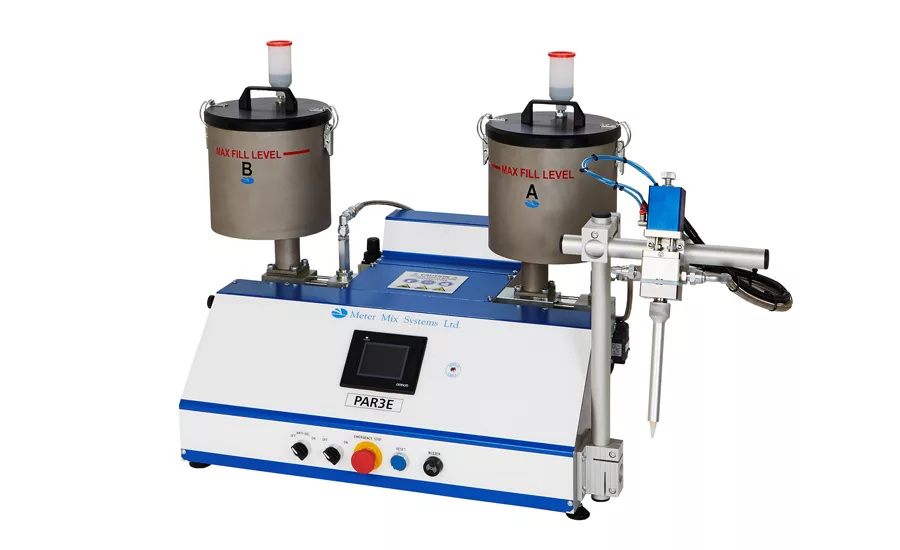
Dopag U.S. Ltd. showed the servo-driven PAR3CE, which precisely meters, mixes and dispenses two-part polyurethanes, epoxies, silicones and methacrylates. It has a single-acting positive displacement metering pump that can output up to 30 shots per minute.
The system handles material with a wide range of mix ratios (up to 20-to-1) and viscosities (up to 500,000 centipoise). Designed for fully or semiautomatic applications, it features positive displacement metering pumps, and a foot valve for starting and stopping. Cycle rate is up to 30 shots per minute, and shot size is from 0.5 to 50 milliliters (at a 1-to-1 ratio). Reservoir capacity is 7 liters.
Options include a handheld mixer valve; thermostatically controlled heating of reservoirs, pumps and hoses; a level sensing system with audible or visual alarm; and anti-gel purge timer; agitation for material reservoirs, and vacuum degassing for material reservoirs.
Valve, Controller for Jet Dispensing
Looking for quick answers on assembly and manufacturing topics? Try Ask ASM, our new smart AI search tool. Ask ASM
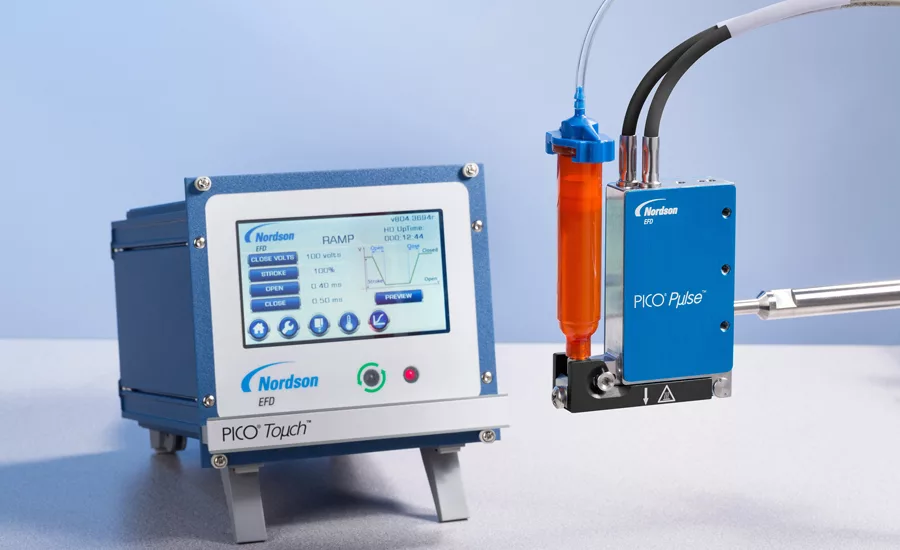
Nordson EFD showed the latest technology for jet dispensing. Used together, the PICO Pµlse valve and PICOToµch controller ensure exact and repeatable dispensing of microdots as small as 0.5 nanoliter at up to 500 hertz continuously.
The noncontact valve’s modular design enables it to jet low- or high-viscosity fluids onto any surface, including uneven and tough-to-reach substrates. Interchangeable parts increase the valve’s versatility. Its innovative tool-free latch mechanism allows for easy removal of the fluid body for faster serviceability and maintenance. Variable stroke, improved close time, and faster full stroke open time ensure consistent performance.
An easy-to-use touch screen on the controller lets operators set precise operating parameters (such as ramp open and close) and stroke control to fine tune dispensing performance. Pulse time adjusts in increments as small as 0.01 microsecond. Better slope control delivers more repeatable deposits while preventing turbulence and air bubbles from entering the fluid, which helps prevent deposit variation.
Compact Light Source Cures Adhesives
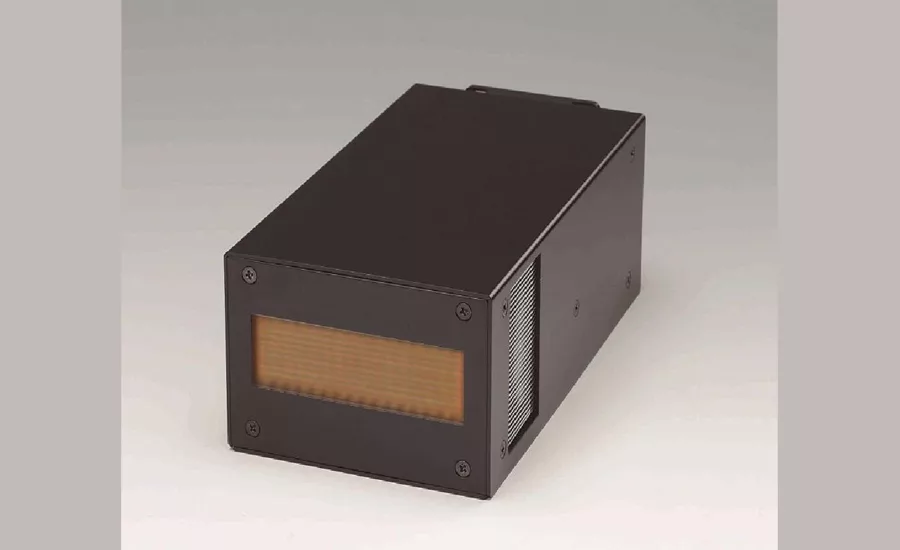
Hamamatsu Corp. showed the Lightningcure LC-L5G, a compact LED-based light source for curing UV adhesives. It emits light at a wavelength of 385 nanometers, with an irradiation area of 12 by 75 millimeters and output intensity of 10 watts per square centimeter. The unit has a service life of 20,000 hours, and it features a built-in cooling fan to minimize the amount of emitted heat. No chiller equipment or exhaust ducts are required.
Suitable applications include adhesives and coatings on medical devices, furniture and building materials; and protective films on printed circuit boards, IC cards, and Blu-ray and DVD disks.
Benchtop Dispenser
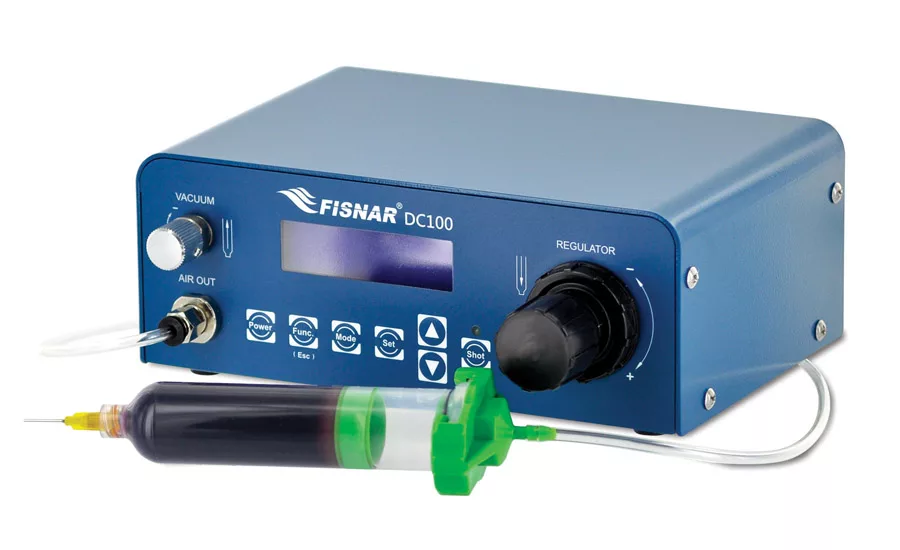
Fisnar Inc. displayed the new DC100, a digital precision benchtop dispenser.
Alarms can be set to notify the user when material life has ended or fluctuations in dispensing pressure have occurred. An auto purge function prevents premature curing of the material when the dispenser is not in operation. Air output and vacuum are digitally displayed and can be set with tolerances, to give dispensing more precision.
The timer can be set from 0.008 to 9,999 seconds. The device can operate at more than 600 cycles per minute.
Programming of the dispenser is accomplished with an easy-to-use system that saves up to 10 programs and provides five dispensing modes:
• Purge mode—dispenses for as long as activated.
• Teach mode—allows the user to record a dispense time.
• Timed mode—dispense at a fixed time interval.
• Time+ mode—allows operator to add time to a shot after a set amount of cycles.
• Interrupt mode—allows the user to stop a programmed dispense time early if needed.
An I/O connection facilitates integration into pre-existing assembly lines. Lockable programs allow the operator to use the device without fear of mistakenly modifying programs.
The DC100 digital dispenser, with its versatile design, makes it perfectly suited for a wide variety of dispensing applications; from microdot deposits, lines, to large potting and filling.
LED-Based UV Curing System for Fiber Optic Coatings
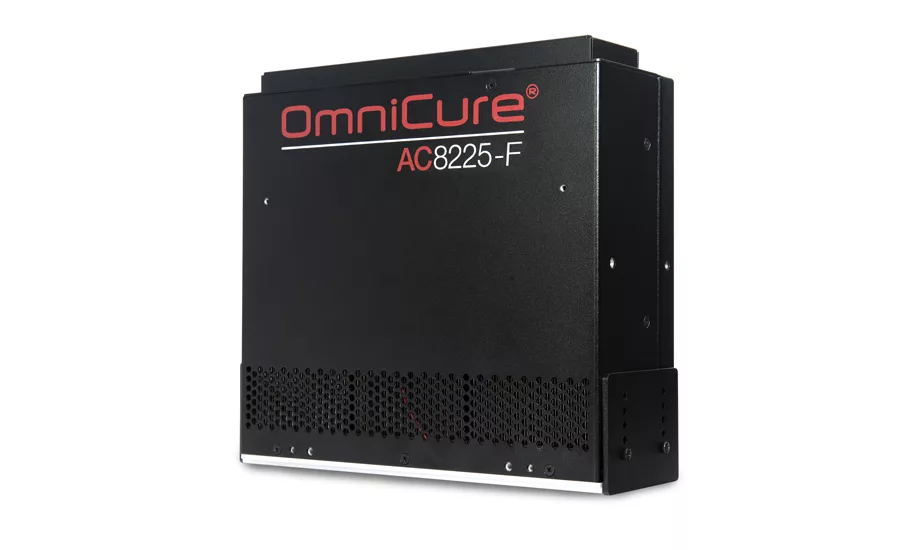
Excelitas Technologies Corp. displayed the OmniCure AC8225-F, an LED-based UV system for curing fiber optic coatings.
With advanced front-end optics, this air-cooled device delivers a peak irradiance of 12 watts per square centimeter and uniform radiation at a working distance of 10 to 18 millimeters for fast, even curing.
Compared with traditional arc lamp systems, the system reduces electricity consumption by up to 60 percent with no compromises in line speed. With over 40,000 hours of LED lifetime and no replacement parts, maintenance costs are reduced.
The system uses air-cooled LED technology in a compact design, allowing for seamless integration into new or existing assembly lines. There’s no need for retooling, external cooling or ozone extraction. The curing systems can be mounted in any orientation for greater flexibility.
Using a patented process for addressing individual LED module outputs, the system provides exceptional uniformity over the entire curing area. Multiple LED heads can be adjoined while maintaining optical uniformity between each system.
Valve Features Disposable Material Path
Techcon Systems displayed the TS5624 diaphragm valve with a disposable material path. Difficult fluids, such as cyanoacrylates and premixed two-part epoxies, can now be dispensed without the need for frequent cleaning, simply by replacing the entire wetted area. Replacement takes seconds, while the valve stays on the assembly line.
The wetted parts are manufactured from black polyethylene to prevent moisture and UV light from coming into contact with the adhesive. As a result, sensitive fluids, such as cyanoacrylates and UV-cured adhesives, can be dispensed reliably and accurately.
The valve dispenses low- to medium-viscosity fluids over a wide range of shot and bead sizes, down to a fraction of a microliter. An internal spring return makes the valves fully adaptable for use with Techcon controllers. A short opening stroke provides a fast and positive shut-off. The seal-less valve design resists moisture, and the incorporated diaphragm creates a barrier between the wetted parts and the air cylinder.
Wand Delivers Targeted UV Radiation for Curing
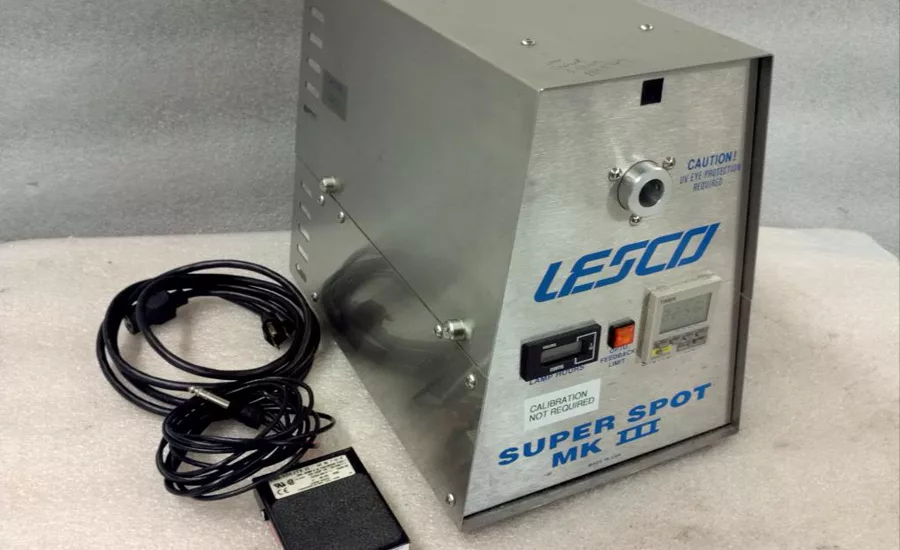
American Ultraviolet Inc. showed the MKIII Super Spot, which delivers an intense, concentrated and regulated spot of UV and visible energy through a light guide. It is used for curing adhesives, coatings and inks when their physical location dictates the use of a light wand.
The light source is a 100-watt DC mercury vapor short-arc lamp. The device outputs light in the visible, UV-A, UV-B and UV-C spectra, with factory preset centered at a wavelength of 365 nanometers. Peak output is 20,000 milliwants per square centimeter.
Entry-Level Vacuum Dispensing System
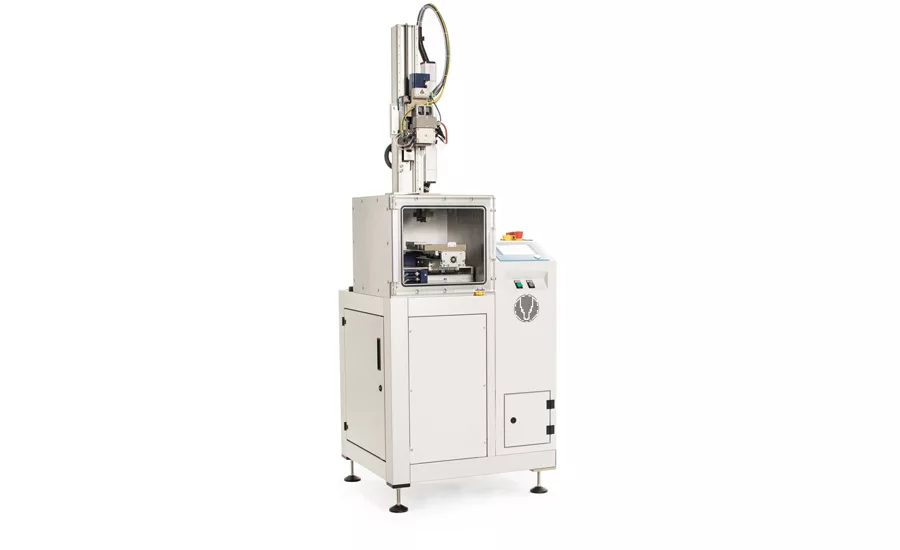
Scheugenpflug Inc. displayed a new vacuum dispensing system, the LeanVDS. Designed as an entry-level system, the LeanVDS is particularly suitable for batch runs, laboratory applications or to replace unreliable and time-consuming subprocesses, such as post-evacuation.
Depending on specific requirements, the LeanVDS is available in various models and sizes. With the basic models, the valve is stationary. The work area ranges from 300 by 300 millimeters to 420 by 420 millimeters. With the more advanced system, the LeanVDS U, the valve is mounted to an X-Y-Z positioning system.
All three models are equipped with Dos P piston dispensers, A310 material preparation units, and the SCP200+, a user-friendly microcomputer controller. Dispensing is accomplished in a vacuum up to 5 millibars absolute.
High-Intensity Spot-Curing System
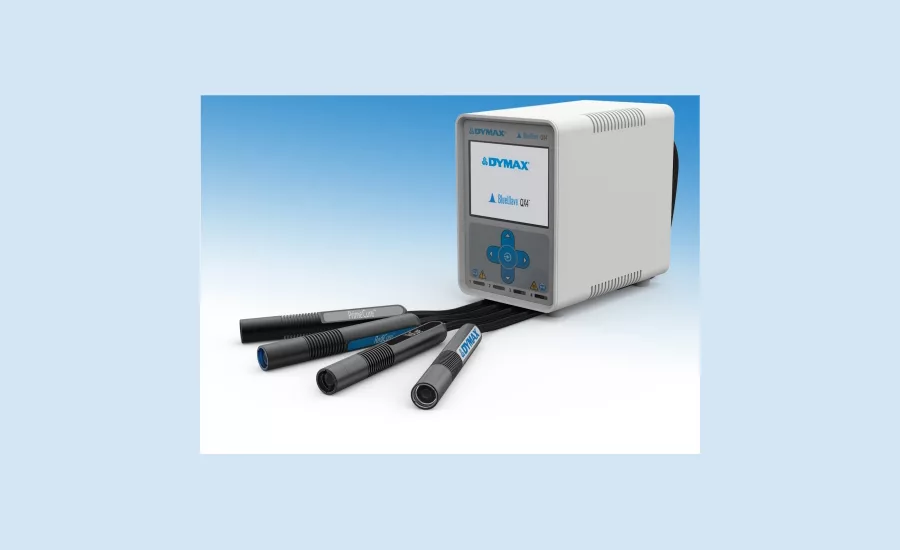
Dymax Corp. showed the new BlueWave QX4 high-intensity spot-curing system.
The system is comprised of a controller and up to four LED heads, which are available in 365, 385, and 405 nanometer wavelengths and can be outfitted with 3-, 5-, or 8-millimeter diameter focusing lenses. The LED heads and focusing lenses can be used in any combination and can be controlled through the system’s variable mode, a feature that allows each head to be individually programed for intensity and cycle times. Individual exposure times and intensity settings can be set in 1 percent increments for each LED head, giving engineers maximum curing flexibility.
In addition to its curing versatility, the device also features an easy-to-use control interface that facilities flexibility in setup and use. The unit can be activated by foot pedal or PLC interface, allowing it to be easily incorporated into automated systems.
Numerically Controlled Dispensing Valve
MTA Automation Inc. showed the NVD, a numerically controlled volumetric dispenser for dispensing one-component adhesives and fluids in bonding, potting, coating and greasing applications.
Dispensing parameters are via a digital controller. Volume per stroke can be set from 0.1 to 1,250 cubic millimeters. Volumetric repeatability is greater than 99 percent. A numerically controlled stepping motor actuates a micro dispensing pump. The valve’s piston and cylinder are made of ceramic, and there are no seals in the piston-cylinder system. Material preheating is possible.