Assembly Magazine logo
search
Ask ASSEMBLY AI
cart
facebook twitter linkedin youtube
  • Sign In
  • Create Account
  • Sign Out
  • My Account
Assembly Magazine logo
  • TRENDS
    • Ask ASSEMBLY AI
    • Trends
    • News
    • New Products
  • INDUSTRIES
    • Aerospace
    • Appliance
    • DFMA Assembly
    • Medical Devices
    • Green Manufacturing
    • Lean Manufacturing
    • Machinery Assembly
    • Electronics Assembly
    • Automotive
  • TECHNOLOGIES
    • Adhesives & Dispensing
    • Assembly Presses
    • Automated Assembly Systems
    • Manufacturing Management
    • Manufacturing Software
    • Motion Control
    • Screwdriving & Riveting
    • Robotics
    • Test & Inspection
    • Plastics & Metal Welding
    • Wire Processing
    • Workstations
  • AUTONOMOUS & ELECTRIC MOBILITY
    • AEM Magazine Archives
    • Autonomy
    • Electrification
    • Mobility Services
    • Assembly & Testing
    • AV/EM News
  • MEDIA
    • Ask ASSEMBLY AI
    • Podcasts
    • Assembly News Now
    • Assembly TV
    • Webinars
    • eBooks
  • EVENTS
    • Calendar
    • The ASSEMBLY Show
  • MORE
    • Exclusives >
      • Plant of the Year
      • Capital Spending
    • Buyers Guide >
      • Supplier Insights
    • Classifieds
    • Featured Products
    • Newsletters
    • Store
    • White Papers
    • Columns
    • Sponsor Insights
  • INFOCENTER
    • Assembly & Test Solutions
  • EMAGAZINE
    • eMagazine
    • Archive Issues
    • Advertise
    • Contact Us
    • Sign Up
Columns

X-Y-Z: Clearing the Air About FRLs

By John Sprovieri
November 1, 2003

For compressed air to be safely and adequately delivered to pneumatic equipment, it must pass through a filter, a pressure regulator, and in some cases, a lubricator. Often packaged together, these devices are collectively known as FRLs.

Passing the air through a filter prevents dirt, moisture and compressor oil from damaging pneumatic devices. Air enters the filter and passes through louvers that direct it into a swirling pattern. Centrifugal force throws liquid droplets and dirt against the side of the filter bowl. "It's like a tornado inside that bowl," says John Lokken, technical support engineer with the Pneumatics Div. of Bosch Rexroth Corp. (Lexington, KY).

The dirty liquid runs to the bottom of the bowl, where it can be drained away. The air then exits through a filter element, which removes any remaining particulates.

The bowl is usually made from clear polycarbonate, says Jeff Carter, leader of the air preparation group at SMC Corp. of America (Indianapolis). However, solvents, alcohol and compressor oils can attack the plastic. If these substances are present, a metal bowl with a glass window should be used. A metal bowl is also needed if the filter is exposed to temperatures above 125 F or pressures above 150 psig.

The bowl can be drained manually or automatically, says Clayton Fryer, product champion at IMI Norgren Inc. (Littleton, CO). An automatic drain closes when the system pressurizes. A float inside the bowl rises as fluid accumulates. When the float reaches the maximum level, the drain opens. The drain also opens when the system depressurizes. A tube carries the fluid to a receptacle, so it can be disposed safely.

Automatic drains should be used if the equipment operates continually, or if maintenance is difficult or unreliable. "With a manual drain, the only way to get the water out is to open it," warns Fryer. "If you don't drain the bowl, water will get into the lubricator and air lines, and that's a bad deal."

Various materials are used for the filter element, including sintered bronze, plastic, paper and felt. Elements are rated according to the size, in microns, of the particles they're designed to catch. For most assembly applications, a 40-micron filter is sufficient. Finer filtration-5 microns or less-is required for sensitive equipment, such as gauges, air bearings and high-speed air motors.

Looking for quick answers on assembly and manufacturing topics? Try Ask ASM, our new smart AI search tool. Ask ASM →

Choosing a filter size often requires trade-offs, warns Lokken. Air exits a filter at a lower pressure than when it entered. The smaller the filter's micron rating, the higher the pressure drop, and that translates into higher operating costs. Conversely, a filter that is too large won't clean the air effectively.

"Sometimes, people choose a larger filter size than they need, so it will last longer between cleanings," says Lokken. "But, you can't go too far overboard, because the airflow gets so low inside the filter that you won't get enough spinning action to remove the particulates."

Regulators reduce inlet pressure to the level required by downstream equipment. They minimize pressure variation at the point of use, and they limit the force of cylinders. The most common type of regulator has a control spring that acts on a diaphragm to regulate the air pressure. "When downstream pressure increases, it pushes against the diaphragm, which decreases airflow," explains Carter. "When downstream pressure decreases, the spring pushes against the diaphragm, which increases airflow."

Lubricators send a fine mist of oil into the air line. Air flowing through the lubricator creates a pressure differential between the air line and the oil reservoir. Oil rises from the reservoir into a dome, where it drips onto an atomizer and becomes a mist. This mist then condenses on the moving parts of downstream devices. The amount of oil sent downstream is varied by adjusting the drip rate.

When selecting FRLs, engineers should specify the pipe size, inlet pressure, airflow demand, and range of operating pressures. Airflow demand can be estimated by adding the air usage of all downstream machinery. The airstream temperature and ambient temperature are also important.

Share This Story

Looking for a reprint of this article?
From high-res PDFs to custom plaques, order your copy today!

John has been with ASSEMBLY magazine since February 1997. John was formerly with a national medical news magazine, and has written for Pathology Today and the Green Bay Press-Gazette. John holds a B.A. in journalism from Northwestern University, Medill School of Journalism.

Recommended Content

JOIN TODAY
To unlock your recommendations.

Already have an account? Sign In

  • Made in the U.S.A.

    Consumer Products Manufacturing: Made in the USA

    Supply chain lessons learned during the coronavirus...
    Automated Assembly Systems
    By: Austin Weber
  • Best Practices for Press-Fit Assembly

    Best Practices for Press-Fit Assembly

    In manufacturing, ironclad formulas for success are hard...
    Assembly Presses
    By: Jim Camillo
  • aem0523leader-tesla1.jpg

    Tesla Rethinks the Assembly Line

    Engineers at Tesla Inc. have developed a new process that...
    Electrification
    By: Austin Weber
Manage My Account
  • eMagazine Subscription
  • Assembly Newsletters
  • Online Registration
  • Subscription Customer Service
  • Manage My Preferences

More Videos

Sponsored Content

Sponsored Content is a special paid section where industry companies provide high quality, objective, non-commercial content around topics of interest to the ASSEMBLY audience. All Sponsored Content is supplied by the advertising company and any opinions expressed in this article are those of the author and not necessarily reflect the views of ASSEMBLY or its parent company, BNP Media. Interested in participating in our Sponsored Content section? Contact your local rep!

close
  • ultrasonic welding
    Sponsored bySonobond Ultrasonics

    Engineering Efficiency in High-Performance Assembly: How Ultrasonic Welding Enhances Throughput, Reliability and Quality

  • UV curing system
    Sponsored byDymax

    Why UV Intensity Alone Doesn’t Define Curing Performance

  • wooden pallets
    Sponsored byLEAN Manufacturing Products

    Eliminating Waste on the Shop Floor: Applying Lean Principles to Improve Manufacturing Efficiency

Popular Stories

ASSEMBLY News Now, episode-30: Volvo Redesigns EV Manufacturing

Volvo Redesigns EV Manufacturing

Boeing CEO Kelly Ortberg announces 1 billion investment

Boeing Plans $1 Billion Wichita Investment, Workforce Training Center

automated consumer goods assembly system

Best Practices for Cycle Time Optimization

Watch the latest episode of ANN now!

Events

July 24, 2025

From Shop Floor to CFO: How Manufacturers Are Closing the Loop Between Operations and Finance

On Demand Learn how manufacturers are bridging the gap between the shop floor and ERP systems to gain real-time visibility, streamline operations, and kick-start digital transformation—without waiting years.

Sponsored by:

PicoStratusGreen
July 30, 2025

Buffer Analysis and Design Fundamentals for Manufacturing Excellence

On Demand In this presentation, Dr. Herman Tang shares practical insights from his industry experience and research on buffer management in manufacturing operations.

View All Submit An Event

Poll

Difficult Assembly Processes

Which assembly process gives you the most difficulty?
View Results Poll Archive

Products

Manufacturing Cost Policy Deployment (MCPD) Profitability Scenarios: Systematic and Systemic Improvement of Manufacturing Costs

Manufacturing Cost Policy Deployment (MCPD) Profitability Scenarios: Systematic and Systemic Improvement of Manufacturing Costs

See More Products
Register for webinar - Modernizing Automotive Assembly: Why Upgrading Legacy MES is a Business Imperative

Related Articles

  • X-Y-Z: Electric Cylinders Take the Air Out of Linear Motion

    See More
  • X-Y-Z: Putting the Clamps on Motion

    See More
  • X-Y-Z: The ABCs of XYZ

    See More

Related Products

See More Products
  • history.jpg

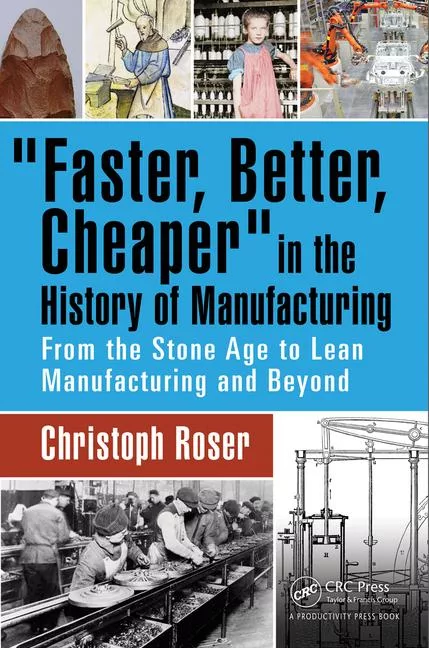
    Faster, Better, Cheaper in the History of Manufacturing: From the Stone Age to Lean Manufacturing and Beyond

  • foreman.jpg

    The Foreman on the Assembly Line

  • digitalization.jpg

    The Digitalization of the 21st Century Supply Chain

See More Products

Related Directories

  • Air Logic

    The Air Logic Division of Fred Knapp Engraving Company designs and manufactures a comprehensive line of pneumatic and vacuum control equipment, Air Logic has earned a reputation for product innovation and development by designing special products to meet customer requirements.
×

Never miss the latest news and trends driving the manufacturing industry

Stay in the know on the latest assembly trends.

JOIN TODAY!
  • RESOURCES
    • Advertise
    • Contact Us
    • Directories
    • Manufacturing Division
    • Store
    • Want More?
  • SIGN UP TODAY
    • Create Account
    • eMagazine
    • Newsletters
    • Customer Service
    • Manage Preferences
  • SERVICES
    • Marketing Services
    • Reprints
    • Market Research
    • List Rental
    • Survey/Respondent Access
  • STAY CONNECTED
    • LinkedIn
    • Facebook
    • Instagram
    • YouTube
    • X (Twitter)
  • PRIVACY
    • PRIVACY POLICY
    • TERMS & CONDITIONS
    • DO NOT SELL MY PERSONAL INFORMATION
    • PRIVACY REQUEST
    • ACCESSIBILITY

Copyright ©2026. All Rights Reserved BNP Media, Inc. and BNP Media II, LLC.

Design, CMS, Hosting & Web Development :: ePublishing